The classic heart attack warning in men is new chest pressure, squeezing, heaviness, or tightness that lasts more than a few minutes or keeps returning. The discomfort may spread to the left or right arm, both arms, shoulders, back, neck, jaw, or upper abdomen. Shortness of breath, cold sweating, nausea, weakness, or lightheadedness can occur at the same time. Men are more likely than women to report chest pain during an acute coronary syndrome, but not every man has crushing pain and not every heart attack follows a textbook pattern. Some begin with milder pressure, indigestion-like discomfort, unexplained breathlessness, or sudden fatigue. Treat a possible heart attack as an emergency: call emergency medical services rather than driving yourself or waiting to see whether symptoms pass. Fast treatment can restore blood flow, limit heart-muscle damage, and reduce the chance of dangerous rhythm problems, heart failure, or cardiac arrest.
Table of Contents
- Classic Heart Attack Symptoms in Men
- Less Obvious Warning Signs
- What to Do Immediately
- What Not to Do During Possible Heart Attack Symptoms
- How Heart Attacks Are Diagnosed
- Heart Attack Mimics and Why You Should Not Self-Diagnose
- Risk Factors and Prevention
Classic Heart Attack Symptoms in Men
The symptom most strongly associated with heart attack is chest discomfort, especially pressure, squeezing, tightness, fullness, or heaviness in the center or left side of the chest. Men with acute myocardial infarction often describe a broad area of discomfort rather than a pinpoint pain they can cover with one fingertip.
A typical pattern may include:
- Pressure or heaviness that lasts more than a few minutes
- Symptoms that improve and then return
- Discomfort triggered by exertion or occurring unexpectedly at rest
- Pain or pressure spreading into one or both arms, the shoulders, neck, jaw, back, or upper abdomen
- Shortness of breath
- Cold, clammy sweating
- Nausea or vomiting
- Lightheadedness, weakness, or a feeling that something is seriously wrong
The pain does not need to be severe. A man can be having a heart attack while describing his chest symptoms as “indigestion,” “a band across my chest,” “someone sitting on me,” or simply “pressure.” Conversely, sharp pain does not completely exclude a cardiac cause. The whole pattern matters.
A heart attack happens when heart muscle is injured because its blood supply is inadequate, most often after a cholesterol-rich plaque in a coronary artery becomes disrupted and a clot forms. The medical term acute coronary syndrome includes heart attacks and unstable angina caused by sudden reduction in coronary blood flow.
Some heart attacks create dramatic symptoms within minutes. Others build gradually. A person may notice pressure while walking, feel better after resting, and then have the discomfort return with less effort or at rest. New or rapidly worsening angina symptoms such as chest pressure and breathlessness should be evaluated urgently because they may signal unstable coronary disease.
Do not use age, fitness, or appearance to rule a heart attack out. Although risk rises with age, younger men can have myocardial infarction, particularly with smoking, severe cholesterol disorders, stimulant use, diabetes, or a strong family history.
Less Obvious Warning Signs
Not every heart attack announces itself with crushing chest pain. Men can have less obvious symptoms, and some have little chest discomfort. This is especially important in older adults and people with diabetes, kidney disease, or other conditions that may alter symptom perception.
Shortness of breath
Breathlessness may accompany chest pressure or occur on its own. You might notice that a normal walk suddenly feels difficult, you need to stop on familiar stairs, or you feel air-hungry at rest. Heart-related breathlessness can result from reduced pumping function, elevated filling pressures, or the body’s stress response during ischemia.
Sweating and nausea
A sudden cold sweat, pallor, nausea, or vomiting can reflect activation of the autonomic nervous system during a heart attack. These symptoms are easy to blame on food poisoning, reflux, anxiety, or a viral illness. Concern rises when they appear with chest discomfort, breathlessness, weakness, or upper-body pain. The pattern of unexplained sweating and nausea with cardiac warning signs deserves urgent attention.
Jaw, arm, back, or upper-abdominal discomfort
Referred pain can occur because nerves carrying signals from the heart share pathways with other areas of the upper body. Some men notice an ache in an arm, pressure in the jaw, or discomfort high in the abdomen before they focus on the chest.
Unusual weakness or lightheadedness
A sudden sense of weakness, near-fainting, or profound fatigue can occur if the heart cannot maintain normal circulation or if a rhythm problem develops. Actual fainting with chest symptoms is particularly concerning.
Symptoms during sleep or at rest
A heart attack can start while sitting, sleeping, or doing routine activities. Lack of exertion does not make the symptoms safe. Likewise, symptoms that come and go can still represent intermittent coronary blockage or evolving injury.
“Silent” heart attacks also occur. These are myocardial infarctions with symptoms so mild or nonspecific that the person does not recognize the event at the time. They are not harmless; the injury may be discovered later on an ECG, imaging study, or evaluation for another problem.
What to Do Immediately
If a heart attack is possible, call your local emergency number immediately. Do this before calling a relative, searching symptoms online, taking a shower, or trying to finish what you are doing.
Emergency medical services are safer than driving yourself because the team can assess your heart rhythm, begin treatment, and respond to sudden cardiac arrest. They can also alert the hospital so the appropriate cardiac team is ready when needed.
Use this sequence:
- Stop activity and sit or lie in a safe position.
- Call emergency medical services and state that you may be having a heart attack.
- If possible, unlock the door and have another person stay nearby.
- Follow the dispatcher’s instructions.
- If you have your own prescribed nitroglycerin, use it exactly as instructed. Never take another person’s prescription.
- Take aspirin only if the dispatcher or a healthcare professional advises it and you do not have an aspirin allergy, active bleeding, or another reason it may be unsafe. Do not delay the emergency call while looking for aspirin.
If the person becomes unresponsive and is not breathing normally, a bystander should call emergency services, start CPR, and use an automated external defibrillator if one is available.
Time matters because blocked coronary arteries can cause progressive heart-muscle death. For certain heart attacks, rapidly reopening the artery with a catheter procedure or medication can preserve myocardium and improve survival. Dangerous ventricular rhythms are also most likely early in the event, which is another reason to be where trained responders and a defibrillator are available.
If you are unsure whether symptoms qualify, use a low threshold for emergency evaluation when chest pressure is new, severe, persistent, or accompanied by breathlessness, sweating, nausea, or faintness. A focused guide to when chest pain needs emergency care can clarify common warning patterns, but active concerning symptoms should not be managed through self-triage alone.
What Not to Do During Possible Heart Attack Symptoms
Several common responses can waste time or add risk. Do not wait for the pain to become unbearable. Heart attack symptoms can be moderate, and treatment should not depend on a pain score.
Avoid these mistakes:
- Do not drive yourself unless there is absolutely no safer transport option. You could faint or develop a lethal arrhythmia behind the wheel.
- Do not exercise to “test” the pain. Exertion can increase the heart’s oxygen demand and worsen ischemia.
- Do not assume relief proves it was harmless. Symptoms can improve temporarily even during an evolving acute coronary syndrome.
- Do not rely on an antacid response. Heart symptoms and reflux can overlap, and improvement after an antacid does not rule out a heart problem.
- Do not use a smartwatch or home blood-pressure reading to clear yourself. A normal pulse, oxygen level, or consumer ECG cannot exclude myocardial infarction.
- Do not borrow nitroglycerin. It can dangerously lower blood pressure and may interact with erectile-dysfunction drugs and other medications.
- Do not take erectile-dysfunction medication for chest symptoms. Drugs such as sildenafil or tadalafil are not heart-attack treatments and can create dangerous interactions with nitrates.
A common trap is deciding that a symptom must be anxiety because it began during emotional stress. Stress can trigger both panic symptoms and cardiac events. Panic attacks often produce chest tightness, fast breathing, tingling, fear, and a racing heart, but symptoms can overlap too much for a first or unusual episode to be safely diagnosed at home. If this is a recurring issue, understanding panic attack versus heart attack symptoms can be useful after urgent causes have been addressed.
Another mistake is assuming “I am too young.” Men in their 30s and 40s can have heart attacks, particularly with familial hypercholesterolemia, smoking, cocaine or methamphetamine exposure, diabetes, severe hypertension, or premature coronary disease in close relatives.
How Heart Attacks Are Diagnosed
Emergency clinicians do not diagnose a heart attack from symptoms alone. The core evaluation combines an ECG, high-sensitivity cardiac troponin testing, the symptom history, physical examination, vital signs, and the person’s overall risk.
An electrocardiogram records the heart’s electrical activity. Some heart attacks cause ST-segment elevation, a pattern that can identify a coronary artery that needs urgent reopening. Other heart attacks cause subtler ECG changes or no diagnostic change on the first tracing. Repeat ECGs are common when symptoms continue or evolve.
High-sensitivity cardiac troponin detects heart-muscle injury. A value above the expected range does not automatically mean a plaque-rupture heart attack because myocarditis, severe heart failure, kidney disease, pulmonary embolism, rapid arrhythmias, and other illnesses can also raise troponin. Clinicians therefore look at the clinical setting and whether the level rises or falls over time.
Likewise, an early normal troponin does not always end the evaluation. If symptoms began recently, a repeat sample may be needed. Modern emergency pathways use the assay’s characteristics, timing, ECG, and clinical risk to determine who can be safely discharged and who needs more testing or treatment.
Additional tests can include:
- Chest radiography when lung or aortic disease is a concern
- Echocardiography to assess heart movement, valves, and pumping function
- Coronary CT angiography in selected stable patients
- Invasive coronary angiography when acute coronary blockage is strongly suspected or confirmed
- Other imaging when pulmonary embolism, aortic dissection, myocarditis, or another diagnosis is possible
A heart attack diagnosis generally requires evidence of acute heart-muscle injury plus findings consistent with ischemia, such as symptoms, ECG changes, imaging evidence, or a coronary clot. That distinction matters because the treatment of a classic coronary-thrombus heart attack differs from treatment of other causes of troponin elevation.
Heart Attack Mimics and Why You Should Not Self-Diagnose
Many conditions can cause chest pain, and most chest pain is not a heart attack. The problem is that some harmless and dangerous causes feel similar. The goal is not to prove at home that symptoms are cardiac; it is to avoid missing a time-sensitive emergency.
Common or important mimics include:
- Gastroesophageal reflux or esophageal spasm
- Chest-wall muscle strain or costochondritis
- Panic attacks
- Pneumonia or pleurisy
- Pulmonary embolism
- Collapsed lung
- Pericarditis or myocarditis
- Aortic dissection
- Gallbladder or upper-abdominal disease
Features can shift probability without giving certainty. Pain reproducible by pressing one small chest-wall spot is more suggestive of a musculoskeletal cause. Burning after a large meal can fit reflux. Sharp pain worse with breathing can occur with pleurisy or pulmonary embolism. Tearing pain moving into the back can occur with aortic dissection. Yet overlap is substantial, and some people have more than one condition at the same time.
The same caution applies to “gas.” Coronary discomfort can feel like pressure high in the abdomen, belching, or indigestion. Men with diabetes may have blunted pain perception, making breathlessness, nausea, or weakness more prominent than chest pain.
If symptoms are mild, recurrent, and clearly linked to meals or movement, outpatient evaluation may be appropriate after a clinician has assessed the pattern. But new severe symptoms, chest pressure with exertion, pain at rest lasting more than a few minutes, fainting, or a combination of chest discomfort with sweating or breathlessness should be treated more urgently.
Risk Factors and Prevention
The best way to reduce the chance of a future heart attack is to identify and treat the factors that drive coronary artery disease. Smoking, high LDL cholesterol, high blood pressure, diabetes, kidney disease, and age are among the most important. Family history and genetics can raise risk even when lifestyle is good.
Key prevention steps include:
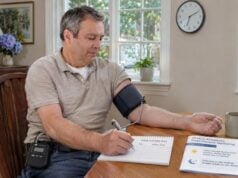
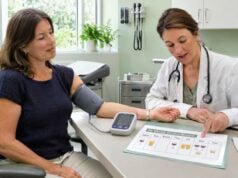
- Know your blood pressure and treat persistent hypertension.
- Check LDL cholesterol and other lipids at intervals appropriate for your age and risk.
- Stop smoking and avoid combustible tobacco.
- Manage diabetes with a plan that targets both glucose and cardiovascular risk.
- Be physically active most weeks, building toward a sustainable mix of aerobic activity and strength work.
- Eat a pattern rich in vegetables, fruits, legumes, whole grains, nuts, seeds, fish or other suitable proteins, and unsaturated fats while limiting excess sodium, refined carbohydrates, and saturated fat.
- Maintain a weight and waist pattern that supports healthy blood pressure, glucose, sleep, and mobility.
- Treat sleep apnea when present and aim for adequate sleep.
Men with very high LDL, established coronary disease, diabetes, or a high calculated cardiovascular risk often need medication in addition to lifestyle changes. Statins have the strongest evidence base for lowering LDL-related coronary risk, with several non-statin options available when more lowering is needed or statins are not tolerated.
Smoking cessation deserves special emphasis because risk begins to improve after quitting and continues to decline over time. A structured plan for quitting smoking to reduce heart risk can combine medication, counseling, and practical triggers management.
Family history can change the prevention conversation even when routine numbers look acceptable. A father or brother with premature coronary disease, especially before age 55, can point to inherited risk. Very high LDL can reflect familial hypercholesterolemia, and elevated lipoprotein(a), or Lp(a), is another inherited factor that is not captured by a standard lipid panel. These findings do not mean a heart attack is inevitable, but they can justify earlier or more intensive prevention.
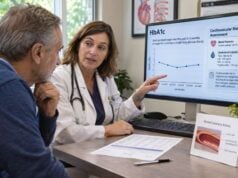
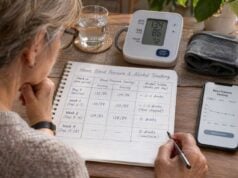
Prevention also works best when changes are measurable. Rather than relying on how healthy you feel, follow actual blood-pressure averages, lipid results, A1C or glucose when relevant, smoking status, activity level, and medication adherence. A fit appearance cannot show whether coronary plaque is developing. Men who have already had a heart attack need secondary prevention, which is more intensive than general wellness advice and usually includes medication plus lifestyle treatment.
Finally, prevention includes knowing what to do if symptoms ever occur. Keep a medication list available, know your local emergency number, and make sure household members know where an automated external defibrillator is located at work, the gym, or community facilities. Recognizing the classic signs is useful, but acting quickly is what turns recognition into better outcomes.
References
- 2025 ACC/AHA/ACEP/NAEMSP/SCAI Guideline for the Management of Patients With Acute Coronary Syndromes: A Report of the American College of Cardiology/American Heart Association Joint Committee on Clinical Practice Guidelines 2025 (Guideline)
- 2021 AHA/ACC/ASE/CHEST/SAEM/SCCT/SCMR Guideline for the Evaluation and Diagnosis of Chest Pain: A Report of the American College of Cardiology/American Heart Association Joint Committee on Clinical Practice Guidelines 2021 (Guideline)
- Symptoms of Infarction in Women: Is There a Real Difference Compared to Men? A Systematic Review of the Literature with Meta-Analysis 2022 (Systematic Review)
- High-Sensitivity Cardiac Troponin and the 2021 AHA/ACC/ASE/CHEST/SAEM/SCCT/SCMR Guidelines for the Evaluation and Diagnosis of Acute Chest Pain 2022 (Review)
- Myocardial Infarction Signs and Symptoms: Females vs. Males 2023 (Review)
Disclaimer
This article is for general education and is not a substitute for emergency evaluation or personal medical advice. If you have new chest pressure, shortness of breath, cold sweating, faintness, or another symptom pattern that could represent a heart attack, call emergency medical services now rather than driving yourself or relying on home testing. Treatment choices such as aspirin or nitroglycerin depend on individual medical history and should follow professional instructions.