A panic attack and a heart attack can feel frighteningly similar. Both can cause chest pressure or pain, a racing heart, shortness of breath, sweating, nausea, dizziness, and a sense that something is seriously wrong. The safest rule is that new, severe, unexplained, or unusual chest symptoms should be treated as a possible heart problem until a medical evaluation says otherwise. You cannot reliably rule out a heart attack based on age, anxiety history, or the fact that symptoms started during stress.
Some clues can make one cause more likely. Panic attacks often build rapidly with intense fear, hyperventilation, trembling, tingling, and a peak within minutes. Heart-attack discomfort is often described as pressure, squeezing, heaviness, or fullness and may spread to an arm, shoulder, jaw, back, or upper abdomen. But neither pattern is universal. Heart attacks can be subtle, and panic attacks can cause real chest pain. The key is knowing which features raise concern, when to call emergency services, and how clinicians distinguish the two safely.
Table of Contents
- Why Panic Attacks and Heart Attacks Feel Similar
- Key Differences and Overlapping Symptoms
- When to Call Emergency Services
- How Doctors Check for a Heart Attack
- What to Do While Symptoms Are Happening
- What to Do if the Cause Is Panic
- Common Mistakes to Avoid
Why Panic Attacks and Heart Attacks Feel Similar
Panic attacks and heart attacks activate some of the same body systems, which is why symptoms overlap. During panic, the brain’s threat response releases stress hormones such as adrenaline. Heart rate and breathing speed up, muscles tighten, sweating increases, and blood flow shifts. Hyperventilation can lower carbon dioxide in the blood, causing tingling, lightheadedness, chest tightness, and a feeling that breathing is difficult even when oxygen levels are normal.
A heart attack, or myocardial infarction, is different: part of the heart muscle is not getting enough blood, usually because a coronary artery is blocked. The heart and nervous system respond to that threat with pain or pressure, sweating, nausea, breathlessness, and a stress response. The person may also feel sudden fear or a sense of impending doom.
That shared physiology creates a dangerous misconception: people sometimes assume that fear means “just anxiety.” Fear can accompany a true heart attack. Likewise, chest pain during panic is physically real and can be intense.
Panic attacks are common enough that clinicians frequently see them in people presenting with chest symptoms. But panic disorder and coronary disease can also coexist. A history of panic attacks does not provide immunity from heart disease, and a previous normal cardiac test does not guarantee that every future episode is harmless.
If chest pain is new or different from your established pattern, the broader guide to common chest pain causes can help explain possibilities—but an article cannot safely diagnose an active episode.
Key Differences and Overlapping Symptoms
No single symptom can perfectly separate a panic attack from a heart attack. The most useful approach is to look at the whole pattern, including onset, triggers, type of discomfort, associated symptoms, duration, cardiovascular risk, and whether the episode resembles previous medically evaluated panic attacks.
| Feature | Panic attack may be more likely | Heart attack may be more likely |
|---|---|---|
| Onset | Often sudden and rapidly intensifies | Can be sudden or build over minutes |
| Chest sensation | Tightness, sharp pain, aching, or pressure | Pressure, squeezing, heaviness, fullness, burning, or pain |
| Fear | Often intense and central to the episode | Can also occur, especially with severe symptoms |
| Breathing | Rapid breathing, air hunger, tingling may occur | Shortness of breath may occur with or without chest discomfort |
| Radiation | Less typical, but pain can move | May spread to arm, shoulder, jaw, neck, back, or upper abdomen |
| Exertion | May happen at rest or during stress | Symptoms brought on by exertion are more concerning for cardiac ischemia |
| Tingling | Common in fingers, hands, feet, or around the mouth during hyperventilation | Not a classic heart-attack feature |
| Cold sweat, faintness | Can occur | Especially concerning when paired with pressure, breathlessness, or nausea |
A panic attack often reaches its most intense point within minutes. Symptoms may then ease gradually, although the person can remain shaky or exhausted for much longer. The National Institute of Mental Health notes that panic attacks can last from a few minutes to an hour or sometimes longer.
Heart-attack symptoms can also wax and wane. Discomfort may last more than a few minutes, disappear, and return. Therefore, “it went away” does not prove it was anxiety.
Age and risk factors change probability but not the emergency rule. Heart attack is more likely in people with known coronary artery disease, diabetes, smoking history, high blood pressure, high LDL cholesterol, chronic kidney disease, or a strong family history. Still, younger adults can have heart attacks, and older adults can have panic attacks.
Symptoms can also differ by person. Some heart attacks cause little or no classic chest pain. Women, older adults, and people with diabetes may present with shortness of breath, nausea, unusual fatigue, back or jaw discomfort, weakness, or dizziness. The separate guides to heart attack symptoms in women and heart attack symptoms in men cover these patterns in more detail.
Several commonly repeated “tests” are less useful than they sound. Pain that changes with a deep breath, position, or movement can point toward a non-cardiac cause, but it does not absolutely exclude a heart problem. Tenderness when you press on the chest wall makes a muscle or rib source more likely, yet a person can have chest-wall tenderness and coronary disease at the same time. Relief after an antacid is also not a reliable rule-out test because reflux and cardiac ischemia can feel similar and symptoms may improve coincidentally.
The trigger deserves special weight. Chest pressure that repeatedly appears with walking uphill, carrying groceries, climbing stairs, or other exertion and improves with rest is concerning for myocardial ischemia, even if the person also feels anxious. Panic can happen during exercise too, but a reproducible exertional pattern should be medically evaluated rather than “tested” by pushing through another workout. New symptoms at rest can also be cardiac, especially when they are prolonged, recurrent, or accompanied by sweating, nausea, or breathlessness.
Risk factors change the odds, not the definition of an emergency. A 30-year-old with no known risk factors is statistically less likely to have a heart attack than a 70-year-old with diabetes and prior coronary disease, but neither age nor fitness can make a new severe chest syndrome safe to diagnose at home. Family history, smoking, stimulant use, pregnancy-related complications, autoimmune disease, and inherited cholesterol disorders can also matter in younger adults.
When to Call Emergency Services
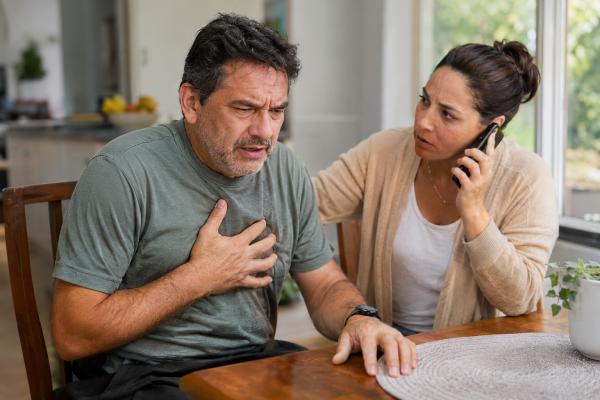
Call your local emergency number immediately for new or unexplained chest pressure, squeezing, heaviness, or pain, especially when it lasts more than a few minutes, returns after easing, or occurs with other warning signs.
Emergency evaluation is particularly important when chest symptoms occur with:
- Shortness of breath.
- Cold sweating or clammy skin.
- Nausea or vomiting.
- Fainting or near-fainting.
- Pain or discomfort spreading to the arm, shoulder, jaw, neck, back, or upper abdomen.
- Sudden unusual weakness or profound fatigue.
- A new irregular, very fast, or very slow heartbeat.
- Symptoms triggered by physical exertion.
- A history of coronary artery disease, prior heart attack, stent, or bypass surgery.
- Multiple cardiovascular risk factors.
Also call if the episode is different from prior panic attacks, if you have never been medically evaluated for similar chest symptoms, or if you cannot confidently explain what is happening.
Do not wait for severe pain. Heart attacks are not always dramatic. A person can have mild pressure, indigestion-like discomfort, breathlessness, or nausea and still be having a serious cardiac event. The CDC emphasizes that the sooner blood flow is restored, the less heart muscle may be damaged.
Symptoms during sleep also deserve the same caution. Both panic attacks and heart attacks can wake someone suddenly. Waking with terror and a racing heart may fit nocturnal panic, but chest pressure, breathlessness, sweating, or nausea that is new or unexplained should not be dismissed simply because it happened at night.
Emergency medical services are preferable to driving yourself. Paramedics can begin assessment and treatment on the way to the hospital, and symptoms can worsen suddenly while driving. For a more detailed red-flag checklist, see when to go to the ER for chest pain.
If symptoms begin while you are alone, unlock the door if it is safe, keep your phone with you, and sit or lie somewhere you are unlikely to fall. Do not spend extra time packing a bag, finishing chores, or arranging your own transport before calling. For someone who becomes unresponsive and is not breathing normally, a bystander should call emergency services and begin CPR according to dispatcher guidance; an automated external defibrillator should be used if one is available.
How Doctors Check for a Heart Attack
Clinicians do not diagnose a heart attack from symptom descriptions alone. They combine the history with objective testing.
The first test is usually a 12-lead electrocardiogram (ECG), which can show patterns of reduced blood flow, an acute coronary blockage, or another rhythm problem. A normal first ECG does not rule out every heart attack, so repeat ECGs may be needed if symptoms continue or risk remains concerning.
Blood tests measure cardiac troponin, a protein released when heart muscle is injured. Modern high-sensitivity troponin tests can detect small amounts of injury, but timing matters. An early result may be normal before troponin rises, so emergency departments often use repeat measurements over a defined period.
Depending on the findings, evaluation may also include:
- Continuous heart-rhythm monitoring.
- Chest imaging to look for other dangerous causes.
- Echocardiography.
- Coronary CT angiography in selected patients.
- Stress testing after acute heart attack has been ruled out in appropriate cases.
- Cardiology consultation or invasive coronary angiography when risk is high.
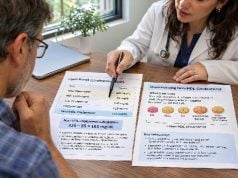
The 2021 AHA/ACC chest-pain guideline recommends structured risk assessment rather than labeling pain “typical” or “atypical” and assuming the latter is safe. Symptoms, ECG findings, troponin values, age, medical history, and other data help determine whether a person is low, intermediate, or high risk.
Troponin testing is especially important because a single value must be interpreted in context. High-sensitivity assays can detect heart-muscle injury early, but clinicians often look at both the absolute level and whether it changes over time. An elevated troponin does not always mean a heart attack from a blocked artery; myocarditis, severe tachycardia, heart failure, pulmonary embolism, kidney disease, and other illnesses can also raise it. Conversely, a very early normal value may need a repeat test before acute myocardial infarction can be excluded.
A normal emergency evaluation is reassuring for the episode that was assessed, but it is not a lifetime guarantee. If a future episode is clearly different—more intense, longer, triggered by exertion, associated with fainting, or accompanied by new neurologic or breathing symptoms—it deserves fresh assessment. This is particularly important for someone whose earlier chest pain was attributed to panic after a thorough workup. The diagnosis of panic should reduce unnecessary fear, not create a rule that every future chest sensation must be anxiety.
Panic becomes more likely after dangerous medical causes have been reasonably excluded and the symptom pattern fits panic. That sequence matters. In an emergency setting, the correct question is not “Does this look anxious?” but “Could this still be acute coronary syndrome or another serious condition?”
What to Do While Symptoms Are Happening
If heart attack is possible, prioritize emergency care rather than trying to prove to yourself that the episode is panic.
- Stop what you are doing and rest. Sit in a safe position.
- Call emergency services for concerning symptoms. Do not drive yourself if a heart attack is a realistic possibility.
- Follow dispatcher instructions. Do not delay the call while searching online, checking repeated smartwatch readings, or trying home remedies.
- Use prescribed emergency medication only as directed. If you have nitroglycerin or another rescue medicine for known heart disease, follow your existing medical plan.
If you have already been medically evaluated for recurring panic attacks and the current episode is clearly identical to your established pattern without new red flags, calming strategies may help while you monitor symptoms. Slow the breathing rather than taking repeated deep breaths. A useful pattern is a gentle inhale through the nose followed by a longer, relaxed exhale. Drop the shoulders, unclench the jaw, and focus attention on a neutral object or physical sensation outside the chest.
Avoid breathing rapidly into a paper bag. That old advice can be unsafe because shortness of breath can result from heart, lung, or metabolic problems, not just hyperventilation.
If emergency services have been called, avoid eating, drinking large amounts, or taking someone else’s medication while waiting. Aspirin is often used for suspected acute coronary syndrome, but it is not appropriate for everyone because allergy, active bleeding, certain anticoagulants, or another diagnosis may change the advice. Follow the emergency dispatcher’s instructions rather than using a one-size-fits-all home protocol.
If the episode is a known panic pattern and no emergency features are present, aim for slower, quieter breathing rather than maximum inhalations. Repeated “deep breaths” can worsen hyperventilation if each breath is too large. A gentle inhale for roughly three to four seconds and a relaxed exhale for four to six seconds is one practical pattern; comfort matters more than hitting an exact count. The goal is to stop over-breathing and reduce the body’s alarm response, not to force the heart rate down instantly.
Caffeine, nicotine, decongestants, and stimulant drugs can intensify palpitations and panic-like symptoms. If attacks recur, reducing triggers may help, but recurrent chest symptoms still deserve an appropriate medical assessment before they are attributed to anxiety.
What to Do if the Cause Is Panic
A medically reassuring heart evaluation is useful, but repeated panic attacks still deserve treatment. Panic attacks can become self-reinforcing: a heartbeat change or chest sensation triggers fear, the fear increases adrenaline and breathing rate, and the stronger body sensations then seem to confirm that something catastrophic is happening.
Panic disorder is considered when a person has recurrent unexpected panic attacks plus ongoing worry about another attack or significant behavior changes, such as avoiding exercise, driving, stores, or being alone. The NIMH notes that this pattern typically persists for at least a month before panic disorder is diagnosed.
Cognitive behavioral therapy (CBT) is one of the best-supported treatments. It teaches people to reinterpret bodily sensations more accurately, reduce avoidance, and gradually face feared sensations or situations. Interoceptive exposure is a CBT technique that safely recreates sensations such as a fast heartbeat or dizziness so they become less frightening.
Medication can also help. SSRIs and SNRIs are common long-term options. Benzodiazepines may reduce acute anxiety quickly but can cause tolerance and dependence and are generally not the preferred long-term strategy for most people. Treatment should be individualized, especially when heart disease, blood-pressure problems, pregnancy, substance use, or other medical conditions are present.
For practical explanations of anxiety-related chest sensations, see panic, anxiety, and chest tightness.
Common Mistakes to Avoid
The biggest mistake is using one “reassuring” feature to dismiss a possible heart attack. Being young, having a history of anxiety, feeling tingling, or having symptoms during emotional stress does not safely exclude cardiac disease.
Other common errors include:
- Assuming sharp pain cannot be cardiac. Heart-related discomfort can be described in many ways.
- Assuming panic must have an obvious trigger. Panic attacks can occur unexpectedly, including during sleep.
- Assuming a heart attack always causes crushing pain. Some cause pressure, breathlessness, nausea, fatigue, or mild discomfort.
- Waiting for a smartwatch ECG to decide. Consumer devices cannot rule out a heart attack.
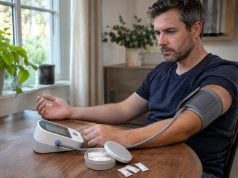
- Relying on one normal blood-pressure or heart-rate reading. Heart attacks can occur with normal vital signs.
- Self-diagnosing repeated chest pain as anxiety without evaluation. Panic and heart disease can coexist.
- Repeatedly seeking emergency testing without treating confirmed panic disorder. Once dangerous causes have been appropriately excluded, effective panic treatment can reduce future distress and unnecessary emergency visits.
The safest distinction is not made by memorizing a symptom checklist. It is made by respecting red flags, using emergency evaluation when the presentation could be cardiac, and treating panic properly when medical causes have been excluded.
References
- 2021 AHA/ACC/ASE/CHEST/SAEM/SCCT/SCMR Guideline for the Evaluation and Diagnosis of Chest Pain: A Report of the American College of Cardiology/American Heart Association Joint Committee on Clinical Practice Guidelines 2021 (Guideline)
- About Heart Attack Symptoms, Risk, and Recovery 2024 (Official Page)
- Panic Disorder: What You Need to Know 2025 (Official Page)
- Panic disorder in general medical practice- A narrative review 2022 (Review)
- Psychosocial treatment for panic disorder: An umbrella review of systematic reviews and meta-analyses. 2022 (Umbrella Review)
Disclaimer
This article is for general education and cannot distinguish an active panic attack from a heart attack. New, severe, unexplained, exertional, or unusual chest discomfort—especially with shortness of breath, sweating, nausea, fainting, or pain spreading to the arm, jaw, back, or shoulder—requires urgent medical assessment. If a heart attack may be occurring, call your local emergency number rather than driving yourself or waiting for symptoms to pass.