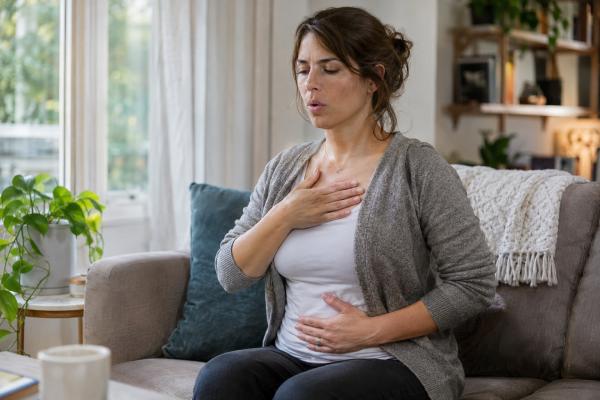
Anxiety can make the chest feel tight, heavy, sore, “air hungry,” or difficult to expand even when the heart and lungs are functioning normally. The sensation usually comes from a combination of the body’s stress response, tense chest and shoulder muscles, faster breathing, and increased attention to normal heartbeat and breathing sensations. During a panic attack, those changes can happen abruptly and feel so intense that many people fear a heart attack.
Chest tightness should not automatically be blamed on anxiety, especially when it is new, severe, exertional, or accompanied by fainting, marked shortness of breath, cold sweating, nausea, or pain spreading to the arm, jaw, shoulder, or back. Once urgent medical causes have been excluded, however, anxiety-related chest symptoms are real and treatable. The fastest way to calm them is usually not to force bigger breaths, but to slow the breathing pattern, reduce muscle tension, and interrupt the fear-sensation-fear cycle. Longer-term treatment focuses on panic and anxiety themselves so the chest sensations become less frequent and less frightening.
Table of Contents
- Why Anxiety Makes the Chest Feel Tight
- What Anxiety-Related Chest Tightness Can Feel Like
- When Chest Tightness Needs Urgent Care
- How to Calm Anxiety-Related Chest Tightness
- Common Triggers That Keep the Cycle Going
- Long-Term Treatment for Panic and Anxiety
- A Practical Plan for Recurrent Symptoms
Why Anxiety Makes the Chest Feel Tight
Anxiety does not create one single “chest symptom.” Several body processes can happen at the same time.
The fight-or-flight response
When the brain interprets danger—whether the threat is external or comes from a frightening body sensation—it activates the sympathetic nervous system. Adrenaline increases heart rate and contraction strength, breathing speeds up, sweating increases, and muscles prepare for action. The chest can feel tight simply because the muscles between the ribs, the diaphragm, shoulders, neck, and upper back are bracing.
This reaction is useful when you need to escape a real danger. During panic, the same system can switch on when no immediate physical threat is present.
Hyperventilation changes body chemistry
People often think hyperventilation means “breathing very deeply,” but it really means breathing more than the body’s current metabolic needs. Rapid or repeated large breaths can lower carbon dioxide in the blood. That change may produce dizziness, tingling, numbness, a sense of unreality, trembling, hand cramping, and chest tightness.
A person may then try to take even bigger breaths because the chest feels unsatisfying. That can worsen the cycle. The sensation is often described as air hunger: you can breathe, but no breath feels complete enough.
Heartbeat awareness increases
Anxiety makes people more aware of internal body signals, a process called interoception. A normal increase in heart rate, one skipped beat, or the movement of the chest wall can suddenly feel highly significant. Focusing on the sensation tends to amplify it.
The brain may then interpret a harmless sensation as evidence of danger: “My heart feels different, so something must be wrong.” That thought increases adrenaline, which makes the heartbeat more noticeable, reinforcing the fear.
Pain and tension can feed each other
Tight pectoral, rib, neck, or shoulder muscles can produce aching or sharp pain that changes with movement or touch. Stress can also aggravate reflux or esophageal spasm, which may cause burning or pressure behind the breastbone. These sensations can trigger more anxiety even when the original cause is not cardiac.
The article on heartburn, anxiety, muscle strain, and heart-related chest pain explains these overlapping causes in more detail.
What Anxiety-Related Chest Tightness Can Feel Like
Anxiety-related chest symptoms vary widely. Some people feel a band around the chest. Others describe heaviness, a lump in the chest or throat, stabbing pains, a burning sensation, fluttering, or an inability to take a satisfying breath.
Common accompanying symptoms include:
- Racing or pounding heartbeat.
- Trembling or shaking.
- Sweating or chills.
- Dizziness or lightheadedness.
- Tingling in the hands, feet, face, or around the mouth.
- Nausea or stomach discomfort.
- A choking sensation or throat tightness.
- Feeling detached, unreal, or out of control.
- Fear of fainting, dying, or having a heart attack.
A panic attack usually rises rapidly and may peak within minutes, although residual symptoms can last much longer. The National Institute of Mental Health notes that panic attacks may last from a few minutes to an hour or sometimes longer.
Anxiety chest tightness can also be less dramatic and more persistent. Chronic stress may leave the upper body tense for hours, especially during desk work, driving, conflict, or poor sleep. In that situation, the person may notice soreness more than sudden panic.
Certain clues can support an anxiety explanation after serious causes have been considered. Symptoms may occur during emotional stress, improve as breathing slows, come with bilateral tingling, or resemble previous medically evaluated panic episodes. But none of these clues is strong enough to rule out heart or lung disease during a new event.
One reason the sensation is so convincing is that oxygen levels can be normal while breathing still feels “wrong.” Hyperventilation changes carbon dioxide and breathing mechanics rather than necessarily lowering oxygen. A person may repeatedly sigh, yawn, or try to fill the lungs to the maximum and still feel unsatisfied. That mismatch between normal oxygen delivery and uncomfortable breathing can itself become frightening.
Chest-wall muscle pain can add to the confusion. Hours of shallow breathing, shoulder elevation, or bracing can leave the ribs and pectoral muscles tender after the peak anxiety has passed. The next small twinge may then restart the fear cycle. If discomfort is persistent, new, or unexplained, it still deserves medical assessment; muscle tenderness is a clue, not proof that the heart and lungs are uninvolved.
A history of panic attacks helps provide context, but it should not become a shortcut that dismisses every future chest symptom. If the current episode feels different, lasts longer, occurs with exertion, or includes new red flags, it deserves reassessment.
When Chest Tightness Needs Urgent Care
Treat new, severe, unexplained, or unusual chest pressure or tightness as potentially serious until assessed. Call your local emergency number if chest discomfort lasts more than a few minutes, returns after improving, or occurs with warning signs such as:
- Shortness of breath that is severe or new.
- Cold sweating or clammy skin.
- Nausea or vomiting.
- Fainting or near-fainting.
- Pain or pressure spreading to one or both arms, the shoulder, jaw, neck, back, or upper abdomen.
- Sudden profound weakness.
- A sustained very fast, very slow, or clearly irregular heartbeat.
- Symptoms that begin with physical exertion.
- New chest symptoms in someone with known coronary artery disease, prior heart attack, stent, or bypass surgery.
Heart attacks do not always cause dramatic “crushing” pain. Some present with breathlessness, nausea, fatigue, or milder pressure. Women, older adults, and people with diabetes may have less classic symptoms.
If you are uncertain whether an episode is panic or a heart attack, err on the side of emergency evaluation. The guide to panic attack vs heart attack explains the overlap and emergency warning signs, while when to go to the ER for chest pain provides a broader triage checklist.
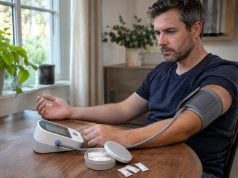
Do not use a smartwatch, pulse oximeter, blood-pressure cuff, or one normal heart-rate reading as proof that the heart is fine. These tools can provide useful information, but they cannot exclude acute coronary syndrome, pulmonary embolism, myocarditis, dangerous arrhythmia, or other serious causes of chest symptoms.
How to Calm Anxiety-Related Chest Tightness
Use calming techniques only when emergency causes are not suspected or after a clinician has already evaluated similar episodes. The goal is to reduce overbreathing and muscle bracing without turning breathing into another performance test.
1. Make the exhale slower, not the inhale bigger
A common mistake is repeatedly taking huge “rescue breaths.” That can worsen hyperventilation. Instead, breathe gently through the nose if comfortable and let the exhale be slightly longer than the inhale.
For example, try a quiet 3- to 4-second inhale followed by a relaxed 5- to 6-second exhale for several minutes. The exact count matters less than keeping the breathing smooth, comfortable, and slower than the panicked pattern. Stop counting if the counting itself increases anxiety.
Research on breathwork suggests that regulated breathing can reduce stress and anxiety, but effects vary by method and person. Brief techniques are most useful when they feel natural rather than forced.
2. Release the muscles that are bracing
Drop the shoulders away from the ears. Unclench the jaw. Let the abdomen soften instead of holding it rigid. Gently roll the shoulders or stretch the chest if movement does not increase pain.
A useful check is to ask, “Am I holding my breath or trying to keep my chest perfectly still?” Many people tense automatically when they fear a symptom.
3. Move attention outside the chest
Constantly checking the heartbeat can amplify normal sensations. Shift attention to neutral external information: name five things you can see, four you can feel, three you can hear, or describe one object in detail. This is not meant to “distract yourself from danger”; it is a way to reduce excessive internal monitoring once urgent danger is not suspected.
4. Use accurate self-talk
Avoid arguing with yourself in absolute terms such as “There is definitely nothing wrong.” A more credible statement is: “This sensation is familiar, I have been medically evaluated for this pattern, and anxiety can create strong chest symptoms. I can let my breathing slow while I watch for anything new.”
5. Do not use a paper bag
Paper-bag breathing is outdated and can be unsafe if shortness of breath is caused by a heart, lung, or metabolic problem rather than hyperventilation. Slow breathing in normal room air is safer.
Calming does not have to be immediate to be working. Adrenaline may take time to settle, and muscles can remain sore or shaky after breathing returns to normal. A useful goal is a gradual downward trend in fear, breathing rate, and muscle tension over 10–20 minutes, not instant disappearance of every sensation. Trying to force the symptoms to zero can keep attention locked on the chest and prolong the episode.
It can also help to change posture without repeatedly checking the pulse. Sit with the feet supported, rest the forearms on the thighs or chair arms, and allow the upper chest to soften. If walking slowly feels comfortable and the episode is a familiar, medically evaluated panic pattern, gentle movement may burn off some of the adrenaline. Stop and seek care if movement brings on worsening pressure, breathlessness, faintness, or other new warning signs.
Common Triggers That Keep the Cycle Going
Panic and chest tightness can become easier to trigger when the nervous system is already activated. Sleep loss, stimulants, dehydration, illness, and chronic stress can all lower the threshold for symptoms.
Caffeine is a frequent contributor. Coffee, energy drinks, pre-workout powders, some teas, chocolate, and certain pain medicines can increase heart rate, tremor, and alertness. People who are sensitive to caffeine may interpret these effects as the beginning of panic. The article on caffeine sensitivity, anxiety, and heart rate explains why the same dose affects people differently.
Nicotine can also increase heart rate and sympathetic activity. Decongestants such as pseudoephedrine and stimulant medications can worsen palpitations in susceptible people. Recreational stimulants can be more dangerous and can cause true cardiac emergencies.
Alcohol may feel calming at first but can worsen sleep, cause dehydration, and produce rebound anxiety as it wears off. Heavy drinking and withdrawal can also provoke dangerous rhythm problems.
Poor sleep increases emotional reactivity and makes ordinary body sensations feel more threatening. Dehydration can cause a faster pulse and dizziness, which may be mistaken for panic.
Finally, avoidance can reinforce the problem. If someone stops exercising because a faster heartbeat feels dangerous, normal exertional sensations become less familiar and more frightening. Deconditioning can then make the heart rate rise more with simple activity, feeding the belief that something is wrong.
Once a clinician has cleared exercise and no cardiac restriction is present, gradually returning to activity can help rebuild confidence in normal body sensations.
Body checking can become a trigger of its own. Repeatedly measuring heart rate, blood pressure, oxygen saturation, or taking smartwatch ECGs may provide a few seconds of reassurance, followed by another urge to check. When a clinician has already evaluated the recurring pattern, reducing unnecessary checking can be part of recovery. Keep enough information to notice a meaningful change, but avoid turning every normal fluctuation into a test.
Meals and reflux can also matter. Large, late, spicy, or high-fat meals may increase heartburn or pressure behind the breastbone, and caffeine or alcohol can worsen both reflux and anxiety. If symptoms repeatedly follow meals, discussing reflux and other gastrointestinal causes may be more useful than assuming every episode is panic.
Long-Term Treatment for Panic and Anxiety
If chest tightness is recurring because of panic, the best long-term strategy is to treat the panic rather than repeatedly trying to suppress each episode.
Cognitive behavioral therapy (CBT) has strong evidence for panic disorder. CBT helps people identify catastrophic interpretations, reduce avoidance, and respond differently to body sensations. A 2023 systematic review and network meta-analysis found that individual, group, and guided self-help CBT formats can all be effective.
A particularly useful technique is interoceptive exposure. Under guidance, the person intentionally creates safe versions of feared sensations—for example, a temporarily faster heartbeat, lightheadedness, or breathlessness—so the brain learns that the sensations do not automatically signal catastrophe. This can reduce fear of exercise, stairs, crowded places, or being far from medical help.
Medication is another option. SSRIs and SNRIs are commonly used for panic disorder and other anxiety disorders. They usually take several weeks to have their full effect and can cause temporary side effects when started. Benzodiazepines can reduce acute anxiety quickly but carry risks of sedation, tolerance, and dependence, so they are usually not the best stand-alone long-term plan.
Treatment can also address chronic stress, sleep, substance use, and depression. Regular physical activity, when medically safe, improves overall anxiety for many people and helps make normal increases in heart rate and breathing feel less threatening.
Stress management is also relevant to cardiovascular health. Chronic stress does not mean every chest sensation is cardiac, but persistent stress can influence blood pressure, sleep, behavior, and other risk factors. See chronic stress and heart disease risk for the broader cardiovascular picture.
A Practical Plan for Recurrent Symptoms
When chest tightness keeps returning, a written plan can reduce both medical risk and panic-driven uncertainty.
- Define your emergency red flags. Know which new symptoms mean “call now” rather than “try another breathing exercise.”
- Get the pattern medically evaluated. New or unexplained chest symptoms deserve an assessment before being labeled anxiety.
- Track context, not every heartbeat. Note triggers, duration, exertion, caffeine, sleep, and associated symptoms rather than repeatedly checking vital signs.
- Practice slow breathing when calm. Skills are easier to use during panic if they are familiar beforehand.
- Reduce obvious triggers. Experiment with less caffeine, nicotine, energy drinks, and stimulant decongestants if they worsen symptoms.
- Treat panic directly. Recurrent attacks, avoidance, or persistent fear of another episode are good reasons to discuss CBT and medication options with a qualified clinician.
If the pattern changes, start the medical assessment again rather than forcing the new symptoms into an old anxiety explanation. Panic is common and treatable, but it should be a diagnosis supported by the overall picture—not a label used to dismiss chest symptoms.
The encouraging part is that anxiety-related chest tightness often becomes less intense once the person understands the mechanism. A tight chest can result from adrenaline, muscle tension, overbreathing, and heightened body awareness. Slowing the respiratory pattern, releasing muscle tension, and reducing catastrophic interpretation can interrupt that loop. When attacks recur, CBT and other evidence-based treatments can make those skills much more durable.
Progress is often measured by function as much as by symptom count. Being able to exercise again, drive, sleep, work, or stay in a store without escaping can be a meaningful sign that treatment is working even if occasional chest sensations still occur. The goal is not to eliminate every heartbeat or twinge; it is to respond to familiar sensations without escalating them while still respecting genuinely new warning signs.
References
- Panic Disorder: What You Need to Know 2025 (Official Page)
- CBT treatment delivery formats for panic disorder: a systematic review and network meta-analysis of randomised controlled trials 2023 (Systematic Review and Network Meta-Analysis)
- Breathing Practices for Stress and Anxiety Reduction: Conceptual Framework of Implementation Guidelines Based on a Systematic Review of the Published Literature 2023 (Systematic Review)
- Effect of breathwork on stress and mental health: A meta-analysis of randomised-controlled trials 2023 (Meta-Analysis)
- 2021 AHA/ACC/ASE/CHEST/SAEM/SCCT/SCMR Guideline for the Evaluation and Diagnosis of Chest Pain: A Report of the American College of Cardiology/American Heart Association Joint Committee on Clinical Practice Guidelines 2021 (Guideline)
Disclaimer
This article is for general education and cannot determine the cause of active chest tightness. New, severe, exertional, or unexplained chest symptoms—especially with marked shortness of breath, sweating, nausea, fainting, or pain spreading to the arm, jaw, shoulder, or back—require urgent medical assessment. Do not use breathing exercises to delay emergency care when a heart or lung problem may be present.