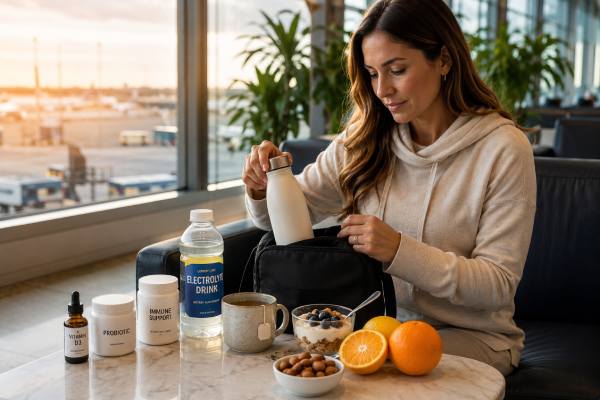
Flying puts several small stressors on the body at once. Airports concentrate large numbers of people, flight schedules disrupt sleep, cabin air is dry, meals become irregular, and long stretches of sitting make it easier to ignore thirst until you already feel depleted. None of that guarantees you will get sick, but together these factors can make travel feel harder on your system than an ordinary day at home.
That is why immune support when flying is best understood as a practical travel strategy, not a search for one miracle product. The goal is to reduce avoidable strain, lower exposure where you can, and make choices that help your body recover instead of working against it. This article explains which foods are most useful before and during flights, how hydration really fits in, which supplements may help in specific situations, and which popular travel “immune hacks” deserve more caution than confidence.
Quick Overview
- The most reliable travel immune habits are steady hydration, sensible food choices, better sleep protection, and exposure reduction in crowded indoor spaces.
- Protein, fiber, and easy-to-tolerate foods help more during travel than sugary airport snacks or long gaps without eating.
- Hand hygiene, masks in higher-risk settings, and being up to date on key vaccines often matter more than travel supplement stacks.
- Dry cabin air, alcohol, and too much caffeine can worsen how depleted you feel during and after a flight.
- A simple plan works best: eat before long travel days, carry a water bottle, pack one real snack, and use supplements only when you have a clear reason for them.
Table of Contents
- What Flying Does to Your Body
- Best Foods Before and During Flights
- Hydration That Actually Helps
- Supplements That May Make Sense
- Reducing Exposure While Traveling
- Recovery After the Flight
What Flying Does to Your Body
Flying does not weaken the immune system in one simple, dramatic way, but it does create a cluster of conditions that can make you feel more vulnerable. Travel days compress crowds, time pressure, disrupted meals, sleep loss, low cabin humidity, and long stretches of sitting into a single experience. When people say they “always get sick after flying,” the flight itself is often only part of the story. The larger issue is the combination of exposure and under-recovery.
Air travel exposes you to several types of stress at once. Airports bring you into close contact with many people from many places. Boarding, deplaning, and waiting areas are often more crowded than the time spent seated in the air. Cabin ventilation on commercial aircraft is better than many people assume, but that does not erase the risk created by close proximity, shared surfaces, and long travel days. Exposure can happen through the air, by direct contact, or by moving germs from hands to eyes, nose, or mouth.
At the same time, travel itself disrupts the body’s recovery cues. Wake times may shift abruptly. Breakfast may become coffee and a pastry grabbed at the gate. Water intake drops because people do not want to use the restroom on the plane. Alcohol feels tempting during delays. By the time you land, the body may be dealing with dry airways, poor sleep, mild dehydration, and a higher exposure burden than usual.
This is why the right framework is not “How do I boost my immune system before a flight?” It is “How do I reduce the travel-related factors that make recovery harder?” That is a much more useful version of immune resilience. Resilience means the body can handle stress and return to balance. Flying becomes more manageable when you support that recovery process instead of expecting one pill or juice shot to do all the work.
The main travel-related pressures usually include:
- crowded indoor environments before and after the flight
- disrupted sleep timing and jet lag
- dry cabin air and airway irritation
- lower-than-usual fluid intake
- long gaps without balanced meals
- extra alcohol or caffeine
- reduced movement
- more face touching after high-contact surfaces
This is also why people with already demanding schedules tend to feel flights more intensely. A traveler who boards already under-slept and underfed is starting from a weaker position than someone who entered the day rested and prepared. The good news is that many of the most useful immune-supportive travel habits are low-tech. They are mostly about reducing predictable strain.
Once you understand that flying is less a single threat and more a stack of ordinary stressors, the rest of the strategy becomes clearer. Food, hydration, sleep timing, exposure reduction, and post-flight recovery all start to matter in practical, concrete ways.
Best Foods Before and During Flights
The best foods for immune support when flying are not exotic. They are steady, portable, and easy to digest. Travel days often go wrong nutritionally in a predictable pattern: too little protein, too much refined carbohydrate, long gaps without real food, and a scramble for expensive airport snacks when hunger is already high. That combination does not just affect energy. It can make you more irritable, more dehydrated, and more likely to rely on caffeine or sugar instead of a real meal.
A better plan starts before you leave. Eating a balanced meal before a long travel day lowers the chance that you will board already depleted. The most helpful pre-flight meals usually include protein, fiber, and some carbohydrate. That might be eggs and toast with fruit, Greek yogurt with oats and nuts, a grain bowl with beans or chicken, or a sandwich with protein and vegetables. You do not need a special “immune meal.” You need one that keeps you steady.
During travel, portability matters. Foods that survive delays, security lines, and awkward gate-area timing tend to work best. Useful examples include:
- nuts and seeds
- roasted chickpeas or edamame
- whole fruit such as apples, oranges, or bananas
- yogurt if you can keep it cool
- cheese sticks or hard cheese
- whole-grain crackers
- protein bars with moderate sugar
- sandwiches or wraps with simple ingredients
- oatmeal cups if hot water is available
The reason these foods help is simple. They reduce the need to rely on candy, pastries, chips, or very salty convenience food that leaves you thirstier and less satisfied. They also make it easier to maintain a steadier eating rhythm, which matters more on travel days than people sometimes realize. Long gaps without food can turn a manageable itinerary into a shaky, headachy, poor-decision day.
Fiber also deserves more attention in travel planning. A higher-fiber pattern can support steadier digestion and a healthier gut environment, which matters because the gut and immune system are closely linked. This does not mean you should suddenly eat a massive bean-heavy meal right before takeoff if your digestion is sensitive. It means that consistently choosing foods aligned with stronger everyday immune nutrition and gut-supportive fiber intake is more useful than chasing a single “immune superfood” at the airport.
A few food mistakes are worth avoiding:
- Skipping meals and hoping snacks will be enough
- Relying only on sweets or pastries
- Choosing very greasy meals right before boarding
- Overdoing salty packaged foods without increasing fluids
- Treating alcohol like hydration or recovery support
If you have a sensitive stomach, the best travel foods are usually simple and familiar. If you are crossing time zones, lighter meals may also feel better than heavy restaurant meals timed far outside your usual rhythm. In most cases, the right strategy is not to optimize every bite. It is to avoid the common travel pattern of underfueling, over-snacking, and arriving more drained than necessary.
Hydration That Actually Helps
Hydration is one of the most useful and least glamorous parts of immune support when flying. It does not prevent every illness, but it can make travel feel noticeably easier on the body. Dry cabin air, long travel days, caffeinated drinks, alcohol, and missed drink opportunities all make it easier to finish a flight more depleted than you expected.
This matters for a few reasons. When fluid intake falls, people often notice headache, dry mouth, irritability, constipation, or general travel fatigue before they think of thirst. Dry air can also make the nose and throat feel more irritated, which may increase discomfort during and after a flight. That does not mean dehydration directly “causes” infection. It means that good hydration helps maintain comfort, supports normal mucus function, and reduces the sense that your body has been scraped down by the travel day.
A simple hydration plan works better than heroic catch-up. Drink before you are thirsty, not only when you already feel off. Carry a refillable bottle through the airport and fill it after security. Take a few sips regularly rather than trying to chug large amounts at once. If you are someone who tends to avoid fluids to skip airplane restroom trips, it helps to recognize the tradeoff clearly: comfort in the moment often means feeling worse later.
A practical approach looks like this:
- Start the day with water, not only coffee
- Drink before boarding, because service may be delayed
- Sip regularly during the flight
- Increase fluid attention if you are drinking alcohol or a lot of caffeine
- Rehydrate again after landing, especially if travel continues on arrival day
Electrolytes can help in certain situations, but they are not necessary for every flight. They make more sense if travel includes heat exposure, vomiting, diarrhea, unusual sweating, or an especially long day with poor intake. For most ordinary flights, plain water plus normal meals is enough. Overcomplicating hydration can make it feel harder than it is.
Travelers who want a deeper view of how low fluid intake affects how they feel may find the broader logic of hydration and vulnerability helpful. The key idea is not that water is an immune treatment. It is that underhydration quietly worsens several of the things people already dislike about flying.
What usually works against hydration?
- repeated coffee without water alongside it
- alcohol before or during the flight
- very salty packaged airport foods
- assuming one drink service is enough
- waiting until the end of the travel day to notice you feel dry or headachy
Hydration also becomes more important if you are sick, recovering, or prone to headaches when traveling. In those cases, what helps most is often boring and effective: water, easy food, and avoiding the belief that one sugary “wellness drink” can compensate for a dry day.
For most travelers, the best hydration strategy is not fancy. It is consistent. That is exactly why it works.
Supplements That May Make Sense
Supplements are often treated as the main event in travel immune support, but they are usually a secondary tool. The strongest travel protections still come from sleep, hand hygiene, air-aware behavior, hydration, and staying current with recommended vaccines. Supplements can sometimes support those basics, but they do not replace them.
The most sensible time to use a supplement is when it solves a specific problem. Someone with a known vitamin D deficiency may already have a clinician-recommended plan. A traveler who struggles to eat enough protein on the road may benefit from a portable protein option. A person prone to travel-related nausea may find ginger useful. That is a very different mindset from buying a large stack of “travel immune” products and hoping the combination covers everything.
This is where the broader reality of immune support supplements matters. Many travel formulas sound useful because they combine several familiar ingredients, but more ingredients do not automatically mean more benefit. They often mean more overlap, more expense, and a higher chance of stomach upset or medication interactions.
A few supplement categories may come up often in travel planning:
- Vitamin D: useful when deficiency or low status is likely, not as an instant pre-flight shield
- Zinc: may have a role in some short-term situations, but dose and duration matter and overuse can backfire
- Vitamin C: generally safe in moderate amounts, but not a guarantee against getting sick
- Probiotics: may make sense in selected digestive or antibiotic-related scenarios, though they are not universally necessary
- Ginger: often more practical for mild nausea or throat comfort than for direct infection prevention
Someone who wants to explore the most common travel-adjacent nutrients often benefits from understanding the tradeoffs among vitamin D, zinc, and vitamin C rather than assuming all three must be taken at once. Likewise, a traveler considering a spicy ginger shot or capsule may get more from the symptom-focused logic behind ginger use and safety than from vague “immune boosting” claims.
The biggest supplement mistakes in travel are familiar:
- starting multiple new products right before a trip
- stacking overlapping formulas without adding up the doses
- using supplements instead of meals, sleep, or hydration
- assuming “natural” means risk-free
- ignoring medication interactions
If you do use supplements for flying, keep them simple, familiar, and clearly justified. Travel is not the best time to test a new probiotic, a concentrated botanical blend, or a high-dose multi-ingredient immune product unless you already know how your body responds. The safest rule is that anything strong enough to help is also strong enough to cause side effects or conflict with another part of your plan.
For most people, supplements are best treated as optional support, not as the foundation of staying well during travel.
Reducing Exposure While Traveling
Staying well when flying is not only about what you eat or drink. It is also about how much exposure you accumulate during the travel day. Airports and airplanes bring together large numbers of people in lines, seating areas, shuttles, restrooms, jet bridges, and boarding queues. Exposure often happens before you even buckle your seatbelt.
The most useful exposure-reduction habits are straightforward. Clean your hands after restroom use, after touching shared surfaces, and before eating. Try not to touch your face with unclean hands. Be especially aware during boarding and deplaning, when crowding is high and people are standing close together. If respiratory viruses are circulating heavily, or if you are trying to avoid bringing illness to a high-risk family member or work setting, a well-fitted mask is often a smart extra layer.
This is one reason travel illness prevention overlaps so much with ordinary respiratory hygiene. The basics are boring because they are reliable. They lower exposure through the routes you can actually control.
A practical travel-exposure routine often includes:
- hand sanitizer accessible, not buried in luggage
- handwashing before meals and after the restroom
- tissues available for coughs, sneezes, or runny nose
- avoiding close face-to-face contact in queues when possible
- masking in crowded gates, on transit, or when seated near obviously sick travelers
- cleaning your hands before touching your eyes, nose, or food
It also helps to think about air rather than only surfaces. Shared air in crowded indoor spaces matters, especially if a flight is delayed at the gate or if airport waiting areas are densely packed. This is where masks in high-risk settings and attention to cleaner indoor air become part of travel planning, not only home or workplace advice.
Vaccination matters here too. Flights and airports increase contact opportunities, and travelers may encounter different seasonal patterns or outbreaks than they are used to at home. Being up to date on routine vaccines, especially flu and COVID, is often one of the most practical travel immune decisions a person can make before the trip even starts.
Exposure reduction also means knowing when not to fly if possible. If you are sick yourself, especially with fever or active respiratory symptoms, travel becomes harder on your body and riskier for the people around you. When flying cannot be avoided, the goal shifts toward reducing spread with masks, hand hygiene, and respectful caution.
The point is not to turn air travel into a sterilized experience. It is to lower unnecessary exposure in the moments that matter most. Those habits do not require paranoia. They require timing, awareness, and a willingness to treat prevention as part of travel logistics instead of as an afterthought.
Recovery After the Flight
Post-flight recovery is where many travel immune plans fall apart. People focus on the flight itself, then land into a new time zone, a conference, a family visit, or a work trip and expect the body to perform as if nothing happened. But travel continues to affect you after landing. Sleep timing may be off, appetite may be erratic, and you may be carrying more exposure and fatigue than you realize.
This is especially true when a flight is long or crosses time zones. The body now has two jobs: adjust to the new schedule and recover from the travel day. If you arrive late, eat a heavy meal, drink alcohol, stay up on screens, and wake early for plans, your next day starts with a recovery deficit. That is where the travel-day basics matter most. Good hydration, better food choices, and exposure control help because they make the landing phase less punishing.
The first recovery priorities are simple:
- Rehydrate again after landing
- Eat a normal meal with protein and some fiber
- Get outside light exposure at the appropriate local time
- Move gently after long periods of sitting
- Protect the next main sleep window as much as possible
This is where ideas related to jet lag and immune stress become useful. The body handles travel better when you give it clearer signals about time, food, and rest. Light in the morning at the destination, fewer massive naps, and a calmer first evening often help more than trying to force sleep at a completely unnatural hour.
Recovery also means being realistic about exercise and alcohol. A hard workout immediately after a long-haul flight is not always a bad choice, but if you are sleep-deprived, dehydrated, and barely fed, it may add more strain than benefit. The same applies to drinking heavily on arrival. It can make a disrupted rhythm worse and leave the next day feeling more like illness than jet lag. That is one reason the connection between alcohol and infection risk matters more during travel than people often realize.
A few signs you need to prioritize recovery more seriously include:
- headache and dry mouth that persist after the trip
- marked fatigue or irritability
- constipation or appetite disruption
- scratchy throat made worse by dry air
- poor sleep the first night after arrival
- feeling “run down” before the trip has really begun
The goal of recovery is not perfection. It is to shorten the period during which travel stress keeps accumulating. When you arrive, your best move is rarely to add more stimulation. It is usually to restore basics: fluids, real food, daylight, movement, and sleep.
That is the version of immune support when flying that holds up in real life. It is not glamorous, but it gives the body the conditions it needs to handle the trip and recover from it faster.
References
- Air Travel | Yellow Book | CDC 2025 (Official Guidance)
- Post-Travel Respiratory Infections | Yellow Book | CDC 2025 (Official Guidance)
- Think Travel Vaccine Guide | Travelers’ Health | CDC 2025 (Official Guidance)
- Preventing Respiratory Illnesses | Respiratory Illnesses | CDC 2025 (Official Guidance)
- Health Implications of Shift Work in Airline Pilots and Cabin Crew: A Narrative Review and Pilot Study Findings 2025 (Narrative Review)
Disclaimer
This article is for educational purposes only and is not medical advice. Travel-related immune support depends on your age, medical history, destination, medications, pregnancy status, and the type of travel you are doing. If you are immunocompromised, pregnant, managing a chronic illness, prone to blood clots, or planning travel soon after a significant infection, ask a qualified clinician or travel medicine professional what precautions are most appropriate for you. Supplements and hydration strategies should not replace medical advice, vaccination, or prompt care for significant symptoms.
If this article was helpful, consider sharing it on Facebook, X, or your preferred platform so more travelers can make practical decisions about food, hydration, and immune support when flying.