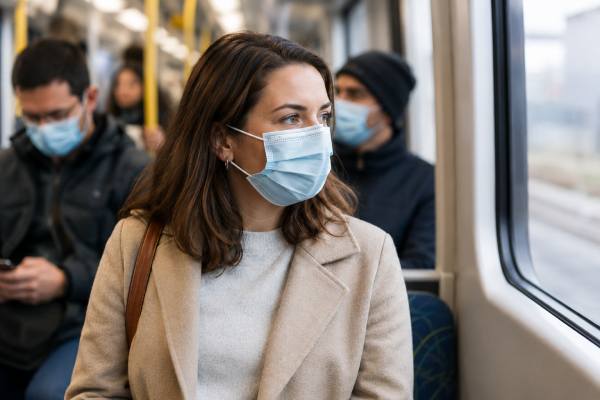
Masks have become one of the most argued-over tools in public health, which can make a simple question feel oddly hard to answer: when do they actually help most? The clearest answer is also the least dramatic. Masks work best when exposure risk is meaningful, the mask fits well, and it is worn consistently enough to matter. They are not magic, and they are not interchangeable. A loose cloth covering worn occasionally in a crowded indoor space is very different from a well-fitted respirator used through a full flight, clinic visit, or household exposure. They also work best as part of a layered approach rather than as a stand-alone fix. Ventilation, staying home when sick, vaccination, and hand hygiene still matter. This article explains how masks reduce viral spread, when the benefit is strongest, which types offer the most protection, how fit changes performance, and when masking is especially worth the effort during COVID, flu, RSV, and other respiratory virus seasons.
Quick Summary
- Masks help most in crowded indoor spaces, during close contact, and when respiratory viruses are circulating widely.
- A well-fitted respirator usually offers more protection than a surgical mask, and a surgical mask usually performs better than a loose cloth mask.
- Wearing a mask early, consistently, and around vulnerable people can reduce both spreading and inhaling infectious particles.
- Masks have limits: poor fit, intermittent use, damp material, and long unmasked breaks can sharply reduce benefit.
- A practical default is to keep a few high-quality respirators available for flights, clinics, caregiving, and busy indoor settings during virus surges.
Table of Contents
- How Masks Lower Risk
- When Masking Helps Most
- Which Mask Type Matters
- Fit and Wear Change Results
- Special Settings and High-Risk People
- Limits, Downsides, and Better Layering
How Masks Lower Risk
Masks help by getting between your airways and other people’s exhaled particles. That matters because respiratory viruses do not spread only through dramatic coughs and sneezes. They also move in fine particles released during talking, breathing, laughing, singing, and shouting. Some of those particles fall quickly. Others can remain suspended, especially in poorly ventilated indoor spaces. The practical result is that a person does not need to look obviously ill to create exposure, and a room does not need to feel packed to carry risk.
This is why masking works in two directions. First, it can reduce source spread by trapping some of the particles a contagious person exhales. Second, it can provide wearer protection by filtering some of what the wearer breathes in. Those two effects are not equal across all mask types. Better filtration and a tighter seal generally improve wearer protection. But even simpler masks can still help with source control when worn by the person who is sick.
That distinction is useful because people often ask whether masks are meant to protect “you” or “others.” The honest answer is both, but not to the same degree in every circumstance. A mask with gaps around the nose and cheeks may still reduce the amount you emit. It will usually do less to protect you from inhaling particles leaking around the edges. That is one reason the conversation has shifted away from masks in general and toward fit, filtration, and consistency.
The other important point is that masks do not replace the rest of respiratory prevention. They work best in combination with cleaner air, shorter exposure time, and sensible decisions about staying home when you are ill. In a small room with poor airflow, a mask helps more when paired with cleaner indoor air measures. In a household, masking helps more when sick family members also isolate as much as possible, improve airflow, and avoid sharing close face-to-face time.
From an immune-health perspective, this matters because the respiratory tract is one of the body’s front-line barriers. The nose, mouth, throat, and lungs are constantly interacting with the outside world. Lowering the number of infectious particles that reach those surfaces can reduce the chance of infection or at least lower the intensity of exposure. That fits with the broader logic of mucosal defenses: prevention is often about lowering burden at the point of entry, not waiting for the immune system to clean up after the fact.
So the most useful mental model is simple. Masks are filters, not force fields. They reduce risk rather than erase it. And the better they fit the risk you are facing, the more they help.
When Masking Helps Most
Masks help most when three things come together: the virus is spreading, the setting favors transmission, and the mask is used consistently enough to matter. In practice, that usually means indoor, crowded, close-contact, or poorly ventilated environments. The benefit tends to rise as exposure grows.
A few situations stand out again and again.
- When you are sick or think you might be contagious
This is one of the clearest uses for a mask. If you have a cough, sore throat, fever, runny nose, or feel like a respiratory virus is starting, a mask can reduce what you spread to other people when you need to be around them. - When you are caring for someone who is sick
Households are high-exposure settings because contact is repeated, prolonged, and close. Early masking can matter more than starting late, especially when a person first develops symptoms. - During seasonal surges or local outbreaks
Masks make more sense when flu, COVID, RSV, or another respiratory virus is circulating widely in your area. The more infectious people you are likely to encounter, the more value you get from reducing inhaled exposure. - In crowded indoor places
Airports, buses, trains, concerts, waiting rooms, retail lines, and conference halls all increase the chance of shared air with many strangers. - Around people at higher risk of severe illness
If you are visiting an older adult, someone with cancer, someone recovering from surgery, or anyone with significant immune compromise, masking can be a considerate and practical layer of protection. - In high-contact work or caregiving roles
Healthcare workers, home caregivers, teachers, retail staff, and others with repeated close contact often benefit more than someone spending most of the day alone or outdoors.
This does not mean masks are equally useful in every circumstance. Outdoors, in brief passing contact, or in a well-ventilated low-density setting, the benefit is usually smaller. That is not because masks stop working outdoors. It is because the baseline risk is already lower.
Travel is another setting where masks often make sense because exposure time can be long and the mix of people changes constantly. Airports, security lines, boarding areas, and ground transport may be more variable than the plane itself. If that is a recurring concern, the broader prevention logic in travel strategies for planes and trips is worth pairing with good mask habits.
The bottom line is that masks help most when risk is concentrated, not randomly. They are especially useful for indoor exposure, long exposure, repeated exposure, and exposure around vulnerable people. In those moments, the cost-benefit ratio improves quickly.
Which Mask Type Matters
Not all masks perform the same way, and this is one of the biggest reasons people report very different experiences with them. The broad ranking is straightforward: a well-fitted respirator usually protects better than a standard surgical mask, and a standard surgical mask usually protects better than a loose cloth mask.
Respirators such as N95, FFP2, KN95, and similar products are built for higher filtration and, ideally, a closer seal. That seal matters as much as the filter material. Air follows the easiest path. If there are large gaps at the sides or nose bridge, even excellent filter material cannot do its full job. Still, when a respirator fits well and is worn continuously, it is generally the strongest option for high-risk indoor settings.
Surgical or medical masks are better than nothing and can be useful for source control, especially when someone with symptoms needs to be around others. They are often more comfortable and easier to tolerate for long stretches. Their main weakness is side leakage. In low-to-moderate risk settings, that may be acceptable. In higher-risk environments, it becomes more important.
Cloth masks are the most variable group. Material, layers, weave, and fit differ so much that “cloth mask” does not describe one consistent level of protection. They may still help with source control, especially if multi-layered and well fitted, but they are generally less reliable than medical masks or respirators when your goal is meaningful personal protection.
This is why the best mask is not just “the highest grade.” It is the most protective one you can actually wear correctly for the duration of the exposure. A premium respirator pulled below the nose or removed every few minutes is not automatically better than a well-worn medical mask in the same setting.
Buying quality also matters. Counterfeit or poor-quality products became common during the pandemic and are still worth watching for. Use reputable retailers, look for recognized standards, and avoid products that make vague claims without any labeling or manufacturer information. That matters even more if you plan to keep a few masks ready for healthcare visits, caregiving, or winter surges.
One useful way to think about mask type is to match it to the moment:
- Low-risk, brief, or source-control use: a surgical mask may be adequate.
- Crowded indoor space or longer exposure: a respirator is often the better choice.
- High-risk personal exposure: use the best-fitting respirator you can tolerate.
Mask choice also fits within a broader prevention toolkit. If you are in a setting where risk is high enough to think carefully about mask type, it may also be worth thinking about other simple prevention habits and whether air cleaning measures such as HEPA filtration are relevant.
Mask type is not everything. But it changes the ceiling of what the mask can do.
Fit and Wear Change Results
A mask’s effectiveness is shaped as much by behavior as by design. This is why some studies and lived experiences seem to disagree. Masks worn poorly, worn late, or worn only part of the time will not perform like masks worn properly from the start of exposure to the end.
Fit is the first issue. A mask should cover the nose and mouth fully and sit close to the face without large gaps at the cheeks, sides, or under the chin. Nose-bridge leaks are especially common. If glasses fog heavily when you exhale, that can be a sign air is escaping upward. Small adjustments can matter: tightening ear loops, using the mask’s nose wire properly, or choosing a different shape. Cup-style, duckbill, bifold, and trifold respirators do not fit every face the same way.
Continuous wear is the second issue. People often think in all-or-nothing terms, but the real problem is repeated interruption. If you mask through the hallway but remove it in the packed waiting room, or wear it on the plane but not during boarding, you may be unmasking during the riskiest parts. Protection is usually strongest when the mask stays on through the entire shared-air period rather than only part of it.
Timing is the third issue. Early masking matters more than reactive masking. In a household, putting on a mask after everyone has already spent six hours together is less useful than masking early when symptoms begin. In a clinic, putting on a respirator before you enter the lobby helps more than waiting until you are seated.
Condition matters too. Wet, damaged, stretched, or dirty masks perform worse and feel worse. A mask that has lost shape or seal is not giving you the same benefit it gave on first wear. Reuse can be reasonable in some circumstances, but it should be practical reuse, not indefinite reuse.
Comfort affects adherence, which affects protection. A mask that is technically excellent but intolerable for more than ten minutes may be less useful than one you can wear correctly for two hours. This is one reason a good personal mask strategy is worth testing before you need it. Find one or two models that fit your face and do not make you constantly adjust them.
Masking should also sit alongside ordinary hygiene, not substitute for it. If you are ill, wash hands after coughing or sneezing, avoid close conversations in small rooms, and keep some distance when possible. That broader prevention approach overlaps with the same reasoning behind hand hygiene choices and the larger set of habits that help reduce infection risk.
In short, masks help most when they are worn well enough and long enough to change the air you actually breathe. Fit, timing, and consistency are not small details. They are most of the story.
Special Settings and High-Risk People
Some settings change the mask decision from optional to more obviously worthwhile. The most important are healthcare spaces, household caregiving, public transport, and any environment involving people at high risk of severe respiratory illness.
Healthcare settings remain one of the clearest examples. Medical offices, emergency departments, infusion centers, and hospital waiting areas bring together people who may be infectious, vulnerable, or both. Even when a facility does not require masks, many people still choose to wear one there because the logic is strong: repeated close contact, indoor air, and a meaningful chance of encountering respiratory illness. For workers with repeated exposure, masking is even more consequential, which is one reason it fits naturally alongside guidance aimed at healthcare workers facing frequent exposure.
Households are another major setting. Once one person becomes sick, the home shifts from a comfort zone to a high-exposure environment. Masks help most when the sick person wears one around others, the other household members mask early, and airflow is improved. Closing the door after half a day of shared unmasked air is less effective than responding at the first sign of illness.
Travel also deserves special attention. A busy airport or train station combines crowding, long dwell times, and people from many locations. For higher-risk travelers, a well-fitted respirator may make sense during the parts of travel where shared indoor air is hardest to control. The same goes for taxis, buses, or shuttle rides. If travel is already physically taxing, the broader planning in immune support when flying can complement masking rather than compete with it.
High-risk individuals and households are where masking often retains the strongest personal relevance. Older adults, people with chronic lung disease, people on immune-suppressing medication, transplant recipients, and some cancer patients may reasonably make different masking decisions than the average healthy adult in the same setting. The question is not whether everyone must make the same choice. It is whether the consequences of infection are different enough to justify more protection.
This is also where courtesy matters. If you have symptoms and need to visit someone vulnerable, masking is often one of the simplest ways to show care. In many cases, it is more practical than trying to predict whether your sore throat is allergies, a cold, flu, or COVID on day one.
So while general advice can feel situational, some environments are consistently clearer. Shared indoor air in healthcare, caregiving, travel, and high-risk households is where masks often deliver their most useful value.
Limits, Downsides, and Better Layering
Masks are useful, but they are not a complete answer. Their limits are practical, not mysterious. A mask cannot solve poor ventilation by itself. It cannot make a crowded, unventilated room low risk. It cannot help much if it is constantly removed, badly fitted, or worn only after exposure is mostly over. And it cannot compensate for going out while clearly ill when staying home is possible.
The evidence base also has real complexity. Some randomized studies have shown smaller or less clear benefits than many people expected, while mechanistic studies, lab studies, and many observational studies support a protective effect, especially with better-fitting masks and better adherence. That does not mean the science is useless. It means real-world mask performance depends heavily on context and behavior, which is exactly what people experience in practice.
There are also downsides worth acknowledging. Masks can be uncomfortable, especially during long wear. They can make communication harder, reduce access to facial cues, cause skin irritation, and feel burdensome for people with certain sensory issues. For some jobs, they complicate speech, heat tolerance, or physical exertion. These are not reasons to dismiss masks altogether. They are reasons to use them more strategically and choose better-tolerated models when possible.
A smarter approach is layering. If the goal is to lower respiratory virus risk, combine masks with other tools rather than expecting one measure to do all the work. The strongest combinations usually include:
- staying home when acutely sick if possible
- improving ventilation or filtration
- choosing less crowded spaces when you can
- protecting sleep and recovery so you are less likely to push through illness
- using vaccination where appropriate
- masking selectively in high-risk settings
This layered mindset matters because some prevention steps may outperform surface cleaning or other rituals people overvalue. For example, many respiratory exposures are shaped more by shared air than by the kinds of choices discussed in disinfecting versus ventilating. Environmental factors such as dry indoor air can also influence comfort and airway defenses, which is why some people find it useful to think about indoor humidity and infection risk alongside masking during winter.
The best use of masks, then, is not permanent or performative. It is targeted. Wear them when the exposure is likely to matter, use a better one when the stakes are higher, and pair them with cleaner air and sensible illness behavior. That is when they help most: not as an isolated symbol, but as one tool used well.
References
- Masks and Respiratory Viruses Prevention | Respiratory Illnesses | CDC 2025 (Guidance)
- Preventing Spread of Respiratory Viruses When You’re Sick | Respiratory Illnesses | CDC 2025 (Guidance)
- Masks and respirators for prevention of respiratory infections: a state of the science review 2024 (Review)
- The role of masks and respirators in preventing respiratory infections in healthcare and community settings 2025 (Review)
- Evidence of Face Masks and Masking Policies for the Prevention of SARS-CoV-2 Transmission and COVID-19 in Real-World Settings: A Systematic Literature Review 2025 (Systematic Review)
Disclaimer
This article is for educational purposes only and is not medical advice. Mask decisions can depend on your health status, exposure risk, workplace requirements, and the needs of people around you. If you are immunocompromised, care for someone medically vulnerable, or have breathing or communication needs that complicate mask use, get individualized guidance from a qualified clinician or occupational health professional.
If this article was useful, consider sharing it on Facebook, X, or another platform you use.