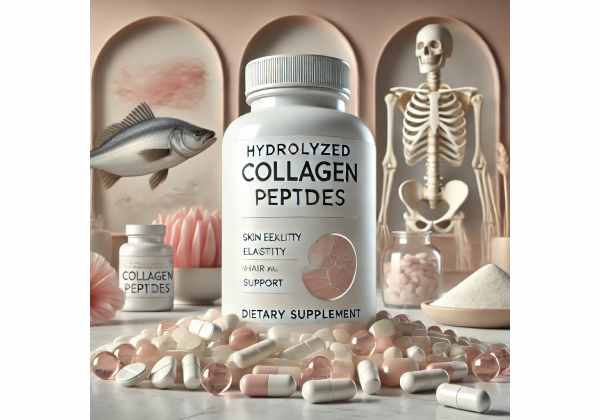
Hydrolyzed collagen peptides are usually associated with skin, joints, and connective tissue, so it can feel surprising to see them discussed in a brain-health context. Yet the idea is not as strange as it first sounds. Collagen peptides are rich in amino acids such as glycine, proline, and hydroxyproline, and emerging studies suggest they may influence sleep quality, fatigue, recovery, and even some aspects of cognitive performance. That does not make them a classic nootropic. In fact, the strongest evidence for hydrolyzed collagen peptides still sits outside direct brain enhancement. The more realistic question is whether they can support mental wellness indirectly, through better sleep, improved recovery, lower physical discomfort, and steadier daily function. That is where the topic becomes interesting. This article explains what hydrolyzed collagen peptides are, what the human evidence actually shows for brain and mental health, where the claims are stronger or weaker, how dosing is usually approached, and what safety and quality issues deserve attention.
Table of Contents
- What hydrolyzed collagen peptides are
- How they may affect mental wellness
- What the human studies show
- Who might benefit most
- Dosage, forms, and timing
- Safety, side effects, and limitations
What hydrolyzed collagen peptides are
Hydrolyzed collagen peptides are collagen proteins that have been broken down into smaller peptide fragments to improve digestibility and absorption. You will also see them called collagen hydrolysate or collagen peptides. They are usually sourced from bovine hide, porcine skin, fish skin, fish scales, or chicken tissues, and the final product can differ meaningfully by source, manufacturing method, average molecular weight, and peptide profile. That matters because two collagen powders on the shelf may look similar while delivering somewhat different peptide patterns and research backing.
From a brain-health perspective, the most important starting point is that hydrolyzed collagen peptides are not neurotransmitters, stimulants, or direct cognitive enhancers in the usual sense. They are protein-derived ingredients with a distinctive amino acid composition. Glycine is especially abundant, and that is one reason collagen has entered conversations about sleep, calmness, and next-day mental function. Glycine itself has a known role in the nervous system, so it is reasonable to ask whether glycine-rich collagen peptides might influence sleep architecture, fatigue, or subjective mental freshness.
Still, collagen should not be framed as “brain food” in the same way people sometimes discuss omega-3 fats, choline, or certain polyphenols. Its better-established roles are structural and connective. The brain-health angle is more indirect and more limited. That can still be useful. A supplement does not have to cross into the brain and alter neurotransmission directly to support mental wellness. If it improves sleep continuity, reduces pain, or helps recovery from training and daily stress, the mental spillover can be meaningful. That is why some of the most interesting collagen studies are not purely neurological studies at all.
The peptide format also matters because hydrolyzed collagen is different from eating gelatin in a stew or consuming collagen-rich cuts of meat. Smaller peptides are chosen partly because they are easier to use in supplements and may generate measurable circulating dipeptides and tripeptides after ingestion. That has helped support clinical research in skin, joint, and exercise settings. It also explains why people sometimes compare collagen with more overtly brain-oriented amino acid compounds such as glycine for sleep and brain health. The overlap is real, but the compounds are not identical and should not be treated as interchangeable.
A practical way to define hydrolyzed collagen peptides is this: they are bioactive protein fragments with well-established structural uses in the body and emerging, mostly indirect relevance to mental wellness. That framing leaves room for promising findings without pretending the evidence is broader than it really is.
How they may affect mental wellness
Hydrolyzed collagen peptides are most plausible for mental wellness when the pathway is indirect. That is the central point to understand before getting pulled into overly broad claims. The current evidence does not suggest collagen peptides act like a stimulant, antidepressant, or classic nootropic. Instead, the possible benefits seem to cluster around sleep quality, fatigue, recovery, pain burden, and general daily function.
The sleep angle is probably the most interesting. Because collagen peptides are rich in glycine, researchers have explored whether taking them before bed could improve sleep continuity and next-day performance. Glycine has been studied separately for its potential effects on sleep quality and daytime functioning, and collagen may partly borrow relevance from that biology. The important nuance is that collagen is not just glycine, and it has not been proven to work in every context where glycine has been studied. Even so, the mechanism is plausible enough that bedtime collagen supplementation has become a reasonable area of early investigation.
The recovery angle is also important. Mental wellness is not only about neurotransmitters or mood scales. Physical soreness, reduced activity, chronic pain, poor recovery, and sleep fragmentation can all shape energy, patience, concentration, and emotional resilience. Several collagen peptide studies outside brain-specific research have reported improvements in pain, function, or recovery-related outcomes. That matters because lowering those stressors can improve how people feel mentally, even if the supplement is not acting on the brain in a narrow pharmacological sense.
There may also be an inflammation-related story, but it should be discussed carefully. Some collagen-derived peptides have shown biological activity in laboratory and animal models, and researchers have explored effects on tissue repair, extracellular matrix signaling, and inflammatory pathways. That is interesting, but it does not yet justify strong claims that hydrolyzed collagen peptides are anti-inflammatory brain supplements. It is more accurate to say they may support systems that influence overall resilience and therefore mental wellness indirectly.
Another reason collagen can appear to “help the brain” is that improved sleep and lower physical discomfort often sharpen next-day cognition in ordinary life. People tend to notice fewer awakenings, smoother mornings, better exercise tolerance, and less bodily distraction before they notice anything that feels like a direct memory boost. That distinction matters because many readers looking for a brain supplement are actually trying to solve a problem rooted in disrupted recovery. In those cases, it can be smarter to address sleep and brain function than to chase stronger and stronger nootropic stacks.
So the mechanism story is not empty, but it is narrower than marketing suggests. Hydrolyzed collagen peptides may help mental wellness by improving the conditions under which the brain works best. That is a more grounded claim than saying they directly upgrade cognition, and for many people it is also the more useful one.
What the human studies show
The human evidence for hydrolyzed collagen peptides and brain-related outcomes is promising enough to be interesting but still too limited to support sweeping claims. The strongest theme across the available studies is not “better memory in everyone.” It is more specific: small trials suggest possible benefits for sleep fragmentation, fatigue-related mood states, and certain cognitive measures in selected groups.
One early clinical pilot study gave 5 g per day of collagen hydrolysates for four weeks to healthy adults in their late forties to early sixties. The study reported improvements in language-related cognitive testing and changes in brain-structure-related measures. That sounds impressive, but the design matters. It was open-label, small, and lacked a control group. Those limitations mean the findings are best treated as hypothesis-generating rather than definitive proof.
A later randomized crossover study looked at 15 g of glycine-rich collagen peptides taken before bedtime for seven nights in physically active men with sleep complaints. The main findings were narrower and more practical. The collagen did not clearly improve total sleep time, latency, or efficiency, but it did reduce awakenings and was linked with better performance on one cognitive task the next morning. That makes the study useful, though still early. It points toward a sleep-quality pathway rather than a broad brain-enhancement effect.
Another randomized trial used 10 g per day for eight weeks in healthy but easily fatigued adults and found improvements in fatigue- and vigor-related mood measures, with better perceived sleep restfulness and no major safety issues reported. Again, the pattern is telling. The benefit appears less like a direct antidepressant effect and more like an improvement in fatigue-related mental state.
Longer-term work in active middle-aged adults also adds context. In that research, 10 to 20 g per day over several months improved some measures of pain, daily function, and mental or physical health-related quality-of-life scores. These are not pure brain outcomes, but they matter. People do not experience mental wellness in isolation from their body. Lower pain burden and better function can make concentration easier, improve resilience, and reduce the background drain that contributes to feeling mentally worn down.
Taken together, the human data support four careful conclusions:
- Direct evidence for hydrolyzed collagen peptides and cognition exists, but it is still preliminary.
- Sleep-related and fatigue-related benefits currently look more plausible than dramatic memory enhancement.
- The positive studies are small or population-specific, so generalization should be cautious.
- The most believable real-world benefit is indirect mental support through sleep, recovery, and reduced physical strain.
That is why collagen peptides do not belong in the same category as a proven all-purpose cognitive enhancer. They may help some people feel and function better, but the best evidence still points to selective use rather than broad promises. Readers who are mainly chasing sharper concentration may still need to step back and look at common causes of brain fog before assuming collagen is the missing piece.
Who might benefit most
Hydrolyzed collagen peptides make the most sense for people whose mental wellness concerns overlap with sleep disruption, training strain, joint discomfort, tissue recovery, or fatigue-prone days. That is a narrower audience than “anyone who wants a better brain,” but it is also the group most likely to see a meaningful return. If your low mental energy shows up alongside poor recovery, sore joints, nighttime awakenings, or general wear-and-tear, collagen peptides may fit more naturally into the picture.
People who exercise regularly are one obvious group. High training volume, repeated soreness, and minor nagging pain can quietly erode sleep and concentration over time. If a supplement improves recovery or reduces physical discomfort even modestly, the mental effect can be real. A person who wakes less often, moves more comfortably, and feels less beaten up may notice better mood and clearer focus during the day without ever describing collagen as a “brain supplement.”
Middle-aged adults with active lifestyles may also be good candidates. This is one of the populations where collagen research has shown benefits beyond appearance. In that setting, the relevant goal is not to become mentally faster overnight. It is to support the physical systems that help preserve energy, function, and quality of life as recovery becomes slower and pain becomes more noticeable.
Another group worth considering is people who are healthy overall but describe themselves as easily fatigued, especially if their fatigue is not severe enough to suggest a medical disorder but still affects mood and daily steadiness. That is close to the population studied in the recent mood trial. Even there, it is important not to overread the findings. The evidence suggests potential benefit, not a guaranteed solution.
Who is less likely to benefit? People looking for a direct nootropic effect. Students hoping collagen will noticeably boost studying. Adults expecting it to treat depression, anxiety, ADHD, or persistent cognitive symptoms. The evidence is simply not strong enough for those expectations. If someone’s main issue is scattered attention, emotional overload, or chronic rumination, something like L-theanine for focus and calm is more directly aligned with the goal than collagen peptides are.
It is also important to think about the reason behind the symptoms. If fatigue is new, worsening, or paired with weight loss, low mood, fever, anemia, or thyroid symptoms, supplementation should not replace proper evaluation. Collagen peptides are best thought of as an adjunct for selected patterns, not as a cover for an unexplained health problem.
The bottom line is that hydrolyzed collagen peptides are more likely to help when mental strain is partly downstream of sleep, recovery, pain, or physical fatigue. They are less likely to be useful as a stand-alone solution for complex cognitive or psychiatric symptoms.
Dosage, forms, and timing
Hydrolyzed collagen peptides are usually sold as powders, single-serve sachets, capsules, gummies, or ready-to-drink products. Powders remain the most practical option because the effective research doses are often larger than what capsules comfortably deliver. The main brain- and wellness-related studies have not used one fixed universal dose. Instead, the dosing pattern depends on the goal and the study design.
For cognitive or general wellness exploration, 5 g per day has appeared in early pilot work. For fatigue and mood-related outcomes, 10 g per day for eight weeks has been studied. For sleep-related effects, 15 g taken about one hour before bedtime for seven nights has been used. In longer trials examining pain, function, and quality-of-life outcomes in active adults, 10 to 20 g per day has been tested over months. That spread matters because it shows there is no single “brain dose” of hydrolyzed collagen peptides.
A practical takeaway is that most real-world use falls somewhere between 5 and 15 g daily, with the higher end more common when the aim is recovery or sleep-related experimentation. Bigger doses are not automatically better. Beyond a certain point, you may simply add cost, digestive burden, or calories without a clearer benefit. It is usually better to match dose to purpose than to chase the largest number on the scoop.
Timing can matter more than many people expect. If the goal is sleep support, taking collagen peptides before bed makes more sense than stirring them into a random midday drink. If the goal is general recovery or connective-tissue support, total daily consistency probably matters more than clock time. A single-ingredient product is also easier to evaluate than a beauty blend or protein mix containing many extras, sweeteners, or stimulants.
Source quality matters too. Marine, bovine, porcine, and chicken-derived products are not all identical. If you have dietary restrictions, allergies, or religious considerations, check sourcing carefully. Look for clearly labeled products that specify collagen type or source, provide the amount per serving, and ideally undergo third-party testing for contaminants. This is especially relevant with marine collagen, where quality control and raw-material sourcing can vary.
A sensible way to trial collagen peptides looks like this:
- Choose a clearly labeled product from a reputable brand.
- Pick one goal, such as sleep continuity, morning freshness, or recovery.
- Use a matching dose consistently for several weeks.
- Track a few specific outcomes rather than relying on a vague impression.
- Stop if nothing meaningful changes.
That process is less glamorous than stacking multiple supplements at once, but it is far more useful. The people most likely to benefit are often those who pair collagen use with a broader routine built around recovery, protein quality, activity, and nutrition for mood and focus.
Safety, side effects, and limitations
Hydrolyzed collagen peptides are generally considered well tolerated in healthy adults, especially at the kinds of doses used in most commercial products and clinical studies. Compared with many more aggressive “brain supplements,” collagen has a relatively straightforward safety profile. That said, safe does not mean consequence-free, and a few practical concerns deserve attention.
The most common side effects are mild digestive issues. Some people notice fullness, bloating, an unusual aftertaste, nausea, or mild stomach upset, especially when they start with a large dose or take it on an empty stomach. These reactions are usually manageable by lowering the dose, splitting it, or taking it with food, unless the supplement is being used specifically around bedtime and that timing is part of the plan.
Allergen and source issues matter more than many labels suggest. Marine collagen can be a poor choice for someone with fish allergy. Chicken-based products may not fit every person’s tolerance or dietary pattern. Bovine and porcine products raise religious, ethical, and sourcing concerns for some users. Because hydrolyzed collagen peptides are animal-derived, they are not suitable for vegan use.
Another issue is quality drift between products. Hydrolyzed collagen is a category, not a single uniform ingredient. The evidence from one branded peptide product does not automatically transfer to every collagen powder on the market. Differences in source, peptide size, and processing may influence both tolerability and effect. That is one reason to be careful about dramatic marketing claims, especially when a company references research on a specific branded ingredient while selling a more generic product.
The biggest limitation, though, is not side effects. It is overinterpretation. The brain-health evidence for hydrolyzed collagen peptides is still early, and several promising studies are small, short, or population-specific. If someone feels better after taking collagen, that improvement may still be real, but it does not prove a direct neurochemical effect. It may reflect better sleep continuity, lower soreness, or improved recovery. That is still valuable. It just needs to be described honestly.
Collagen peptides also should not distract from bigger drivers of mental wellness. If you are sleeping poorly, overworked, under-eating protein, avoiding movement, or dealing with untreated mood symptoms, collagen will not solve the underlying pattern by itself. Readers who are thinking about increasingly elaborate supplement stacks often benefit more from revisiting the basics of exercise, mood, and brain health than from adding another ingredient.
The safest conclusion is balanced. Hydrolyzed collagen peptides appear reasonably safe for many adults and may support mental wellness indirectly in selected situations. But the evidence is not strong enough to market them as a proven brain booster, and they work best when expectations stay realistic.
References
- Effects of Collagen Hydrolysates on Human Brain Structure and Cognitive Function: A Pilot Clinical Study 2020 (Clinical Study)
- Collagen peptide supplementation before bedtime reduces sleep fragmentation and improves cognitive function in physically active males with sleep complaints 2024 (RCT)
- Dietary Collagen Peptides Ameliorate the Mood Status of Fatigue and Vigor: A Randomized, Double-Blinded, Placebo-Controlled, Parallel-Group Comparative Trial 2024 (RCT)
- Collagen peptides supplementation improves function, pain, and physical and mental outcomes in active adults 2023 (RCT)
- Collagen supplementation and regenerative health: advances in biomarker detection and smart material integration 2025 (Review)
Disclaimer
This article is for educational purposes only and is not medical advice. Hydrolyzed collagen peptides may not be appropriate for everyone, especially people with relevant food allergies, dietary restrictions, pregnancy, breastfeeding, kidney disease, or unexplained fatigue, mood changes, or cognitive symptoms that need medical evaluation. Supplements should not replace diagnosis, prescribed treatment, psychotherapy, or urgent medical care. Speak with a qualified clinician before starting hydrolyzed collagen peptides if you have ongoing mental health symptoms, chronic illness, or complex medication use.
If you found this article useful, please share it on Facebook, X, or your preferred platform.