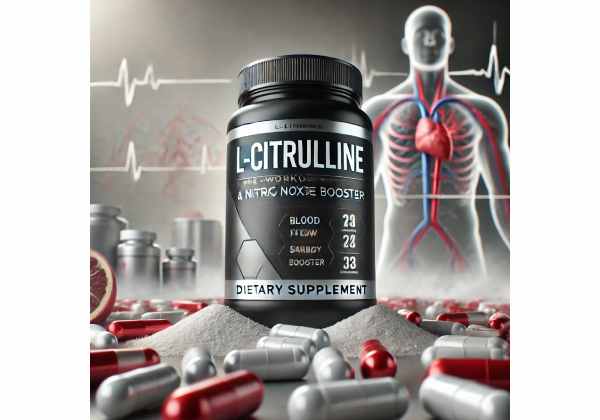
L-citrulline is usually marketed for exercise performance, pumps, and circulation, yet its connection to brain health is more interesting than many labels suggest. This amino acid helps raise arginine levels and supports nitric oxide production, which affects blood flow, vascular function, and recovery from physical stress. Because the brain depends on steady oxygen delivery and healthy vessels, that pathway has led researchers to explore whether L-citrulline could also matter for mental energy, cognitive resilience, and recovery after strain.
Still, this is a supplement where careful framing matters. The evidence for muscle and vascular effects is stronger than the evidence for direct improvements in mood, memory, or focus. L-citrulline may support the brain indirectly through circulation and nitric oxide biology, but it is not an established nootropic or a proven treatment for anxiety, depression, or cognitive decline. This guide explains what L-citrulline does, where its mental wellness value may fit, how to use it, and what safety issues deserve attention.
Table of Contents
- What L-citrulline Is
- How It May Affect the Brain
- Where Benefits Are Most Plausible
- Limits of the Mental Health Evidence
- Dosage, Forms, and Best Use
- Safety, Side Effects, and Interactions
What L-citrulline Is
L-citrulline is a naturally occurring amino acid involved in the urea cycle and nitric oxide pathway. The body can make it on its own, and it is also found in foods, especially watermelon. In supplement form, it is usually sold either as pure L-citrulline or as citrulline malate, a combination of citrulline and malic acid. These forms are often grouped together in marketing, but they are not identical, and the actual citrulline dose can vary a lot from one product to another.
What makes L-citrulline distinct is that it serves as an efficient precursor to arginine. Although many people assume taking arginine directly is the simplest way to support nitric oxide, citrulline often raises circulating arginine more effectively because it bypasses much of the early breakdown that limits oral arginine. That matters because nitric oxide helps relax blood vessels, regulate vascular tone, and support blood flow to tissues under stress.
In practical use, L-citrulline is best known for three reasons:
- supporting nitric oxide production
- improving aspects of exercise performance or recovery
- helping vascular function in some settings
The brain-health interest comes from those same effects. The brain is highly energy dependent and extremely sensitive to blood flow. Anything that meaningfully improves endothelial function, circulation, or vascular recovery may have indirect relevance for concentration, fatigue resistance, and long-term cerebrovascular health. That is why L-citrulline sometimes appears in “brain support” formulas even though it is not a classic cognition supplement.
The catch is that its reputation has outpaced the evidence. In the body of human research, L-citrulline has far better support for exercise and vascular outcomes than for mood, memory, or mental clarity. Some early and emerging studies suggest a possible role in cerebrovascular recovery or neuroprotection, but the field is still limited. That means readers should think of L-citrulline as a circulation-oriented supplement with possible brain spillover effects, not as a proven mental wellness tool in its own right.
It also helps to place it in context. L-citrulline sits closer to nitric oxide and vascular support than to the better-known cholinergic or stimulant-style nootropics. If you are comparing categories, it belongs more naturally in the broader discussion of what nootropics really do than in the same bucket as caffeine or citicoline.
That distinction is useful because it shapes expectations. Someone looking for a sharp boost in focus may be disappointed. Someone interested in blood flow, exercise recovery, or a more indirect route to mental freshness may find it more relevant.
How It May Affect the Brain
L-citrulline’s potential brain effects are mostly indirect, but they are biologically plausible. After supplementation, L-citrulline helps raise arginine levels, and arginine is the substrate used to produce nitric oxide. Nitric oxide matters throughout the vascular system, including the vessels that help regulate cerebral blood flow. When that pathway functions well, tissues can receive oxygen and nutrients more efficiently, especially during recovery from stress or exertion.
That vascular angle is the main reason L-citrulline draws attention for brain health. The brain depends on a stable blood supply, and even subtle impairments in vascular function can contribute to mental fatigue, slower processing, or reduced resilience under stress. In theory, better nitric oxide signaling could help support:
- cerebral perfusion
- vascular responsiveness
- oxygen delivery during recovery
- endothelial health over time
Researchers have also looked at L-citrulline in relation to the blood-brain barrier and neurovascular protection. Experimental work suggests it can cross or interact with brain-related transport systems and may help restore nitric oxide signaling in models of endothelial stress. Animal studies have also hinted at memory-related and neuroprotective effects in certain injury or aging settings. That does not prove a human nootropic benefit, but it helps explain why the compound keeps appearing in conversations about brain resilience.
Another path is recovery. Some newer human work suggests L-citrulline may help cerebrovascular recovery after intense exercise. This does not mean it suddenly transforms cognition, but it suggests the supplement may help the brain recover its normal vascular balance more efficiently after a period of heavy physiological demand. For athletes or people who feel mentally drained after very intense training, that is a more realistic mechanism than a direct neurotransmitter boost.
It is important not to overstate this. L-citrulline is not known to work like a stimulant, and it does not primarily act by increasing dopamine, acetylcholine, or serotonin. Its likely value comes from changing the conditions that support brain function rather than flipping a mental performance switch.
That difference matters. Many brain complaints are not caused by one missing neurotransmitter. They can also reflect poor sleep, high stress load, endothelial dysfunction, blood pressure changes, overtraining, or a body that is struggling to deliver energy efficiently. In those cases, improving circulation-related physiology may help the mind feel better even when the supplement is not directly “for the brain.”
This is why L-citrulline fits best into a larger conversation about vascular and physiological stress. Readers exploring that broader picture may also find it useful to think about how stress affects focus and the brain, because circulation, recovery, inflammation, and mental performance often overlap more than supplement marketing admits.
Where Benefits Are Most Plausible
If you look at L-citrulline honestly, the most plausible mental wellness benefits are not dramatic improvements in memory or mood. They are indirect benefits linked to vascular health, exercise recovery, and fatigue resistance. That may sound less exciting, but it is a more useful way to judge whether the supplement actually fits your needs.
The strongest practical case for L-citrulline usually starts outside the brain. It may improve arginine availability, support nitric oxide production, and help aspects of blood flow and endothelial function. In some people, especially those under physical strain or with suboptimal vascular health, that can translate into better physical recovery and less of the washed-out feeling that often follows hard training. When mental dullness is partly driven by physical exhaustion, recovery support can matter.
A second plausible use case is exercise-linked mental sharpness. Emerging research suggests L-citrulline may help cerebrovascular recovery after high-intensity work. That is a narrower claim than “better brain function,” but it is meaningful. Someone who does intense intervals, combat sports, or heavy conditioning may care not just about muscle recovery but about reaction time, decision-making, and feeling mentally composed after exertion. In that setting, faster vascular recovery in the brain could matter.
A third potential area is age-related vascular strain. Because cerebral health depends partly on vascular health, supplements that improve endothelial function may be relevant to long-term brain support. This does not make L-citrulline a dementia-prevention supplement, but it does make it more relevant to the brain than its gym-oriented reputation suggests.
The most reasonable use cases are:
- people who want circulation-based support rather than stimulation
- athletes or active adults who feel mentally depleted after hard training
- people interested in nitric oxide support as part of broader brain-health habits
- those whose brain fog seems linked to vascular or recovery issues rather than simple sleepiness
Where the claims get weak is when L-citrulline is marketed as a direct fix for low mood, distractibility, or poor memory in the general population. There is not strong evidence that it reliably improves those outcomes on its own.
This is where context matters. If someone is dealing with poor sleep, social burnout, blood sugar swings, or nonstop screen overload, a circulation supplement may be only a small piece of the picture. Many people describing “brain fog” are really dealing with a mix of factors, which is why it helps to understand what brain fog can actually mean before choosing a supplement.
In other words, L-citrulline may be more useful as a support tool than a stand-alone solution. It makes the most sense when the goal is physiological resilience that may spill over into mental performance, not when the goal is a dramatic cognitive transformation.
Limits of the Mental Health Evidence
One of the most important things to say about L-citrulline is that the evidence for direct mental health benefit is still limited. That does not mean the supplement is useless. It means the strongest claims should stay narrow.
At the moment, the best-supported L-citrulline findings are still in vascular and exercise-related research. Human trials more often examine blood flow, blood pressure, exercise tolerance, oxygen kinetics, or recovery markers than depression, anxiety, memory, or sustained cognitive performance. That matters because people often assume a supplement with a brain-related mechanism must also have strong clinical brain outcomes. The field is not there yet.
For mood, there is no robust human evidence showing L-citrulline is an established treatment for depression or anxiety. At most, its effects on vascular health, fatigue, and stress recovery may help some people feel better indirectly. That is a reasonable hypothesis, but it is not the same as a proven psychiatric benefit.
For cognition, the picture is also mixed. Experimental and animal studies suggest possible neuroprotective or memory-related effects in specific models, including ischemia and aging. Those are important clues, but they are not enough to support broad consumer claims. Human evidence remains early, narrow, and often tied to exercise or vascular conditions rather than ordinary daily cognition.
That means expectations should be shaped by what the research can actually support:
- L-citrulline may improve physiology that helps the brain.
- It may support cerebrovascular recovery in certain demanding situations.
- It is not established as a direct enhancer of memory, mood, or attention in the general population.
- It should not replace treatment for mental illness or progressive cognitive symptoms.
This is especially important because nitric oxide itself is complex. More is not always better in every tissue or situation. Healthy nitric oxide signaling supports blood flow and vascular function, but that does not mean aggressive boosting automatically improves cognition. Biology rarely works that simply.
A balanced article on L-citrulline therefore has to resist the urge to make it sound like a secret brain supplement. It is more accurate to describe it as a vascular and recovery supplement with emerging relevance to cerebrovascular health. For some readers, that is still very useful. It just means the benefit is likely to be conditional and context dependent.
This also explains why L-citrulline may pair better with foundational lifestyle steps than with hype-based supplement stacking. If someone is hoping to improve mental clarity, basics such as sleep, hydration, movement, and stress control still matter more. In that broader framework, L-citrulline may complement efforts to improve focus with daily habits, but it should not be treated as the main driver.
Dosage, Forms, and Best Use
L-citrulline dosing depends heavily on the goal. Most research and real-world use revolve around exercise, blood flow, or vascular support, not mood or cognition alone. That means dosage decisions should be based on those better-established uses rather than on vague “brain booster” promises.
Pure L-citrulline is usually dosed in gram amounts, not milligrams. Common supplemental ranges include about 3 to 6 grams per day, with some protocols going higher. Many performance-oriented users take 6 to 8 grams before training, while some vascular or daily-support approaches spread the dose across the day. Research reviews suggest doses as low as around 3 grams can raise arginine availability, while higher intakes may be used when the goal is stronger nitric oxide support.
A practical way to think about dosing is:
- 3 grams daily: conservative starting point
- 4 to 6 grams daily: common range for circulation or training support
- 6 to 8 grams before exercise: often used in performance settings
- very high intakes: usually unnecessary for casual wellness use
Timing depends on the goal. If the main aim is exercise recovery or blood-flow support around training, pre-workout use makes sense. If the goal is broader vascular support, once-daily or split dosing can be reasonable. Because L-citrulline is not stimulating in the usual sense, it does not need to be reserved for mornings only, though some people simply prefer taking it earlier in the day with other active supplements.
Form matters too. Pure L-citrulline and citrulline malate are both common, but the label must be read carefully. Citrulline malate is not 100 percent citrulline, so a scoop may deliver less actual L-citrulline than expected. That matters if you are trying to match doses used in studies.
A sensible trial looks like this:
- choose a clear goal such as training recovery, circulation support, or testing whether it helps exercise-linked mental fatigue
- start at the lower end of the range
- stay with the same dose for at least one to two weeks
- avoid adding several other nitric oxide products at the same time
- track whether the benefit is physical, mental, or both
For brain and mental wellness specifically, it makes sense to judge L-citrulline by indirect outcomes: less drained feeling after exercise, better stamina, smoother recovery, or improved sense of clarity during periods of physical load. If the goal is a more direct focus supplement, something like citicoline for cognitive enhancement may align more closely with that search intent.
The bottom line is that dosage should match the biology L-citrulline is most known for. It is a gram-dose circulation supplement first, and any mental benefit is more likely to follow from that than from a direct nootropic effect.
Safety, Side Effects, and Interactions
L-citrulline is generally considered well tolerated, especially compared with oral arginine, which is more likely to cause stomach upset at higher doses. That better tolerance is one reason citrulline has become so popular in sports nutrition and vascular support formulas. Even so, “well tolerated” does not mean risk free.
The most common side effects are usually mild and digestive. They may include:
- stomach discomfort
- nausea
- loose stools
- bloating
- mild headache
These effects are more likely at higher doses or when people take large amounts on an empty stomach. Splitting the dose or taking it with food can improve tolerance, although some pre-workout users prefer it before meals for convenience.
The bigger question is interaction risk. Because L-citrulline may lower vascular resistance and support nitric oxide production, caution makes sense if you already take medications or supplements that affect blood pressure, blood flow, or erectile function. That includes nitrates, phosphodiesterase-5 inhibitors, and some antihypertensive drugs. The issue is not that a dangerous interaction is guaranteed, but that stacked vasodilatory effects may cause dizziness, lightheadedness, or unexpected drops in blood pressure in sensitive users.
Use extra caution if you:
- take blood pressure medication
- use nitrates or erectile-dysfunction medication
- have low blood pressure
- are prone to dizziness or fainting
- are pregnant or breastfeeding
- are using multiple pre-workout or nitric oxide products together
It is also worth remembering that high-intensity supplements can hide in combination formulas. Someone may think they are taking a simple workout product when they are actually combining caffeine, citrulline, nitrates, and other vasoactive ingredients. That increases the chance of side effects and makes it much harder to tell what is helping.
For most healthy adults, a careful dose trial is unlikely to cause major problems. But there are still reasons to be measured. If you develop headaches, flushing, unusual palpitations, or repeated lightheadedness, the supplement may not be a good fit. And if you are using it because of persistent brain fog, exhaustion, or poor concentration, it is important not to let a supplement delay proper evaluation of underlying causes.
A safer approach is simple:
- start low
- avoid combining it immediately with other nitric oxide boosters
- review medications first
- stop if symptoms such as dizziness or headaches appear
- seek medical advice if you have cardiovascular disease or ongoing symptoms
That cautious approach matters especially when L-citrulline is being used for energy or focus. Many people would be better served by first addressing sleep, overtraining, and stimulants such as caffeine and its brain effects before layering on another performance-oriented supplement.
References
- The effects of L-citrulline supplementation on cerebrovascular function during sprint interval training in taekwondo athletes 2025 (RCT)
- Subchronic tolerance trials of graded oral supplementation with ornithine hydrochloride or citrulline in healthy adults 2022 (Clinical Trial)
- Effects of Citrulline Supplementation on Exercise Performance in Humans: A Review of the Current Literature 2020 (Review)
- l-Citrulline Supplementation: Impact on Cardiometabolic Health 2018 (Review)
- L-Citrulline: A Non-Essential Amino Acid with Important Roles in Human Health 2021 (Review)
Disclaimer
This article is for educational purposes only and is not medical advice. L-citrulline supplements are not approved to diagnose, treat, cure, or prevent depression, anxiety disorders, dementia, or other medical conditions. Current evidence for direct brain and mental health effects is limited, and most benefits appear to be indirect and related to vascular or exercise physiology. Speak with a qualified healthcare professional before using L-citrulline if you are pregnant, breastfeeding, have cardiovascular disease, low blood pressure, or take medications that affect circulation or blood pressure. Seek prompt medical care for severe headaches, fainting, chest symptoms, rapidly worsening cognition, or major mood changes.
If you found this article useful, consider sharing it on Facebook, X, or another platform you prefer so others can find clearer information about L-citrulline.