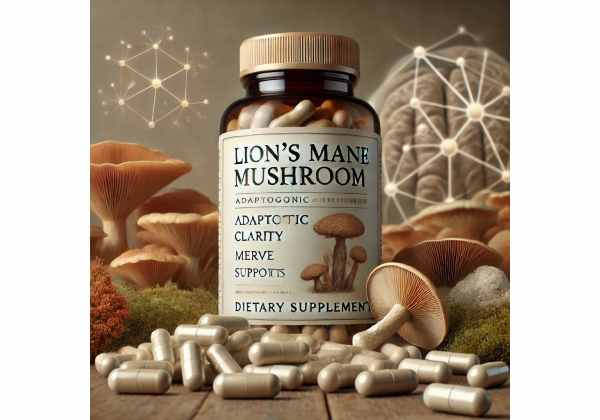
Lion’s mane mushroom has moved from culinary curiosity to one of the most talked-about supplements in brain health. Its appeal is easy to understand. Unlike many products marketed for focus, lion’s mane is not mainly framed as a stimulant. It is often discussed in terms of nerve growth, neuroplasticity, memory support, and a steadier kind of mental resilience. That combination makes it especially attractive to people looking for cognitive support without the wired feeling that can come with more activating compounds.
At the same time, lion’s mane is a supplement where enthusiasm often runs ahead of the evidence. Laboratory and animal data are intriguing, and a small number of human trials suggest possible benefits for cognition, mood, and subjective stress. But the research base is still limited, product quality varies widely, and the strongest claims remain unproven. This article takes a careful, practical look at what lion’s mane mushroom is, how it may work, what human studies suggest, how it is commonly used, and where safety and expectations matter most.
Table of Contents
- What Makes Lion’s Mane Different
- How It May Support Brain Function
- Benefits for Cognition, Mood, and Mental Wellness
- What Human Studies Actually Show
- Dosage, Forms, and How to Choose a Product
- Safety, Side Effects, and Who Should Be Cautious
What Makes Lion’s Mane Different
Lion’s mane mushroom, known scientifically as Hericium erinaceus, stands out from many other brain supplements because it is usually discussed in terms of nerve support rather than quick stimulation. Its shaggy white fruiting body is edible, but most supplement interest centers on extracts made from the fruiting body, the mycelium, or both. These products are marketed for memory, focus, mood, and long-term brain health, though the biological story behind those claims is more specific than the marketing often suggests.
The main reason lion’s mane gets attention is its content of compounds called hericenones and erinacines. These are often described as neuroactive molecules because they appear, at least in preclinical research, to influence pathways related to nerve growth factor and broader neurotrophic activity. That matters because neurotrophic signaling supports neuronal survival, repair, and plasticity. In plain language, lion’s mane is interesting because it may help create conditions that support healthier nerve function rather than simply pushing the brain to work harder in the short term.
That makes it conceptually different from caffeine-based products and different from supplements aimed more directly at calming the nervous system. It sits in a middle space: not a stimulant, not a sedative, and not a vitamin in the usual sense. Instead, it is better viewed as a functional mushroom with possible neurotrophic, anti-inflammatory, antioxidant, and gut-brain effects.
One practical complication is that not all lion’s mane products are alike. Fruiting body powders, mycelium powders, and concentrated extracts can differ sharply in their active compounds. Some supplements emphasize beta-glucans, while others focus on dual extraction or standardized percentages. This matters because the human studies do not all use the same kind of product. A trial using a specific extract cannot automatically validate every capsule sold online.
Lion’s mane is also often placed alongside other mushroom or nootropic products, but that can blur important distinctions. It is more targeted to neuroplasticity and nerve-support narratives than many general “adaptogen” blends. It also differs from compounds that primarily support membranes or energy metabolism, such as CoQ10. That difference in mechanism helps explain why the effects people hope for can be subtle and slow rather than immediate.
A good starting point is to see lion’s mane as promising but not fully settled. It is one of the more biologically interesting natural products in brain health, yet it still requires a careful eye because the research, while encouraging, remains much smaller than the market around it.
How It May Support Brain Function
The most discussed mechanism for lion’s mane mushroom is its possible effect on neurotrophic signaling. In laboratory and animal studies, compounds from lion’s mane have been associated with increased nerve growth factor activity, neurite outgrowth, neuronal maintenance, and protection against some forms of oxidative and inflammatory stress. These findings help explain why the mushroom is repeatedly explored in the context of memory, healthy aging, and neurodegenerative risk.
Nerve growth factor matters because neurons are not static cells. They rely on chemical signals to survive, adapt, and form or maintain healthy connections. A supplement that meaningfully supports these processes would be genuinely interesting, especially in aging or chronic stress. Lion’s mane has attracted attention precisely because its compounds appear to influence this terrain rather than just producing a temporary alert feeling.
There may be several overlapping pathways involved.
- neurotrophic support through nerve growth factor-related signaling
- reduced oxidative stress that may otherwise damage neurons
- lowered neuroinflammatory activity in some preclinical models
- support for synaptic plasticity and neuronal communication
- possible effects on the gut-brain axis that indirectly influence mood and cognition
That final point is easy to overlook. Some recent reviews discuss lion’s mane not only as a neurotrophic mushroom but also as a supplement that may alter gut microbial activity and short-chain fatty acid production. If that turns out to matter clinically, it would make lion’s mane relevant to the broader relationship between the gut-brain axis and mental performance. At present, though, that connection is more suggestive than proven in large human trials.
Another important nuance is that fruiting body and mycelium may not contribute in the same way. Erinacines are more strongly associated with the mycelium, while hericenones are often linked to the fruiting body. This means “lion’s mane” is not one perfectly uniform intervention. Product composition may shape outcomes, which is one reason study results do not always line up neatly.
This mechanism profile also helps explain why people sometimes report that lion’s mane feels subtle. It is not designed to create a sharp immediate shift in attention the way caffeine or other activating compounds can. If it helps, the effect may look more like steadier recall, less mental friction, slightly improved clarity, or a greater sense of cognitive resilience over time.
That kind of support is appealing, but it also invites exaggeration. A plausible mechanism does not guarantee a powerful real-world result. Lion’s mane may influence pathways relevant to learning, mood, and aging, yet the size of the effect in humans remains the central unanswered question.
Benefits for Cognition, Mood, and Mental Wellness
Lion’s mane mushroom is commonly promoted for memory, focus, mood, and stress resilience, but those benefits do not all rest on the same level of evidence. The strongest case is for possible support of selected cognitive functions, particularly in people dealing with age-related decline or mild impairment. Mood-related benefits are plausible and supported by some small human and preclinical findings, but they are less firmly established.
The most realistic potential benefits fall into a few categories.
- support for memory and general cognitive performance
- possible improvement in subjective mental clarity
- modest help with stress, irritability, or low mood in some users
- support for healthy aging of the nervous system
- possible assistance with mild cognitive complaints rather than severe impairment
The mood story is especially important to frame carefully. Lion’s mane is not a standard antidepressant or anxiolytic, and it should not be presented that way. However, some small studies and reviews suggest it may help with symptoms such as tension, anxiety, sleep disturbance, or low mood, particularly when these are mild. The mechanism here may not be purely neurochemical. Effects on inflammation, neurotrophic signaling, gut-brain communication, and perceived stress may all contribute.
This is one reason lion’s mane is often discussed alongside gentler options for mental wellness, though it occupies a different niche than something like L-theanine. L-theanine is often chosen for a more immediate calming effect, while lion’s mane is more often chosen for a slower, structural, or restorative idea of support.
For cognition, the most likely benefits are not dramatic. A realistic expectation is improvement at the margins: slightly better recall, somewhat stronger performance on selected tasks, or reduced subjective sense of mental dullness. This still matters. Small improvements can be meaningful, especially for older adults or people who feel their thinking is not as sharp as it once was.
Who is less likely to be impressed? Healthy young adults looking for a same-day productivity boost may find lion’s mane underwhelming. The research in healthy younger populations is mixed, and when benefits appear, they are often specific rather than broad.
Another helpful distinction is between symptom relief and long-term support. Lion’s mane is more compelling as a support for underlying brain health than as a fast fix for bad sleep, burnout, or acute anxiety. If the main driver of brain fog is iron deficiency, chronic stress, insomnia, or depression, lion’s mane may play a supporting role, but it should not distract from the larger issue. The broader context around brain fog causes and symptoms still matters more than any one mushroom supplement.
The benefit profile, then, is promising but measured. Lion’s mane may help some people think and feel better, but it works best when expectations are calm and the goal is support rather than transformation.
What Human Studies Actually Show
The human evidence for lion’s mane mushroom is one reason it remains so compelling. Unlike many supplements that rely almost entirely on theory, lion’s mane has at least a small clinical literature. The problem is not the complete absence of human data. The problem is that the human data are still limited in size, product consistency, and duration.
Several studies have shaped the conversation. Small randomized trials in older adults with mild cognitive impairment have reported improvements in cognitive measures during active treatment, with the gains fading after discontinuation. That pattern is encouraging because it suggests an active effect, but it also highlights that the evidence is still fragile and based on relatively small samples.
More recent work in healthy young adults has been mixed. One pilot study found signals suggesting improved speed of performance and lower subjective stress after lion’s mane supplementation, while a later acute study did not show broad cognitive or mood improvement overall. This mixed picture is exactly what readers need to know: positive findings exist, but they do not add up to a uniform result across all populations and settings.
A balanced reading of the research looks like this:
- There is some human evidence for cognitive benefit, especially in mild cognitive impairment.
- There are tentative human signals for reduced stress or better mood, but the evidence is not strong enough to call lion’s mane a proven mood supplement.
- The studies are small and use different products, doses, and durations.
- Benefits may depend on whether the supplement uses fruiting body, mycelium, or a specialized extract.
- Better trials are still needed before the strongest claims can be treated as established.
The Alzheimer-related research is also worth mentioning carefully. A pilot placebo-controlled study using erinacine A-enriched lion’s mane mycelia in people with early Alzheimer disease reported favorable changes in several outcomes over time. That is important and promising. But a pilot study is still a pilot study. It cannot carry the weight of broad treatment claims on its own.
For readers interested in practical takeaways, the current evidence puts lion’s mane in the “credible but not conclusive” category. It has a stronger human signal than many fashionable brain supplements, but far less evidence than the marketing often implies. In the larger world of brain boosters and nootropics, that makes it more serious than hype-only products, yet still clearly early-stage.
The right conclusion is neither dismissal nor certainty. Lion’s mane has enough human evidence to justify interest, especially for cognition and mild stress-related complaints, but not enough to justify inflated promises.
Dosage, Forms, and How to Choose a Product
Lion’s mane dosing is more complicated than it first appears because the supplement comes in several forms and the research does not use one standard preparation. Powders, capsules, hot-water extracts, dual extracts, fruiting body products, mycelium products, and specialized mycelial extracts can all behave differently. This is one reason people sometimes compare experiences and feel like they took two different supplements under the same name.
In human studies, daily intake has often fallen into a broad range of about 600 mg to 3 g, depending on the extract and the product. Whole powder products may require gram-level doses, while concentrated extracts may use smaller amounts. A useful starting framework is:
- start low if using a concentrated extract
- follow the manufacturer’s serving guidance rather than assuming more is better
- use the product consistently for at least 4 to 12 weeks before judging it
- avoid switching products too quickly, since formulation can change the experience
Many experienced users look for labels that specify the source and composition clearly. Questions worth asking include:
- is this made from fruiting body, mycelium, or both
- is it an extract or just a dried powder
- does the label disclose beta-glucan content
- is there transparent testing for contaminants and identity
This matters because lion’s mane quality can vary sharply. Some products contain a large amount of grain-grown mycelial biomass with relatively little of the mushroom material consumers think they are buying. Others use more concentrated extract methods that may better align with the compounds discussed in the literature.
Timing is flexible. Many people take lion’s mane in the morning or early afternoon because they want any subtle cognitive benefit during the day. Others split the dose. There is no strong evidence that time of day radically changes the outcome, so consistency is usually more important than timing.
Lion’s mane is also frequently stacked with other supplements, but restraint helps. Combining it with half a dozen products makes it hard to know what is doing what. A person interested in memory and energy might compare it with options such as citicoline, but it is smarter to test one major change at a time rather than layering everything at once.
The best product choice is usually the one with the clearest identity, sensible dosing, and transparent manufacturing. Lion’s mane may be subtle, but poor-quality lion’s mane may be indistinguishable from nothing at all.
Safety, Side Effects, and Who Should Be Cautious
Lion’s mane mushroom is generally considered well tolerated in the limited human studies available, and serious adverse effects have not emerged as a common pattern in clinical trials. That said, “generally well tolerated” is not the same as “risk free,” and there are enough caveats to make thoughtful use important.
The side effects reported most often are mild and may include:
- stomach discomfort
- nausea or bloating
- headache
- skin irritation or itchiness
- allergic reactions in sensitive individuals
Allergy deserves special attention. Lion’s mane is still a mushroom, and people with mushroom allergies or strong sensitivity to fungal products should be cautious. Rare case reports and anecdotal reactions suggest that not everyone tolerates it smoothly. If someone has reacted badly to other mushrooms, starting lion’s mane casually is not a good idea.
Another issue is product contamination or poor labeling. As with many supplements, safety is not just about the active ingredient. It is also about what else is in the bottle. Third-party testing and reputable sourcing matter because heavy metals, filler materials, and inaccurate species labeling can create problems unrelated to lion’s mane itself.
People who should be especially cautious include:
- those with known mushroom allergies
- people who are pregnant or breastfeeding
- individuals with autoimmune conditions who want personalized medical guidance
- anyone taking multiple medications or supplements and trying to untangle side effects
- people with new or worsening neurological or psychiatric symptoms who need proper evaluation first
There is also a category of risk that is less physical and more practical: misplacing expectations. Someone with progressive memory problems, major depression, panic symptoms, or severe burnout can lose time by hoping a mushroom supplement will solve what actually needs clinical assessment. Lion’s mane may be a useful adjunct, but it should not replace the basics of sleep, therapy, exercise, medication when needed, or workup for underlying causes.
Compared with more stimulating nootropics, lion’s mane has a relatively calm side-effect profile. But that does not mean it is automatically the best fit for every goal. Someone whose main need is better sleep or lower nighttime arousal may benefit more from addressing sleep and brain function directly than from relying on lion’s mane alone.
The bottom line is reassuring but measured: lion’s mane looks reasonably safe for many healthy adults when sourced well and used at typical doses, yet product quality, allergy risk, and realistic expectations are central to using it wisely.
References
- Benefits, side effects, and uses of Hericium erinaceus as a supplement: a systematic review 2025 (Systematic Review)
- Lion’s Mane Mushroom (Hericium erinaceus) 2025 (Narrative Review)
- Acute effects of a standardised extract of Hericium erinaceus on cognition and mood in healthy adults: a randomised placebo-controlled trial 2025 (RCT)
- The acute and chronic effects of lion’s mane mushroom supplementation on cognitive function, stress and mood in young adults: a double-blind, parallel groups, pilot study 2023 (Pilot RCT)
- Prevention of Early Alzheimer’s Disease by Erinacine A-Enriched Hericium erinaceus Mycelia Pilot Double-Blind Placebo-Controlled Study 2020 (Pilot RCT)
Disclaimer
This article is for educational purposes only and does not provide medical advice, diagnosis, or treatment. Lion’s mane mushroom is not a proven treatment for depression, anxiety, dementia, or other neurological conditions, and supplement effects can vary based on product type, dose, medical history, and other medications or supplements you use. Speak with a qualified healthcare professional before using lion’s mane if you are pregnant, breastfeeding, have a mushroom allergy, take prescription medication, have a chronic medical condition, or have new or worsening cognitive or mental health symptoms.
If you found this article useful, consider sharing it on Facebook, X, or another platform where it may help someone else.