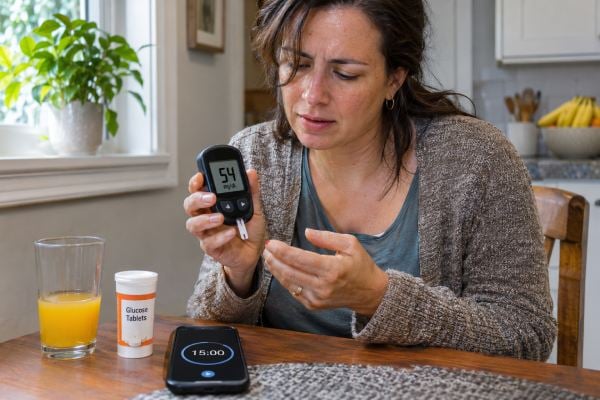
You’re halfway through the afternoon when your hands start shaking, you break into a sweat, and concentrating gets hard. A snack helps, so you wonder whether your blood sugar dropped. It can drop even if you’ve never had diabetes. Hunger, a racing heart, and lightheadedness can happen at normal blood sugar levels too.
What helps sort out the cause is a glucose reading taken while the symptoms are happening, along with the timing of the episode and what happens as you recover. True low blood sugar, called hypoglycemia, is uncommon in adults without diabetes. Repeated episodes deserve medical attention, especially if they happen overnight, before breakfast, or after weight-loss surgery.
Safety comes first. An alert adult who can swallow can usually take fast-acting sugar for a low. Someone who is too confused to swallow safely, passes out, or has a seizure needs emergency help right away.
Table of Contents
- What counts as low blood sugar without diabetes?
- Symptoms of low blood sugar and common look-alikes
- What to do during a suspected low
- Why blood sugar can drop and what the timing tells you
- How clinicians test for hypoglycemia
- How to reduce your risk and when to seek follow-up
What counts as low blood sugar without diabetes?
Between meals, your body normally keeps blood sugar steady by lowering insulin output and releasing stored glucose from the liver. The liver also makes new glucose as needed. Hypoglycemia can develop when those safeguards can’t keep up, when the body releases too much insulin, or when a medicine keeps insulin levels higher than they should be.
Two numbers often come up, and they serve different purposes. Below 70 mg/dL (3.9 mmol/L) is a common alert threshold in diabetes care and a practical point to act on when you have symptoms and a low finger-stick reading. Around 55 mg/dL (3.1 mmol/L) is the blood glucose level at which symptoms often appear in adults without diabetes during fasting. A lab result around or below that level during symptoms helps support a diagnosis. After a meal, the exact threshold is less well defined, and the circumstances matter.
Clinicians look for three findings together, known as Whipple’s triad.
- You have symptoms or signs that fit low blood sugar.
- Your blood glucose is low at the same time, ideally confirmed by a laboratory plasma glucose test.
- Your symptoms improve as your glucose returns to a normal level.
For example, shakiness and trouble speaking during a lab-confirmed glucose of 49 mg/dL, followed by recovery when glucose rises, fit this pattern. Feeling better after eating gives the clinician one piece of information. Without a glucose measurement during symptoms, there’s still no way to know whether glucose was low. A reading taken after juice or a snack can show that your glucose is now normal while leaving the earlier level unknown.
Finger-stick meters and continuous glucose monitors can help capture the timing of an episode, but both have limits at low levels. A continuous glucose monitor, or CGM, measures glucose in the fluid under your skin. Its reading can lag behind blood glucose when levels are changing quickly, and pressure from sleeping on the sensor can produce a false alarm. If you feel well and get a surprising low alert, check with a finger-stick meter if you have one. For more on unexplained overnight alerts, see how sensor lag and compression lows affect readings.
Symptoms of low blood sugar and common look-alikes
Some symptoms come from your body’s early alarm response. As glucose falls, stress hormones such as adrenaline can make you feel shaky, sweaty, hungry, or anxious. Your heart may pound, and your skin may look pale. These changes can come on quickly enough that you remember exactly what you were doing when they started.
Other symptoms appear when your brain has too little glucose to work normally. You might have blurry vision, stumble, respond slowly, or struggle to speak clearly. Someone else may notice confusion or a sudden change in behavior before you realize anything is wrong. A severe low can cause a seizure or loss of consciousness. Some people with repeated lows become less aware of the early warning signs.
| What you notice | What to do |
|---|---|
| Shaking, sweating, hunger, or a pounding heart while fully alert | Stop what you’re doing. Check glucose if a meter is available, and treat a low promptly. |
| New severe confusion, difficulty swallowing, a seizure, or loss of consciousness | Call emergency services. Give nothing by mouth if the person cannot swallow safely. |
| A sensor alarm while you feel well, especially while lying on the sensor | Take pressure off the sensor and check with a finger-stick meter if possible. |
| Repeated symptoms with normal glucose measured during the episode, before eating | Ask a clinician about other causes. Bring the readings and a record of when symptoms occur. |
Caffeine, anxiety, dehydration, and a drop in blood pressure can cause some of the same symptoms. The circumstances may offer clues. Lightheadedness when you stand up may point toward blood pressure. A shaky spell after strong coffee may have more to do with caffeine. If symptoms tend to follow meals but glucose stays normal during them, a clinician may call it postprandial syndrome. The symptoms are real, and identifying the cause can help you avoid relying on sugar every time they occur.
New trouble speaking, one-sided weakness, fainting, or severe confusion warrants emergency assessment because serious conditions can look like hypoglycemia. Call for help even if you have no way to check glucose.
What to do during a suspected low
If you’re alert and can swallow safely
Stop exercising or doing anything that could cause injury. If you’re driving, pull over safely. Check with a finger-stick meter if you can do so promptly. If the reading is below 70 mg/dL and you have symptoms, take fast-acting carbohydrate. If you have typical symptoms, no meter is available, and you suspect a low, it’s reasonable to treat the suspected low while you’re still able to swallow safely.
- Take about 15 g of fast-acting carbohydrate. Use glucose tablets or gel in the amount listed on the label, about ½ cup (4 fl oz) of fruit juice or regular soda, or 1 tablespoon of sugar or honey.
- Wait 15 minutes and check again if you have a meter. If your glucose is still below 70 mg/dL, take another 15 g. Get urgent help if your glucose stays low despite repeat treatment, your symptoms worsen, or you can’t manage the episode safely.
- Once glucose has recovered and you feel better, eat your next meal or have a snack if the meal is some time away. Crackers and cheese or a small sandwich provide carbohydrate along with protein.
Glucose tablets make it easy to measure what you take. Chocolate, cookies, and other foods high in fat work more slowly. If you have a treatment plan for lows after bariatric surgery, follow its instructions. The plan may call for a smaller measured amount of glucose to reduce the chance of another drop. If you take acarbose, use glucose tablets or gel rather than table sugar for rescue.
If someone cannot swallow safely or needs emergency help
Call emergency services right away if the person is unconscious, having a seizure, or too confused to swallow safely. Keep food, drink, and glucose gel out of their mouth because they could choke. If they are breathing, turn them onto their side when it’s safe to do so. Follow the dispatcher’s instructions.
If they have prescribed rescue glucagon and you know how to give it, use it while waiting for help. They still need emergency assessment if they wake up. Arrange prompt medical care after a first unexplained episode with a clearly low reading, even if you feel better after treatment. Get urgent advice if a low may be due to accidentally taking insulin or a glucose-lowering pill. Its effects can outlast the sugar you take, and the low can return after you initially recover.
Why blood sugar can drop and what the timing tells you
Episodes a few hours after eating
A confirmed low after a meal is often called reactive hypoglycemia. It can occur when insulin continues to lower glucose after the flow of glucose from the meal has slowed. The time between eating and feeling symptoms helps guide evaluation, especially if the same pattern repeats.
Weight-loss surgery is an important clue. After gastric bypass or sleeve gastrectomy, nutrients can reach the intestine quickly. That can lead to a rapid rise in glucose followed by a strong insulin response. Post-bariatric hypoglycemia typically occurs 2–4 hours after eating and can develop well after recovery from surgery. A spell during breakfast or shortly afterward, especially with flushing, stomach cramps, or diarrhea, may fit early dumping syndrome instead. Tell your bariatric team when symptoms start and whether you’ve measured your glucose during them. Lows before breakfast or long after the last meal also deserve a review for other causes.
Episodes before breakfast, overnight, or well after eating
Ordinary gaps between meals rarely cause true hypoglycemia in a healthy adult. Prolonged poor intake or malnutrition, however, can reduce the body’s fuel reserves. Long, strenuous exercise can use up more of those reserves, especially when you’ve eaten very little. If you repeatedly wake up with symptoms and a confirmed low, or get lows after routine activity, seek medical evaluation.
Alcohol can make it harder for the liver to produce glucose. The risk is higher after heavy drinking, drinking on an empty stomach, or drinking when you’ve had very little to eat. A low can occur hours later. Confusion, slurred speech, and poor coordination can look like intoxication, so someone who is unusually difficult to wake needs immediate help. The timing helps explain why alcohol can affect blood sugar later that night or the next morning.
A rare cause of repeated fasting lows is an insulinoma, a tumor in the pancreas that releases insulin when the body would normally turn it down. Some people with an insulinoma have episodes after eating as well. The diagnosis starts with blood tests during a low to see whether insulin is involved. Timing alone can’t identify a tumor.
Episodes during illness or after a medication change
Accidental exposure to insulin or to pills that make the pancreas release insulin, such as glipizide or glyburide, can cause significant lows in a person without diabetes. This can happen after a medication mix-up in a household. Some other medicines can occasionally contribute, including certain antibiotics such as fluoroquinolones. A clinician or pharmacist can review the drug, dose, timing, and other risk factors.
Severe illnesses can affect how much glucose the body makes or how fast it uses it. Examples include severe liver disease, kidney failure, and sepsis, a dangerous response to infection. Adrenal insufficiency, in which the body makes too little cortisol, is another possible cause. A clinician may consider it when lows occur alongside symptoms such as persistent fatigue, weight loss, nausea, or low blood pressure. When low glucose develops in someone who is already very ill, treating the underlying illness is part of restoring glucose safely.
How clinicians test for hypoglycemia
The most useful blood sample is one collected during a spontaneous episode, before glucose treatment, when that can be done safely and without delaying care. Your clinician will ask what the episode felt like, how long it lasted, what you ate or drank, and what brought relief. A list of your prescriptions, over-the-counter medicines, and supplements helps. Mention prior stomach surgery and any recent illness, vomiting, or difficulty eating.
When a lab sample confirms a low, the care team may measure insulin, C-peptide (released when your pancreas makes insulin), proinsulin, and a ketone called beta-hydroxybutyrate. They may also screen for medicines that stimulate insulin release. These results help distinguish excess insulin from other causes. For example, high insulin with low C-peptide can suggest insulin came from outside the body. When both are inappropriately high during a low, the pancreas is releasing insulin. A medication screen can help tell whether a drug triggered that release.
If a spontaneous episode is difficult to capture, the clinician may choose a supervised test based on your history.
- For suspected fasting hypoglycemia, a supervised fast can last up to 72 hours. The medical team checks glucose and collects other blood samples as needed. The team ends the test when its criteria are met, which can happen well before 72 hours. Never try to reproduce a fasting low at home.
- For selected cases of suspected after-meal hypoglycemia, a supervised mixed-meal test may help. You eat a meal containing carbohydrate, protein, and fat, and the team checks glucose and symptoms over several hours. A standard glucose tolerance drink can provoke misleading lows and is generally avoided for this purpose.
- After bariatric surgery, clinicians usually focus on the history and documenting a low during an everyday episode. Bariatric guidelines advise against routinely provoking symptoms with a glucose drink or mixed-meal test to make this diagnosis.
A normal fasting glucose at a routine appointment tells you what your glucose was at that moment. Likewise, an A1C result estimates average blood glucose over about three months and can miss brief lows. If repeated episodes occur while glucose is normal, your clinician can look for other explanations. If low glucose is confirmed, blood tests during the episode usually guide any next steps, including whether imaging would help.
How to reduce your risk and when to seek follow-up
Start with a short record of episodes you experience naturally. Write down the time, the symptoms, and what you were doing. Note when you last ate, drank alcohol, exercised, or took a medicine. If you check glucose, record the value, whether it came from a finger stick or a sensor, and whether you’d already taken sugar. Note how long recovery took and if someone had to help you.
A useful entry might read, “2:40 p.m., shaking and sweating. Lunch at noon was a bagel and sweet coffee. Finger stick 58 mg/dL before treatment. Took 15 g of glucose. At 2:55 p.m. the reading was 82 mg/dL and the shaking had stopped.” That gives a clinician more to work with than a list of low sensor readings or a general description of feeling unwell after lunch.
If your symptoms tend to follow large, carbohydrate-heavy meals, try smaller portions of those foods and include protein and fiber. Instead of having a sweet coffee and pastry on their own, for example, try plain yogurt with oats and berries or eggs and whole-grain toast. If long gaps seem to play a part, eat at more consistent times while you’re being evaluated. After bariatric surgery, work with your care team or a bariatric dietitian on meal size, carbohydrate portions, and a rescue plan that fits your needs.
Avoid drinking alcohol on an empty stomach. If you’ve had a confirmed low or you’re being assessed for recurrent episodes, carry a measured source of fast-acting glucose. If episodes have impaired your ability to think or act, tell someone close to you how to get help. Ask your clinician when it’s safe to resume driving or other activities where a sudden episode could put you or someone else at risk.
Book a medical visit if episodes recur, even if you haven’t captured a reading yet. Seek prompt assessment for a confirmed unexplained low, especially a reading near or below 55 mg/dL, or for repeated episodes overnight, before meals, or after bariatric surgery. Symptoms that continue despite normal glucose readings also merit a visit if they interfere with everyday life. Severe confusion, a seizure, loss of consciousness, or inability to swallow safely calls for emergency help immediately.
References
- Non-Diabetic Hypoglycemia: Evaluation and Management in Adults 2025 (Review)
- Non-Diabetic Hypoglycemia 2024 (Clinical Review)
- Society for Endocrinology guidelines for the diagnosis and management of post-bariatric hypoglycaemia 2024 (Guideline)
- Treatment of Low Blood Sugar (Hypoglycemia) 2024 (Public Health Guidance)
Disclaimer
This article provides general information for adults and cannot diagnose the cause of a suspected low. Seek medical care for recurrent or unexplained episodes and follow any individual treatment plan from your clinician. Call emergency services if someone is severely confused, has a seizure, loses consciousness, or cannot swallow safely.