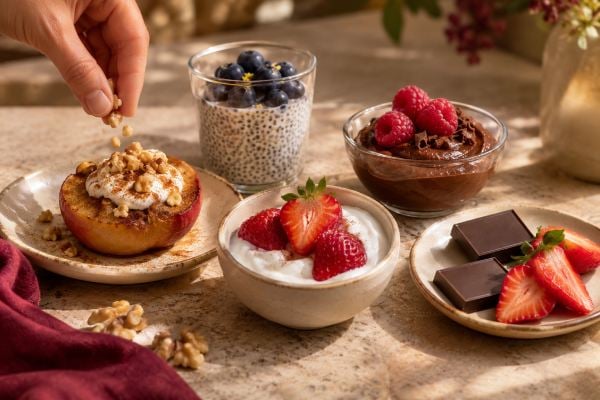
A bowl of berries and yogurt, a warm apple with cinnamon, or a slice of chocolate cake can all fit into an eating plan that takes blood sugar into account. What matters most is the carbohydrate in the portion, the food it comes from, and what else you’re eating alongside it. A smaller slice of your favorite cake may sit better than a generous serving of a dessert marketed as low carb.
For an everyday dessert that’s less likely to push glucose high, start with a portion you can picture and ingredients you actually enjoy. Whole fruit, plain yogurt, nuts, and seeds make a useful base; a little chocolate, a spoonful of crumble, or a measured drizzle of syrup adds the flavor you’re after. Glucose normally rises after eating, and the same dessert can affect people differently. The goal is to find portions and combinations that work for you and still feel like dessert.
Table of Contents
- What low-glycemic means for dessert
- How to build a dessert with less glucose impact
- Seven dessert ideas with practical portions
- Sweeteners and labels that can be misleading
- Dessert after meals, at restaurants, and on special occasions
- How to tell what works for your blood sugar
What low-glycemic means for dessert
The glycemic index, or GI, ranks carbohydrate-containing foods by the blood sugar response they produce under standardized conditions. Researchers compare portions that contain the same amount of digestible carbohydrate, using glucose as the reference. On that scale, a GI of 55 or below is low, 56 to 69 is medium, and 70 or above is high.
Glycemic load, or GL, adds portion size to the picture. It multiplies the food’s GI by the grams of digestible carbohydrate in the portion and divides by 100. A food with a GI of 50 and 20 g of digestible carbohydrate in the portion has a GL of 10. Double that portion and the GL rises to 20, even though the food’s GI stays at 50. That distinction between glycemic index and glycemic load explains why a generous bowl of a low-GI dessert can still deliver a substantial amount of carbohydrate.
Most homemade desserts lack a measured GI. Swapping flours, adding a crust, or changing the amount of syrup can change the finished recipe. A test result for one brand of ice cream also tells you little about a sundae with a cone, sauce, and candy. When the exact GI is unknown, the carbohydrate in the portion is usually the most practical place to start.
Timing matters, too. A rich dessert can slow digestion, so glucose may rise later. Someone who checks soon after eating cheesecake might see a modest early change and a larger rise later. That delayed response is especially relevant for people who use mealtime insulin. If it happens repeatedly, bring the pattern to your diabetes care team so they can help you interpret it.
Research supporting lower-GI eating generally looks at the overall diet over time. European diabetes nutrition guidelines support lower-GI or lower-GL eating patterns when they also provide enough fiber and fit other nutrition goals. At dessert, that can be as simple as choosing whole-fruit or yogurt-based options more often and deciding how much of a richer dessert you want based on the rest of the meal.
How to build a dessert with less glucose impact
Measure the part that contributes most of the carbs
Start with the main carbohydrate source. In apple crisp, that might be the fruit, oats, and sugar. In a parfait, a sweetened yogurt and a generous layer of granola can contribute more than the berries. Once you know where most of the carbs come from, you can decide which ingredients are worth keeping in full and which work just as well in a smaller amount.
For a packaged dessert, read Total Carbohydrate alongside the serving size. If ice cream has 24 g of carbohydrate per ⅔ cup, a ⅓-cup scoop has about 12 g before toppings. Add a topping that supplies another 6 g and the bowl comes to about 18 g. Those numbers are examples. Use the labels on your own products if you count carbs.
For a homemade dessert, add up the carbohydrate in the ingredients and divide by the number of equal portions. A pan with 180 g of total carbohydrate yields about 15 g per piece when cut into 12 equal pieces, or 20 g when cut into nine. Include what you serve alongside it. A spoonful of whipped cream and a scoop of ice cream can contribute different amounts, and brands vary.
Use fiber and protein where they improve the dessert
Whole fruit brings sweetness, water, and fiber. Keep the peel on baked apples or pears if you like the texture. For a cold dessert, thaw frozen berries and spoon both the fruit and its juices over plain yogurt. That gives you a fruit sauce without needing to sweeten it separately. Using whole fruit in place of juice also makes it easier to see how much fruit you’re serving.
Plain Greek yogurt, skyr, or silken tofu can give a dessert body. Chia seeds make a pudding set, and toasted nuts bring crunch with a small topping. Fiber, protein, and fat can change how quickly a meal is digested and how glucose rises afterward. The carbohydrate you started with still matters. If you want a smaller rise from a big slice of pie, serving a smaller slice is a more direct way to reduce the carb amount than adding nuts on top.
Add sweetness where you’ll taste it
Taste the fruit or base before sweetening it. A ripe pear may need only cinnamon and lemon zest. Plain yogurt is tangier, so you might prefer a measured teaspoon of maple syrup on top, where you can taste it in the first few bites. One teaspoon of table sugar supplies about 4 g of carbohydrate. Using a measuring spoon makes it easy to compare that choice with the amount you’d normally pour.
Vanilla, toasted oats, citrus zest, and unsweetened cocoa can make a lightly sweet dessert taste more complete. Texture helps, too. A spoonful of crunchy topping can make baked fruit feel like a crisp. If you’re making cookies or cake, use a recipe designed for your chosen sweetener or level of sweetness. Sugar also affects browning, moisture, and spread, so a big reduction can change the bake.
Seven dessert ideas with practical portions
These serving ideas give you a place to start. They have no assigned GI scores, and the carbohydrate content will vary with the fruit, brand, sweetener, and toppings you use. If you follow a carb plan, use your own targets to decide how much to serve.
| Dessert | Example portion | What to pay attention to |
|---|---|---|
| Berry yogurt cup | ½ cup plain Greek yogurt or skyr and ½ cup berries | Sweetened yogurt and granola can add carbs quickly. |
| Warm cinnamon apple | ½ medium apple with 2 tablespoons plain yogurt and 1 tablespoon chopped walnuts | Count a crumble or syrup if you add one. |
| Vanilla chia pudding | One pudding made with 2 tablespoons chia seeds and ½ cup unsweetened milk or soy beverage | Check the liquid and toppings. Plain dairy milk contains lactose. |
| Chocolate tofu mousse | ⅓ to ½ cup with a few raspberries | Unsweetened cocoa adds chocolate flavor. Sweetened chocolate and syrup change the carbs. |
| Frozen yogurt bark | Two of eight equal pieces from a batch made with 1 cup plain yogurt and ½ cup berries | Divide the tray evenly and count any chocolate or sweetener across the batch. |
| Dark chocolate and strawberries | 10 to 15 g dark chocolate and ½ cup sliced strawberries | Square sizes and sugar content vary across bars. |
| Ice cream with berries | ⅓ cup ice cream with ¼ cup berries | Read the label for the flavor you buy and include cones, sauces, or mix-ins. |
For something warm, bake the fruit and toast the topping
Core half an apple, place it cut-side up in a small baking dish, and sprinkle it with cinnamon. Add a splash of water to the dish. Bake at 375°F (190°C) until you can pierce it easily with a fork, about 25 to 35 minutes depending on the apple. Top it with cold plain yogurt and chopped walnuts. If you want a crisp topping, toast a tablespoon of rolled oats in a dry skillet and sprinkle them on just before serving.
Pears work well the same way. For a batch that serves four, bake four halves and spoon the toppings on individually. That makes it easy to adjust for different tastes. A soft, ripe pear may already be sweet enough, while a tart apple may taste better to you with a small spoonful of maple syrup.
For a creamy dessert, try cocoa mousse or chia pudding
For a quick mousse, blend 1 cup of silken tofu with 2 tablespoons of unsweetened cocoa, ½ teaspoon of vanilla, and a pinch of salt. Taste, sweeten as you like, and divide between two or three small dishes. Chill until cold. Use a few raspberries for tartness or finely chopped chocolate for texture. Choose a plain tofu, and check any chocolate or sweetener you add if you’re counting carbs.
For chia pudding, stir 2 tablespoons of chia seeds into ½ cup of milk or unsweetened soy beverage with vanilla. Stir again after 5 to 10 minutes to break up clumps, then refrigerate for at least 2 hours or overnight. If you prefer a looser pudding, stir in another splash of your chosen liquid before serving. Add berries just before eating. If 2 tablespoons of chia feels like too much fiber at once, split the pudding into two servings.
For a frozen treat, portion it before serving
For yogurt bark, spread 1 cup of plain Greek yogurt on a parchment-lined tray and scatter ½ cup of chopped berries over it. Mark eight portions with a knife or spatula before the yogurt hardens. Freeze until firm, break along the lines, and store the pieces in a freezer container. Let a serving sit briefly at room temperature to soften.
If what you want is regular ice cream, measure a scoop into a small bowl. Taste it before adding anything. Fruit adds texture, and a spoonful of chopped nuts can replace some of the crunch you’d get from a cone. For dark chocolate, weigh your usual square once or check how many squares make up a labeled serving. A higher cocoa percentage can guide you toward a flavor you like, while the label tells you how much carbohydrate is in the amount you eat.
Sweeteners and labels that can be misleading
Honey, maple syrup, coconut sugar, and date syrup all contribute carbohydrate. They can bring distinctive flavors, so choose the one you like and measure how much you use. Whole dates bring some fiber, but several dates blended into a brownie batter can still supply a substantial share of the carbs. If a recipe has six dates and yields six equal bites, each bite contains the equivalent of one date plus its share of the other ingredients. The size and type of date matter when you estimate the total.
High-intensity sweeteners such as stevia and monk fruit can reduce the carbohydrate from sweetening when they replace sugar. Check the product itself because packets and baking blends may contain other ingredients that help with measuring and texture. In a cold dessert, you can start with a little, taste, and add more. In baked goods, follow the recipe or the blend’s directions since different products vary in sweetness and bulk.
Some sugar-free chocolates, cookies, and frozen desserts use sugar alcohols. Their effect on glucose varies. Maltitol, for example, can raise glucose because the body absorbs part of it. Larger amounts of some sugar alcohols can also cause gas, bloating, or diarrhea. Check the ingredient list if you tend to get symptoms from sugar-free sweets, and look at how many servings you actually ate.
At the store, three label details can save you from a poor comparison.
- Check how much you’ll eat. Use the same weight or volume when comparing two products. Check whether a wrapper or pint contains more than one serving.
- Read Total Carbohydrate first. “No added sugar” products can contain carbs from milk, fruit, flour, or starch. The Added Sugars line helps you see how much sugar was added during preparation or processing.
- Treat “net carbs” as a separate claim. Manufacturers may calculate net carbs in different ways. If you use mealtime insulin, follow the carb-counting method agreed on with your diabetes care team.
A label can help you compare foods, while taste and portion determine what you’ll actually eat. If an expensive low-carb cookie leaves you reaching for two more, compare the amount you typically eat with one portion of the cookie you enjoy most.
Dessert after meals, at restaurants, and on special occasions
Having dessert with or just after a mixed meal may slow the early rise compared with eating the same dessert on its own. The effect depends on the meal and the person. The simplest way to plan for dessert is to consider the carb amount for the whole meal, including drinks. If dinner includes rice, bread, and a sweet drink, dessert adds to that total even if it’s served last.
At home, think about the part of the meal you’d most enjoy. If you want peach crisp, you might choose a smaller serving of a starchy side dish. If you’re still hungry after dinner, eat enough to feel satisfied and choose a dessert portion that suits your plan. If your medication plan calls for a consistent amount of carbohydrate at a meal, work within that plan when changing portions.
At a restaurant, serving sizes vary even for familiar dishes. A scoop of ice cream, a small custard, or a shared slice of pie gives you a portion you can see. A fruit dessert may come with pastry, syrup, or ice cream, so ask what’s included if that would help you choose. When there’s no nutrition information, make the best estimate you can and follow your usual diabetes management plan.
For birthdays and holidays, decide what you actually want to taste. If the cake is the reason you’re looking forward to dessert, a slice you enjoy may be more satisfying than a plate of smaller items picked out because they sound lighter. If you want to sample several desserts, put small portions on one plate. Seeing them together makes the total serving easier to judge than grazing from the dessert table.
An evening dessert can also be its own snack. If you’re choosing something you’ll eat regularly, a portion you can serve consistently makes it easier to compare how you feel and, if you monitor glucose, what your readings show. If bedtime snacks are part of a plan to prevent overnight lows, ask your diabetes care team how a change in snack composition or portion fits that plan.
How to tell what works for your blood sugar
If you already check glucose with a meter or continuous glucose monitor, look at patterns you can compare. A yogurt cup after a light lunch and a slice of pie after a heavy dinner tell you how you responded to two different meals. To learn how much a dessert portion matters, keep the main meal and timing similar and change one thing, such as the size of the pie slice or the amount of topping. Note your starting glucose, the portion, and any unusual activity, poor sleep, or illness that day.
For many nonpregnant adults with diabetes, a common goal for peak after-meal glucose is below 180 mg/dL (10.0 mmol/L), checked 1 to 2 hours from the start of the meal. Your care team may set a different goal, particularly during pregnancy or if you’re prone to lows. The target applies to diabetes management. A single reading after dessert cannot diagnose prediabetes or diabetes.
If you use a sensor and often see a later rise after rich desserts, bring a few examples to your next diabetes visit. Include when you started eating, when you had dessert, and when you took any mealtime insulin. If your symptoms and sensor reading disagree, check with a fingerstick meter when available and follow your treatment plan. A sensor measures glucose in the fluid between cells, so its reading can lag behind blood glucose when levels are changing quickly.
Feeling shaky or tired after dessert can have several causes. If the symptoms recur, note when they start and discuss them with a clinician. If you have diabetes and your glucose is below 70 mg/dL (3.9 mmol/L), follow your low-blood-sugar plan promptly. Fast-acting glucose, such as glucose tablets, is the usual first choice when you can safely swallow. Chocolate, ice cream, and other high-fat desserts can take longer to work.
If you have prediabetes and aren’t routinely checking at home, you can start with a change you can repeat. Choose a dessert you enjoy, settle on a portion, and check the label or ingredients for the main sources of carbs. Use the follow-up testing schedule your clinician recommends to assess your blood sugar over time. If you already track readings and see repeated highs or lows, share the pattern with your care team so they can help you decide what to adjust.
References
- Evidence-based European recommendations for the dietary management of diabetes 2023 (Guideline)
- 5. Facilitating Positive Health Behaviors and Well-being to Improve Health Outcomes: Standards of Care in Diabetes—2026 2026 (Guideline)
- 6. Glycemic Goals, Hypoglycemia, and Hyperglycemic Crises: Standards of Care in Diabetes—2026 2026 (Guideline)
- Nutrition Facts Label and Your Health 2026 (CDC Guidance)
Disclaimer
These dessert ideas provide general nutrition information. If you use insulin or another medicine that can cause low blood sugar, follow your care team’s guidance on carbohydrate portions, medication timing, and treating lows. Ask your clinician about personal glucose targets if you’re pregnant or regularly see high or low readings.