Weight loss after 60 is not just about burning calories. The better goal is to reduce excess body fat while protecting muscle, balance, bone health, joint comfort, and everyday independence. Low-impact exercise can support that goal because it is easier to repeat consistently, kinder to painful joints, and flexible enough to fit different fitness levels.
Low-impact does not mean easy, ineffective, or only for beginners. A brisk walk, cycling session, pool workout, resistance-band routine, or well-paced chair workout can all raise your heart rate, build strength, and improve stamina without the pounding that comes from running or jumping. The key is choosing activities that feel safe enough to do regularly and challenging enough to create progress over time.
Table of Contents
- Why Low-Impact Exercise Works After 60
- Best Low-Impact Exercises to Choose
- How Much Exercise to Aim For
- A Joint-Friendly Weekly Plan
- Strength, Balance, and Mobility
- How to Progress Without Overdoing It
- Safety Signs and Medical Guidance
- Making Results Sustainable
Why Low-Impact Exercise Works After 60
Low-impact exercise works best when it helps you move more often without aggravating your knees, hips, back, feet, or shoulders. For many adults over 60, the most effective exercise plan is not the hardest one; it is the one that can be repeated week after week.
Weight loss still depends on an overall calorie deficit, but exercise changes the process in important ways. It helps you burn more energy, improves blood sugar control, supports heart and lung fitness, preserves physical function, and makes daily activities easier. When combined with enough protein and sensible nutrition, exercise also helps reduce the chance that weight loss comes with unnecessary muscle loss.
This matters more with age. Muscle mass and strength tend to decline over time, and aggressive dieting can speed that loss if exercise is missing. A plan that combines low-impact cardio with strength training is often more useful than doing cardio alone. For a broader age-specific approach, weight loss after 60 strategies should include nutrition, movement, recovery, and medical context rather than focusing only on the scale.
Low-impact exercise is especially useful if you have:
- Knee, hip, ankle, or back discomfort
- Arthritis or stiffness
- A history of falls or fear of falling
- A higher starting weight
- Low stamina after illness, surgery, or a long inactive period
- Fatigue from poor sleep, stress, or caregiving
- Concerns about high-impact workouts feeling intimidating or unsafe
A useful way to think about low impact is “one foot stays supported, or the body is supported by equipment or water.” Walking, cycling, swimming, rowing, elliptical training, water aerobics, chair cardio, and many strength exercises all fit this idea.
Intensity still matters. A slow stroll may be a good starting point, but weight-loss support usually improves when some sessions reach a moderate effort. Moderate intensity means your breathing is faster and your body feels warmer, but you can still speak in short sentences. You do not need to chase exhaustion. In fact, workouts that leave you wiped out may reduce your movement for the rest of the day, which can cancel out some of the benefit.
Low-impact exercise is most powerful when it improves your whole week. A person who walks 20 minutes most days, strengthens twice a week, and stands up more often during the day may do better than someone who attempts one very hard workout and then needs several days to recover.
Best Low-Impact Exercises to Choose
The best low-impact exercise is the one that matches your joints, balance, access, confidence, and current fitness. You do not need a gym, but having several options can prevent boredom and help you work around flare-ups.
Walking is often the simplest place to start. It is familiar, adjustable, and easy to divide into shorter sessions. A flat outdoor route, indoor mall, treadmill, walking pad, or hallway loop can all work. If walking is comfortable, gradually increasing pace, time, or gentle incline can make it more effective. A practical walking for weight loss plan can be especially helpful when you want structure without complicated workouts.
Cycling is another strong option because the bike supports much of your body weight. A stationary bike is useful for people who want predictable footing, climate control, and easy intensity changes. Recumbent bikes may feel better for people with back discomfort or balance concerns. Outdoor cycling can also work well, but it requires more attention to traffic, surfaces, and fall risk.
Water-based exercise is often helpful for painful joints. Swimming, water walking, and aqua aerobics reduce loading through the hips, knees, and feet while still allowing the muscles and lungs to work. The water also adds gentle resistance, which can make simple movements more challenging without adding impact.
Elliptical machines provide a smooth stepping motion that can feel easier on the knees than running. Some people love them; others find the stride awkward. Start with short sessions and low resistance before deciding whether the machine suits your body.
Chair workouts and seated cardio are good options if standing stamina is limited. They can include marching, punches, heel taps, resistance-band pulls, and sit-to-stand practice. These workouts are not “less valid.” They can be the right bridge from inactivity to more upright movement.
| Exercise | Best for | Starting point | Watch for |
|---|---|---|---|
| Walking | Simple daily movement, stamina, habit building | 5 to 20 minutes on flat ground | Foot pain, uneven surfaces, poor footwear |
| Stationary bike | Knee-friendly cardio, indoor consistency | 10 minutes at easy resistance | Seat height, knee discomfort, numbness |
| Water aerobics | Arthritis, higher body weight, joint sensitivity | One beginner class or 15 minutes water walking | Slippery pool decks, fatigue after class |
| Elliptical | Smooth cardio without running impact | 5 to 10 minutes at low resistance | Balance, hip or knee irritation |
| Chair cardio | Low stamina, balance concerns, home workouts | 5 to 15 minutes seated movement | Shoulder strain, holding breath |
| Resistance bands | Strength, posture, muscle preservation | 1 set of 8 to 12 controlled reps | Band snapping, poor anchoring, rushed form |
If knee discomfort is your main barrier, choose movements that reduce pounding and avoid deep painful ranges at first. Cycling, pool exercise, flat walking, chair workouts, and carefully chosen strength exercises often fit well. A more specific guide to low-impact cardio for bad knees can help you compare options when joint pain limits your choices.
How Much Exercise to Aim For
A strong long-term target is at least 150 minutes per week of moderate-intensity aerobic activity, plus strength training at least two days per week. If that sounds far from where you are now, start smaller; some movement is better than none, and gradual progress is safer than forcing a sudden jump.
For weight loss, many people eventually benefit from building toward 150 to 300 minutes of moderate cardio per week. That does not need to happen immediately. It can be divided into short sessions, such as 10 minutes after meals, 15 minutes twice a day, or 30 minutes five days per week.
A practical starting ladder looks like this:
- First goal: Move for 5 to 10 minutes on most days.
- Next goal: Reach 20 to 30 minutes on three to five days per week.
- Then: Add one or two slightly longer sessions.
- Later: Build toward 150 minutes per week.
- If tolerated: Increase toward 200 to 300 minutes per week when weight loss, stamina, or maintenance goals require more activity.
The right amount also depends on diet. Exercise alone can support weight loss, but many people overestimate how many calories a workout burns and underestimate how easily hunger can rise afterward. A balanced plan usually pairs movement with meals that include protein, fiber-rich carbohydrates, fruits, vegetables, and enough healthy fats to stay satisfied.
Use the talk test to control intensity:
- Light effort: You can talk easily and sing.
- Moderate effort: You can talk, but not sing.
- Vigorous effort: You can only say a few words before pausing.
- Too hard for most routine sessions: You feel chest pressure, dizziness, nausea, unusual breathlessness, or cannot recover after slowing down.
Most adults over 60 do not need vigorous exercise to make progress. Moderate effort is enough for many goals and is often easier to recover from. You can include brief harder moments later if you are already active, cleared to do so, and your joints tolerate it.
Strength training is not optional if the goal is healthy weight loss. It helps your body keep the muscle that supports metabolism, balance, posture, and daily tasks. If you are unsure how cardio fits with the bigger picture, how much exercise you need to lose weight depends on your current activity, food intake, health status, and how quickly you can recover.
A Joint-Friendly Weekly Plan
A joint-friendly plan should mix easy cardio, moderate cardio, strength, balance, and recovery. The goal is not to punish the body into weight loss; it is to build a repeatable week that increases total movement while leaving you able to function well.
Begin with your current baseline. If you are inactive, a realistic first week may include 5 to 10 minutes of walking on most days and one short strength session. If you already walk regularly, you may start with longer sessions, gentle intervals, and two strength days.
Here is a sample plan that can be adjusted for walking, cycling, water exercise, elliptical, or chair cardio.
| Day | Workout | Effort | Simple adjustment |
|---|---|---|---|
| Monday | 20 to 30 minutes walking or cycling | Light to moderate | Split into two 10-minute sessions if needed |
| Tuesday | Strength training plus balance practice | Controlled | Use chair support for standing moves |
| Wednesday | 15 to 30 minutes pool exercise, walking, or chair cardio | Easy to moderate | Choose the lowest-pain option |
| Thursday | Rest day or 10 to 15 minutes gentle mobility | Easy | Add a relaxed walk if you feel good |
| Friday | 20 to 35 minutes low-impact cardio | Moderate | Add 3 short faster intervals if ready |
| Saturday | Strength training plus light walk | Controlled | Keep weights lighter if sore |
| Sunday | Easy walk, stretching, gardening, or active chores | Light | Focus on enjoyable movement |
A low-impact cardio session can be simple:
- Warm up for 5 minutes at an easy pace.
- Move at a moderate pace for 10 to 25 minutes.
- Cool down for 3 to 5 minutes.
- Stretch gently if it feels good, without forcing range of motion.
For a slightly more challenging session, use intervals:
- 5 minutes easy
- 1 minute brisk, 2 minutes easy
- Repeat 4 to 8 times
- 5 minutes easy cooldown
Intervals do not have to be intense. “Brisk” can simply mean a pace where you breathe faster but still feel in control. On a bike, it may mean slightly more resistance. In the pool, it may mean faster water walking. In chair cardio, it may mean quicker arm and leg movements while keeping posture tall.
Avoid increasing everything at once. Do not add more days, longer workouts, faster pace, and harder resistance in the same week. Pick one variable. A safe progression might be adding 5 minutes to two sessions, or adding one extra short walk, or adding one set to a strength move.
Daily movement outside workouts also counts. Light housework, gardening, errands, stairs, standing breaks, and short walks all contribute to energy expenditure. These small movements can be especially helpful when formal workouts are short.
Strength, Balance, and Mobility
For adults over 60, strength training is one of the most important parts of a weight-loss exercise plan. Cardio helps burn energy and improve endurance, but strength training helps protect the muscle and function that make weight loss safer and more useful.
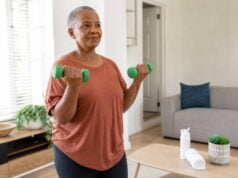
You do not need heavy barbells to start. Body weight, resistance bands, light dumbbells, machines, water resistance, and household objects can all work. The goal is controlled effort through a comfortable range of motion.
A basic full-body routine can include:
- Sit-to-stand: Strengthens thighs, hips, and everyday rising ability.
- Wall push-up or counter push-up: Trains chest, shoulders, and arms.
- Band row: Supports posture and upper-back strength.
- Step-up to a low step: Builds leg strength and stair confidence.
- Heel raise: Strengthens calves and supports walking.
- Farmer carry: Builds grip, posture, and core stability using light weights or bags.
- Dead bug or seated core brace: Trains trunk control without aggressive crunching.
Start with 1 set of 8 to 12 repetitions for each movement. Over time, build to 2 or 3 sets as tolerated. The last few repetitions should feel challenging but controlled. You should not hold your breath, strain your neck, or push through sharp pain.
Balance training deserves its own attention. Falls can change confidence quickly, and fear of falling often reduces movement. Balance work can be short and simple:
- Stand with feet close together near a counter.
- Practice heel-to-toe walking along a hallway.
- Shift weight slowly from side to side.
- Stand from a chair without using hands if safe.
- Try single-leg standing while lightly holding a support.
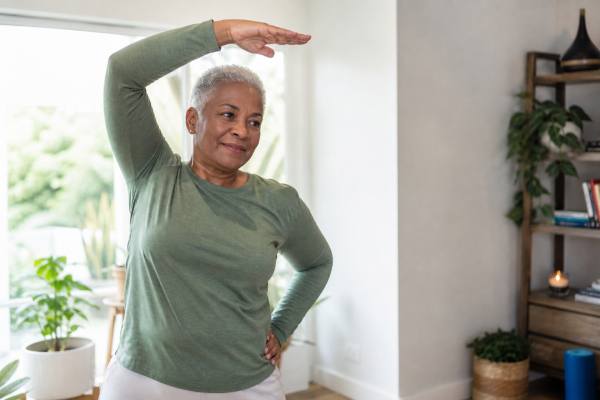
Mobility helps you move well enough to exercise. Gentle ankle circles, hip hinges, shoulder rolls, chest-opening movements, and controlled spinal rotation can reduce stiffness and improve comfort. Mobility should not feel like forcing your joints into positions they resist.
If muscle preservation is a major concern, losing weight without losing muscle requires strength training, enough protein, and avoiding overly aggressive calorie cuts. Many adults also benefit from a structured strength training plan over 50, especially if they are new to resistance exercise or returning after a long break.
How to Progress Without Overdoing It
Progress should make exercise feel more doable, not more punishing. The best signs of progress are better stamina, steadier balance, less breathlessness during daily tasks, improved strength, and a routine you can maintain.
Use a simple 10% rule as a ceiling, not a requirement. Avoid increasing total weekly exercise time by more than about 10% at once. If you walked 100 minutes this week, a reasonable next step might be 105 to 110 minutes, not 180. Some people need even slower increases, especially with arthritis, neuropathy, chronic pain, or a history of injury.
There are several ways to progress without adding impact:
- Add 2 to 5 minutes to a session.
- Add one extra short walk per week.
- Increase pace slightly for part of the workout.
- Add gentle incline on a treadmill.
- Increase bike resistance by one level.
- Add one set to selected strength exercises.
- Use a slightly stronger resistance band.
- Reduce rest time between strength moves.
- Add balance practice after cardio.
Pain is information. Mild muscle soreness after strength training can be normal, especially when starting. Sharp pain, joint swelling, limping, pain that worsens during the workout, or soreness that lasts several days means the plan needs adjustment.
A helpful pain scale is:
- 0 to 2 out of 10: Usually acceptable if movement feels controlled.
- 3 to 4 out of 10: Use caution; reduce range, speed, resistance, or duration.
- 5 or higher: Stop or modify the activity.
- Pain that changes your walking pattern: Back off and reassess.
- Pain with swelling, warmth, or instability: Seek professional guidance.
Recovery is part of the plan. Sleep, hydration, adequate food, rest days, and easier sessions all help the body adapt. Warm-ups and cooldowns matter more with age because joints and connective tissues often need more time to feel ready. A practical guide to warm-up, mobility, and recovery can help you make workouts more comfortable and consistent.
Watch for compensation. If a hard workout leaves you sitting most of the next day, total movement may not improve. A moderate workout that you recover from quickly is often better for weight loss than a session that drains you.
Safety Signs and Medical Guidance
Most adults over 60 can benefit from exercise, but some symptoms require caution or medical advice. The safest plan is one that respects your current health, medications, balance, and recent medical history.
Talk with a healthcare professional before starting or significantly increasing exercise if you have:
- Known heart disease, heart failure, or recent chest pain
- Uncontrolled high blood pressure
- Diabetes with frequent low blood sugar episodes
- Severe shortness of breath with light activity
- Recent surgery, hospitalization, fall, or fracture
- Severe osteoporosis or high fracture risk
- New or worsening dizziness
- Neuropathy, foot ulcers, or major foot pain
- Advanced arthritis with swelling or joint instability
- A pacemaker, implanted device, or complex cardiac history
- Unexplained weight loss, rapid weight gain, or new swelling
Stop exercising and seek urgent medical help if you experience chest pressure, pain spreading to the arm or jaw, fainting, severe breathlessness, sudden weakness on one side, confusion, severe headache, or a racing or irregular heartbeat that does not settle with rest.
Medication can change exercise tolerance. Blood pressure medicines, beta blockers, insulin, sulfonylureas, diuretics, sedatives, and some pain medications may affect heart rate, balance, hydration, or blood sugar. If you take medications that can cause low blood sugar, ask your clinician how to time meals, snacks, and activity.
Footwear and environment matter. Supportive shoes, safe surfaces, good lighting, handrails, and clear walkways reduce risk. Outdoor walking may require extra caution with ice, heat, uneven sidewalks, loose gravel, or poor visibility. Indoor options can be safer during bad weather.
If balance is uncertain, begin near a wall, counter, sturdy chair, or supervised setting. Group classes for older adults, physical therapy, cardiac rehabilitation, aquatic classes, or personal training with a qualified professional can be useful when you need more guidance.
Safety does not mean avoiding effort forever. It means building effort in a way your body can handle. For many people, the first victory is not weight loss; it is feeling confident enough to move again.
Making Results Sustainable
Sustainable results come from combining exercise with eating patterns, recovery, and habits that you can keep. Low-impact exercise can support weight loss, but it works best when it is part of a realistic daily system.
Start with consistency before intensity. A 15-minute walk after breakfast may not look dramatic, but it can become the anchor for a larger routine. Once that habit is stable, adding strength training, longer walks, or a pool session becomes easier.
Pair exercise with nutrition that protects muscle. Many adults over 60 need to be careful with large calorie cuts because appetite may be lower, protein intake may be inconsistent, and muscle loss is a bigger concern. Protein at meals, high-fiber foods, fruits, vegetables, and enough fluids all support training and satiety. A practical protein intake for weight loss approach can be especially useful when strength and muscle preservation are priorities.
Track progress in more than one way. The scale can move slowly, especially if you are gaining strength, improving hydration, or reducing inflammation. Useful markers include:
- Waist measurement
- Walking distance or time
- Resting heart rate trends
- Chair stands completed with good form
- Stairs feeling easier
- Less joint stiffness after warming up
- Better balance confidence
- Clothing fit
- Blood pressure, blood sugar, or cholesterol changes if monitored clinically
Expect some fluctuations. Soreness, salt intake, constipation, travel, medication changes, and poor sleep can temporarily raise scale weight through water retention. Do not respond to every fluctuation by cutting calories harder or adding more exercise. Look at trends over several weeks.
Make the plan enjoyable enough to repeat. Music, audiobooks, walking with a friend, pool classes, scenic routes, gentle competition with step counts, or a favorite morning routine can make movement feel less like a chore. Social exercise can also improve accountability and mood.
Use “minimum days” for hard weeks. On low-energy days, do the smallest version of the habit: 5 minutes of walking, one set of sit-to-stands, or a short mobility session. This keeps the routine alive without turning every day into a test of willpower.
The strongest plan over 60 is not built on punishment. It is built on steady movement, joint-friendly choices, strength, balance, enough recovery, and nutrition that supports the body you want to keep using for years.
References
- Aerobic Exercise and Weight Loss in Adults: A Systematic Review and Dose-Response Meta-Analysis 2024 (Systematic Review)
- Exercise and dietary recommendations to preserve musculoskeletal health during weight loss in adults with obesity: A practical guide 2025 (Review)
- Older Adult Activity: An Overview 2025 (Guideline)
- Overweight and obesity management 2026 (Guideline)
- Effects of Aquatic Exercise in Older People with Osteoarthritis: Systematic Review of Randomized Controlled Trials 2025 (Systematic Review)
- WHO guidelines on physical activity and sedentary behaviour: at a glance 2020 (Guideline)
Disclaimer
This article is for general educational purposes only and is not a substitute for personal medical advice, diagnosis, or treatment. Adults over 60 who have heart disease, diabetes, balance problems, severe joint pain, recent surgery, unexplained symptoms, or concerns about exercise safety should speak with a qualified healthcare professional before changing their activity routine.
If you found this helpful, consider sharing it on Facebook, X, or your preferred platform so others can use these practical, joint-friendly exercise ideas.