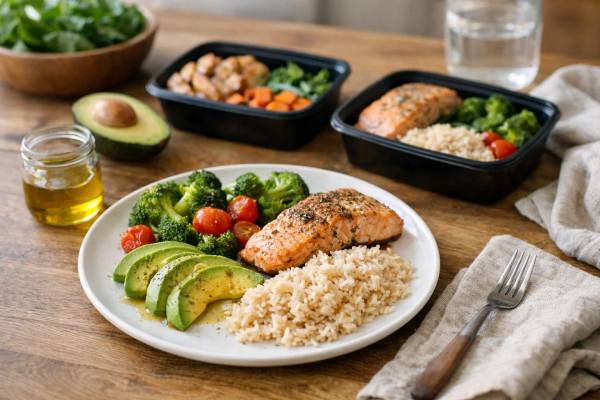
Macro-friendly meals are not just “healthy meals with protein.” They are meals built on purpose so your protein, carbs, fat, calories, and fullness all work together. That matters for weight loss because a meal can look nutritious and still leave you hungry, overshoot calories, or make it harder to hit your daily targets.
The most useful approach is not chasing perfect numbers at every meal. It is learning how to build flexible meals that usually land in the right range, then making small adjustments when needed. Below, you will find a practical way to do that, along with easy breakfast, lunch, dinner, and snack ideas that can be repeated, prepped, and customized without feeling like diet food.
Table of Contents
- What Macro-Friendly Meals Actually Mean
- How to Build Meals That Fit Your Targets
- Easy Macro-Friendly Breakfast Ideas
- Easy Macro-Friendly Lunch Ideas
- Easy Macro-Friendly Dinner Ideas
- Smart Snacks, Sides, and Macro Fixes
- Common Macro-Friendly Meal Mistakes
What Macro-Friendly Meals Actually Mean
A macro-friendly meal is a meal designed to fit your bigger daily plan. It gives you a useful amount of protein, a sensible amount of carbs and fat, and enough volume to keep hunger under control without blowing past your calorie budget.
That sounds obvious, but many people make the idea more complicated than it needs to be. Macro-friendly does not mean every meal must hit an identical ratio. It does not mean eating bland food out of plastic containers. It does not mean obsessing over whether your lunch is 31 grams of protein instead of 34. It means your meals are structured well enough that the day adds up smoothly.
For weight loss, protein usually deserves the most attention because it helps with fullness and makes it easier to hold onto lean mass while dieting. Carbs and fats then become tools you adjust based on preference, training, energy needs, and the style of deficit that feels sustainable. Some people feel better with a little more carbohydrate around workouts. Others prefer slightly higher fat meals because they stay satisfied longer. Both can work if calories and protein are in the right place.
This is why many people do well when they first learn how to count macros for weight loss or use a simple formula to calculate protein, carbs and fat targets. Once you know roughly what your day should look like, meals stop feeling random.
A good macro-friendly meal usually does three jobs at once:
- It covers a meaningful chunk of your daily protein target.
- It controls energy density so the meal feels filling for the calories.
- It is easy enough to repeat on busy days.
That last point matters more than people expect. A meal you can repeat three times a week is often more useful than a “perfect” recipe you only make once. Weight loss is built on repeatable decisions, not occasional ideal ones.
There is also a practical difference between meals that are macro-friendly on paper and macro-friendly in real life. On paper, a salad with a tiny piece of chicken may look clean and disciplined. In real life, it may leave you hunting for snacks an hour later. By contrast, a rice bowl with lean protein, vegetables, and a measured sauce may look more substantial, but it often performs better because it satisfies you and prevents rebound eating.
That is the lens to keep throughout this article: not just what fits the numbers, but what helps you live with the numbers consistently.
How to Build Meals That Fit Your Targets
The easiest way to make macro-friendly meals is to stop building meals from scratch every time. Use a repeatable template instead. Start with protein, add a carb source that suits your day, include vegetables or fruit for volume, then decide whether the meal needs a fat source or whether the fat is already built in.
For many weight-loss diets, this works well as a starting point:
- Pick a lean or moderate-fat protein anchor.
- Add a controlled carb portion if the meal needs more energy or you prefer it.
- Add produce for fiber, volume, and staying power.
- Use fats deliberately, not accidentally.
- Adjust one ingredient instead of rebuilding the whole meal.
The most overlooked step is number five. You do not need a new recipe when the macros are off. You usually just need a small tweak. If protein is low, add more chicken, Greek yogurt, egg whites, tuna, tofu, shrimp, or cottage cheese. If carbs are high, reduce rice, wraps, granola, pasta, or bread. If fat creeps up, measure oil, cheese, avocado, nuts, and sauces rather than eyeballing them.
A useful checkpoint is whether each meal gets you reasonably close to your daily protein goal. Many people benefit from aiming for steady distribution rather than saving most of their protein for dinner, which is why understanding protein per meal targets can make meal planning much easier. It also helps to think in terms of a simple high-protein plate formula instead of isolated macros.
| Meal part | Easy options | What it mainly helps with | Easy adjustment |
|---|---|---|---|
| Protein anchor | Chicken breast, turkey, lean beef, tuna, salmon, shrimp, eggs, Greek yogurt, cottage cheese, tofu, tempeh | Protein, fullness, muscle retention | Add 3 to 5 ounces more or swap to a leaner source |
| Carb base | Rice, potatoes, oats, fruit, beans, quinoa, wraps, pasta, whole-grain bread | Energy, workout fuel, meal satisfaction | Reduce or increase by one small serving |
| Produce | Leafy greens, broccoli, peppers, cucumbers, tomatoes, berries, apples, carrots, zucchini | Volume, fiber, meal size | Add more freely when hunger is high |
| Fat source | Olive oil, avocado, nuts, seeds, cheese, nut butter, dressing | Flavor, satiety, texture | Measure instead of pouring or sprinkling |
| Flavor boost | Salsa, mustard, hot sauce, yogurt sauce, herbs, spices, soy sauce, lemon | Taste without many extra calories | Choose lower-calorie sauces first |
This template keeps meals flexible. The same basic bowl can become a higher-carb post-workout dinner, a lower-carb lunch, or a more filling dinner with extra vegetables and a little avocado. That is the real advantage of macro-friendly meals: they are adjustable without becoming complicated.
Easy Macro-Friendly Breakfast Ideas
Breakfast is where many weight-loss meal plans go wrong. It is easy to end up with a meal that is too small, too sugary, or too low in protein, which often leads to stronger cravings later. A macro-friendly breakfast should be simple, filling, and easy to repeat on autopilot.
One of the best breakfast patterns is protein plus produce plus a controlled carb. That could mean eggs and toast with fruit, Greek yogurt with berries and oats, or a protein smoothie with banana and spinach. You do not need a gourmet breakfast. You need one that makes the next four hours easier.
Here are several easy options:
- Greek yogurt bowl: nonfat or low-fat Greek yogurt, berries, a measured portion of oats or granola, and chia seeds. This works well because it is fast, high in protein, and easy to scale up or down.
- Egg and egg white scramble: whole eggs for flavor and satiety, egg whites for extra protein, plus spinach, mushrooms, peppers, and one slice of toast or roasted potatoes on the side.
- Protein oatmeal: oats cooked with milk, stirred with protein powder or served with Greek yogurt, topped with berries and cinnamon.
- Cottage cheese toast plate: cottage cheese on whole-grain toast with cucumber or tomatoes, plus fruit.
- Smoothie that actually satisfies: protein powder, milk or yogurt, frozen fruit, and spinach. Keep nut butter, juice, honey, and granola controlled so the smoothie does not quietly become a large meal.
A strong breakfast does not need to be low carb. It needs to be balanced. Oats, fruit, toast, and potatoes can all fit well when protein is present and portions are deliberate. People who want more structured morning options often do well with high-protein breakfast meal prep or a short list of high-protein breakfast ideas they can rotate.
One of the most useful tricks is repeating the same breakfast on workdays. That removes decision fatigue and makes your daily totals more predictable. For example, if you know your yogurt bowl usually lands near 30 grams of protein and a moderate calorie range, you have already simplified the rest of the day.
Breakfast also does not have to look like traditional breakfast food. Leftover turkey chili, a chicken wrap, or a rice and egg bowl can be perfectly macro-friendly if that is what keeps you full and on track. The best breakfast is the one that prevents the 10:30 a.m. snack spiral.
If you are often hungry by midmorning, check whether your breakfast is too light on protein or too low in total volume. Most people do not need a tiny breakfast. They need a breakfast that pulls its weight.
Easy Macro-Friendly Lunch Ideas
Lunch needs to do a hard job. It has to be portable or quick, satisfying enough to prevent afternoon grazing, and structured well enough that you do not end the workday starving. Macro-friendly lunches work best when they are built around one clear protein source and one clear plan for carbs rather than a pile of random “healthy” ingredients.
Bowls, wraps, salads with substance, and leftovers tend to work better than delicate lunches that look appealing but do not satisfy.
Reliable lunch ideas include:
- Chicken rice bowl: grilled chicken, rice, roasted vegetables, and salsa or yogurt-based sauce.
- Turkey wrap: high-fiber wrap, turkey, crunchy vegetables, mustard, and a side of fruit.
- Tuna and bean salad: tuna, white beans or chickpeas, cucumbers, tomatoes, herbs, and a light vinaigrette.
- Ground turkey taco bowl: lean ground turkey, lettuce, pico de gallo, black beans, and a measured portion of rice or avocado.
- Greek yogurt chicken salad: chopped chicken mixed with Greek yogurt, mustard, celery, and seasonings, served in a wrap or over greens.
- Tofu stir-fry leftovers: tofu, vegetables, and rice or noodles in a portion you can repeat.
The most common lunch mistake is relying on meals that are light in protein and heavy in “free” extras like dressing, cheese, croutons, creamy sauces, and snack add-ons. A salad can absolutely be macro-friendly, but it often stops being one when the protein is tiny and the toppings are doing all the calorie work.
This is why make-ahead lunches tend to outperform improvisation. A few dependable ideas from healthy make-ahead lunches or low-calorie lunch options can save a lot of mental energy during the week.
Lunch is also a great place to use leftovers strategically. If dinner was lean protein, potatoes, and vegetables, lunch is halfway done already. This is more efficient than cooking separate “diet lunches” that you do not enjoy. Macro-friendly meals should reduce friction, not create more of it.
If afternoons are where your diet usually breaks down, lunch is the meal to strengthen first. A satisfying lunch often does more for adherence than a perfectly optimized dinner, because it protects you during the hours when stress, convenience, and snack access are usually highest.
Easy Macro-Friendly Dinner Ideas
Dinner should feel like a real meal. If dinner is too skimpy, many people end up prowling the kitchen later. If it is too restaurant-style and calorie-dense, it can wipe out the day’s deficit fast. The sweet spot is a satisfying dinner with a strong protein base, enough volume, and controlled energy-dense extras.
Some of the easiest macro-friendly dinner formats are bowls, skillets, sheet-pan meals, stir-fries, and simple plated meals built from protein, starch, and vegetables.
Here are dependable dinner ideas:
- Sheet-pan chicken, potatoes, and broccoli: a simple default dinner that is easy to portion and meal prep.
- Lean beef burger bowl: lean beef patty, roasted potatoes, lettuce, tomatoes, pickles, and a measured burger sauce.
- Salmon with rice and green beans: a higher-fat protein choice that can still fit well when portions are deliberate.
- Turkey chili: lean ground turkey, beans, tomatoes, onions, and peppers. Easy to batch cook and very filling.
- Shrimp stir-fry: shrimp, mixed vegetables, rice, and a soy-ginger sauce.
- Taco plate: lean taco meat, tortillas or rice, lettuce, salsa, and Greek yogurt instead of a large amount of sour cream.
- Protein pasta bowl: higher-protein pasta or regular pasta in a measured portion with lean meat sauce and vegetables.
- Air fryer tofu or chicken with roasted vegetables: easy, low effort, and flexible.
Dinner is where hidden fats often sneak in. Oil in the pan, extra cheese, creamy sauces, garlic bread, nuts on salads, and casual tasting while cooking can all push macros higher than expected. That does not mean dinner has to be dry. It means flavor should be intentional. Salsa, herbs, yogurt-based sauces, spice blends, soy sauce, citrus, and broth-based cooking can add a lot without sending calories sideways.
Readers who want more repeatable evening ideas often benefit from a shortlist of easy high-protein, high-fiber dinners or a small library of high-protein dinner meal prep recipes that hold up well in the fridge.
Another useful dinner strategy is to decide the macro role of dinner ahead of time. For example, if breakfast and lunch were already moderate in carbs, dinner can include rice or potatoes comfortably. If earlier meals were heavier, dinner can be built leaner with extra vegetables and a smaller starch portion. The point is not to make dinner tiny. The point is to make dinner fit the day.
The best macro-friendly dinners also leave you feeling done. That usually comes from enough protein, enough chewing, and enough plate volume, not from endlessly chasing lower calories.
Smart Snacks, Sides, and Macro Fixes
Even well-built meals do not always land exactly where you want them. That is where small add-ons and “macro fixes” become useful. Instead of changing the whole meal, you adjust the missing piece.
If protein is low, the easiest fixes are usually:
- Greek yogurt
- cottage cheese
- egg whites
- tuna packets
- deli turkey
- shrimp
- edamame
- a protein shake
If carbs are low and you need more training fuel or a bigger meal, good add-ons include:
- fruit
- oats
- rice
- potatoes
- beans
- whole-grain toast
- wraps
If fats are too low and meals feel unsatisfying, small amounts of these can help:
- avocado
- olive oil
- nuts
- seeds
- nut butter
- cheese
This is also where many people either become more flexible or more frustrated. The flexible approach says, “My lunch is short on protein, so I’ll add yogurt on the side.” The frustrated approach says, “My lunch is not perfect, so the whole day is off.” The first approach works better because it is practical.
A few macro-friendly snacks are worth keeping around specifically for these adjustments. Think yogurt cups, cottage cheese, hard-boiled eggs, fruit, light cheese sticks, air-popped popcorn, protein bars you actually enjoy, and ingredients for quick snack plates. A small list of smart snack options helps because snacks are easiest to overdo when they are unplanned.
Sides matter too. A meal can be much easier to stick to when the side dish actually matches the goal. Potatoes, beans, fruit, rice, and oats are often easier to fit than pastries, chips, fries, or random snack foods. If you need better everyday carb options, it helps to understand the best carbs for a calorie deficit so you are choosing foods that support both performance and fullness.
The same idea applies to fats. Some fat makes meals taste better and can improve satisfaction, but fats are easy to overshoot because they are dense. Measured olive oil, avocado, nuts, or cheese can work very well. Pouring and sprinkling without paying attention usually does not.
Think of these foods as tools, not temptations. When your kitchen contains useful add-ons, it becomes much easier to rescue a meal instead of replacing it with takeout or snack food.
Common Macro-Friendly Meal Mistakes
Most people do not struggle because they picked the wrong single meal. They struggle because a few repeat mistakes keep pulling the day off course.
The first mistake is chasing macro perfection instead of meal consistency. A meal does not need flawless numbers to be useful. It needs to keep you close enough to the plan that the rest of the day stays manageable.
The second is underestimating calorie-dense extras. Cooking oil, dressings, sauces, cheese, nuts, granola, avocado, and restaurant portions can make a meal look macro-friendly while quietly pushing calories much higher.
The third is over-prioritizing “clean eating” and under-prioritizing adherence. Some people build meals that are technically wholesome but too small, too bland, or too inconvenient. Then they end up snacking later. A macro-friendly meal should be enjoyable enough that you want to repeat it.
The fourth is not prepping anything. You do not need a full Sunday kitchen marathon, but you do need some structure. Even one hour of simple weekend meal prep can make the week much smoother by giving you cooked protein, starches, chopped produce, and one or two backup meals.
The fifth is forgetting that weight loss still depends on a calorie deficit. Macro-friendly meals are a strategy, not magic. They make the deficit easier to live with, but they do not override total intake. That is why understanding the basics of a sustainable calorie deficit still matters.
A few final reminders help keep expectations realistic:
- You do not need six “perfect” macro-friendly meals. You need a dozen decent ones you can rotate.
- Protein is important, but protein alone does not guarantee fullness if the meal is tiny.
- Carbs are not the enemy. The issue is usually portion size, low fiber choices, or pairing them with lots of added fat.
- Fat is not the enemy either. The issue is that it is easy to add without noticing.
- Simplicity is a strength. Repeat meals save energy and reduce decision fatigue.
Macro-friendly eating works best when it feels like a system, not a test. Build meals from familiar parts, keep a few reliable fixes in your kitchen, and let your day guide the small adjustments. That is what makes the approach sustainable enough to actually support weight loss.
References
- Obesity Management in Adults: A Review 2023 (Review)
- Nutrition and physical activity: An Obesity Medicine Association (OMA) Clinical Practice Statement 2022 2022 (Clinical Practice Statement)
- Does a Higher Protein Diet Promote Satiety and Weight Loss Independent of Carbohydrate Content? An 8-Week Low-Energy Diet (LED) Intervention 2022 (Clinical Trial)
- Meal Timing and Anthropometric and Metabolic Outcomes: A Systematic Review and Meta-Analysis 2024 (Systematic Review and Meta-Analysis)
- Impacts of protein quantity and distribution on body composition 2024 (Review)
Disclaimer
This article is for general educational purposes only. Macro targets, calorie needs, and meal structure can vary based on medical conditions, medications, training load, and personal history, so it is not a substitute for individualized advice from a qualified clinician or registered dietitian.
If you found this article useful, please share it on Facebook, X, or your preferred platform to help more people build macro-friendly meals that actually support weight loss.