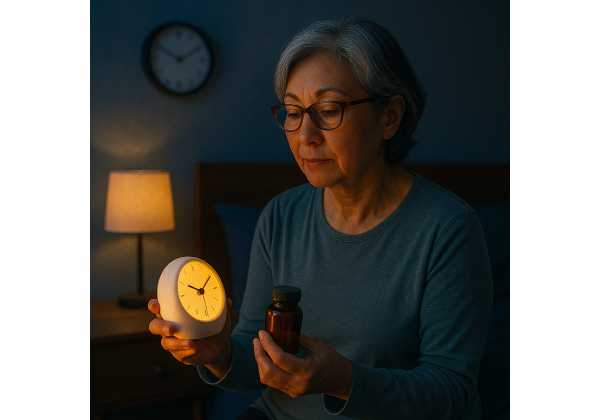
Melatonin is useful for healthy aging when it solves a specific sleep-timing problem, not when it is treated as a general anti-aging pill. Its strongest role is as a circadian signal: it tells the brain that biological night is approaching. That matters more with age because sleep often becomes lighter, earlier, and more fragmented, while evening light, irregular schedules, medications, alcohol, pain, stress, and sleep apnea push the body clock out of rhythm.
The evidence supports modest sleep benefits, especially for sleep onset and circadian rhythm problems. It does not prove that melatonin extends human lifespan. For longevity, the better framing is simple: better-timed sleep supports metabolic health, brain function, mood, blood pressure patterns, and recovery. Melatonin sometimes helps that system work better, but dose, timing, product quality, and safety matter far more than taking more.
Table of Contents
- How Melatonin Changes With Aging
- What Melatonin Does and Does Not Do for Longevity
- Best Use Cases in Midlife and Older Adults
- Dose, Timing, and Form
- Safety, Medications, and Product Quality
- Circadian Habits That Make Melatonin Work Better
- How to Track Results and Decide Whether to Continue
- When to Get Medical Help for Sleep
How Melatonin Changes With Aging
Melatonin is a hormone made mainly by the pineal gland in the brain. Darkness increases its release. Bright light, especially blue-rich evening light, suppresses it. The brain uses this nightly rise as a time signal for sleep, body temperature, hormone rhythms, immune activity, and many other 24-hour patterns.
Aging changes this system in several ways. Many older adults produce a weaker melatonin signal at night, spend less time in deep sleep, wake more often, and feel sleepy earlier in the evening. The circadian clock also tends to shift earlier with age. That is why some people in their 60s, 70s, and beyond naturally become tired at 8:30 p.m. and wake at 4:30 a.m., even when they prefer a later schedule.
Melatonin is not a sedative in the same way as alcohol, antihistamines, benzodiazepines, or Z-drugs. It does not force sleep by broadly slowing the brain. It works more like a timing cue. A low dose at the right time nudges the circadian system toward night. A large dose at the wrong time creates a blurry signal and leaves some people groggy, foggy, or awake at odd hours.
The aging sleep pattern also reflects many non-melatonin factors:
- Less daytime outdoor light
- Lower physical activity
- More naps, especially long or late naps
- Pain, reflux, urinary symptoms, hot flashes, or restless legs
- Alcohol, caffeine, and late meals
- Depression, anxiety, grief, and social isolation
- Medicines that affect alertness, urination, breathing, or dreams
- Sleep apnea, which becomes more common with age
Melatonin helps most when the problem involves timing. It helps less when awakenings come from breathing pauses, pain, excess alcohol, an enlarged prostate, uncontrolled reflux, or a noisy sleep environment. For a broader view of sleep timing, light exposure, and daily rhythm, the guide to circadian rhythm and healthy aging gives the larger framework.
What Melatonin Does and Does Not Do for Longevity
Melatonin supports longevity indirectly when it improves sleep timing and helps restore a stable day-night rhythm. Strong, regular sleep is linked with better cardiometabolic health, immune regulation, mood, appetite control, cognitive performance, and recovery from exercise. These are healthspan pathways, not proof that a supplement extends lifespan.
No high-quality human trial shows that melatonin makes healthy adults live longer. Animal and cell studies describe antioxidant, anti-inflammatory, mitochondrial, and immune effects, but those findings do not translate cleanly into a human longevity protocol. The human evidence is strongest for selected sleep and circadian outcomes, not lifespan extension.
This distinction matters. People often take melatonin because they have heard it is a “longevity hormone.” That framing encourages daily, high-dose, indefinite use. A better approach is to define the target:
- Falling asleep earlier
- Reducing jet lag
- Stabilizing a shifted sleep schedule
- Supporting sleep in adults over 55 with insomnia symptoms
- Helping a weak circadian signal in some older adults
- Reducing reliance on riskier sleep aids when a clinician agrees
Melatonin usually produces modest changes. In older-adult insomnia studies, benefits often show up as shorter sleep latency, slightly longer total sleep time, or improved sleep quality scores. That matters for a person who lies awake for 60 to 90 minutes. It is less impressive for someone who already falls asleep easily but wakes repeatedly from untreated sleep apnea.
The strongest longevity move is not “take melatonin forever.” It is to protect the circadian system that melatonin belongs to. Morning light, daytime movement, consistent meals, a dark evening, regular wake time, and appropriate sleep duration form the base. Melatonin is an add-on when that base needs help. Adults comparing sleep length with health outcomes should also consider healthy sleep duration for longevity, because both too little sleep and chronically poor-quality sleep strain recovery.
Best Use Cases in Midlife and Older Adults
Melatonin works best when the reason for use is specific. It is a poor match for vague fatigue, burnout, or “I want deeper sleep” without a clear pattern. It is a better match for circadian delay, jet lag, or age-related difficulty falling asleep.
Sleep-onset insomnia
Sleep-onset insomnia means trouble falling asleep despite a real chance to sleep. Melatonin is most reasonable when the person feels alert too late, uses screens at night, has irregular bedtimes, or has shifted later after travel, stress, illness, or retirement.
A small immediate-release dose often fits this pattern. The target is a gentle timing signal, not a knockout effect. Many adults do better with 0.3 to 1 mg than with 5 to 10 mg.
Older adults with weaker circadian signaling
Some adults over 55 benefit from prolonged-release melatonin, often around 2 mg taken 1 to 2 hours before bedtime. This form releases melatonin more gradually and is closer to the approved medicine model used in some countries for short-term insomnia treatment in older adults.
This approach is more structured than grabbing a high-dose gummy at the pharmacy. It also fits the age group where melatonin production and sleep continuity often weaken together.
Jet lag and travel
Melatonin helps jet lag when timing matches the destination. After eastward travel, many people need help falling asleep earlier. After westward travel, evening sleepiness and early waking are more common. Light timing matters as much as the pill: morning light after eastward travel helps advance the clock, while poorly timed early-morning light after some trips worsens the shift.
For travel, short-term use works best. A few nights at the destination often beats long, open-ended use.
Delayed sleep phase
Delayed sleep phase means the body wants sleep and wake times that are much later than the person’s responsibilities allow. A person might feel naturally sleepy at 1:30 a.m. and struggle to wake before 9:00 a.m. Melatonin for this pattern is usually taken earlier than a typical sleeping pill, often several hours before the desired bedtime. Morning light then anchors the new rhythm.
This is one of the clearest examples of melatonin as a clock-shifter rather than a sedative.
Reducing reliance on riskier sleep aids
Melatonin is often safer than diphenhydramine, doxylamine, benzodiazepines, and many sedating drug combinations in older adults. Antihistamine sleep aids are especially problematic because anticholinergic effects can worsen constipation, urinary retention, dry mouth, confusion, and next-day balance.
Melatonin is not risk-free, but it is often a lower-risk first discussion when someone wants to avoid stronger sleep drugs. People already taking sleep medications should not mix or replace them without clinician guidance. The guide to sleep aids in aging covers the wider safety tradeoffs.
Dose, Timing, and Form
Melatonin dosing is often too high. More does not mean better sleep. Higher doses raise the chance of next-day sleepiness, vivid dreams, dizziness, headache, and a mistimed circadian signal.
A smart plan starts with the smallest dose that matches the sleep problem. The first trial should happen on a night without driving, alcohol, or an early high-stakes obligation the next morning.
| Use case | Typical starting dose | Common timing | Form that often fits |
|---|---|---|---|
| Trouble falling asleep | 0.3–1 mg | 30–60 minutes before bed | Immediate-release |
| Adults over 55 with insomnia symptoms | 2 mg | 1–2 hours before bed | Prolonged-release |
| Delayed sleep phase | 0.3–0.5 mg | Often 3–5 hours before desired bedtime | Immediate-release |
| Jet lag | 0.5–3 mg | Destination bedtime for a few nights | Immediate-release |
| Middle-of-the-night waking | Usually not first choice | Needs individualized advice | Do not redose casually overnight |
Immediate-release melatonin rises quickly and suits sleep-onset or circadian timing problems. Prolonged-release melatonin lasts longer and suits some older adults who have both sleep-onset and sleep-maintenance issues. Sublingual forms act quickly for some people, but product quality varies. Gummies are convenient but often encourage casual dosing and are harder to keep away from children.
Avoid combining melatonin with alcohol. Alcohol makes sleep lighter, worsens breathing during sleep, and increases fall risk. It also makes it harder to know whether morning grogginess came from melatonin, alcohol, or both.
A simple dose ladder works well:
- Start with 0.3 mg or 0.5 mg for immediate-release products when available.
- Use the same dose and timing for 3 to 5 nights.
- Increase only if the sleep pattern clearly has not changed.
- Stop increasing once sleep improves or side effects appear.
- Avoid routine doses above 3 mg unless a clinician recommends them for a specific reason.
People often take melatonin too late. A dose swallowed at the moment of frustration—after lying awake for two hours—rarely solves the problem and often worsens the next morning. Timing should be planned before the evening starts.
Safety, Medications, and Product Quality
Melatonin has a favorable short-term safety profile for many adults, but older adults need more care because falls, confusion, medication interactions, and chronic health conditions carry higher consequences.
Common side effects include:
- Morning sleepiness or grogginess
- Headache
- Dizziness
- Nausea
- Vivid dreams or nightmares
- Lower alertness during nighttime bathroom trips
- Mood changes in sensitive people
Stop or lower the dose if melatonin causes next-day fog, imbalance, unusual dreams, low mood, or morning headaches. A sleep supplement that worsens function the next day is not supporting longevity.
Medication interactions deserve attention. Melatonin should be reviewed with a clinician or pharmacist when a person uses anticoagulants, antiplatelet drugs, seizure medicines, sedatives, blood pressure medicines, diabetes medicines, immunosuppressants, or antidepressants with strong interaction potential. People with autoimmune disease, organ transplants, epilepsy, severe liver disease, untreated severe depression, dementia, or high fall risk need individualized advice.
Product quality is a major issue. In the United States, melatonin is sold as a dietary supplement, not as a tightly regulated prescription drug. Independent testing has found large gaps between labeled and actual melatonin content in some products, and some products have contained undeclared serotonin. This is especially concerning for people taking antidepressants, migraine medicines, or other drugs that affect serotonin.
Choose products with:
- A single active ingredient
- A low-dose option, such as 0.3 mg, 0.5 mg, 1 mg, or 2 mg
- Third-party testing from a credible program
- Clear lot numbers and expiration dates
- No proprietary sleep blends
- No added antihistamines, alcohol, or sedating herbs unless specifically advised
Store melatonin like a medication, not like a candy. Gummies and flavored chewables are a poisoning risk for children and pets. Adults who keep supplements on a nightstand should move them to a child-safe place.
Long-term daily use has less evidence than short-term use. A reasonable self-trial lasts 1 to 3 weeks for sleep-onset problems or a few nights for jet lag. Longer use, especially beyond 3 months, should have a clear reason, measurable benefit, and safety review.
Circadian Habits That Make Melatonin Work Better
Melatonin works better when the rest of the day sends the same message. A pill taken at 10:00 p.m. has limited power if the person spends the evening under bright lights, scrolls in bed, drinks wine, eats a heavy late meal, and wakes at different times each morning.
Morning light is the strongest daily anchor. Outdoor light within the first hour after waking helps set the body clock, supports daytime alertness, and makes evening sleepiness more predictable. On cloudy days, outdoor light still beats indoor light. Ten to 30 minutes is a useful range for many people; longer exposure helps during winter or after a poor night.
Evening darkness matters too. Dim lights in the last 1 to 2 hours before bed allow natural melatonin to rise. Screens are not the only issue. Bright bathroom lights, overhead kitchen lights, and late-night shopping under intense LEDs also send daytime signals. The guide to morning light and evening darkness explains this rhythm in practical terms.
Good circadian habits include:
- Wake at a consistent time, including weekends.
- Get outdoor light early.
- Move during the day, preferably outside when possible.
- Keep caffeine earlier; many adults do best stopping by noon or early afternoon.
- Finish heavy meals at least 2 to 3 hours before bed.
- Keep naps short, usually 10 to 30 minutes, and avoid late-day naps.
- Dim the home environment in the evening.
- Keep the bedroom cool, dark, quiet, and uncluttered.
- Use the bed mainly for sleep and intimacy, not work or scrolling.
Evening nutrition also affects sleep. Large meals, reflux-triggering foods, and alcohol fragment sleep. A lighter dinner with enough protein and fiber works better for many adults than grazing until bedtime. People who wake hungry sometimes benefit from a small protein-rich snack, but late sugar and alcohol are poor sleep tools.
Exercise timing is individual, but daytime movement improves sleep pressure. Strength training, brisk walking, and zone 2 cardio all support sleep quality. Very intense late-night exercise pushes some people later, especially if it includes bright lights, competition, or a long drive home.
Melatonin should fit into this rhythm, not replace it.
How to Track Results and Decide Whether to Continue
A melatonin trial should answer a clear question: Did the same dose at the same time improve the sleep problem without harming the next day?
Track for 7 to 14 nights. Use a notebook, app, or wearable, but do not let the device create anxiety. Wearables estimate sleep stages imperfectly. They are more useful for bedtime, wake time, sleep duration, resting heart rate, and patterns across weeks. For a practical approach, see what to track with sleep wearables.
Track these items:
- Dose and time taken
- Lights-out time
- Estimated time to fall asleep
- Number of awakenings
- Final wake time
- Morning grogginess, rated 0 to 10
- Daytime energy, rated 0 to 10
- Naps
- Alcohol, caffeine, late meals, and unusual stress
- Any dizziness, vivid dreams, headache, or mood change
A successful trial usually shows at least one of these changes:
- Falling asleep 15 to 30 minutes faster
- Fewer nights of lying awake for long periods
- Easier adjustment to a new bedtime
- Better morning alertness because sleep timing improved
- Less need for a riskier sleep aid
A failed trial looks like this:
- No clear sleep improvement after 1 to 2 weeks
- Morning grogginess or dizziness
- More awakenings
- Stronger dreams that reduce sleep quality
- Better sleep only when paired with alcohol or other sedatives
- A pattern of needing higher and higher doses
Stop melatonin if the benefit is unclear. Supplements should earn their place. A washout of several nights often shows whether it was truly helping.
People using melatonin for jet lag should stop once the new schedule stabilizes. People using it for delayed sleep phase should focus on maintaining the new wake time and morning light exposure, not increasing the dose. People using prolonged-release melatonin for age-related insomnia should reassess after several weeks and avoid drifting into indefinite use without review.
When to Get Medical Help for Sleep
Melatonin is not the right answer for every sleep problem. Persistent insomnia deserves evaluation, especially when it lasts at least 3 nights per week for 3 months or causes daytime impairment. Cognitive behavioral therapy for insomnia, known as CBT-I, has stronger long-term evidence than most sleep supplements and teaches the brain to rebuild sleep drive and confidence. The guide to CBT-I for insomnia in midlife explains the practical steps.
Get medical help sooner when sleep problems include:
- Loud snoring, choking, gasping, or witnessed breathing pauses
- Morning headaches or high blood pressure that is hard to control
- Severe daytime sleepiness or drowsy driving
- New confusion, falls, or balance problems
- Restless legs, leg jerks, or crawling sensations at night
- Acting out dreams, punching, kicking, or falling from bed
- Depression, panic, trauma symptoms, or suicidal thoughts
- New insomnia after starting or changing medication
- Unexplained weight loss, night sweats, pain, or frequent urination
Sleep apnea is especially important in longevity planning. It raises strain on the heart, brain, metabolism, and blood vessels. Melatonin might help someone fall asleep while leaving breathing problems untreated. That is not a win. Anyone with snoring plus daytime sleepiness, resistant hypertension, atrial fibrillation, obesity, or witnessed pauses should consider evaluation. The guide to sleep apnea and longevity covers signs, testing, and treatment basics.
Older adults should also review medication lists. Some drugs worsen insomnia; others cause daytime sleepiness that leads to long naps and weaker nighttime sleep. Diuretics taken late can cause nighttime urination. Decongestants, steroids, stimulants, some antidepressants, and thyroid over-replacement can keep the brain alert. Alcohol, cannabis, and sedating antihistamines can make sleep look longer while reducing sleep quality and safety.
Melatonin has a place in healthy aging, but it works best as a precise tool. Use it for a defined sleep-timing problem, choose a low and reliable dose, pair it with light and schedule habits, track next-day function, and stop when it no longer helps.
References
- Melatonin for sleep and cognitive outcomes in older adults with cognitive impairment: a meta-analysis of randomised controlled trials 2025 (Systematic Review)
- Current Insights into the Risks of Using Melatonin as a Treatment for Sleep Disorders in Older Adults 2023 (Review)
- Use of Melatonin and/on Ramelteon for the Treatment of Insomnia in Older Adults: A Systematic Review and Meta-Analysis 2022 (Systematic Review)
- Safety of higher doses of melatonin in adults: A systematic review and meta-analysis 2022 (Systematic Review)
- Melatonin for the Treatment of Insomnia: A 2022 Update 2022 (Review)
- Melatonin Natural Health Products and Supplements: Presence of Serotonin and Significant Variability of Melatonin Content 2017 (Quality Analysis)
Disclaimer
This article is educational and does not replace care from a qualified clinician. Melatonin use should be discussed with a healthcare professional if you are pregnant, frail, at risk of falls, managing chronic disease, or taking prescription medicines. Seek medical evaluation for persistent insomnia, suspected sleep apnea, severe daytime sleepiness, or new sleep problems after a medication change.