Overnight oats can be a blood-sugar-friendly breakfast, but the oats alone do not guarantee a small glucose rise. The biggest factors are the type and amount of oats, how much added sugar goes into the jar, and whether the meal includes enough protein, fiber, and fat. Oats contain beta-glucan, a viscous soluble fiber that slows digestion and can reduce post-meal glucose peaks. Research also suggests that oats soaked overnight retain a relatively low glycemic impact compared with more rapidly digested cereal foods.
Still, a large jar made with 1 cup of oats, sweetened oat milk, maple syrup, dried fruit, and granola can deliver a substantial carbohydrate load. A better approach is to start with a moderate portion of old-fashioned rolled oats, add Greek yogurt or another protein source, include chia or ground flax, use unsweetened milk, and sweeten mainly with whole fruit. The result is filling, practical, and easier on glucose for many people.
Table of Contents
- Why Overnight Oats Can Work for Blood Sugar
- Best Oat Types and Portion Sizes
- How to Build a Lower-Spike Overnight Oat Jar
- Toppings, Fruit, and Sweeteners That Change the Glucose Response
- Common Overnight Oat Mistakes
- Three Practical Overnight Oat Builds
- How to Personalize Overnight Oats to Your Glucose Response
Why Overnight Oats Can Work for Blood Sugar
Oats are a whole grain rich in beta-glucan, a soluble fiber that becomes viscous when mixed with liquid. That gel-like texture slows the movement of food through the stomach and can slow the rate at which carbohydrate is digested and absorbed. The result is often a smaller or later glucose peak than you would get from a similarly sized serving of a more refined cereal.
Recent evidence supports that mechanism. Controlled studies and reviews show that oat beta-glucan can reduce post-meal glucose and insulin responses, especially when the meal contains enough beta-glucan relative to the amount of digestible carbohydrate. A 2026 European Food Safety Authority evaluation concluded that oat beta-glucan can reduce postprandial glucose peaks when an adequate amount is consumed with a carbohydrate-containing meal.
Overnight oats have also been studied directly. In a randomized crossover trial, oats soaked overnight in skim milk produced lower glucose and insulin responses than cream of rice, both when eaten plain and when tested with added sugar, nuts, and seeds. That study was conducted in adults without diabetes, so it cannot tell us exactly what will happen in someone with prediabetes or type 2 diabetes, but it shows that soaking oats overnight does not erase their favorable glycemic properties.
The key point is that soaking is not the magic part. Oats can work well because of their intact grain structure and beta-glucan. The final glucose response still depends heavily on portion size and everything else in the jar.
If you prefer hot oatmeal, the same principles apply. Oatmeal type, toppings, and portion size often matter more than whether the oats are served hot or cold.
Why breakfast can be tricky for some people
Some people are less glucose-tolerant in the morning because of normal hormone patterns, including the rise in cortisol and other counter-regulatory hormones around waking. Others handle carbohydrate well at breakfast but see bigger responses later in the day. There is no universal rule.
That is one reason a balanced jar is more reliable than trying to find a “perfect” carb number. Adding protein and fiber changes the meal from mostly starch into a mixed breakfast that digests more slowly and usually keeps you full longer.
Best Oat Types and Portion Sizes
For overnight oats, old-fashioned rolled oats are usually the best balance of texture, convenience, and slower digestion. They soften overnight without becoming as rapidly digestible as highly processed instant oatmeal.
Oat processing affects glycemic response. Smaller particle size and more extensive pre-cooking can make starch easier to digest. Older randomized research found that steel-cut and large-flake oats produced lower glucose and insulin responses than instant oats. Although that study was not specific to overnight soaking, the principle is useful when choosing a base.
A practical ranking is:
- Steel-cut oats: minimally processed and generally slower to digest, but they stay very chewy unless soaked longer or partially cooked.
- Old-fashioned rolled oats: the most practical choice for classic overnight oats.
- Quick oats: softer and more processed; still whole grain, but they may raise glucose faster in some people.
- Instant flavored oatmeal packets: often finely processed and may contain added sugar; usually the least useful option for a low-spike jar.
How much oats should you use?
A common starting point is 1/3 to 1/2 cup dry rolled oats. That amount is large enough to make a satisfying breakfast but leaves room for protein, seeds, and fruit without turning the jar into a very high-carbohydrate meal.
A full cup of dry oats is not “bad,” but it roughly doubles the carbohydrate load of a 1/2-cup serving. A person who sees a large glucose rise from 1 cup may do perfectly well with 1/2 cup when protein and fiber are added.
Portion matters more than glycemic index alone. Even a low- or moderate-GI food can create a large glucose excursion if the carbohydrate dose is large enough. That is the same reason glycemic load can be more practical than glycemic index for real meals.
Do overnight oats become resistant starch?
Cooling cooked starch can increase resistant starch through retrogradation, but classic overnight oats are usually soaked without first being fully cooked. That means the popular “cold oats create lots of resistant starch” explanation is often overstated.
Overnight oats can still be a good choice, but their main advantages are better explained by whole-grain structure, beta-glucan, and the ingredients you add. If you cook oats first and then cool them, some starch changes may occur, but you do not need to rely on that effect to make the meal blood-sugar-friendly.
How to Build a Lower-Spike Overnight Oat Jar
A good overnight oat formula combines moderate carbohydrate + protein + viscous fiber + whole-food fat. Start with these components:
- Oats: 1/3 to 1/2 cup old-fashioned rolled oats.
- Liquid: about 1/2 cup unsweetened milk or enough to reach your preferred texture.
- Protein: Greek yogurt, skyr, cottage cheese blended smooth, protein powder, or higher-protein milk.
- Extra fiber: 1 tablespoon chia seeds or ground flaxseed.
- Fruit: berries, chopped apple, pear, or another modest portion of whole fruit.
- Fat and crunch: 1 tablespoon nuts, seeds, or nut butter.
- Flavor: cinnamon, vanilla, cocoa powder, citrus zest, or a small amount of noncaloric sweetener if desired.
Aim for meaningful protein
Oats contain some protein, but a basic oats-and-milk jar may still be relatively carbohydrate-heavy. Adding Greek yogurt, skyr, cottage cheese, or protein powder can make the meal more balanced. For many adults, roughly 20–30 g of protein at breakfast is a practical target, although individual needs vary. Protein can slow gastric emptying, increase satiety, and reduce the proportion of the meal coming from carbohydrate. It does not make carbohydrate disappear, but it changes the overall response.
If breakfast tends to leave you hungry within two hours, a higher-protein breakfast can reduce cravings and improve meal balance.
Add a second source of soluble or gel-forming fiber
Chia seeds thicken overnight oats and add fiber with relatively little digestible carbohydrate. Ground flaxseed adds fiber and healthy fats. Psyllium can also thicken a jar, but it is powerful; small amounts are enough, and too much can make the texture unpleasant or cause bloating.
A tablespoon of chia is an easy starting point. If you already eat little fiber, increase gradually and drink enough fluid. More fiber is not always better if it causes abdominal pain, constipation, or diarrhea. For a breakfast built around chia rather than oats, chia pudding can also be designed without hidden sugar.
Choose the liquid carefully
Unsweetened dairy milk, soy milk, almond milk, or other unsweetened options can all work, but their carbohydrate content differs widely. Cow’s milk contains lactose, but it also provides protein. Unsweetened soy milk is often relatively high in protein. Unsweetened almond milk is usually low in carbohydrate but also low in protein.
Oat milk can add a meaningful amount of carbohydrate because some of the oat starch is broken down during processing. If you use oat milk because you like the flavor, account for it as part of the meal rather than assuming every plant milk is automatically low-carb. Oat milk can raise glucose more than many people expect.
Toppings, Fruit, and Sweeteners That Change the Glucose Response
The base may be healthy, but toppings can double the carbohydrate load without looking like much food.
Best fruit choices
Whole fruit adds vitamins, minerals, fiber, and sweetness. Berries are especially easy to fit because a generous-looking portion can provide less carbohydrate than dried fruit. Good options include:
- blueberries, strawberries, raspberries, or blackberries;
- chopped apple or pear;
- a few slices of banana rather than a whole large banana if you are glucose-sensitive;
- peach, plum, or kiwi.
Fruit is not something everyone with insulin resistance needs to avoid. The more useful question is how much fruit is in the meal and what it is paired with. Pairing fruit with protein or fat can make the overall snack or meal more balanced.
Watch dried fruit
Raisins, dates, dried cranberries, and dried mango are concentrated. A few tablespoons can contain as much carbohydrate as a much larger volume of fresh fruit. Many dried cranberry products also contain added sugar. Use dried fruit more like a garnish than the main fruit serving if you are trying to reduce the glucose load.
Added sugar adds up quickly
Maple syrup, honey, agave, brown sugar, and coconut sugar all contribute digestible carbohydrate. None becomes “free” because it is marketed as natural. One tablespoon of syrup may not seem like much, but when it is added to oats, milk, fruit, and granola, the total can become substantial. Start with cinnamon, vanilla, berries, or a small amount of a noncaloric sweetener if you need more sweetness.
Granola is not a neutral topping
Granola often contains oats plus sweetener and oil, making it calorie-dense and easy to overpour. A small spoonful for crunch is different from adding another half cup. Nuts or seeds can provide crunch with less added carbohydrate.
Common Overnight Oat Mistakes
Most “healthy breakfast spikes” come from the total build rather than oats being inherently bad. Common mistakes include:
- Using a very large oat portion. One cup dry is a much bigger glucose challenge than 1/2 cup.
- Using sweetened milk. Vanilla plant milks can contain added sugar even when the front label looks healthy.
- Adding several sweeteners at once. Honey plus banana plus dried fruit plus granola can turn into dessert-level carbohydrate.
- Skipping protein. Oats, fruit, and milk alone may not keep some people full.
- Assuming “overnight” means low-glycemic. Soaking does not erase starch.
- Choosing instant oats for convenience. They are often easier to digest rapidly and may come pre-sweetened.
- Trying to force the CGM perfectly flat. Some rise after breakfast is normal.
Another mistake is making the jar so high in nuts, seeds, nut butter, and protein powder that calories become much higher than intended. A low glucose peak is not the only nutrition goal. If weight loss is part of the plan, portions of energy-dense toppings still matter.
What if oats always spike you?
Not everyone responds the same way. If a moderate, balanced portion repeatedly produces a glucose response you and your clinician consider too high, reduce the oat amount and increase protein, or choose a different breakfast. You are not required to eat oats because they are considered healthy. Eggs with vegetables, Greek yogurt with berries and seeds, cottage cheese with fruit, or another high-protein meal may work better for you. Blood-sugar-friendly breakfast options can help you compare alternatives.
Three Practical Overnight Oat Builds
These examples are templates, not prescriptions. Adjust amounts to your energy needs, medications, hunger, and glucose response.
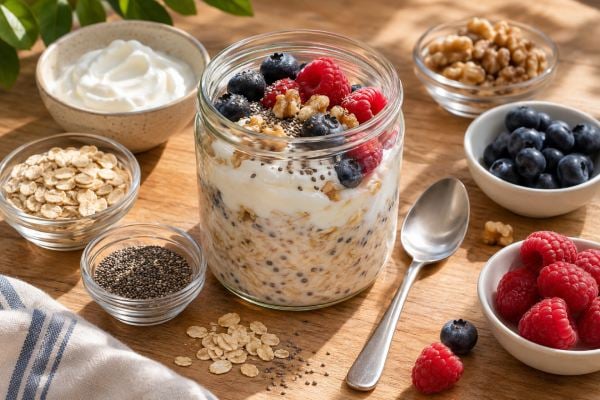
Berry Greek yogurt oats
Combine:
- 1/2 cup old-fashioned rolled oats;
- 1/2 cup unsweetened milk;
- 1/2 cup plain Greek yogurt;
- 1 tablespoon chia seeds;
- 1/2 cup berries;
- cinnamon and vanilla.
This version gets protein from yogurt, additional viscous fiber from chia, and sweetness from berries.
Apple-cinnamon walnut oats
Combine:
- 1/3 to 1/2 cup rolled oats;
- unsweetened soy milk;
- 1/2 cup skyr or Greek yogurt;
- 1 tablespoon ground flaxseed;
- 1/2 small chopped apple;
- 1 tablespoon chopped walnuts;
- cinnamon.
The apple provides crunch and sweetness without needing syrup. Walnuts add fat and texture, while soy milk and yogurt raise protein.
Chocolate peanut overnight oats
Combine:
- 1/3 cup rolled oats;
- 1/2 cup unsweetened milk;
- plain Greek yogurt or an unsweetened protein powder;
- 1 tablespoon chia seeds;
- 1 teaspoon unsweetened cocoa powder;
- 1 tablespoon peanut butter;
- a few berries or a small amount of sliced banana.
Choose a peanut butter without added sugar if possible. If using protein powder, check the label because flavored powders can contain added sugars or large amounts of sugar alcohols.
How to Personalize Overnight Oats to Your Glucose Response
If you monitor glucose, test the meal like an experiment rather than changing everything at once. Start with one balanced recipe and repeat it on two or three mornings. Note the dry oat portion, liquid, toppings, sleep, activity, and timing. Then change one variable—for example, reduce oats from 1/2 cup to 1/3 cup, add more protein, or take a short walk afterward.
A useful sequence is:
- establish your normal response;
- reduce the biggest source of extra carbohydrate first;
- increase protein or fiber if the meal is light on either;
- test a brief walk after breakfast;
- compare several days rather than one graph.
A short walk is particularly practical because muscle contraction helps clear glucose from the blood. Post-meal walking can lower glucose excursions without changing the food itself. Remember that CGM readings lag behind blood glucose and vary from day to day. Stress, sleep, menstrual-cycle phase, illness, and recent exercise can all change the curve. A single peak should not lead to an extreme diet change.
For people using insulin or medications that can cause hypoglycemia, carbohydrate changes may affect medication needs. Do not make major medication or dosing changes based on an overnight-oat experiment without guidance from your diabetes care team.
The best overnight oats are not the jar with the fewest possible carbohydrates. They are the version that fits your appetite, nutrition needs, and glucose pattern while remaining easy enough to make repeatedly. For many people, that means modest oats, meaningful protein, extra fiber, unsweetened liquid, whole fruit, and restrained sweeteners.
It is also worth judging the meal by how you feel between breakfast and lunch. A jar that gives a modest glucose rise but leaves you hungry 90 minutes later may need more protein or volume. A jar that keeps you satisfied for four hours but is so calorie-dense that it works against your weight goals may need less nut butter, granola, or seeds. Blood sugar is one outcome, not the only one.
If you do not use a CGM, you can still personalize the meal. Pay attention to fullness, energy, cravings, and whether your next meal becomes easier to manage. If your clinician has asked you to check glucose with a meter, use the timing they recommend and compare similar breakfasts rather than chasing one isolated number.
References
- Clinical and mechanistic evidence on metabolic effects of oat β-glucan, rice bran, and unripe banana flour: a systematic review with mechanism-informed synthesis. 2026 (Systematic Review)
- Oat beta-glucans and reduction of postprandial glucose peak: Evaluation of a health claim pursuant to Article 13(5) of Regulation (EC) No 1924/2006. 2026 (Review)
- Oat beta-glucans consumed at breakfast improve glucose tolerance acutely and after a subsequent lunch – a randomized dose-response study in healthy young adults. 2025 (RCT)
- The acute effect of a β-glucan-enriched oat bread on gastric emptying, GLP-1 response, and postprandial glycaemia and insulinemia: a randomised crossover trial in healthy adults. 2024 (RCT)
- Glycaemic and insulinaemic impact of oats soaked overnight in milk vs. cream of rice with and without sugar, nuts, and seeds: a randomized, controlled trial 2019 (RCT)
Disclaimer
Overnight oats can fit into a blood-sugar-conscious diet, but the right carbohydrate amount varies with diabetes status, medications, activity, and individual glucose response. If you use insulin or medication that can cause hypoglycemia, discuss major carbohydrate changes with your healthcare professional rather than adjusting treatment on your own.