
PCSK9 inhibitors are powerful LDL-cholesterol medicines used when a person’s cardiovascular risk is high and standard treatment does not lower LDL enough. The injectable monoclonal antibodies evolocumab and alirocumab commonly reduce LDL cholesterol by about 50% to 60% on top of other therapy. They are most often considered for people with established atherosclerotic cardiovascular disease, familial hypercholesterolemia, or severe LDL elevation that remains above the appropriate treatment threshold despite maximally tolerated statin therapy and, often, ezetimibe.
These drugs are not simply “stronger statins.” They work through a different pathway and usually do not cause the same muscle-related concerns that lead some people to stop statins. They also have cardiovascular-outcome evidence showing fewer heart attacks and other major vascular events in high-risk patients. A related medicine, inclisiran, also lowers PCSK9 activity but uses small interfering RNA rather than an antibody and follows a different dosing schedule. This guide explains who may benefit, how much LDL can fall, what injections are like, and what to expect from monitoring, safety, and insurance approval.
Table of Contents
- How PCSK9 Therapy Lowers LDL Cholesterol
- Who PCSK9 Inhibitors Are For
- How Much LDL Can Drop and How Fast
- What the Injections and Dosing Are Like
- Side Effects and Safety
- Monitoring, Cost, and Insurance Approval
- How PCSK9 Therapy Fits Into a Cholesterol Plan
How PCSK9 Therapy Lowers LDL Cholesterol
PCSK9 is a protein made mainly by the liver. Its name stands for proprotein convertase subtilisin/kexin type 9. The name is complicated, but its job in cholesterol metabolism is easier to understand: PCSK9 attaches to LDL receptors and promotes their breakdown.
LDL receptors sit on liver cells and pull LDL particles out of the bloodstream. After a receptor captures an LDL particle, the receptor can normally return to the cell surface and be used again. When PCSK9 binds to that receptor, more of the receptor is sent for destruction instead of being recycled. Fewer working receptors means less LDL can be cleared from the blood.
Monoclonal-antibody PCSK9 inhibitors block circulating PCSK9. More LDL receptors survive and recycle, so the liver removes LDL particles more efficiently. The result is a large reduction in LDL cholesterol and usually in non-HDL cholesterol and apolipoprotein B as well. If you need a refresher on what a high LDL result means, see high LDL cholesterol causes and treatment.
The two established monoclonal antibodies are evolocumab and alirocumab. Both are given by subcutaneous injection, meaning into the fatty tissue under the skin rather than into a vein or muscle.
Inclisiran targets the same pathway differently. It is a small interfering RNA medicine that tells liver cells to make less PCSK9. Because it does not bind PCSK9 as an antibody, it is more precise to call it a PCSK9-directed therapy rather than a monoclonal PCSK9 inhibitor. Its long dosing interval can be useful when frequent self-injection or adherence is a problem.
These therapies are not primarily triglyceride drugs. They can produce small changes in other lipids, but their major effect is lowering LDL-containing atherogenic particles. They also tend to lower lipoprotein(a), or Lp(a), by roughly 20% to 30%, although they are not approved solely as Lp(a)-lowering medicines and the effect varies. People with an unexpectedly high Lp(a) can learn more from the guide to lipoprotein(a) testing and cardiovascular risk.
Who PCSK9 Inhibitors Are For
PCSK9 inhibitors are usually reserved for people whose absolute cardiovascular risk and LDL burden justify a large additional reduction. They are not first-line treatment for most adults with mildly elevated cholesterol.
Common situations include:
- Established atherosclerotic cardiovascular disease (ASCVD). This includes previous heart attack, symptomatic coronary artery disease, ischemic stroke from atherosclerosis, or peripheral artery disease. If LDL remains above the recommended threshold despite maximally tolerated statin therapy and usually ezetimibe, a PCSK9 inhibitor may be added.
- Familial hypercholesterolemia (FH). People with inherited very high LDL often need several medicines because lifestyle and a statin alone may not be enough. PCSK9 therapy can produce a large additional LDL reduction in heterozygous FH and is used in selected people with more severe inherited disease. See familial hypercholesterolemia diagnosis and treatment for the broader approach.
- Severe primary hypercholesterolemia. A person with very high untreated LDL may remain above goal despite high-intensity therapy even without a prior cardiovascular event.
- True or substantial statin intolerance. PCSK9 therapy can be an option when a high-risk patient cannot take an adequate statin dose despite careful attempts to find a tolerable regimen. This does not mean every muscle ache automatically qualifies; clinicians usually document which statins and doses were tried and whether other causes of symptoms were considered.
Guidelines increasingly favor combination therapy rather than waiting years to intensify treatment in very high-risk patients. The exact LDL threshold for adding a PCSK9 inhibitor depends on the guideline, the person’s risk category, prior events, other medicines, and local coverage rules. In very high-risk ASCVD, clinicians often aim for LDL values around 55 mg/dL or lower; other high-risk groups may use thresholds around 70 mg/dL. The target should be individualized rather than chosen from one number alone.
Before moving to an injectable, clinicians usually confirm that the current treatment is actually being taken and tolerated. A person who has not yet tried an appropriate statin dose or ezetimibe may be able to reach the goal with simpler and less expensive therapy. The guide to statin alternatives for high LDL compares the major nonstatin options.
When a PCSK9 inhibitor may be unnecessary
Someone with a modest LDL elevation and low short-term cardiovascular risk usually does not need a PCSK9 inhibitor. Lifestyle changes, statins, and other oral treatments are generally considered first. Likewise, a person who is already well below their LDL goal is unlikely to gain enough additional benefit to justify another drug without a specific reason.
The decision is about risk reduction, not chasing the lowest laboratory number for its own sake. A 55-year-old who has already had two coronary events and still has LDL of 95 mg/dL despite intensive therapy has a very different expected benefit from a healthy 30-year-old with LDL of 130 mg/dL and no major risk factors.
How Much LDL Can Drop and How Fast
Evolocumab and alirocumab usually lower LDL cholesterol by about 50% to 60% when added to background therapy. The percentage varies by dose, adherence, baseline LDL, genetics, and the other drugs being used.
A simple example shows why the effect is clinically important. If LDL is 140 mg/dL and therapy lowers it by 55%, the new level would be around 63 mg/dL. If LDL starts at 100 mg/dL, the same percentage reduction would bring it near 45 mg/dL. People with familial hypercholesterolemia may start much higher, so even a large percentage drop can leave LDL above the desired target.
The effect starts quickly. LDL typically falls substantially within the first few weeks, which is why clinicians can usually judge the biochemical response soon after starting therapy. Cholesterol lowering then remains consistent as long as doses are taken on schedule.
Large outcome trials showed that LDL lowering with these medicines translates into fewer cardiovascular events. Evolocumab reduced major cardiovascular events in people with stable ASCVD, and alirocumab reduced events in people treated after an acute coronary syndrome. The absolute benefit was greatest in people at higher baseline risk, which is another reason these medicines are targeted to high-risk groups rather than used routinely for everyone with elevated LDL.
PCSK9 inhibitors also lower apoB, the number of cholesterol-carrying atherogenic particles. For people following apoB as an additional marker, the direction of change generally parallels the LDL reduction. The guide to apoB targets and cholesterol goals explains when that measurement may add useful information.
Very low LDL values are common during combination therapy. Modern trials have not shown a clear safety threshold at which an otherwise appropriate LDL reduction must be reversed simply because the number looks unfamiliar. Clinicians still interpret an unexpectedly low value in context and review the full medication plan, but reaching LDL levels below older historical targets is often intentional in very high-risk patients.
What the Injections and Dosing Are Like
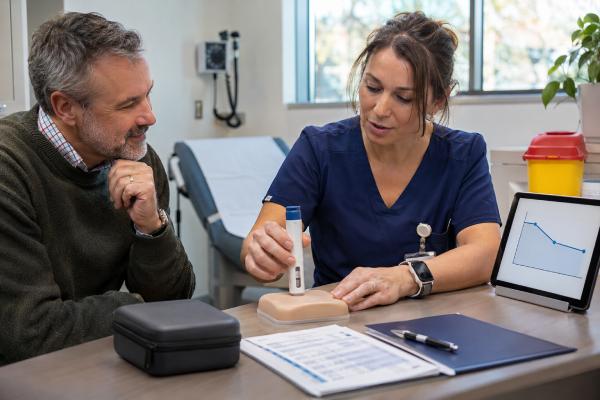
The monoclonal antibodies are given under the skin with a prefilled pen, syringe, or on-body delivery system depending on the product and market. Most people can learn to self-inject after instruction, or a family member can help.
Evolocumab is commonly given as 140 mg every two weeks or 420 mg once monthly for adults with standard LDL-lowering indications. Alirocumab is commonly started as 75 mg every two weeks or 300 mg every four weeks, with adjustment to 150 mg every two weeks when more LDL lowering is needed. Exact dosing can differ by diagnosis and product labeling, so the prescription instructions take priority.
Common injection sites are the abdomen, thigh, or upper arm. Rotate sites rather than repeatedly injecting the same spot. Do not inject into skin that is bruised, tender, red, infected, or scarred.
The medicines are generally stored refrigerated. Many devices can be kept at room temperature for a limited period, but the allowed temperature and duration are product-specific. Do not freeze or shake them. If a dose is missed, follow the exact product instructions or contact the pharmacy rather than guessing how to “catch up.”
The injection itself is brief. Many people describe only a small pinch or pressure. Letting a refrigerated device warm to room temperature for the period specified in the instructions can make injection more comfortable. Never heat it in a microwave, hot water, or direct sunlight.
Inclisiran follows a different model. It is generally administered by a healthcare professional after the initial dose, again at about three months, and then every six months. That schedule can be attractive for people who forget frequent injections or strongly prefer not to self-inject. Current expert guidance generally treats inclisiran as an alternative PCSK9-directed strategy rather than something to stack on top of a PCSK9 monoclonal antibody, because using both has not been shown to add meaningful clinical benefit.
Side Effects and Safety
PCSK9 monoclonal antibodies are generally well tolerated. The most common problems are usually mild and do not resemble the classic statin muscle-symptom pattern.
Possible side effects include:
- Redness, itching, swelling, or soreness at the injection site.
- Nasopharyngitis, cold-like symptoms, or upper respiratory symptoms.
- Flu-like symptoms in some people.
- Back pain or general aches reported in some trials.
- Rare allergic or hypersensitivity reactions.
Serious allergic reactions are uncommon but require urgent care when they cause facial or throat swelling, widespread hives, severe wheezing, or trouble breathing.
Early in PCSK9 development, researchers watched carefully for neurocognitive problems because very low LDL levels were unfamiliar. Large randomized trials and longer-term follow-up have not shown a convincing major neurocognitive safety signal. Similarly, the therapies have not shown the same diabetes-risk concern seen with some intensive statin regimens.
Muscle symptoms can still occur for many reasons, but PCSK9 antibodies do not inhibit HMG-CoA reductase, the statin enzyme target. For a person who had reproducible muscle problems on several statins, this different mechanism is one reason the medicines can be useful. The article on statin benefits and side effects explains why clinicians still try to preserve whatever statin dose is tolerable when possible.
Because monoclonal antibodies are broken down as proteins, they have relatively few traditional drug-drug interactions. They are not processed through the same liver enzyme pathways that create many oral-drug interactions. That makes the medication list simpler, but patients should still report all drugs and supplements.
Pregnancy and breastfeeding require individualized advice because outcome data are limited and cholesterol-lowering plans often change during pregnancy. Anyone planning pregnancy should discuss timing before the next dose rather than stopping or continuing automatically.
Monitoring, Cost, and Insurance Approval
PCSK9 therapy usually does not require complicated laboratory safety monitoring. The main test is the lipid panel, because the purpose of treatment is to produce a large LDL reduction.
A clinician commonly checks LDL several weeks after starting or changing therapy and then periodically once the response is stable. If LDL does not fall as expected, the first questions are practical: Were the injections taken on schedule? Was the device used correctly? Was the medicine stored appropriately? Is the person taking the other prescribed lipid drugs? A poor response should be investigated before assuming the biology “does not work.”
Routine liver-enzyme or creatine-kinase testing is not required solely because someone is taking a PCSK9 antibody, although those tests may be needed for other medicines or symptoms. Follow-up still includes blood pressure, diabetes care, smoking status, diet, exercise, and other cardiovascular risk factors because LDL is only one part of prevention.
Access can be more complicated than the injection. Insurers often require prior authorization, especially for people without documented ASCVD or familial hypercholesterolemia. The application may ask for untreated and current LDL values, cardiovascular diagnoses, statin doses tried, reasons for intolerance, and whether ezetimibe was used.
Coverage criteria do not always match the clinician’s preferred treatment sequence. If approval is denied, an appeal may succeed when the medical record clearly documents the indication and previous treatment. Manufacturer assistance programs or specialty-pharmacy support may reduce out-of-pocket costs for eligible patients, but eligibility varies.
Before starting, ask the pharmacy or insurer about the actual monthly cost rather than assuming the list price is what you will pay. Also ask whether the medicine must come from a specialty pharmacy and whether refills need refrigeration during shipping.
Travel is another practical issue. If an injection is due while you are away, check the product’s room-temperature storage window before leaving and carry the medicine according to pharmacy instructions. Do not place an injector directly on ice or in checked baggage where it may freeze or overheat. Keep a copy of the prescription information when flying. These details sound minor, but missing a dose because the device was stored incorrectly can erase some of the convenience that makes long-term injectable therapy workable.
How PCSK9 Therapy Fits Into a Cholesterol Plan
For most high-risk patients, PCSK9 therapy is an add-on, not a replacement for everything else. A high-intensity or maximally tolerated statin remains the foundation because statins have extensive evidence, are inexpensive, and reduce cardiovascular events. Ezetimibe is often the next oral step because it adds LDL lowering with a simple once-daily tablet. A PCSK9 inhibitor is then added when the remaining LDL gap is large enough to matter.
A common sequence looks like this:
- Define the person’s cardiovascular-risk category. Prior heart attack, stroke, peripheral artery disease, diabetes, familial hypercholesterolemia, kidney disease, age, and other factors affect how aggressively LDL should be lowered.
- Use the maximum tolerated statin. “Maximum tolerated” may mean a high-intensity dose, a lower dose, or an alternative schedule in someone with side effects.
- Add an oral nonstatin when appropriate. Ezetimibe is commonly used because it can reduce LDL by roughly another 15% to 25%.
- Estimate the remaining LDL gap. If a person still needs a 40% to 60% reduction, a PCSK9 inhibitor may be a better fit than trying several small-effect changes.
- Recheck LDL and adherence. Confirm that the expected reduction occurred and that the treatment remains practical.
For example, a person with previous myocardial infarction whose LDL remains 100 mg/dL despite a strong statin and ezetimibe may need a large additional reduction to reach a very-high-risk target. A PCSK9 inhibitor can often close that gap in one step. In contrast, someone at lower risk whose LDL is only slightly above goal may reach the target with diet changes, improved adherence, or an oral medicine.
Do not stop statin or ezetimibe after seeing a dramatic LDL drop unless the prescribing clinician specifically changes the plan. The low number often reflects the combined effect of all the medicines. Removing one component can cause LDL to rise again.
The most useful expectation is that PCSK9 therapy should produce a clear, measurable LDL reduction with relatively little day-to-day burden. The tradeoffs are injections, cost, insurance paperwork, and the need to stay on schedule. For the right high-risk patient, however, the magnitude of LDL lowering and proven cardiovascular benefit can make those inconveniences worthwhile.
Bring the most recent lipid results to follow-up visits and ask for the target in plain numbers. Knowing both the current LDL and the goal makes it easier to understand whether the injectable is closing a meaningful treatment gap and whether the rest of the regimen should stay unchanged.
References
- 2026 ACC/AHA/AACVPR/ABC/ACPM/ADA/AGS/APhA/ASPC/NLA/PCNA Guideline on the Management of Dyslipidemia: A Report of the American College of Cardiology/American Heart Association Joint Committee on Clinical Practice Guidelines 2026 (Guideline)
- 2023 AHA/ACC/ACCP/ASPC/NLA/PCNA Guideline for the Management of Patients With Chronic Coronary Disease: A Report of the American Heart Association/American College of Cardiology Joint Committee on Clinical Practice Guidelines 2023 (Guideline)
- PCSK9-directed therapies: an update 2024 (Review)
- PCSK9 Inhibitors: The Evolving Future 2024 (Review)
- 2025 Focused Update of the 2019 ESC/EAS Guidelines for the management of dyslipidaemias 2025 (Guideline)
- American Association of Clinical Endocrinology Clinical Practice Guideline on Pharmacologic Management of Adults With Dyslipidemia 2025 (Guideline)
Disclaimer
This article is for general education and is not a substitute for individualized lipid or cardiovascular care. Do not start, stop, skip, or combine cholesterol medicines—including statins, ezetimibe, PCSK9 inhibitors, or inclisiran—without guidance from the prescribing clinician. Treatment choice depends on your LDL level, prior cardiovascular events, inherited conditions, pregnancy plans, other medicines, and insurance requirements.





