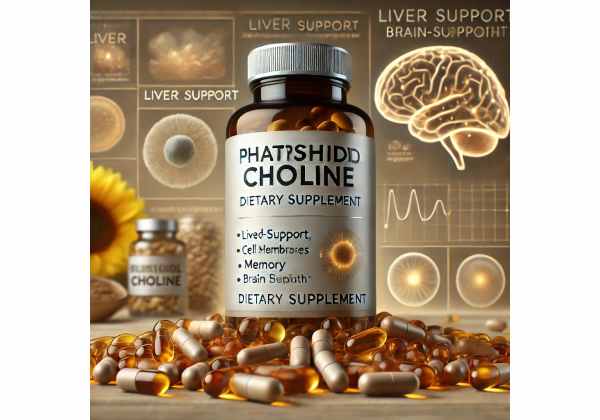
Phosphatidylcholine often gets described as a brain supplement, but that label only tells part of the story. It is also a major structural phospholipid in cell membranes, a dietary source of choline, and part of the body’s broader system for building acetylcholine, maintaining membrane integrity, and moving fats through the liver. Those roles make it biologically important. They do not automatically make it a proven cognitive enhancer. The most useful way to think about phosphatidylcholine is as a foundational support compound with a strong role in brain structure and choline metabolism, but with more mixed evidence for direct improvements in memory, focus, or mood in healthy adults. That nuance matters, especially because phosphatidylcholine is often confused with other choline-related supplements that have different evidence and different uses. This article explains what phosphatidylcholine does, how it may support brain health, what the human research actually shows, how dosing and labels can become confusing, and what to know about safety before using it.
Table of Contents
- What phosphatidylcholine is
- How it supports the brain
- What human research suggests
- Who might benefit most
- Dosage, forms, and label confusion
- Safety, side effects, and precautions
What phosphatidylcholine is
Phosphatidylcholine is one of the body’s most abundant phospholipids. In plain terms, it is one of the key fat-like molecules that helps build and maintain cell membranes. Every cell depends on membrane stability, but the brain is especially sensitive to membrane composition because neurons rely on fast signaling, flexible synapses, and tightly regulated communication across cell surfaces. That is one reason phosphatidylcholine attracts attention in brain-health discussions even before you get to its connection with choline itself.
It also matters because phosphatidylcholine is a major dietary source of choline. Choline is required to produce acetylcholine, a neurotransmitter involved in memory, attention, muscle control, and other nervous system functions. The body also uses choline to build phosphatidylcholine and sphingomyelin, both of which are vital for membrane structure. This creates an interesting loop: phosphatidylcholine helps maintain structural integrity and also contributes to the supply chain for a nutrient the brain needs for signaling. That dual role makes it more foundational than flashy.
Food is where most people encounter phosphatidylcholine naturally. Eggs, liver, meat, fish, dairy foods, soybeans, and some legumes provide meaningful amounts of choline, much of it in phosphatidylcholine-containing forms. In the United States, about half of dietary choline intake is estimated to come in the form of phosphatidylcholine. Supplement forms usually come from soy lecithin, sunflower lecithin, egg-derived phospholipids, or more purified phosphatidylcholine concentrates.
One of the most common mistakes is assuming phosphatidylcholine is interchangeable with every other choline-related supplement. It is not. Citicoline, alpha-GPC, choline bitartrate, lecithin, and phosphatidylcholine all relate to choline metabolism, but they differ in structure, absorption characteristics, and research focus. That distinction matters because people often expect phosphatidylcholine to perform like a more directly marketed cognitive ingredient. In reality, it often behaves more like structural and nutritional support than a fast nootropic. Readers comparing categories often find it helpful to contrast phosphatidylcholine with citicoline, which has a more direct reputation in cognitive-supplement discussions.
Another useful point is that phosphatidylcholine does not need to be viewed only through a dementia or memory lens. Its importance starts much earlier. It plays a role in fetal development, cell division, membrane signaling, and lipid transport across the lifespan. That does not mean supplementation is necessary for everyone. It means the compound matters biologically even when supplement effects are uncertain.
The best way to frame phosphatidylcholine is as a core membrane phospholipid and choline-delivery form with real physiological importance. The question is not whether it matters. The real question is when extra supplemental intake changes outcomes in a meaningful way.
How it supports the brain
Phosphatidylcholine supports the brain through structure first and signaling second. That order helps keep the topic clear. The most basic job of phosphatidylcholine is helping form and maintain cell membranes. In the brain, that matters because membranes are not passive wrappers. They influence receptor function, synaptic transmission, membrane fluidity, transport processes, and how neurons respond to stress. If membrane composition becomes compromised, signaling can become less efficient and cells can become more vulnerable.
The second pathway is through choline. When phosphatidylcholine is consumed, part of it contributes to the body’s choline pool. Choline is then used to make acetylcholine, a neurotransmitter closely tied to attention, memory encoding, and aspects of executive function. This is one of the main reasons phosphatidylcholine has been explored for cognitive aging and neurodegenerative disorders. The theory is straightforward: if choline status is low or membrane turnover is high, phosphatidylcholine might support both structural maintenance and cholinergic function.
There is also a transport angle that makes phosphatidylcholine biologically interesting. Not all dietary choline arrives in the body in the same way. Free choline and some water-soluble forms are absorbed and handled differently from fat-soluble phospholipids. Phosphatidylcholine can be absorbed intact to a meaningful degree, incorporated into lipoprotein particles, and distributed to tissues, including the brain. That does not guarantee a cognitive effect, but it helps explain why phosphatidylcholine remains part of serious discussions about brain-related nutrition rather than being dismissed as a generic fat.
A third mechanism involves nutrient interaction. Choline metabolism is linked with folate, methionine, betaine, vitamin B12, and DHA. These pathways overlap in methylation, membrane synthesis, and neural development. In pregnancy, that relationship becomes especially important because the developing brain needs enough choline not only for acetylcholine production but also for phospholipid synthesis, cell division, and epigenetic regulation. This is one reason the strongest human evidence around choline and brain outcomes tends to appear in prenatal and developmental research rather than in adult “brain boost” studies.
Still, it is important not to oversell the mechanism. Structural relevance is not the same as measurable clinical benefit. Many compounds matter for the brain in principle but only produce clear outcomes in particular populations. Phosphatidylcholine seems to fit that pattern. Adequate intake makes sense. Broad promises about faster focus or better mood are much harder to justify. For people trying to understand the broader nutrient context, it often helps to compare phosphatidylcholine with the more general question of how choline supports the brain, because the supplement story is really part of that larger nutritional framework.
So the mechanism case for phosphatidylcholine is good. It contributes to membrane integrity, provides choline, intersects with acetylcholine biology, and matters for neurodevelopment. What remains less settled is how often those mechanisms translate into noticeable benefits when a healthy adult takes a supplement.
What human research suggests
The human research on phosphatidylcholine is best described as meaningful but uneven. There is solid support for its biological importance and a growing body of observational work linking higher choline or phosphatidylcholine intake with better cognitive outcomes. What is less solid is the idea that phosphatidylcholine supplementation clearly improves memory, focus, or mood in healthy adults across the board.
Some of the most encouraging evidence is observational. In large cohorts, moderate to higher intakes of total choline and phosphatidylcholine have been associated with better cognitive performance or lower odds of mild cognitive impairment and dementia. These findings are useful because they point to a possible long-term relationship between adequate choline-rich eating patterns and healthier cognitive aging. But they remain observational. They cannot prove that taking a phosphatidylcholine supplement will produce the same result, especially over a short period.
The most convincing interventional evidence is not actually in typical adult nootropic use. It is in pregnancy and neurodevelopment. Controlled human trials and follow-up studies suggest that higher maternal choline intake can support some child cognitive outcomes, especially sustained attention and certain learning-related measures. That does not mean every prenatal phosphatidylcholine trial has been clearly positive, because the literature is mixed, but it does show that choline-related phospholipid nutrition can matter in a human brain context when demand is especially high.
By contrast, direct adult supplementation evidence remains thinner and more inconsistent. In cognitive-aging or neurodegenerative contexts, phosphatidylcholine has theoretical appeal because of its cholinergic and membrane-support roles. Yet trials have not established it as a reliable stand-alone treatment for memory decline. A recent exploratory study in post-acute COVID-related cognitive impairment also failed to show a clear effect of phosphatidylcholine beyond placebo-like improvement over time. That matters because it pushes against the idea that phosphatidylcholine is an all-purpose “brain fog” fix.
This pattern leads to a more honest summary than most supplement pages offer:
- The biological rationale is strong.
- Long-term dietary intake patterns look more promising than short, direct supplement trials.
- Developmental and life-stage-specific uses appear more convincing than general adult enhancement.
- Evidence for mood benefits is weaker than evidence for structural or cognitive-support roles.
That final point is important for search intent. People often look up phosphatidylcholine because they want sharper focus, better mood, or less mental fatigue. The research does not strongly support it as a direct mood supplement. If someone’s issue is persistent scatter, low drive, or heavy fatigue, it may be more useful to work through the common drivers of brain fog instead of expecting phosphatidylcholine to act like a fast neurochemical solution.
In practical terms, phosphatidylcholine looks more like a foundational support compound than a dramatic cognitive performer. That does not make it unhelpful. It just means expectations should be built around long-term support, not quick transformation.
Who might benefit most
Phosphatidylcholine is most likely to make sense for people whose goals line up with choline sufficiency, membrane support, or life stages with higher demand, not for people seeking a fast nootropic effect. That distinction helps narrow the field quickly. The supplement is usually a better fit for foundational support than for immediate mental stimulation.
One group that deserves special mention is pregnant individuals under clinician guidance. Choline demand rises during pregnancy, and the developing brain depends on adequate choline availability for cell membranes, methylation, and cholinergic development. Many prenatal supplements still contain little or no choline, which is why targeted intake discussions have become more prominent. But pregnancy is also a case where self-prescribing from marketing copy is a bad idea. The relevant question is not whether phosphatidylcholine is trendy. It is whether total choline intake from food and supplements is adequate in the context of the person’s full diet and medical care.
Older adults who do not eat many choline-rich foods may also be reasonable candidates, especially if their diets are low in eggs, meat, fish, dairy, or legumes. In this setting, phosphatidylcholine can be seen as one way to support choline intake, though food quality still matters. The goal is not to bypass nutrition with one capsule. It is to support a nutrient pattern that may otherwise be thin.
People with high mental workload sometimes turn to phosphatidylcholine hoping it will work like a sharper, more obvious focus supplement. That is where disappointment often happens. If the real problem is sleep fragmentation, stress overload, irregular meals, or excessive caffeine, phosphatidylcholine is unlikely to be the single missing link. It may still be useful as part of a bigger plan, but it is not built for dramatic acute effects. Many people in that situation are actually better served by strengthening basics such as nutrition for mood and focus before adding another specialized supplement.
It may also appeal to people who want a gentler, more nutritional form of brain support than stimulant-heavy products. That can be reasonable, especially for those who are sensitive to more activating supplements. But “gentler” does not always mean “noticeable,” and that tradeoff should be clear from the start.
Who is less likely to benefit? Healthy adults expecting same-day concentration changes, people trying to self-treat major depression or significant memory complaints, and anyone using the supplement in place of evaluation for worsening cognitive symptoms. Phosphatidylcholine works best when the goal is nutritional support rather than pharmacologic intensity.
The most grounded use case is selective: someone with a plausible reason to improve choline intake, a tolerance for slower and subtler effects, and a willingness to judge the supplement by sustained function rather than by a dramatic feeling after the first dose.
Dosage, forms, and label confusion
Dosing phosphatidylcholine is more confusing than it looks because labels do not always report the same thing. Some products list total lecithin. Others list purified phosphatidylcholine. Some emphasize the amount of choline provided, while others emphasize the total phospholipid weight. These are not interchangeable numbers. A person comparing two products can easily think they are getting the same dose when they are not.
This matters because most formal intake recommendations are expressed for choline, not for phosphatidylcholine specifically. For healthy adults, the adequate intake for choline is 550 mg per day for men and 425 mg per day for women. During pregnancy the target is 450 mg per day, and during lactation it is 550 mg per day. Those figures are for total daily choline intake from food and supplements combined. They do not tell you that everyone should take a phosphatidylcholine pill. They tell you what level of choline intake is considered nutritionally adequate.
Supplement reality is less tidy. Health-professional guidance notes that typical choline-only supplements often provide 10 to 250 mg of choline, and phosphatidylcholine is one of the common forms used. Yet consumer products labeled as phosphatidylcholine may deliver much larger amounts of the phospholipid by weight, because only part of that weight counts as choline. This is why reading the supplement facts panel carefully matters more than trusting the front of the bottle.
A practical way to approach dosing is:
- Decide whether your goal is to raise total choline intake or to trial a phosphatidylcholine-specific product.
- Check whether the label lists total phosphatidylcholine, total lecithin, or actual choline content.
- Add up your food intake mentally, especially if you already eat eggs, fish, dairy, or meat regularly.
- Start conservatively rather than assuming a large dose will be more effective.
- Reassess after several weeks, not after one or two days.
Forms also matter. Soy lecithin and sunflower lecithin are common, more general phospholipid sources. Purified phosphatidylcholine products aim for higher PC content. Egg-derived phospholipids may appeal to people who want a source closer to major dietary patterns, though this can affect cost and allergen considerations. For some readers, it is also useful to compare phosphatidylcholine with other choline-linked options such as phosphatidylserine, because the products are often grouped together even though they are not the same compound.
Timing is less important than consistency. Unlike caffeine or some amino-acid-based nootropics, phosphatidylcholine is not mainly used for an acute effect. Many people take it with meals, partly because it is fat-based and partly because that tends to improve tolerance. The better question is not “What time should I take it?” but “Does this form actually match my goal, and do I know what amount I am really taking?”
Safety, side effects, and precautions
Phosphatidylcholine is generally considered well tolerated for many adults, especially when used in moderate amounts that fit within a sensible total choline intake. Compared with more stimulating brain supplements, it tends to have a milder safety profile. Even so, “mild” should not be mistaken for “limitless.” The main cautions come from choline biology itself, from product sourcing, and from the fact that high intake is not risk-free.
At higher total choline intakes, adverse effects can include fishy body odor, nausea, vomiting, sweating, salivation, low blood pressure, and liver-related problems. The adult tolerable upper intake level for total choline is 3,500 mg per day. That figure applies to healthy adults and includes choline from food and supplements. It is not a target to aim for. It is a ceiling meant to reduce the chance of harm. This is particularly relevant because someone may take phosphatidylcholine without realizing that lecithin products, multinutrient formulas, eggs, and other foods are all contributing to the total.
There is also a cardiovascular nuance worth keeping in mind. Choline metabolism can increase trimethylamine N-oxide, or TMAO, through gut microbial pathways. That does not prove that phosphatidylcholine supplements are dangerous for the heart, but it is one reason more is not automatically better and why long-term megadosing is hard to justify when the cognitive benefit case remains uncertain.
Source and formulation matter too. Soy-derived products may be inappropriate for some people with allergies or strong sensitivities. Egg-derived products may not fit those avoiding egg proteins. Lecithin-based products can vary in phosphatidylcholine concentration, which means tolerability and usefulness may differ more than labels suggest. Some people notice mild digestive discomfort or fullness, especially when starting with a larger dose.
A few practical precautions are worth taking:
- Do not use phosphatidylcholine to self-treat worsening memory loss, severe depression, or major concentration problems.
- Be cautious with high-dose stacking if you already use multiple choline-containing products.
- Review pregnancy and breastfeeding use with a clinician instead of relying on generic online advice.
- Use extra care if you have complex liver, cardiovascular, or metabolic conditions.
Another quiet but important safety issue is substitution. A person can spend months fine-tuning a supplement stack while ignoring the main drivers of poor mental performance. If sleep is fragmented, stress is chronic, or recovery is poor, the gains from phosphatidylcholine alone may be modest at best. In that setting, the bigger improvement often comes from restoring sleep and brain function rather than from escalating supplement complexity.
The most balanced conclusion is that phosphatidylcholine is a relatively reasonable supplement when used thoughtfully, but it is not a free pass to ignore dose, diet, or context. Its benefits are likely to be subtle, and its safest use is usually as part of a broader nutrition strategy rather than as an isolated promise of better cognition.
References
- Choline – Health Professional Fact Sheet 2022 (Official Fact Sheet)
- Choline, Neurological Development and Brain Function: A Systematic Review Focusing on the First 1000 Days 2020 (Systematic Review)
- Dietary Choline Intake Is Beneficial for Cognitive Function and Delays Cognitive Decline: A 22-Year Large-Scale Prospective Cohort Study from China Health and Nutrition Survey 2024 (Prospective Cohort Study)
- Future Directions in Choline: From Neurodevelopment to Cardiometabolic Health 2025 (Perspective Review)
- Exploring cognitive impairments and the efficacy of phosphatidylcholine and computer-assisted cognitive training in post-acute COVID-19 and post-acute COVID-19 Vaccination Syndrome 2024 (Clinical Study)
Disclaimer
This article is for educational purposes only and is not medical advice. Phosphatidylcholine may not be appropriate for everyone, especially people with relevant allergies, pregnancy or breastfeeding needs that require individualized guidance, or complex cardiovascular, liver, or metabolic conditions. Supplements should not replace diagnosis, prescribed treatment, psychotherapy, or urgent medical care. Speak with a qualified clinician before starting phosphatidylcholine if you have ongoing memory problems, mood changes, severe fatigue, brain fog, or any chronic health condition.
If you found this article useful, please share it on Facebook, X, or your preferred platform.