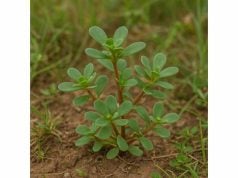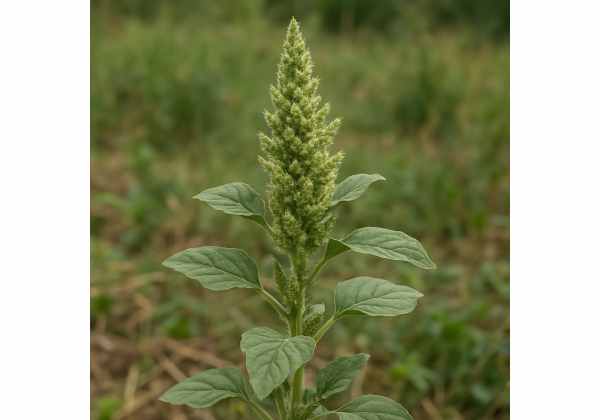
Pigweed, more precisely redroot pigweed or Amaranthus retroflexus, is one of those plants that sits in an unusual space between weed, wild food, and traditional remedy. It is often pulled from gardens and fields, yet in several regions it has also been eaten as a leafy green and used in home medicine for stomach complaints, skin irritation, diarrhea, wounds, and general inflammatory discomfort. That contrast makes it interesting. Pigweed is not a mainstream medicinal herb with clinical trials, official dosing monographs, or a standardized supplement tradition. Still, it does contain nutrients, polyphenols, flavonoids, and other bioactive compounds that help explain why people have continued to use it.
The most balanced way to understand pigweed is as a traditional food-medicine plant with promising laboratory findings and important safety caveats. Its likely value lies in mild digestive support, topical folk use, and edible-young-greens nutrition rather than in any proven disease treatment. It is also a plant that demands respect: older material may accumulate nitrates and oxalates, wild stands may be contaminated, and medicinal claims go well beyond what modern evidence can confirm.
Essential Insights
- Pigweed is best viewed as an edible wild amaranth with traditional medicinal uses, not as a clinically proven herbal medicine.
- Young leaves and shoots may provide minerals, antioxidant compounds, and mild traditional digestive support when properly prepared.
- A cautious traditional range is about 1 cup of weak infusion up to 2 or 3 times daily for short-term use, not a standardized medical dose.
- Topical folk use for minor skin irritation and simple washes is more defensible than aggressive internal use.
- People with kidney stone risk, chronic kidney disease, possible nitrate sensitivity, or uncertain foraging conditions should avoid unsupervised use.
Table of Contents
- What pigweed is and why it has been used
- Key ingredients and medicinal properties
- Pigweed benefits and what the evidence actually shows
- Traditional food and herbal uses
- How to prepare and use pigweed
- Dosage, timing, and duration
- Safety, side effects, and who should avoid it
What pigweed is and why it has been used
Pigweed, usually referring here to Amaranthus retroflexus, is an annual plant in the amaranth family. It is common in disturbed soils, roadsides, gardens, crop fields, empty lots, and sunny waste ground. Many people know it only as an agricultural nuisance. Yet that reputation hides a second identity. In some regions, especially where wild edible plants remain part of local food culture, pigweed has been gathered as a vegetable and used in simple household remedies.
The plant’s medicinal story starts with that edible identity. A great many traditional remedies began as food plants rather than as specialized herbs. When a plant is widely available, easy to harvest young, and mild enough to eat, communities often test it first as nourishment and then expand its role into digestive, skin, and fever-related care. Pigweed seems to fit that pattern. Ethnobotanical records describe young shoots and leaves eaten fresh, cooked, or added to pies and other dishes, while decoctions or infusions are used for gastrointestinal complaints, diarrhea, dysentery-like symptoms, mouth problems, and minor skin conditions.
This dual role matters because it shapes what kind of article pigweed deserves. It should not be described like peppermint oil or standardized passionflower extract, because it does not have that level of clinical definition. It also should not be dismissed as “just a weed,” because the plant is clearly used as food and medicine in more than one cultural setting. A better phrase is traditional edible medicinal plant. That keeps the plant grounded in both its practical use and its limits.
Pigweed is also a reminder that plant reputation often depends on context. In farming, it is often treated as invasive, competitive, and troublesome. In rural food traditions, it may be viewed as abundant seasonal nutrition. In ethnomedicine, it appears as a modest remedy for irritated tissues and unsettled digestion. These are not contradictions so much as different human relationships with the same species.
From a modern perspective, the most useful reason to look at pigweed is not that it promises spectacular health outcomes. It is that it may combine three modest advantages: nutrient density, bioactive plant compounds, and long-standing practical use. That combination is enough to justify careful interest, especially when it is paired with honest discussion of uncertainty. Pigweed is neither a miracle herb nor meaningless folklore. It is a real traditional plant whose strongest modern value lies in being interpreted carefully rather than romantically.
Key ingredients and medicinal properties
Pigweed does not have one famous active compound that defines everything it does. Instead, its profile appears to come from a mix of nutrients and phytochemicals. Recent studies on Amaranthus retroflexus point to minerals, phenolic compounds, flavonoids, and several other secondary metabolites that together support its reputation as both a food plant and a mild medicinal resource.
The leaf appears especially important. Analytical work has found that the leaves contain higher levels of flavonoids than other plant parts, including a notable concentration of rutin. That matters because flavonoids are often associated with antioxidant, tissue-protective, and mild anti-inflammatory effects. Rutin in particular is one of the more recognizable plant flavonoids in herbal and nutraceutical discussions, and it helps explain why pigweed is sometimes discussed for irritated tissues and vascular or oxidative balance. For readers curious about that compound family, rutin and its broader health relevance offers a useful comparison point.
Other studies have identified or reported phenolic acids and related compounds such as gallic acid, vanillic acid, rosmarinic acid, oleuropein, quercetin, and ascorbic acid in methanolic extracts of A. retroflexus. These findings do not automatically translate into proven human benefits, but they make the plant chemically plausible as an antioxidant and mild antimicrobial herb. Laboratory work has also described antibiofilm and iron-chelating activity, which adds another layer of interest, especially for food and topical applications.
Pigweed also seems nutritionally relevant. Recent work looking at the plant as a possible sustainable food source reported high levels of essential minerals, antioxidants, and other bioactive compounds. That does not make it nutritionally identical to cultivated amaranths bred for food, but it does reinforce the idea that redroot pigweed is more than empty greenery. In the right setting, especially when harvested young, it can function as a nutrient-rich wild vegetable.
From this chemistry come the medicinal properties most often attributed to pigweed:
- Antioxidant potential from phenolics and flavonoids.
- Mild anti-inflammatory potential.
- Possible antimicrobial and antibiofilm activity in laboratory testing.
- Astringent and tissue-supportive traditional action.
- Nutrient contribution when used as a food plant.
At the same time, this chemistry also explains why caution is necessary. Amaranth species can accumulate anti-nutritional or potentially problematic compounds, especially nitrates and oxalates, depending on growth stage and growing conditions. So pigweed is not just bioactive in the “benefit” direction. It is bioactive in ways that require judgment.
The best summary is that pigweed has real phytochemical substance behind its traditional uses, but the gap between chemistry and clinical proof remains wide. Its medicinal properties are plausible and interesting. They are not yet strongly validated in human medicine.
Pigweed benefits and what the evidence actually shows
When people ask about pigweed health benefits, they usually want a clear list. The problem is that the strongest evidence does not support a polished supplement-style list. Instead, it supports a more careful ranking: likely nutritional benefit as a young edible green, plausible mild digestive and topical value from traditional use, and early laboratory evidence for antioxidant and antimicrobial activity.
The first and most defensible benefit is nutritional. Pigweed is part of the wider amaranth group, and modern analysis suggests that Amaranthus retroflexus can contain meaningful amounts of minerals and antioxidant compounds. That makes it potentially useful as a seasonal wild food, especially where communities already know how to collect and prepare it properly. This is not the same thing as proving a medicinal effect, but it does matter. A nutrient-dense plant can support health without ever becoming a “drug herb.”
The second likely benefit is mild digestive support. Ethnobotanical records from Armenia and neighboring traditions describe decoctions or infusions of pigweed for gastrointestinal ailments. Other traditional accounts mention diarrhea, dysentery-like conditions, colic, and stomach regulation. This is plausible because tannin-like astringent action, flavonoids, and general soothing plant chemistry often converge in herbs used for irritated digestion. Still, there are no strong clinical trials proving pigweed as a treatment for digestive disease. At best, it belongs in the category of short-term traditional support.
The third likely area is skin and tissue care. Traditional uses include leaves for wound support, external applications for irritated skin, and folk use for burns, sores, and inflammatory skin complaints. This makes pharmacological sense given the plant’s antioxidant and antimicrobial signals, but again the evidence is mostly traditional and preclinical. It is similar to the way people historically used calendula for minor skin support, though calendula has a much more developed modern herbal literature.
Beyond that, the evidence becomes much weaker. Laboratory studies suggest antioxidant, antibiofilm, and possibly immune-modulating effects. Those are interesting and worth future research, but they do not justify claims that pigweed treats infections, cancer, liver disease, or cardiovascular disease in humans. A recent open-access study even describes the plant as having potential in food or pharmaceutical applications, but that is still a forward-looking scientific statement, not a clinical recommendation.
So the most honest benefit hierarchy looks like this:
- Strongest practical value: young edible-greens nutrition and traditional short-term use.
- Plausible traditional value: digestive settling and minor topical support.
- Promising early science: antioxidant and antimicrobial activity in extracts.
- Not established: treatment of chronic disease, major infection, or serious inflammation.
That answer may sound restrained, but it is actually the most useful version. Pigweed does not need exaggerated claims to be interesting. Its real value lies in being a credible traditional food-medicine plant that deserves careful use, not inflated promises.
Traditional food and herbal uses
Pigweed is easiest to understand when its uses are divided into food use and remedy use. The food use is especially important because it tells us how communities judged the plant: not as a rare medicine for special occasions, but as an available seasonal resource that could nourish as well as support health.
As a food, young shoots and leaves have been eaten in salads, pies, and cooked preparations. Ethnobotanical work from Armenia describes substantial local use of the plant as a food green, with many families harvesting it during summer. Elsewhere, pigweed and related amaranths have been cooked like spinach or mixed with other greens. This is consistent with a wider global pattern in which amaranth leaves are used as wild or semi-cultivated vegetables. For readers who think in terms of modern nutrient-dense greens, pigweed is closer in spirit to nettle as a mineral-rich traditional green than to a specialized medicinal tincture herb.
As a digestive remedy, decoctions or infusions are the main traditional form. These are used for gastrointestinal complaints, loose stools, colic, and general stomach upset. Some traditional sources broaden this further to constipation, dysentery-like complaints, and bowel irritation. The common thread is digestive instability. Pigweed seems to have been used when the gut felt irritated, inflamed, or poorly regulated.
As a topical herb, the leaves and aboveground parts are used more broadly. Traditional uses include wound support, swelling, rashes, eczema-like conditions, burns, sores, ulcers in the mouth, and general skin irritation. In some folk traditions the ash is used to wash sores, while infusions are applied externally. These uses reflect a classic pattern seen in many humble green herbs: if a plant is cooling, mildly astringent, and easy to mash or steep, it often becomes part of first-line household care.
There are also more scattered traditional uses, including diuretic, fever-related, laxative, and hemostatic roles. Some reports mention use for headaches, jaundice, or inflammatory conditions. These should be treated as ethnobotanical records rather than as validated outcomes. They are still worth noting because they show the breadth of traditional curiosity around the plant.
One practical lesson emerges from all of this: pigweed was historically used in simple, direct ways. It was eaten, boiled, steeped, applied, or cooked. It was not typically turned into highly concentrated modern extracts. That matters because it suggests the plant’s safest and most meaningful uses today are still likely to be simple ones. In many cases, the older preparation method tells us more than the longer list of conditions ever could.
That is why pigweed is best approached as a traditional green with mild medicinal overlap. Its old uses make sense. They just need to be translated into modern caution rather than copied uncritically.
How to prepare and use pigweed
Pigweed should be prepared differently depending on whether the goal is food use or traditional remedy use. In both cases, young plant material is generally the safer and more practical choice. Recent work on Amaranthus retroflexus as a food source specifically advises proper thermal treatment and suggests that earlier growth stages may be preferable, partly because nitrate levels can rise as the plant matures.
For food use, the simplest approach is to treat young leaves and tender shoots as a cooked green. They may be steamed, boiled, sautéed, or added to mixed dishes. Boiling and discarding the water is a traditional and practical approach because it may reduce some anti-nutritional factors. This is also why pigweed should not be foraged casually from roadsides, field margins with herbicide exposure, or heavily manured sites. Where it grows is almost as important as how it is cooked.
For tea or infusion use, the modern approach should stay conservative. A weak infusion made from dried or fresh aerial parts can be used in the traditional way for short-term digestive support. The point is not to create a strong extract. The point is to make a mild herbal drink closer to folk use than to pharmacological dosing. If someone wants a more established tea herb for mild stomach upset, chamomile for gentle digestive support has a stronger modern reputation.
For topical use, strained infusions, washes, or soft leaf preparations make the most sense. These fit traditional use for minor irritated skin, small superficial sores, or inflamed areas that are intact and not severely infected. A wash is generally easier to keep clean than a mashed poultice, which is one reason it may be the better modern interpretation of folk practice.
The least appropriate use is aggressive experimentation with concentrated extracts. Pigweed is not a standardized medicinal oil or capsule herb. It does not have a modern preparation tradition strong enough to justify highly concentrated self-made tinctures, powders, or strong decoctions used in large amounts.
A sensible use pattern looks like this:
- Harvest only young plants from clean, trusted places.
- Use cooking as the default for edible use.
- Keep internal herbal use mild and short term.
- Prefer washes or gentle external applications over elaborate topical formulas.
- Stop quickly if irritation, stomach upset, or unusual symptoms appear.
This is also one of those plants where restraint matters more than cleverness. Pigweed’s usefulness lies in modest preparation. It is a plant that makes more sense as a simple seasonal green and folk-support herb than as a modern high-potency botanical experiment.
Dosage, timing, and duration
Dosage is the least standardized part of pigweed use. There is no modern clinical monograph that establishes a validated oral dose for Amaranthus retroflexus as medicine, and there are no strong human trials that tell us what amount is ideal for digestive or topical outcomes. That means any dosage discussion has to be framed clearly as traditional-use guidance, not evidence-based prescribing.
For food use, dosage is naturally flexible. Young cooked leaves and shoots are used as part of a meal, much like other wild greens. In this form, the idea of “dose” matters less than preparation quality, plant age, and source safety. Smaller portions at first make sense because tolerance can vary and because the plant’s anti-nutritional profile is not negligible.
For infusion use, the safest modern interpretation is a light, short-term tea rather than a strong medicinal decoction. A practical folk-style range is about 1 cup per use, up to 2 or 3 times daily for a few days, especially when used for mild digestive discomfort. This should not be presented as a validated medical dose. It is simply a conservative translation of traditional decoction and infusion patterns into a modern setting.
For topical use, quantity is even less formal. A sufficient amount of strained infusion or fresh preparation is used to cleanse or cover the affected area briefly, then discontinued if there is any irritation. Repeated short applications make more sense than one prolonged, occlusive application.
Timing depends on purpose:
- For digestive use, after meals or between meals is most practical.
- For topical washing, timing is less important than cleanliness and observation.
- For edible use, pigweed works best as part of ordinary meals rather than as a medicinal fasting food.
Duration should stay short. Because the plant lacks standardized safety and dosing data, it makes little sense to use it medicinally for long stretches. A few days for digestive upset or a short span for mild topical use is more reasonable than routine daily use for weeks. If symptoms are persistent, the problem should be reassessed rather than treated as a dose-adjustment issue.
Two dosing mistakes are worth avoiding. The first is assuming that weak evidence means the plant is automatically safe in large amounts. The second is assuming that because pigweed is edible, medicinal use is unlimited. Edible and unlimited are not the same thing, especially in a plant that may accumulate nitrates and oxalates depending on its environment.
The best dosage summary is simple: small amounts, young plant material, short duration, and food-style or mild folk-style preparation. That approach fits both the evidence and the plant’s actual history far better than any attempt to make pigweed sound like a standardized herbal supplement.
Safety, side effects, and who should avoid it
Pigweed’s safety profile is the most important part of the article because this is where a “wild edible weed” reputation can become misleading. The plant may be usable, but that does not mean every stand is safe or every preparation is wise.
The first issue is nitrate and oxalate accumulation. Amaranthus retroflexus has been linked to livestock poisoning, especially in pigs and cattle, and amaranths are known nitrate accumulators under some growing conditions. Human use is obviously different from livestock eating large amounts of mature forage, but the basic caution still matters. Older plants, stressed plants, or plants grown in nitrate-rich or contaminated conditions are not ideal candidates for human use. This is why recent food-oriented research advises proper thermal treatment and suggests harvesting younger plants.
The second issue is site contamination. Pigweed grows exactly where many people should not forage: roadsides, crop margins, heavily fertilized soil, waste ground, and herbicide-exposed field edges. A plant can be edible in principle and still be a poor foraging choice in practice. This may be the single biggest real-world safety issue for pigweed.
The third issue is kidney and mineral sensitivity. Because amaranths may contain appreciable oxalates, people with a history of calcium oxalate kidney stones, chronic kidney disease, or medically restricted oxalate intake should be cautious with pigweed as a food or remedy. This is a prudence-based warning rather than a claim that every serving is dangerous. But it is sensible enough to state clearly.
Possible side effects or problems include:
- Stomach discomfort if the plant is taken in excess or prepared poorly.
- Throat or skin irritation in sensitive individuals.
- Greater risk from contaminated, mature, or improperly sourced plants.
- Theoretical concern for high-oxalate or high-nitrate exposure in vulnerable people.
Who should avoid self-directed medicinal use:
- People with kidney stone history or chronic kidney disease.
- Pregnant or breastfeeding people because safety data are too limited.
- Anyone foraging from uncertain, polluted, sprayed, or roadside locations.
- People trying to self-treat persistent diarrhea, rectal bleeding, fever, or significant skin infection.
- Anyone using wild plants without confident identification.
This last point deserves emphasis. Pigweed is common, but “common” does not mean foolproof. Correct identification, clean sourcing, and conservative preparation are central to safe use.
The safest way to think about pigweed is not as a danger plant and not as a free superfood. It is a conditional plant. When young, clean, properly prepared, and used modestly, it may be useful as a food and minor traditional remedy. When old, contaminated, overused, or treated as a substitute for medical care, it becomes much less appealing. That balanced view is what keeps the herb interesting without turning it into either hype or fear.
References
- Nutrient Status and Antioxidant Activity of the Invasive Amaranthus retroflexus L. 2025
- Investigation of the Antioxidant, Antibiofilm, and Endocrine‐disrupting Potential of Amaranthus retroflexus Methanol Extract Used as Food: Network and Molecular Docking Analyses 2025
- Determination by UHPLC – UV – MS of polyphenol content of Amaranthus retroflexus 2023
- Use of the alien invasive species Amaranthus retroflexus L. in Armenia 2026
Disclaimer
This article is for educational purposes only and does not replace medical advice, diagnosis, or treatment. Pigweed has traditional food and medicinal uses, but modern human evidence is limited, and no standardized clinical dosage has been established. Do not use it to self-treat persistent digestive illness, serious skin disease, infection, jaundice, kidney problems, or unexplained symptoms. Because wild pigweed may accumulate nitrates or oxalates and may also grow in contaminated places, safe identification, clean sourcing, and cautious preparation are essential.
If you found this article useful, please share it on Facebook, X, or any platform you prefer.