Pizza can be harder on blood sugar than its carbohydrate count suggests. The crust supplies a concentrated dose of starch, while cheese, meat, and oil add fat and protein that slow digestion. The result is often a smaller early rise than expected, followed by a longer glucose increase several hours after the meal. Portion size, crust thickness, sauces, toppings, and what you eat alongside the pizza all reshape that pattern.
You do not have to avoid pizza to manage glucose well. For many people, the most effective approach is to choose a thinner or higher-fiber crust, keep the portion moderate, add vegetables and protein, skip sugary drinks, and take a short walk afterward. People who use insulin may need to pay special attention to delayed rises because high-fat, high-protein meals can change insulin needs and timing. The goal is not to find a magical “blood-sugar-safe” pizza, but to build a meal that gives you a more predictable response.
Table of Contents
- Why Pizza Can Cause a Delayed Blood Sugar Rise
- Pizza Crust Types Compared for Blood Sugar
- How Toppings, Cheese, and Sauces Change the Meal
- Portion Strategies That Work Better Than Cutting Pizza Out
- Better Pizza Orders at Restaurants, at Home, and From the Freezer
- How to Check Your Own Blood Sugar Response to Pizza
- Special Considerations if You Have Diabetes or Use Insulin
Why Pizza Can Cause a Delayed Blood Sugar Rise
Pizza combines rapidly digestible starch with enough fat and protein to change the timing of the glucose response. That combination is why a normal-looking reading one hour after pizza does not always mean the meal is finished affecting your blood sugar.
The crust is usually the main source of carbohydrate. White-flour dough is ground finely, cooked thoroughly, and easy to digest. In a large serving, that can deliver 60, 80, or more grams of carbohydrate before counting sweetened sauce, drinks, or dessert.
At the same time, cheese, pepperoni, sausage, and added oil raise the fat content. Fat slows stomach emptying, so carbohydrate may reach the small intestine more gradually. Protein also changes post-meal glucose and insulin responses. In research on mixed meals, high-fat and high-protein meals can shift glucose later in the post-meal period, especially in people with type 1 diabetes.
This creates a classic pizza pattern: glucose may rise modestly at first, continue climbing after the usual one- to two-hour window, and stay elevated longer than it would after a lower-fat carbohydrate meal. The effect is not identical in everyone, but it is real enough that pizza has been used as a test meal in diabetes studies.
The lesson is not that fat “cancels” carbohydrate. It changes the curve. If you are interested in why foods with similar carbohydrate counts behave differently, glycemic index and glycemic load help explain part of the picture, while mixed-meal fat and protein explain another part.
Pizza Crust Types Compared for Blood Sugar
Crust thickness and total carbohydrate matter more than marketing labels. A thin crust usually gives you less flour per slice than a pan or deep-dish crust, but the nutrition label or restaurant information is the best way to compare actual servings.
| Crust style | Likely glucose impact | What to watch |
|---|---|---|
| Thin crust | Often lower carbohydrate per slice | Large diameter slices can still add up quickly |
| Traditional hand-tossed | Moderate to high | Portion size and refined flour |
| Pan or deep dish | Often higher | More dough, more oil, and sometimes more cheese |
| Whole-wheat crust | May be somewhat slower | Can still contain mostly refined flour; check fiber |
| Cauliflower crust | Highly variable | Many versions use rice flour, tapioca starch, or cornstarch |
| “Keto” or low-carb crust | Often lower, but not always | Serving size, modified starches, and total calories |
Thin crust is often the easiest practical choice because it reduces the amount of dough without changing the meal completely. If two slices of thin pizza contain 45 g of carbohydrate and two slices of thick pan pizza contain 75 g, that difference is likely to matter more than whether either crust is marketed as artisan or whole grain.
Whole-grain dough can add fiber and micronutrients, but “whole wheat” does not guarantee a low glucose response. Breads and cereal products show wide variation in glycemic index because flour particle size, processing, fermentation, and formulation differ. A dense, fiber-rich whole-grain crust may behave better than a soft refined crust, but you still need to consider the portion.
Cauliflower crust deserves special skepticism. Some products are mostly cauliflower, eggs, and cheese and contain relatively little carbohydrate. Others use cauliflower mainly as a branding ingredient while rice flour or starch provides the structure. A cauliflower pizza can therefore contain nearly as much carbohydrate as regular pizza.
The same rule applies to low-carb crusts: read total carbohydrate, fiber, protein, serving size, and the ingredient list. If you want a broader framework for carbohydrate portions, eating carbs without large glucose spikes starts with dose, processing, and meal composition.
How Toppings, Cheese, and Sauces Change the Meal
Toppings can improve a pizza meal, but adding more cheese or meat is not automatically better for metabolic health. The most useful toppings add protein, fiber, flavor, and volume without turning the meal into an extremely high-fat calorie load.
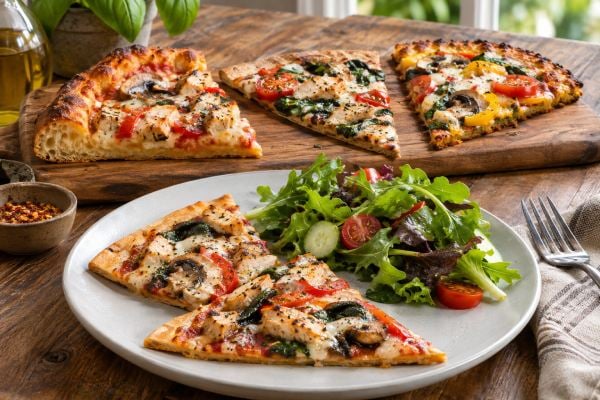
Vegetable toppings such as mushrooms, peppers, onions, spinach, tomatoes, broccoli, arugula, and artichokes add very little digestible carbohydrate relative to their volume. They can make two slices feel more substantial and help you build a higher-fiber meal.
Protein toppings can also improve satiety. Chicken, shrimp, leaner ham, or modest amounts of meat can make the meal more balanced. However, heavy pepperoni, sausage, bacon, extra cheese, and oil can push saturated fat, sodium, and calories very high. They may also contribute to a later glucose rise by slowing digestion.
Cheese itself usually contains little carbohydrate. Its effect is mostly through protein, fat, calories, and meal timing. Research on adding protein to carbohydrate shows that protein can reduce the early glucose area under the curve in some groups while increasing insulin release. In type 1 diabetes, however, protein can contribute to later glucose rises because insulin secretion does not automatically increase in the same way. That difference is one reason nutrition advice cannot be reduced to “add protein and the spike disappears.”
Sauce is another variable. Plain tomato sauce usually contributes a modest amount of carbohydrate, but sweet barbecue sauce, honey-based sauces, sweet chili sauce, and some specialty pizza sauces can add substantial sugar. A thick barbecue-chicken pizza may be very different from a tomato-and-vegetable pizza even when the crust is identical.
Finally, the beverage matters. Soda, sweet tea, lemonade, beer, or a sugary cocktail can add rapidly absorbed carbohydrate on top of the crust. Water, sparkling water, or an unsweetened drink usually makes the glucose load more manageable without changing the food itself.
Portion Strategies That Work Better Than Cutting Pizza Out
For most people, portion is the strongest lever. The difference between two slices and four slices can easily exceed any benefit from switching between similar crust types.
A practical plate might look like this:
- Two slices of thin- or regular-crust pizza
- A large salad or roasted vegetables
- An unsweetened drink
- Optional extra lean protein if the pizza is light on protein
That structure lowers the proportion of the meal coming from refined starch without making pizza feel like a token food. It also gives you more chewing volume and fiber, which can improve fullness.
If you tend to arrive very hungry and eat four or five slices quickly, start with the salad or vegetables and protein before the first slice. Research on meal sequence suggests that eating carbohydrate later in a mixed meal can reduce the post-meal glucose excursion in some people. The evidence is not strong enough to make food order a substitute for portion control, but it is a low-effort strategy worth trying. You can see the practical approach in vegetables first, protein next, and carbs last.
Another effective tactic is to decide the pizza portion before eating rather than relying on fullness after several slices. Restaurant slices vary enormously, so “two slices” is not a standard dose. Two small thin-crust slices may contain less carbohydrate than one oversized deep-dish slice.
If weight management is also a goal, remember that a lower glucose response does not necessarily mean fewer calories. Adding large amounts of cheese, meat, oil, or ranch dressing can flatten the early curve while raising the energy content substantially. The better target is a meal that is moderate in carbohydrate, reasonably high in protein and vegetables, and satisfying enough that you do not keep grazing afterward.
Better Pizza Orders at Restaurants, at Home, and From the Freezer
There is no single best pizza, but you can improve almost any version by adjusting crust, portion, toppings, and sides.
At a restaurant, a reliable order is thin crust with vegetables and one protein topping, normal cheese rather than extra cheese, and a salad on the side. If the pizza is very large, share it or box part of it before eating. Ask for sauce on the lighter side if the restaurant uses a sweet sauce.
For takeout, look up nutrition information when the chain provides it. Compare carbohydrate per slice, not just calories. A “personal” pizza may sound portion-controlled yet contain the carbohydrate equivalent of several standard slices.
Frozen pizza can work well because the serving size and carbohydrate are printed on the package. The common trap is assuming the stated serving equals the amount you actually eat. If the label lists one-third of a pizza but you normally eat two-thirds, double the listed carbohydrate, calories, and sodium in your mental calculation.
At home, you have more control. Useful bases include a smaller traditional dough, a whole-grain flatbread, a high-fiber tortilla-style crust, or a genuinely lower-carbohydrate crust whose label supports the claim. Add tomato sauce, vegetables, a reasonable amount of cheese, and a protein you enjoy.
You can also make the meal more glucose-friendly without changing the pizza recipe. Eat a vegetable-rich starter, keep the pizza portion planned, and walk after the meal. A systematic review found that exercise performed after eating reduced post-meal glucose more effectively than exercise before the meal, with earlier post-meal activity generally working better. A practical overview of walking after meals for glucose control can help you choose a realistic duration and pace.
How to Check Your Own Blood Sugar Response to Pizza
Pizza is a good example of why you should not judge a mixed meal from a single one-hour reading. Because fat and protein can delay digestion, you may need to look farther into the post-meal period to understand your pattern.
If you use a glucose meter, follow the testing schedule your clinician recommends. If you are experimenting for general pattern recognition, note the pre-meal reading and the timing of later checks. People who use CGM can see the full curve, but sensor data still needs context.
When comparing pizza meals, keep the experiment simple. Try the same restaurant and same pizza on two occasions before drawing a conclusion. Record the number and size of slices, drink, side dishes, time of day, and whether you walked afterward. Poor sleep, stress, alcohol, and earlier exercise can all alter the result.
Then change one thing. For example:
- Compare three slices with two slices plus salad.
- Compare pan crust with thin crust while keeping toppings similar.
- Compare sitting after the meal with a 10- to 20-minute walk.
- Compare a sweetened drink with water.
This approach is more useful than comparing unrelated pizza meals and attributing every difference to one ingredient. If you use CGM, also remember that CGM lag and false readings can distort isolated points. Look for repeatable curves rather than perfection.
A practical win might be reducing a long four-hour elevation to a smaller, shorter rise while still enjoying the meal. You do not need a completely flat trace for the strategy to be worthwhile.
Special Considerations if You Have Diabetes or Use Insulin
If you use mealtime insulin, pizza can require a different plan from a low-fat meal with the same carbohydrate count. High-fat, high-protein meals can delay glucose appearance and increase later insulin requirements in some people with type 1 diabetes. Studies using pizza specifically have monitored glucose for up to six hours because the late rise can be clinically important.
Do not copy an insulin-splitting strategy from an article or another person. Pump settings, insulin type, insulin-to-carbohydrate ratio, insulin sensitivity, active insulin, and hypoglycemia risk all affect the safest approach. Research on split or extended dosing has shown potential benefits for late hyperglycemia, but it has also shown hypoglycemia risk. Work with your diabetes clinician or educator to develop a plan for high-fat mixed meals.
For people with type 2 diabetes who do not use mealtime insulin, the same food strategies still apply: reduce the crust load, add vegetables and protein, avoid sugary drinks, and move after eating if safe. Medication timing should follow the prescribing instructions rather than being changed for a single pizza meal without clinical advice.
Repeatedly high glucose after pizza may also be telling you something broader. If many carbohydrate-containing meals lead to large or prolonged elevations, it is worth reviewing overall glucose control rather than searching for a special pizza workaround. Watch for symptoms and risks of high blood sugar, and discuss persistent abnormal readings with your healthcare professional.
Pizza can fit into a blood-sugar-conscious diet. The most effective combination is usually unglamorous but reliable: less dough, a sensible portion, vegetables, enough protein, fewer sugary extras, and some movement after the meal.
Pizza is also a good example of why timing matters as much as the peak. A meal that combines refined starch with substantial fat and protein can produce a slower, later rise than a bowl of cereal or plain bread. If you check only one hour after eating, the result may look reassuring even though glucose is still climbing at two, three, or more hours. This is especially relevant for people with diabetes using insulin, because the insulin action and carbohydrate absorption may not line up neatly.
For occasional pizza, this does not require turning dinner into a laboratory test. It simply means that a single early reading can miss the real pattern. If you are evaluating a pizza meal with a meter or CGM, look at the full several-hour curve and compare it with your usual targets. Repeated prolonged elevations matter more than whether the one-hour number crosses an arbitrary internet threshold.
The same principle applies to leftovers. Reheated pizza may have a slightly different starch structure after cooling, but the practical effect is usually smaller than the differences created by crust thickness, number of slices, sugary drinks, and total meal size. Do not rely on refrigeration as a way to “cancel” the carbohydrate in a large portion. Portion, toppings, side dishes, and movement remain the more dependable levers.
References
- Effects of meal sequence intervention on blood glucose response in healthy adults: a systematic review 2026 (Systematic Review)
- The Effect of Adding Protein to a Carbohydrate Meal on Postprandial Glucose and Insulin Responses: A Systematic Review and Meta-Analysis of Acute Controlled Feeding Trials 2024 (Systematic Review)
- Splitting Mealtime Insulin Doses for Mixed Fat and Protein Meals in Children and Adolescents with Type 1 Diabetes Using Multiple Daily Injection Regimen: A Randomized Cross-Over Trial 2023 (RCT)
- After Dinner Rest a While, After Supper Walk a Mile? A Systematic Review with Meta-analysis on the Acute Postprandial Glycemic Response to Exercise Before and After Meal Ingestion in Healthy Subjects and Patients with Impaired Glucose Tolerance 2023 (Systematic Review)
- International tables of glycemic index and glycemic load values 2021: a systematic review 2021 (Systematic Review)
Disclaimer
This article provides general nutrition education and is not individualized medical or diabetes treatment advice. If you use insulin or another medication that can cause hypoglycemia, do not change medication dose or timing based on pizza composition without guidance from your diabetes care team. Seek medical advice for repeated high readings, severe symptoms, or difficulty keeping glucose in your recommended range.