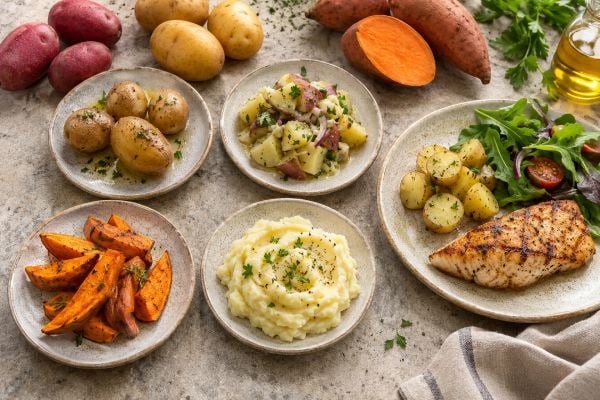
Potatoes can raise blood sugar quickly, but they do not all behave the same way. Variety, cooking method, texture, serving temperature, portion size, and the rest of the meal all shift the glucose response. A large serving of hot mashed potatoes eaten by itself is very different from a smaller serving of cooled potatoes served with fish, beans, and vegetables.
The most useful strategy is not to hunt for one “perfect” potato. Instead, choose a sensible portion, keep the potato structure as intact as possible, pair it with protein and fiber, and consider cooking and cooling when practical. Some varieties have lower glycemic index values than others, but preparation can change the result enough that the label “red,” “russet,” or “Yukon Gold” is not a guarantee. Potatoes also provide potassium, vitamin C, vitamin B6, and other nutrients, so they can fit into a blood-sugar-conscious eating pattern when the meal is built well.
Table of Contents
- How Potatoes Affect Blood Sugar
- Which Potato Types Are Best for Blood Sugar?
- Boiled, Baked, Mashed, or Fried: Does Cooking Matter?
- Cooling Potatoes and Resistant Starch
- Portions and Meal Pairings That Work Better
- Practical Potato Meals for Better Glucose Control
- What to Know if You Have Prediabetes or Diabetes
How Potatoes Affect Blood Sugar
Potatoes are a starchy vegetable, so their main blood sugar effect comes from carbohydrate. Most of that carbohydrate is starch, which digestive enzymes break down into glucose. The speed of that process depends on the potato’s starch structure, cooking method, texture, and what else you eat with it.
Many commonly tested potato preparations have a medium or high glycemic index. The 2021 international glycemic index tables found that most potato varieties tested were high GI, although lower-GI varieties also exist. Glycemic index is useful for comparing equal amounts of available carbohydrate under standardized conditions, but it does not tell you how much carbohydrate you actually eat.
That is why glycemic load can be more useful than glycemic index alone. A food with a high GI can produce a more moderate glucose effect if the portion is small. Conversely, a very large portion of a medium-GI food can still deliver a substantial glucose load.
Potatoes are also different from refined snack foods. A plain potato contains water, potassium, vitamin C, vitamin B6, and some fiber, especially when the skin is eaten. The metabolic problem is often not “potatoes” in isolation but the combination of a large portion, heavy processing, added fat, and a meal with few vegetables or other fiber-rich foods.
Recent trials also show why single-food rankings can be misleading. When potatoes are eaten as part of mixed meals, their glucose effect can differ from what their GI value predicts when tested alone. In other words, the entire plate matters.
Which Potato Types Are Best for Blood Sugar?
There is no potato variety that guarantees a low glucose response, but waxier, less floury potatoes and some specifically tested low-GI cultivars may be easier to fit into a glucose-conscious meal.
Potato varieties differ in starch composition and texture. Russets are high-starch, fluffy potatoes commonly used for baking and mashing. Red potatoes, fingerlings, and some yellow potatoes are waxier and tend to hold their structure better after cooking. That intact structure may slow eating and digestion compared with a very soft mash, although variety alone does not determine glycemic response.
The most practical way to choose is to prioritize form and portion:
- Small red or fingerling potatoes: Useful because they stay intact when boiled or roasted and are easy to portion.
- Yukon Gold and similar yellow potatoes: Versatile and often satisfying without needing large amounts of butter or cream.
- Russet potatoes: Fine in moderate portions, but large baked russets and fluffy mashed preparations can deliver a substantial starch load.
- New potatoes: Their smaller size and waxy texture can make portion control easier.
- Sweet potatoes: They are nutritionally different from white potatoes but still contain significant carbohydrate. Their glucose effect depends on variety, cooking, and portion, so they are not automatically “free” foods.
Color is not a reliable shortcut. Purple, red-skinned, and yellow-fleshed potatoes contain different phytonutrients, but a colorful potato can still raise glucose substantially if the serving is large and the starch is highly digestible.
If you use a glucose meter or CGM, treat variety as one variable rather than the whole answer. A smaller serving of a familiar potato may work better for you than a large serving of a supposedly lower-GI variety. This is one example of why individual blood sugar responses to the same food can differ.
Boiled, Baked, Mashed, or Fried: Does Cooking Matter?
Cooking changes potato starch, and texture can strongly affect how quickly the starch is available for digestion. Heat and water gelatinize starch, making it easier for digestive enzymes to access. The more thoroughly a potato is cooked and physically broken down, the faster that starch may become available.
Boiled potatoes
Boiling whole or halved potatoes until just tender is a practical option because the potato can remain relatively intact. Leaving the skin on adds a little fiber and helps preserve structure. Avoid boiling until the potato falls apart if you are trying to keep the texture firm.
Baked potatoes
A baked potato can work well, but size matters. Restaurant baked potatoes can be much larger than a standard serving. A huge russet may contain the carbohydrate of several smaller potatoes. Keep the portion moderate and load the plate with non-starchy vegetables and protein rather than relying on the potato as the entire meal.
Mashed potatoes
Mashing destroys structure and creates a soft food that is easy to eat quickly. Instant mashed potatoes are processed even further. That does not mean mashed potatoes are forbidden, but they are a good place to be especially deliberate about serving size. Use milk or a modest amount of olive oil for texture, and pair the mash with protein and vegetables. Adding excessive butter or cream may slow the early glucose rise, but it also adds substantial saturated fat and calories.
Roasted potatoes
Roasting can preserve more structure than mashing, especially when the pieces are not overcooked. The main trap is oil. Potatoes absorb or carry added oil easily, and a large tray of roasted potatoes can become calorie-dense even if glucose rises more slowly.
French fries and chips
Frying does not make potato carbohydrate disappear. Fries combine refined or highly cooked starch with added fat and salt and are easy to eat in large portions. Observational studies increasingly distinguish fried potatoes from nonfried preparations, with fried potato intake showing a less favorable association with type 2 diabetes risk.
For blood sugar and overall metabolic health, fries are best treated as an occasional side rather than the default vegetable. If you want a starch at the meal, a modest portion of boiled, baked, or roasted potato is usually easier to balance.
Cooling Potatoes and Resistant Starch
Cooking potatoes and then cooling them can increase resistant starch, but the effect is helpful rather than magical. Resistant starch is starch that resists digestion in the small intestine and reaches the colon, where gut bacteria can ferment some of it.
When cooked starch cools, part of it reorganizes into a structure that digestive enzymes have more difficulty breaking down. This process is called retrogradation. Research in potatoes has shown that chilled potatoes can contain more resistant starch than the same potatoes served hot.
In a randomized crossover study of women with elevated fasting glucose and insulin, baked-then-chilled potatoes produced lower early glucose and insulin responses than boiled potatoes, although the total glucose area under the curve was not significantly different. That distinction is important. Cooling may change the shape of the response without turning potatoes into a low-carbohydrate food.
A practical method is:
- Cook potatoes until tender but not mushy.
- Cool them promptly in the refrigerator.
- Use them cold in a potato salad or reheat them later.
- Keep the portion similar to what you would have eaten hot.
Food safety matters. Refrigerate cooked potatoes within a safe timeframe rather than leaving them at room temperature for hours. Cooling is a starch strategy, not a reason to ignore safe storage.
Reheating may preserve some resistant starch, although the exact amount depends on the potato and method. The bigger point is that resistant starch from cooling rice, pasta, and potatoes can modestly change digestibility, but portion size still has a larger practical effect for many people.
Portions and Meal Pairings That Work Better
A moderate potato portion paired with protein, vegetables, and healthy fat is usually easier on blood sugar than a large potato eaten as the main event.
For many adults, a useful starting portion is roughly 1/2 to 1 cup of cooked potato, or one small potato. Your needs may be higher or lower based on body size, activity, medications, total carbohydrate goals, and whether you have diabetes.
Try building the plate so that the potato occupies about one-quarter, protein one-quarter, and non-starchy vegetables about half. That might mean:
- Salmon, green beans, and small roasted potatoes
- Chicken, broccoli, and a small baked potato
- Lentil salad with cooled baby potatoes and leafy greens
- Eggs with sautéed vegetables and a small portion of breakfast potatoes
Protein helps make the meal more filling and can alter the post-meal glucose response. Fiber-rich vegetables add volume and slow the eating pace. A modest amount of olive oil, nuts, seeds, or avocado can add flavor and satiety without making the meal excessively fatty.
You can also experiment with eating vegetables and protein before the potato. Evidence on food order and post-meal glucose suggests that placing carbohydrate later in the meal can reduce the early glucose rise in some people.
Avoid adding another large starch automatically. A meal of steak, a large baked potato, bread, and dessert may contain several carbohydrate servings even though the potato gets blamed for the entire rise.
Practical Potato Meals for Better Glucose Control
You can improve a potato meal without making it complicated. The goal is to control the starch dose and build enough protein and fiber around it.
For breakfast, try two eggs, sautéed spinach and peppers, and a small portion of diced potatoes. This is very different from a large plate of hash browns with toast and juice.
For lunch, use cooled baby potatoes in a salad with tuna, chicken, chickpeas, or tofu. Add leafy greens, cucumber, tomatoes, and a vinaigrette. Because the potato is part of the salad rather than the whole base, the portion is naturally easier to control.
For dinner, roast small potatoes beside vegetables and a protein. Measure the oil rather than pouring freely. If you prefer a baked potato, choose a smaller one and top it with Greek yogurt, cottage cheese, beans, chili, or vegetables instead of making butter, sour cream, and cheese the main toppings.
If you want mashed potatoes, serve them as a scoop rather than a mound. Mixing cauliflower into the mash can reduce the starch per cup while keeping familiar texture. It is not necessary to replace every potato with cauliflower; the blend simply changes the ratio.
After a higher-carbohydrate potato meal, a short walk can also help. Research across many meal types supports post-meal walking as a way to reduce glucose excursions. Even 10 to 20 minutes can be a practical experiment for people who can exercise safely.
What to Know if You Have Prediabetes or Diabetes
People with prediabetes or diabetes do not automatically need to eliminate potatoes. Recent randomized studies have found that potatoes can fit into structured diets without worsening glycemic control compared with other carbohydrate sources such as rice. However, those findings do not mean unlimited potatoes are harmless.
A 2025 crossover study in adults with type 2 diabetes compared daily white potatoes with calorie-matched white rice and found no adverse effect on glycemic measures from the potato condition. Another controlled feeding trial in people with insulin resistance found that a low-energy-density potato-based diet and a bean-based diet produced broadly comparable glucose outcomes while participants lost weight.
These studies highlight an important point: the whole dietary pattern matters more than a single food label. Potatoes eaten in a calorie-aware, vegetable-rich meal are not equivalent to supersized fries eaten with a sugary drink.
If you use insulin, sulfonylureas, or another medication that can cause hypoglycemia, do not make large carbohydrate reductions without considering medication needs. Consistency can matter as much as choosing a lower-GI preparation.
If potatoes repeatedly produce readings above your target, test changes systematically. Reduce the portion, switch from mashed to intact potatoes, cool them before eating, add protein and vegetables, or walk afterward. Change one variable at a time so you can see what helps.
For people with prediabetes, potatoes are one part of the larger picture. Overall carbohydrate quality, weight management when needed, physical activity, sleep, and total dietary pattern all affect risk. A practical prediabetes grocery strategy can help put potatoes in context rather than treating them as a special problem food.
The best potato for blood sugar is usually the one you can portion sensibly, prepare without excessive processing, and eat as part of a balanced meal. Potatoes also fit differently depending on what role they play on the plate. A large baked potato topped with little more than salt is mostly a substantial starch serving. The same potato divided between two meals and paired with salmon, beans, or chicken plus non-starchy vegetables creates a smaller carbohydrate load per eating occasion and a more balanced meal. That change is often more important than searching for a single “best” potato variety.
Texture is another practical clue. Processing that breaks down the potato structure—mashing very finely, whipping, or turning potatoes into highly processed flakes—generally makes the starch easier to access during digestion. Leaving potatoes in larger pieces and avoiding overcooking can preserve more structure. This does not make a chunked potato low-carbohydrate, but it can be one of several small differences that influence the response.
If you use a meter or CGM, test the meal you actually eat rather than a potato in isolation. Keep the portion reasonably consistent and compare preparation methods on similar days. A cooled potato salad with vegetables and protein may produce a different curve from hot mashed potatoes with the same nominal potato weight because temperature, resistant starch, added fat, and the rest of the meal all differ. The most useful result is the one that helps you build a satisfying plate you can repeat.
Restaurant potatoes deserve extra caution because preparation can be hard to see. Roasted potatoes may be cooked with substantial oil, mashed potatoes may contain butter or cream, and fries combine a large refined-starch portion with added fat and salt. Those additions do not necessarily make the immediate glucose peak higher, but they can increase calories and sometimes delay the glucose rise. If you are testing your response, home-cooked portions are easier to compare consistently.
References
- The Comparative Effects of White Potato and White Rice Consumption on Measures of Cardiometabolic Health in Individuals with Type 2 Diabetes Mellitus and Features of Metabolic Syndrome. 2025
- Potato Consumption and Risk of Type 2 Diabetes Mellitus: A Harmonized Analysis of 7 Prospective Cohorts 2024
- Potatoes Compared with Rice in Meals with either Animal or Plant Protein Reduce Postprandial Glycemia and Increase Satiety in Healthy Adults: A Randomized Crossover Study 2024 (RCT)
- Low-Energy Dense Potato- and Bean-Based Diets Reduce Body Weight and Insulin Resistance: A Randomized, Feeding, Equivalence Trial 2022 (RCT)
- International tables of glycemic index and glycemic load values 2021: a systematic review 2021 (Systematic Review)
- Chilled Potatoes Decrease Postprandial Glucose, Insulin, and Glucose-dependent Insulinotropic Peptide Compared to Boiled Potatoes in Females with Elevated Fasting Glucose and Insulin 2019 (RCT)
Disclaimer
This article is for general nutrition education and is not a substitute for individualized medical advice. If you have diabetes, kidney disease, take glucose-lowering medication, or have been given a specific carbohydrate or potassium target, discuss major dietary changes with your healthcare team. Use your prescribed glucose targets rather than a general rule when evaluating a potato meal.