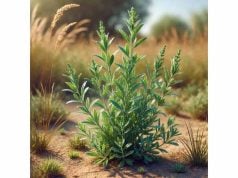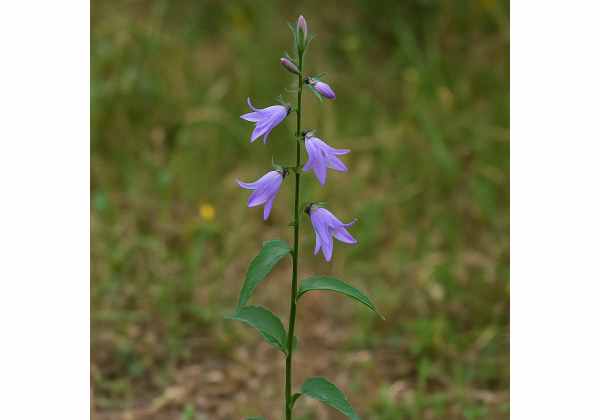
Rampion, botanically known as Campanula rapunculus, is an old European food plant that sits at the border between vegetable, herb, and cultural memory. It belongs to the bellflower family and was once grown in kitchen gardens for its crisp leaves and slender, radish-like root. Today it is far less common than lettuce, chicory, or dandelion greens, yet it remains interesting for people who care about traditional foods, wild edibles, and overlooked plant nutrition. Its main strengths are practical rather than dramatic: it adds fiber, water, chlorophyll-rich green matter, and bitter-fresh flavor to the diet, while traditional use links it with appetite, digestion, and gentle cleansing foods.
That balance matters. Rampion has a real history of use, but very limited modern clinical research on the species itself. The most responsible way to understand it is as a nutritious edible plant with modest traditional medicinal value, not a proven therapeutic herb. Used well, it can bring variety to salads, cooked greens, and seasonal root dishes while supporting a broader plant-rich eating pattern.
Quick Facts
- Rampion adds fiber, leafy green pigments, and mild bitter compounds to meals.
- Traditional use centers on appetite, digestion, and light spring cleansing rather than strong drug-like effects.
- A practical adult amount is about 80 to 160 g fresh leaves and root as food.
- People with uncertain plant identification, bellflower-family sensitivity, or medically restricted diets should avoid casual self-foraging use.
Table of Contents
- What Rampion Is and Why It Was Once Valued
- Key Ingredients and Nutritional Profile
- Rampion Health Benefits and What the Evidence Actually Supports
- Medicinal Properties in Traditional Practice
- Uses in Food and Home Preparation
- Rampion Dosage, Serving Size, and Timing
- Safety, Side Effects, and Who Should Avoid It
What Rampion Is and Why It Was Once Valued
Rampion is a biennial bellflower native to parts of Europe, western Asia, and North Africa. In its first season it forms a basal rosette of leaves and a fleshy, tapering root. In the second season it sends up a taller flowering stem with violet-blue bell-shaped blossoms. That life cycle helps explain why it was historically valued: gardeners could harvest the tender leaves early, then lift the root before the plant became coarse and woody. In older European food traditions, it was appreciated as a useful “two-part” plant, offering both greens and a root crop from the same sowing.
Its old reputation also comes from timing. Rampion often entered the diet in the gap between winter storage foods and the abundance of summer produce. At that point in the year, any fresh green with a pleasant bite mattered. The leaves could be eaten in salads or boiled with other spring herbs, and the root was described as crisp, mild, and suitable raw or cooked. In this sense, rampion was not a rare medicinal curiosity. It was a seasonal, practical food that happened to carry a gentle medicinal reputation.
The plant’s cultural history also helped it endure. The German name “Rapunzel” is widely connected with the old fairy tale, and that literary link kept the plant in memory long after it disappeared from most everyday kitchens. Still, memory and regular use are not the same thing. As agriculture standardized around higher-yield vegetables and modern grocery chains narrowed what people buy, rampion faded from common diets. It became a heritage edible rather than a household staple.
That forgotten status is part of why it matters now. Modern interest in overlooked plants is not only about nostalgia. It is also about dietary diversity. Many people eat the same few greens repeatedly, even though plant variety can improve meal quality, flavor range, and micronutrient spread. Rampion fits that interest well. It offers the crispness of a salad green, the identity of a root vegetable, and the appeal of a traditional edible.
It also helps to place it realistically among other greens. Rampion is not nutritionally empty, but it is not a miracle vegetable either. Its value lies in breadth rather than intensity. It contributes freshness, fiber, and phytochemical variety, especially when used alongside more familiar greens. Readers who want a comparison point with more familiar salad crops may find it helpful to look at milder salad greens and their nutritional role.
Seen clearly, rampion is best understood as a forgotten edible bellflower with gentle traditional uses, culinary flexibility, and renewed relevance for people who enjoy seasonal, plant-forward eating.
Key Ingredients and Nutritional Profile
Rampion’s nutritional story is promising, but it comes with an important limitation: modern laboratory data on Campanula rapunculus itself are still sparse. That means a careful article should not pretend there is a precise, supplement-style profile with exact standardized values for every nutrient. What can be said with reasonable confidence is that rampion behaves like a useful edible green-and-root plant, and that research on edible wild plants and Campanula species supports the presence of pigments, phenolic compounds, carbohydrates, minerals, and fiber-like bulk relevant to health.
The leaves are the easier part to understand. Like many spring greens, they provide water, plant fiber, chlorophyll-rich green matter, and a mix of micronutrients typical of edible leafy plants. Their exact profile changes with soil, season, maturity, and whether they are eaten young or fully developed. Younger leaves tend to be more tender and are usually preferred raw. Older leaves are better cooked and may taste slightly stronger.
The root contributes a different nutritional role. Rather than functioning like a dense starch crop, it acts more like a light, fresh root vegetable. Historical descriptions often emphasize its crisp texture and mild flavor more than concentrated calories. In practical dietary terms, that makes it helpful for adding bulk and interest to meals without making them heavy.
The main “key ingredients” worth highlighting are these:
- dietary fiber and plant bulk, which support fullness and bowel regularity
- chlorophyll and carotenoid pigments in the green parts
- phenolic and polyphenol-type compounds reported in Campanula research
- naturally occurring minerals found in edible wild greens
- water and low energy density, especially in the leaves
- mild bitter-fresh compounds that may explain some traditional digestive uses
One of the more interesting parts of recent wild edible plant research is that bellflower-family plants are no longer viewed only as ornamentals. They are increasingly discussed as edible species with functional-food potential. That does not mean every Campanula shares the same chemistry in the same amount, but it does justify talking about rampion as more than a quaint historical vegetable.
Still, the most useful interpretation is practical. Rampion’s chemistry matters because it supports how the plant is used in meals. A crisp edible root encourages chewing and slows eating. Tender green leaves increase vegetable variety. Pigments and phenolics suggest antioxidant value, even if that value is modest at the level of one serving. The point is not that rampion contains one magical molecule. The point is that it offers a layered nutritional profile in a form people can actually eat.
For readers who like comparing unusual greens with stronger, more familiar water-rich vegetables, watercress and related functional greens offer a useful reference point.
Rampion Health Benefits and What the Evidence Actually Supports
The phrase “health benefits” can quickly become misleading with a plant like rampion. Its benefits are real, but mostly food-based, gentle, and indirect. There are no well-known human clinical trials showing that rampion treats a disease, lowers cholesterol in a measurable way, or performs like a standardized medicinal extract. That does not make it unimportant. It simply means the strongest case for rampion is nutritional and traditional, not pharmaceutical.
Its clearest benefit is dietary diversification. When people add lesser-used edible plants to the diet, they often increase total vegetable intake, phytochemical variety, and meal satisfaction. Rampion helps here because it offers both leaves and root, which makes it more flexible than a single-purpose leafy herb. That flexibility can support better overall eating patterns.
A second likely benefit is digestive support in the broadest sense. This comes from several overlapping features:
- the leaves and root contribute bulk and chewing time
- the plant fits well into light, vegetable-forward meals
- its mild bitter-fresh taste may help appetite and meal readiness
- spring use often replaces heavier foods with fresher ones
These are not dramatic mechanisms, but they are practical. A food does not need to act like a drug to improve the quality of digestion. Sometimes it simply makes people eat in a steadier, lighter, more plant-rich way.
A third likely benefit is antioxidant support. Research on edible flowers and Campanula species points to polyphenols and other bioactive constituents with antioxidant relevance. Even so, the right conclusion is restrained: rampion may contribute to antioxidant intake as part of a varied plant diet. It should not be marketed as a concentrated antioxidant treatment.
A fourth benefit is culinary adherence. This may sound less scientific, but it matters. Healthy diets fail when they are dull. Rampion’s root texture and leaf character can make vegetable dishes more interesting, and that can help someone continue eating well. From a real-world perspective, a nutritious food that is pleasant and memorable often outperforms a theoretically perfect one that no one wants to eat twice.
The evidence therefore supports several reasonable claims:
- Rampion can improve vegetable diversity.
- It may support digestion in a food-based, traditional sense.
- It likely contributes useful phytochemicals and leafy-plant pigments.
- It fits well into light, fiber-aware meals.
- Its medicinal claims remain much weaker than its culinary and nutritional claims.
That last point deserves emphasis. The evidence is enough to respect the plant, but not enough to exaggerate it. A responsible article should say that rampion belongs in the category of functional traditional foods rather than clinically proven herbal therapies.
If you want a good comparison with a more established bitter edible that has a longer digestive reputation, dandelion as a digestive and spring green offers a helpful benchmark.
Medicinal Properties in Traditional Practice
Rampion’s medicinal profile comes mainly from ethnobotany rather than modern clinical medicine. That means the plant has a documented history of being used with health intentions, but those uses should be treated as traditional knowledge, not as proof of medical effectiveness. This distinction matters because many older edible plants accumulated medicinal reputations simply because they were eaten in the right season, in the right form, and by people who paid close attention to bodily effects.
Traditional descriptions of rampion commonly place it in the spring-food category. In that role, it was seen as refreshing, cleansing, and helpful after winter diets dominated by grains, preserved foods, or animal fats. Leaves were eaten raw or cooked, roots were taken in simple dishes or roasted, and the plant was sometimes described as supporting digestion, bowel movement, liver function, or general bodily “purification.” Modern readers should translate those old claims cautiously. In current terms, many of them likely reflect the effects of more vegetables, more water, more fiber, and lighter seasonal meals.
Some traditional uses also connect rampion with appetite and digestive readiness. That is plausible. Slightly bitter or fresh spring plants often stimulate interest in food and balance richer dishes. In this sense, rampion’s medicinal role may have been less about treating illness and more about improving the experience of eating and easing transitions between seasons.
Historical and local records also suggest a broader household use pattern. In some places, leaves or other plant parts were assigned soothing, cleansing, or mouth-related uses, while the root could be roasted into a substitute beverage. These are best seen as examples of practical folk medicine rather than standardized herbal prescriptions.
A sensible summary of rampion’s traditional medicinal identity would include:
- digestive and appetite-supportive spring food
- mild laxative or bowel-moving reputation in some local traditions
- “purifying” or depurative associations typical of spring greens
- occasional household use beyond food, though not strongly validated
- stronger cultural evidence than clinical evidence
This is where responsible interpretation matters most. Traditional use does not make a claim worthless, but it also does not make it proven. With rampion, the wisest position is respectful restraint. Its medicinal reputation is part of why the plant deserves attention, yet that reputation is not an invitation to overstate treatment value.
That balanced perspective is especially important for readers who like herbal bitters and digestive plants. Rampion belongs in that conversation, but near the gentler, food-based end of the spectrum. A more established digestive culinary herb such as fennel for digestive comfort has a clearer modern place, whereas rampion remains more historical and food-centered.
The practical takeaway is simple: rampion has authentic traditional medicinal significance, especially around seasonal digestion and light cleansing foods, but it should be used with the expectations appropriate for a heritage edible, not a proven remedy.
Uses in Food and Home Preparation
Rampion is easiest to appreciate in the kitchen. Most people who enjoy it do not begin with a medicinal preparation. They begin with the edible parts themselves. The young leaves can be eaten raw in salads, often mixed with milder greens rather than served alone. The root can be sliced thinly and eaten fresh, or it can be cooked to soften texture and bring out sweetness. Traditional records also describe the plant among mixed boiled greens, which is one of the most realistic ways to use it today.
The stage of harvest makes a major difference. Very young leaves are the best for salads because they are more tender and less fibrous. Once the flowering stem develops, raw use becomes less appealing. At that point, cooking is usually the better route. The root is most pleasant when lifted before it becomes woody.
Useful kitchen approaches include:
- thin raw slices of root with olive oil, lemon, and salt
- chopped young leaves mixed with lettuce or soft bitter greens
- brief boiling or steaming, then dressing with oil
- adding leaves to mixed spring vegetable pans
- light roasting of the root with other root vegetables
- roasting the root more fully for a coffee-like substitute beverage
The roasted-root tradition is especially interesting because it shows how older food systems minimized waste and used every edible part. That does not mean roasted rampion is nutritionally equivalent to coffee or chicory beverages. It simply means the root had enough character to be repurposed as a warming drink.
At home, simplicity works best. Rampion is not a plant that needs complicated recipes. In fact, too much seasoning can bury what makes it distinct. A light acid, good olive oil, and a modest amount of salt are often enough. For cooked dishes, onion, garlic, soft cheese, eggs, beans, and mild grains all pair well with it.
A few practical rules improve results:
- Harvest or buy it young whenever possible.
- Use raw only when the leaves are genuinely tender.
- Mix it with other greens if its flavor feels too unfamiliar at first.
- Cook older material rather than forcing it into a salad.
- Keep preparation clean and simple so the plant remains recognizable.
Because rampion is uncommon, some readers may be tempted to treat it like a novelty ingredient. It is better to think of it as a seasonal supporting vegetable. It works best when folded into ordinary meals rather than turned into a performance food.
People who enjoy sharp, heritage-style greens often appreciate similar culinary logic in sorrel and other high-character salad plants, where a small amount can shape an entire dish.
Rampion Dosage, Serving Size, and Timing
Because rampion is primarily a food, “dosage” should be understood as serving size rather than as a medicinal dose. There is no widely accepted clinical dosage for rampion extract, no standard capsule strength, and no evidence-based therapeutic schedule comparable to established herbal products. That is not a weakness. It simply reflects the plant’s real place: it is best used as an edible vegetable with traditional supportive value.
For most adults, a practical fresh-food range is about 80 to 160 g total per serving. That can be divided in several ways depending on the form:
- about 40 to 80 g of young leaves in a mixed salad
- about 1 small to medium root, often around 30 to 70 g depending on size
- around 1 cup cooked greens when the leaves are prepared as a side dish
- smaller introductory portions, around 40 to 60 g total, for first-time use
This range is sensible because it matches the reality of vegetable portions. It is large enough to matter nutritionally, but small enough to remain comfortable for most people. It also respects the fact that rampion is usually not eaten alone in large bowls.
Timing depends on the goal. If you are using it mainly for meal quality and nutrition, it can be eaten whenever it fits naturally. If you are interested in its traditional appetite and digestive role, a smaller raw portion before or at the start of a meal makes the most sense. If your digestion is sensitive, cooked use is usually the better entry point.
A practical rhythm looks like this:
- Start with one modest serving once or twice weekly.
- Use young raw leaves only if they are tender.
- Shift to cooked leaves or root if raw use feels rough or fibrous.
- Increase toward regular seasonal use only if tolerance stays good.
For most people, there is no strong reason to consume rampion daily. Rotating it with other greens is more realistic and often more nutritionally useful. Variety generally beats obsession with a single plant.
It is also important not to invent “medicinal” doses without evidence. A common mistake in herbal writing is to turn every edible plant into a pseudo-supplement. With rampion, the honest answer is that food portions are the appropriate dose. Concentrated folk preparations may exist, but they are not standardized, well studied, or necessary for most readers.
In practical terms, think of rampion as a one- to two-portion vegetable ingredient rather than a remedy measured in drops or capsules. Readers who want a familiar reference for what counts as an adult vegetable portion may compare it with other traditional bitter vegetables used in food-sized amounts.
Safety, Side Effects, and Who Should Avoid It
Rampion appears generally safe when eaten as a correctly identified food plant in ordinary culinary amounts. Its safety concerns are less about known severe toxicity and more about common-sense issues: plant identification, contamination, digestive tolerance, and inappropriate medicinal expectations.
The first concern is identification. This matters most for foragers and gardeners handling unfamiliar ornamentals. “Bellflower” is a broad visual category, and not every attractive flower in that neighborhood should be eaten casually. Even with an edible species, harvesting from roadsides, sprayed areas, or polluted soils can create a greater risk than the plant itself. If identification is uncertain, it is wiser to avoid foraged use altogether.
The second concern is digestive tolerance. Like many wild or heritage vegetables, rampion may cause mild discomfort if eaten in unusually large amounts, especially raw. Possible effects include:
- bloating from sudden extra fiber
- stomach heaviness when older leaves are eaten uncooked
- mild bitterness or roughness that some people do not tolerate well
- reduced enjoyment if the plant is harvested too late and becomes fibrous
These issues are usually solved by choosing younger material, using smaller portions, or cooking the plant.
The third concern is medicinal overreach. A vegetable with traditional uses can still be misused if someone assumes it is a treatment. Rampion should not replace care for ongoing digestive disease, unexplained weight loss, persistent bowel symptoms, or inflammatory oral problems. Food plants can support health, but they do not automatically substitute for diagnosis.
Who should be especially cautious?
- anyone unsure of wild-plant identification
- people with known sensitivity to unfamiliar edible flowers or greens
- those with highly reactive digestion who do poorly with fibrous raw plants
- pregnant or breastfeeding adults considering medicinal-style use beyond normal food amounts
- people on strict clinician-directed diets that tightly control leafy vegetable intake or mineral intake
Allergy to rampion is not a famous issue, but any new plant food can cause an adverse reaction in a sensitive person. Start small the first time. If itching, swelling, rash, wheezing, or marked digestive symptoms occur, stop using it.
A few practical safety rules cover most situations:
- Eat only confidently identified plants.
- Prefer young, clean, unsprayed material.
- Wash raw leaves well.
- Start with modest portions.
- Treat it as food first, not medicine first.
This final point brings the whole article together. Rampion is safest and most useful when approached as a traditional edible vegetable with mild functional value. That frame protects against both needless fear and unnecessary hype.
References
- Bioactive Compounds Isolated from the Species of the Campanula Genus: A Review 2025 (Review)
- Diachronic changes in local food heritage: the ethnobiology of wild foods in central Tuscany 2025 (Ethnobotanical Study)
- Saving the local tradition: ethnobotanical survey on the use of plants in Bologna district (Italy) 2024 (Ethnobotanical Study)
- Edible flowers’ flavor, safety and their utilization as functional ingredients: a review 2024 (Review)
- 5 A Day portion sizes – NHS 2022 (Guidance)
Disclaimer
This article is for educational purposes only and should not be used as a substitute for medical advice, diagnosis, or treatment. Rampion is discussed here mainly as a traditional edible plant with limited direct clinical research. If you are pregnant, breastfeeding, have a chronic digestive disorder, follow a medically restricted diet, take medicines that require close dietary consistency, or plan to forage wild plants yourself, speak with a qualified healthcare professional before using rampion beyond ordinary food amounts.
If you found this article useful, please consider sharing it on Facebook, X, or your preferred platform to help other readers discover it.