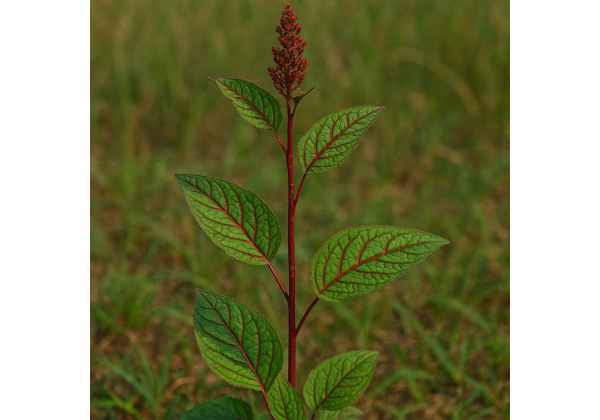
Red dock, botanically known as Rumex sanguineus, is an eye-catching leafy plant best known for its green leaves marked with striking red veins. It is often grown as an ornamental edible, but it also belongs to a broader group of sorrels and docks that have long been used as food and, in some traditions, as medicine. The young leaves are tart, slightly earthy, and refreshing, which makes the plant feel at once decorative, culinary, and quietly medicinal.
What makes red dock worth a closer look is not a single miracle compound, but a layered profile of polyphenols, flavonoids, tannins, organic acids, and other plant chemicals that help explain its antioxidant potential and traditional digestive appeal. At the same time, this is a plant that deserves balance. Its strongest modern support comes from phytochemical and edible-plant research, not from large human clinical trials, and its oxalate content means more is not always better.
This guide explains what red dock contains, which benefits are realistic, how it is used, what dosage ranges make sense, and where the most important safety limits begin.
Essential Insights
- Red dock may contribute antioxidant support through its polyphenols, flavonoids, and tannins.
- Young leaves may support appetite and light digestion when used in modest food amounts.
- A practical intake is about 5 to 20 g of fresh young leaves daily, usually as part of a mixed dish or salad.
- People with kidney stone risk, hyperoxaluria, or plans to use concentrated preparations should be cautious.
Table of Contents
- What red dock is and how it differs from other sorrels
- Key ingredients and active compounds in red dock
- Health benefits and medicinal properties of red dock
- Culinary, traditional, and practical uses
- Dosage, timing, and best ways to use it
- Harvesting, preparation, and common mistakes
- Safety, side effects, and who should avoid it
What red dock is and how it differs from other sorrels
Red dock is a perennial leafy plant in the Polygonaceae family, the same broad family that includes sorrels, docks, and rhubarb. Its common names can vary, and people often call it red-veined sorrel, bloody dock, or red dock, depending on the region and the way it is being grown. That naming overlap is one reason the plant can be misunderstood. It is related to sorrel, and it can be used in a similar way, but it is not exactly the same thing as common garden sorrel.
The first thing most people notice is appearance. Red dock has long, narrow green leaves traced with deep red or burgundy veins, which makes it popular in edible landscaping and decorative kitchen gardens. It looks ornamental enough to be grown for beauty alone, yet the leaves are edible and can be quite useful in the kitchen when harvested young.
Flavor is where its identity becomes clearer. Red dock is tart, gently astringent, and slightly earthy, with the sourness that many people associate with sorrel. That tang comes largely from oxalic acid and related organic acids. Compared with many classic sorrels, red dock is often a little milder and more visual, which is one reason it fits well into mixed salads rather than serving as a main cooked green. If you already know the bright, lemony style of sorrel-like culinary greens, red dock belongs to that same flavor neighborhood, but it usually brings a more restrained acidity and a more decorative leaf.
Its growth habit also matters. Red dock forms a basal clump of leaves and prefers moist, fertile soil with partial sun or light shade. In culinary use, it is usually the young leaves that matter most. Older leaves can become tougher, more fibrous, and more assertive in acidity, which changes both taste and tolerance.
One of the most useful ways to understand red dock is to separate three roles it can play:
- an ornamental edible with striking foliage
- a tart leafy vegetable for modest, fresh use
- a member of a medicinally interesting genus, though not one with strong human clinical evidence of its own
That last point is important. Many health claims made about red dock are inherited from broader discussions of Rumex plants rather than proven directly in human studies on Rumex sanguineus. This does not make the plant unimportant. It simply means the honest case for red dock is food-first and evidence-aware.
So what is red dock best at? It is best treated as an edible leaf with real phytochemical value, a pleasing sour edge, and a more careful safety profile than ordinary lettuce. That combination is exactly what makes it worth writing about.
Key ingredients and active compounds in red dock
Red dock’s medicinal interest starts with its chemistry. Recent work on Rumex sanguineus has shown that it contains a large number of primary and specialized metabolites, with polyphenols and anthraquinones making up a major share of the identified compounds. That already tells us something important: red dock is not just a decorative acidic leaf. It is chemically active in ways that help explain both its possible benefits and its limits.
Among the most useful compound groups are polyphenols and flavonoids. Across studies of Rumex leaves, R. sanguineus stands out as a species with relatively high total phenolic content and substantial flavonoid levels. Researchers have identified quercetin derivatives, kaempferol derivatives, rutin, isoquercitrin, catechins, proanthocyanidins, and tannins in red dock leaves. These compounds matter because they are commonly linked with antioxidant activity and broader cell-protective effects.
A particularly interesting feature is that red dock leaves appear rich in catechins relative to several other Rumex species. That is a useful nuance because it suggests red dock may not simply duplicate the chemistry of common sorrel. Even within the same genus, species can emphasize different parts of the phenolic spectrum.
The major components worth knowing include:
- polyphenols that support antioxidant activity
- flavonoids such as quercetin and kaempferol derivatives
- catechins and proanthocyanidins
- tannins that may contribute mild astringency
- organic acids, including oxalic acid, which shape the sour taste
- anthraquinones, including emodin-related compounds, which deserve special caution
Oxalic acid is one of the most practical compounds in the plant. It contributes the tart bite that makes red dock refreshing in small amounts, but it also explains why the herb is not ideal for unlimited raw consumption. Oxalates can be a problem for people prone to kidney stones or certain mineral-balance issues, and this is one reason red dock should be viewed as a flavorful leaf, not a bulk green for everyday large salads.
Anthraquinones complicate the picture further. Traditionally, many people associate anthraquinones mainly with roots in dock and rhubarb relatives. But recent metabolomic work on Rumex sanguineus suggests that leaves can also accumulate emodin, a biologically active anthraquinone. This is a valuable reminder that “edible” and “chemically simple” are not the same thing.
Freshness and leaf age also matter. Young leaves are usually more tender and more appealing in flavor. Mature leaves may carry a sharper sourness and feel heavier in the stomach. Processing changes the chemistry as well. Blanching or light cooking can soften the oxalic sharpness, while raw use preserves the livelier acidity and fresher sensory profile.
In short, red dock’s chemistry supports a careful, food-based approach. Its phytochemicals give it real interest, but its oxalates and anthraquinone-related compounds are part of the story too. The plant’s value lies in that balance.
Health benefits and medicinal properties of red dock
The most useful way to discuss red dock’s health benefits is to keep two ideas together. First, it is an edible leaf with meaningful phytochemical value. Second, it is not a clinically established medicinal herb with strong human trial data behind every traditional claim. That balanced view helps separate credible benefits from overstatement.
The clearest potential benefit is antioxidant support. Red dock leaves contain substantial polyphenols, flavonoids, catechins, and tannins, all of which are commonly studied for their ability to help neutralize oxidative stress. This does not mean red dock is a cure for inflammation or aging. It means that, like many richly pigmented or phenolic-rich plants, it may contribute to the broader protective value of a diverse diet.
A second likely area of benefit is digestive stimulation in modest amounts. Sour greens have a long tradition of being used to sharpen appetite and enliven meals. Red dock’s tartness, mild astringency, and leafy freshness can make heavy foods feel lighter. This effect is often practical rather than dramatic. A few young leaves in a salad or warm dish may encourage appetite and meal balance more than they produce a clear drug-like digestive response.
A third area is broader medicinal interest inherited from the genus. Reviews of Rumex species describe antioxidant, anti-inflammatory, antimicrobial, and gastrointestinal uses across multiple related plants. Some of these effects are associated with flavonoids, tannins, and anthraquinones. However, the strongest evidence often comes from other Rumex species, cell studies, or preclinical models rather than direct trials on red dock leaves.
Realistic potential benefits include:
- contribution to antioxidant defenses
- gentle appetite and digestive support in small food amounts
- mild astringent action that may help explain traditional gut uses
- support for dietary diversity through the use of unusual leafy plants
- possible antimicrobial or anti-inflammatory relevance at the extract level, though not well proven in human use
One of the most important original insights about red dock is that its “medicinal” value may be strongest when it remains culinary. People often assume a plant becomes more therapeutic as it becomes more concentrated. In red dock’s case, that is not clearly true. The very compounds that make the plant interesting also create its safety boundaries. In other words, red dock is most persuasive as a smart edible leaf, not as an aggressive detox or laxative herb.
It is also worth saying what red dock probably does not do well. It is not the best plant for broad self-treatment of constipation, liver issues, or chronic inflammatory disease without guidance. Those claims belong more to traditional dock-root narratives than to clear modern evidence for Rumex sanguineus leaf use.
So does red dock have health benefits? Yes, but mainly in a practical, food-based sense. It appears to offer antioxidant-rich greenery, modest digestive value, and an intriguing phytochemical profile. Its strongest role is supportive, not curative, and that makes it more credible, not less.
Culinary, traditional, and practical uses
Red dock is most useful when it is treated like a tart spring leaf rather than a bulky salad base. In the kitchen, its best qualities are brightness, contrast, and visual appeal. It can bring color and acidity to a dish without requiring lemon juice or vinegar, and its red-veined leaves make even simple food look more intentional.
The most common use is fresh, especially when the leaves are young and tender. A few leaves can be sliced into mixed salads, layered into sandwiches, scattered over eggs, or added to grain bowls. Because the plant is sour and slightly astringent, it works best in balance with milder greens rather than alone. Mixed with lettuce, baby spinach, herbs, or tender spring greens, it adds complexity without taking over the plate.
Red dock can also be lightly cooked. Brief wilting in soups, omelets, or sautéed vegetable mixes softens the leaf and rounds off some of its sharper acidity. This is often a better choice for older leaves, which can be tougher raw. Still, it is not a leaf that benefits from long cooking. Extended heat tends to flatten the freshness and reduce what makes the plant interesting in the first place.
Useful culinary applications include:
- mixed salads with mild greens
- chopped garnish over eggs and potatoes
- folded into soups just before serving
- added to savory yogurt or soft cheese
- blended sparingly into herb sauces
- paired with fish, legumes, or roasted root vegetables
In traditional food-medicine thinking, sour leaves often had a place as spring tonics. That does not necessarily mean people were taking them as formal remedies. More often, they were restoring fresh bitterness, acidity, and minerality to the diet after winter. Red dock fits that pattern better than it fits a supplement model. It can be viewed as one of the useful seasonal leaves that refresh the palate and diversify plant intake, alongside other spring plants such as dandelion-type greens.
One practical advantage of red dock is that it lets the cook work in small, elegant amounts. Not every useful plant has to be eaten by the bowlful. Sometimes the right use is a few leaves that lift a meal. This is especially true of sour and oxalate-containing plants, where moderation improves both flavor and tolerance.
Red dock also pairs well with fat and dairy, because creamy or oily elements soften its sharpness. Soft cheese, yogurt dressing, olive oil, avocado, or egg yolk can help make the leaf feel less stark. It is less successful in dishes where it has nothing to balance against.
The key lesson is that red dock’s uses are primarily culinary, with medicinal relevance emerging from repeated, moderate inclusion in food. That is very different from treating it as a cleansing herb to be taken in strong teas or extracts. In most cases, the kitchen is exactly where this plant belongs.
Dosage, timing, and best ways to use it
There is no widely accepted medicinal dose of red dock leaf supported by human clinical trials. That means dosage needs to be framed practically, based on food use and the plant’s known chemistry rather than on standardized therapeutic recommendations. This is especially important because red dock contains both beneficial phenolics and limiting factors such as oxalates.
For fresh leaves, a sensible range for most adults is about 5 to 20 g per day, usually from young leaves and usually mixed with other foods rather than eaten as a large stand-alone portion. In kitchen terms, that is roughly a small handful of chopped leaves or a modest scattering through a meal. Many people will naturally stay below this simply because the flavor is assertive.
Reasonable food-based amounts include:
- 5 to 10 g fresh leaves for frequent garnish or mixed salad use
- 10 to 20 g fresh leaves occasionally in a composed dish
- 1 to 2 tablespoons finely chopped leaves in soups, eggs, or sauces
- 1/4 to 1/2 cup lightly wilted young leaves in a mixed vegetable dish
For cooked use, the amount can be slightly larger because the plant softens and the sourness becomes less sharp. Even then, it makes sense to treat red dock as one component of a dish rather than the entire vegetable base.
Timing matters mainly for tolerance. If you are using red dock for digestive liveliness and freshness, it works best with meals. Taking tart, oxalate-containing greens on an empty stomach is more likely to feel harsh, especially for people prone to nausea, reflux, or stomach sensitivity. Using the leaves with fat, starch, or protein usually improves the experience.
Concentrated use is harder to justify. Dried leaf teas, strong extracts, or homemade medicinal preparations are not well standardized for Rumex sanguineus, and current evidence does not support confident high-dose use. In fact, recent metabolomic work raises a good reason for restraint by showing that anthraquinone-related compounds, including emodin, may accumulate in the leaves more than some people would assume.
A cautious step-by-step approach works best:
- Start with young fresh leaves in a mixed dish.
- Use a small portion and assess taste and digestive comfort.
- Repeat a few times per week rather than taking a single large dose.
- Prefer lightly cooked use if raw sourness feels too intense.
- Avoid jumping straight to teas, powders, or extracts.
Signs that the amount is too high may include mouth puckering that lingers, stomach warmth, nausea, loose stools, or a feeling of heavy acidity after the meal. Those are useful cues to reduce the amount, not to power through.
For most people, the best “dose” of red dock is culinary and moderate. The plant’s chemistry rewards thoughtful use, and its safety profile punishes excess more quickly than many ordinary greens do. In that sense, restraint is part of proper dosing.
Harvesting, preparation, and common mistakes
Red dock is one of those plants that can seem easy until you actually try to use it well. Because it is edible, people sometimes assume any leaf at any stage is equally suitable. In practice, harvest timing, leaf age, and preparation make a noticeable difference in flavor, texture, and tolerance.
The first rule is to favor young leaves. Early leaves are usually the most tender, visually attractive, and pleasant to eat raw. They have enough acidity to be lively without becoming tiring. Older leaves can still be used, but they are more likely to be fibrous, tougher, and sharper in both sourness and astringency. This is the stage where brief cooking becomes much more useful.
The second rule is to use the plant in proportion. Red dock is not lettuce. One of the most common mistakes is building an entire salad around it and then discovering that the acidity becomes too dominant. A better approach is to treat it as an accent leaf, especially at first.
The third rule is to match preparation to leaf age:
- very young leaves work best raw
- medium leaves are often best chopped into mixed dishes
- mature leaves are better lightly wilted or blanched
- bruised or old leaves are usually not worth forcing into salads
Blanching is a helpful technique when the leaves are more mature or when you want to reduce sharpness. A short blanch followed by draining can soften texture and make the plant easier to combine with other ingredients. It may also reduce some of the oxalate burden, though it does not turn red dock into an unlimited food.
Storage matters too. Like many tender greens, red dock loses freshness quickly. After harvest, keep the leaves cool, dry, and lightly protected in the refrigerator. Use them within a few days for the best flavor. Once the leaves wilt heavily, the plant tends to taste flatter and less appealing.
Another common mistake is treating all sour greens as interchangeable. Red dock overlaps with sorrel, but it has its own balance of acidity, tannin, texture, and visual appeal. It is best understood through its own behavior, even if you rotate it with other seasonal leaves such as nettle and spring greens.
A final mistake is assuming “more medicinal” means older, stronger, or more concentrated. With red dock, that logic is not very useful. The plant becomes less elegant as a food and potentially less forgiving as a self-treatment when pushed too far. Better results usually come from careful harvest, small portions, and smart pairing than from intensity.
In short, good use begins long before the first bite. Choosing the right leaf, using the right amount, and preparing it with respect matter just as much as any discussion of active compounds.
Safety, side effects, and who should avoid it
Red dock is edible, but that should never be confused with unlimited safety. Its main safety issues come from oxalates, leaf acidity, and the growing recognition that anthraquinone-related compounds can be present in meaningful ways. For most healthy adults, small culinary amounts of young leaves are unlikely to cause problems. The risk rises when intake becomes large, frequent, or concentrated.
Oxalates are the most immediate concern. Red dock’s sour taste is part of its appeal, but oxalic acid is exactly why the plant should be used with moderation. People prone to calcium oxalate kidney stones, hyperoxaluria, kidney disease, or medically advised low-oxalate diets should be especially careful. In these groups, even edible sour greens can become a poor fit if used casually or in large amounts.
Digestive irritation is the next common issue. Large raw portions may cause stomach discomfort, nausea, or loose stool, especially in people who are sensitive to tart leaves or astringent greens. Some people also find that very sour greens worsen reflux. In these cases, smaller amounts or light cooking are usually safer than raw use.
Anthraquinone-related safety is a more nuanced issue. Many Rumex discussions historically emphasized roots as the main anthraquinone-rich part. More recent work on R. sanguineus suggests that leaves can also accumulate emodin, which is useful information because it argues against careless high-dose experimentation. This does not mean a few leaves are dangerous. It means concentrated medicinal use is less straightforward than many herbal summaries imply.
People who should be especially cautious include:
- those with kidney stone history
- people with chronic kidney disease
- anyone following a low-oxalate diet
- people with very sensitive digestion or reflux
- pregnant individuals considering concentrated use
- children or adults being given strong homemade dock preparations
- anyone planning prolonged use of extracts, powders, or teas
Pregnancy deserves a conservative approach. Small culinary amounts are very different from medicinal dosing, and there is not enough strong evidence to recommend concentrated red dock preparations during pregnancy. The same caution applies to breastfeeding and to people taking multiple medications, since strong plant concentrates can complicate otherwise stable routines.
Skin sensitivity is also possible. Some individuals may find the sap or foliage irritating, especially with repeated contact. This is usually a minor issue but worth noting for gardeners and harvesters.
The most practical safety rules are simple:
- Keep use food-based and moderate.
- Prefer young leaves over older ones.
- Avoid frequent large raw portions.
- Be cautious with concentrates and extracts.
- Skip use or seek guidance if kidney stone risk is relevant.
The bottom line is that red dock is a worthwhile edible plant, but not a casual one. Its benefits live in modest culinary use, while its safety limits become more important as the dose grows. That is exactly the kind of plant that rewards knowledge.
References
- Rumex Species: Phytochemistry, Pharmacology and Nutritional Potential for Food and Health Applications 2025 (Review)
- Non-targeted metabolomics-based molecular networking enables the chemical characterization of Rumex sanguineus, a wild edible plant 2025
- Variability of Phenolic Compound Accumulation and Antioxidant Activity in Wild Plants of Some Rumex Species (Polygonaceae) 2022
- The genus Rumex (Polygonaceae): an ethnobotanical, phytochemical and pharmacological review 2022 (Review)
Disclaimer
This article is for educational purposes only and does not replace medical advice, diagnosis, or treatment. Red dock is an edible plant, but edible does not always mean appropriate in large or medicinal amounts. People with kidney stone risk, kidney disease, digestive sensitivity, pregnancy-related concerns, or questions about concentrated use should speak with a qualified healthcare professional before using red dock beyond ordinary culinary amounts.
If you found this article helpful, please consider sharing it on Facebook, X, or another platform you prefer.