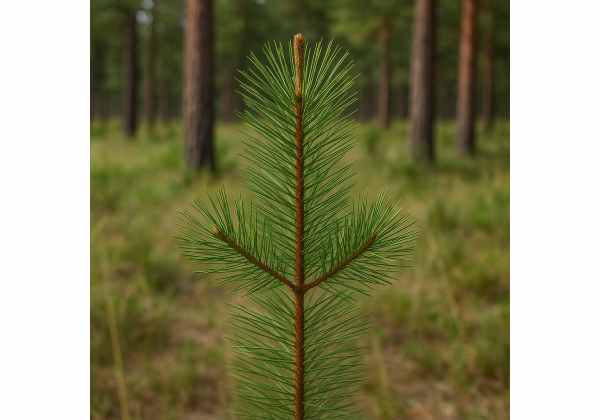
Red pine, or Pinus resinosa, is a tall North American conifer better known for timber and landscape value than for modern herbal medicine. Even so, it has a meaningful medicinal story. Traditional records describe the use of red pine inner bark, cones, resinous pitch, and needle-rich preparations for inflamed skin, sore tissues, and practical folk remedies. Modern phytochemical research adds another layer by showing that pine materials can contain terpene-rich volatile oils, resin acids, and bark polyphenols with antioxidant and surface-protective potential. That combination makes red pine an interesting medicinal tree, but not a simple one.
The key point is balance. Red pine does not have the same level of evidence as mainstream herbs such as chamomile or peppermint, and many claims about pine medicine come from the broader Pinus genus rather than from Pinus resinosa alone. Still, there is enough traditional use and enough chemistry to discuss its likely strengths: aromatic respiratory support, topical use, and antioxidant-rich bark extracts. Used carefully, red pine is best understood as a selective traditional remedy rather than a general-purpose daily herb.
Quick Facts
- Red pine is most credible as a traditional topical and aromatic remedy rather than a highly studied internal herb.
- Bark polyphenols and needle terpenes suggest antioxidant and surface-protective potential.
- A mild exploratory needle infusion is about 1 to 2 g dried needles or 1 to 2 tsp fresh chopped needles per 240 mL water.
- Pregnant people, children, and anyone considering concentrated resin or essential oil use should avoid unsupervised use.
Table of Contents
- What red pine is and where its medicinal value comes from
- Key ingredients and medicinal properties of red pine
- Potential health benefits and what the evidence actually supports
- Traditional uses and the most practical modern applications
- How to prepare and use red pine
- Dosage timing and common mistakes
- Safety side effects and who should avoid it
What red pine is and where its medicinal value comes from
Red pine is an evergreen conifer native to northeastern North America and parts of the Great Lakes region. It is sometimes called Norway pine, though the botanical name Pinus resinosa is the most precise and useful name in medicinal discussions. The tree is easily recognized by its reddish bark, paired needles, and straight, tall growth habit. In forestry, it is valued for durability and straight grain. In herbal history, its reputation is much smaller but still real.
The parts most relevant to traditional use are the inner bark, needles, cones, and resinous pitch. That matters because medicinal value in conifers is usually distributed across several plant parts rather than concentrated in a single root, flower, or seed. In practical terms, different parts of red pine appear to offer different strengths. The needles and aromatic tissues relate more to volatile terpenes. The bark contributes polyphenols and tannins. The resin and pitch bring a more concentrated, sticky, protective, and potentially irritating profile.
Red pine’s medicinal story comes from two overlapping sources. The first is ethnobotanical use. Historical records describe the inner bark being pounded as a poultice for inflamed wounds, sores, or ulcers when similar conifer bark was unavailable. Other ethnobotanical records describe pitch derived from cones and mixed into a salve for sores. These are practical, surface-oriented uses, and that tells us something important. Red pine was not primarily remembered as a daily tonic or kitchen herb. It was used more as a situational remedy.
The second source is broader pine-family chemistry. Modern reviews of Pinus species show that pines commonly contain biologically active terpenes, resin acids, and phenolic compounds. Those compounds help explain why pine species have often been linked with respiratory, skin, and antiseptic-style folk uses. For readers familiar with other traditional conifer remedies, red pine fits within the same general medicinal world, though species-specific data remain much thinner.
A useful way to think about red pine is this: it is a medicinal tree by tradition and chemistry, but not a thoroughly standardized herbal product. That distinction prevents two common mistakes. One is dismissing the tree entirely because it is not sold like mainstream supplements. The other is overpromoting it based on broader pine research without enough Pinus resinosa-specific evidence.
For most readers, red pine is best approached as a carefully limited traditional herb whose strongest themes are topical care, aromatic support, and exploratory phytochemistry. It deserves interest, but also restraint.
Key ingredients and medicinal properties of red pine
Red pine’s medicinal properties come from a mix of resinous and phenolic compounds rather than a single celebrated active ingredient. That is typical of medicinal trees. Their chemistry is often distributed across bark, needles, cones, and secreted resins, with each part contributing a different therapeutic profile.
The most relevant compound groups include:
- Terpenes and terpene-rich volatile oils
- Resin acids
- Polyphenols
- Tannins and related bark compounds
Terpenes are the compounds that give pines much of their fresh, sharp, resinous scent. Across the Pinus genus, common volatile constituents include alpha-pinene, beta-pinene, limonene, and related monoterpenes. These are often associated with aromatic respiratory uses, antimicrobial testing, and rubefacient or stimulating topical applications. In plain language, they help explain why pine-based preparations often feel clearing, penetrating, or resinously medicinal.
Red pine also contains notable resin acids. Species-specific chemical work on Pinus resinosa needles identified characteristic resin-acid patterns, especially labdane diterpenes. These compounds are less familiar to the average reader than essential oils, but they are important because they support the plant’s protective chemistry. Resin acids are part of how conifers defend themselves, and they likely contribute to the traditional use of pine pitch or resin-based salves.
Bark chemistry adds a different layer. Studies of boreal conifer barks, including Pinus resinosa, show that bark extracts can be rich in phenolic compounds and display strong antioxidant activity in laboratory systems. Phenolics matter because they are often linked with tissue protection, anti-oxidative effects, and mild astringency. In herbal practice, that helps make sense of why bark-based preparations have historically been used on irritated or inflamed tissue.
Taken together, these compounds suggest several medicinal properties that are plausible for red pine:
- mildly aromatic and clearing
- surface-protective
- antioxidant-rich at the bark level
- mildly antimicrobial in broader pine-family research
- potentially soothing or protective in salve-type preparations
Still, the evidence needs careful wording. These properties are partly supported by red pine-specific work and partly by broader Pinus literature. That means some claims are more secure than others. It is reasonable to describe red pine as chemically promising and traditionally useful. It is not reasonable to present it as a clinically established remedy for infection, chronic inflammation, or internal disease.
This is where good herbal writing matters. A tree can have interesting chemistry without being a cure-all. Red pine’s strongest medicinal profile is probably not “powerful” in the dramatic sense. It is better described as protective, resinous, aromatic, and situational. That makes it more similar to practical forest medicine than to concentrated supplement culture.
Potential health benefits and what the evidence actually supports
When people search for red pine health benefits, they usually want direct answers: what might it help with, and how strong is the evidence? The honest answer is that red pine may offer several traditional and plausible benefits, but few of them are strongly confirmed by modern human trials.
The most credible benefit category is topical support. Traditional records of red pine inner bark poultices and pitch-based salves point toward use on inflamed sores, irritated tissue, and minor skin complaints. This makes practical sense. Resinous plants often form protective coatings, while bark phenolics can add antioxidant and mildly astringent value. Even so, this remains a traditional and mechanistic benefit rather than a clinically proven wound therapy.
A second likely benefit is aromatic respiratory support, though this claim rests more on broader pine-family literature than on modern trials of Pinus resinosa specifically. Pine terpenes are often described as clearing, fresh, and helpful in inhalation-style remedies. This does not mean red pine cures bronchitis or infection. It means gentle steam, warm infusions, or aromatic preparations may offer sensory relief during congestion or throat irritation. If respiratory soothing is the main goal, a gentler herb such as mullein for throat and cough support is usually easier to place in modern home use.
A third benefit is antioxidant potential. This is the best-supported laboratory claim for red pine bark. Conifer bark extracts, including Pinus resinosa, have shown strong phenolic content and meaningful antioxidant activity in preclinical testing. That does not automatically translate into a clinically meaningful supplement effect, but it does confirm that the bark contains real bioactive compounds rather than inert bulk.
A fourth, more tentative benefit is mild antimicrobial potential. Reviews of pine essential oils and extracts suggest that pine species often show antimicrobial activity in vitro. That finding is valuable, but it should not be stretched into claims that red pine treats infections in people. Laboratory antimicrobial activity is common in aromatic plants and does not replace medical care.
The best way to summarize red pine’s benefits is to rank them by confidence:
- Traditional topical usefulness
- Aromatic and respiratory comfort potential
- Laboratory antioxidant activity from bark extracts
- Broader pine-family antimicrobial promise
What the evidence does not support is equally important. Red pine should not be presented as a proven immune booster, a heart-health herb, a cancer remedy, or a stand-alone antimicrobial treatment. Those claims go beyond the available data.
In practical terms, red pine is more useful when matched to low-drama situations: surface irritation, minor aromatic support, and carefully prepared traditional applications. Its benefits are best understood as grounded, modest, and context-dependent rather than sweeping or highly clinical.
Traditional uses and the most practical modern applications
Red pine’s traditional uses give the clearest picture of where the tree belongs in herbal practice. Historical records do not present it as a daily tonic or a general cure. Instead, they show a plant used with purpose, often for external or resin-based applications. That is a valuable clue, because old remedies tend to reveal a plant’s most trustworthy role.
Documented traditional uses include:
- inner bark poultices for inflamed wounds, sores, and ulcers
- pitch-based salves for sore or damaged tissue
- practical forest-medicine applications centered on surface protection
That pattern tells us red pine was appreciated less for drinking and more for what it could do when placed on irritated tissue or used in simple medicinal preparations. This does not mean internal use never happened in the wider pine tradition, only that red pine’s more clearly documented uses are external and resin-centered.
A sensible modern translation of those traditions would focus on three applications.
1. External soothing preparations
A carefully made salve or balm using properly prepared resinous material can be understood as a modern extension of old pitch-based remedies. This is probably the most intuitive red pine use because it respects the tree’s resin chemistry and traditional role. It should still be limited to mild, non-serious skin concerns rather than open infections or deep wounds.
2. Mild aromatic support
Needle-based preparations or steam-style uses fit the wider medicinal logic of pines. This kind of use is less about red pine as a precise medicine and more about the aromatic character of conifer tissues. It may be comforting during cold weather or mild stuffiness, though stronger or more familiar aromatic plants are often easier to use safely.
3. Educational and seasonal herbalism
Red pine also has value simply as a medicinal tree worth understanding. That matters in forest-based or traditional herbal practice, where knowing how to recognize, prepare, and respect local plants is part of the craft.
Modern use becomes less convincing when the claims become too ambitious. Red pine is not the first herb to choose for routine skin care, persistent cough, or chronic inflammation. For everyday skin soothing, for example, calendula is usually the more practical topical herb. That comparison helps place red pine correctly. Red pine is a good forest remedy. It is not always the best household remedy.
Another practical issue is sustainability. Using inner bark from a living tree can damage or kill it. That means responsible use requires restraint. Fallen branches, shed resin, cultivated material, or very limited harvesting are far more ethical than casual stripping of bark. In many cases, red pine’s most responsible modern role is learning from it without overharvesting it.
In short, the traditional uses of red pine are meaningful, but they point toward selective, respectful application. The tree’s best modern uses remain simple, topical, aromatic, and low-intensity.
How to prepare and use red pine
Red pine can be prepared in several ways, but not every form is equally appropriate. The best method depends on which part of the tree you are using and what your goal is. Because the tree combines aromatic needles, tannin-rich bark, and sticky resin, preparation should stay simple and intentional.
Needle infusion
A mild needle infusion is the easiest place to begin for exploratory internal use. Fresh or properly dried needles can be chopped and steeped in hot water. This kind of preparation is primarily aromatic and lightly resinous. It may be used as a seasonal forest tea rather than a strong medicinal decoction. The flavor is resinous, clean, and slightly bitter.
A practical method is:
- chop the needles fairly finely
- pour hot, not violently boiling, water over them
- cover and steep for about 10 to 15 minutes
- strain carefully before drinking
This is best viewed as a mild infusion, not a concentrated treatment.
Steam or aromatic bowl
For aromatic support, some people prefer using needles in a bowl of hot water and inhaling the vapors gently. This is a more traditional-feeling forest remedy and often suits red pine better than strong internal dosing.
Resin-based salve
Red pine resin or pitch can be incorporated into salve-style preparations, often blended with oil and wax. This is a more advanced preparation because raw resin is sticky, potent, and harder to dose consistently. It is best for experienced herbal makers who understand how to filter and dilute resin properly.
Bark poultice or wash
Traditional inner bark use points toward moistened bark preparations for surface use. In modern practice, this is less convenient than salve-making and harder to standardize, but the concept is still useful for understanding how the tree was used.
The main rule is to avoid confusing gentle plant preparations with concentrated pine essential oil. Essential oils are far stronger and far more irritating. They should not be treated as interchangeable with a needle infusion or forest tea.
Preparation choice also depends on the actual problem. If the goal is respiratory aroma, red pine can make sense. If the goal is digestive comfort, a better fit may be peppermint for more direct digestive and upper-airway support. Matching the herb to the need matters more than forcing every plant into every category.
Two final preparation principles are worth keeping in mind:
- use correctly identified plant material
- harvest gently and never damage a living tree unnecessarily
Red pine works best when treated as a specific traditional resource, not as a conifer version of a daily supplement powder.
Dosage timing and common mistakes
Red pine does not have a well-established clinical dosage framework, so any internal use guidance should be presented as cautious, traditional-style practice rather than evidence-based therapeutic dosing. This is especially important because many pine-related claims online blur together multiple species, forms, and strengths.
For a mild needle infusion, a practical starting range is:
- 1 to 2 g dried needles per 240 mL hot water
- or 1 to 2 tsp fresh chopped needles per 240 mL hot water
- steep for 10 to 15 minutes
- begin with 1 cup once daily
- increase to 1 cup twice daily only if well tolerated
This is a food-like or tea-like range, not a concentrated medicinal regimen. It is best suited to short-term, occasional use.
For steam or aromatic use, there is no strict dose. A small handful of fresh needles in a bowl of hot water is usually sufficient. The goal is gentle aroma, not intense exposure.
For resin or pitch-based topical use, dosing is even less standardized. Because resin is potent and sticky, it is better discussed in terms of dilution than exact grams. It should be used only in a well-made salve or balm, not in crude, thick layers on irritated skin.
Common mistakes with red pine include:
- Using essential oil as though it were the whole herb
Pine essential oil is far more concentrated and irritating than an infusion or salve. - Borrowing dosage from unrelated pine products
Commercial pine bark extracts, essential oils, and fresh needle infusions are not interchangeable. - Assuming all pine species behave the same way
Broader pine-family evidence is useful, but it cannot replace species-specific caution. - Using too much because the tea seems gentle
Resinous plants can irritate if made too strong. - Harvesting irresponsibly
Overharvesting bark or resin can harm the tree and reduce long-term access to the plant.
Timing also matters. Red pine preparations are usually best used:
- during short-term symptom periods
- earlier in the day if you are testing tolerance
- away from prolonged daily use unless guided by experience or a skilled practitioner
If the main reason for using red pine is aromatic clearing, it can fit into brief seasonal use. If the issue is persistent cough or recurring irritation, another herb may fit better. For example, chamomile often suits mild, daily soothing needs better than a resinous conifer infusion.
The most practical dosing mindset with red pine is restraint. Use the weakest preparation that gives you the effect you want, and stop if the plant feels irritating rather than supportive.
Safety side effects and who should avoid it
Red pine is not usually described as a highly dangerous herb in mild traditional forms, but it does deserve careful handling. The plant contains resinous and aromatic compounds that can irritate skin, airways, or digestion when concentrated. Safety depends heavily on the form being used. A light needle infusion is very different from raw resin, and both are very different from essential oil.
The most plausible side effects include:
- stomach upset from strong infusions
- throat or mouth irritation from overly resinous preparations
- skin irritation or rash from topical resin
- headache or airway discomfort from intense aromatic exposure
- allergic reactions in people sensitive to conifers, resins, or fragrance-like compounds
The people who should be most cautious are:
- pregnant or breastfeeding people
- children
- people with asthma or strong fragrance sensitivity
- people with known rosin or conifer allergy
- anyone with chronic kidney, liver, or severe gastrointestinal disease
- those planning to ingest concentrated resin, pitch, or essential oil
A major safety rule is simple: do not ingest pine essential oil or raw resin casually. Those forms are too concentrated for beginner use and carry much more irritation risk than traditional teas or well-diluted salves.
Topical use also needs guardrails. A resin salve may be useful for minor surface care, but it should not be applied to deep wounds, serious burns, or obviously infected skin. If your real need is a gentle everyday skin remedy, witch hazel for simpler topical care is usually easier to place in routine use.
Another issue is misidentification. Pine species can look similar to non-experts, especially when using needles or collected forest materials. Correct identification matters because casual “pine tea” advice online often ignores species differences, contamination, and harvesting quality.
One more practical point is sustainability-related safety. Stripping bark from a live red pine can injure or kill the tree, and damaged bark can also be contaminated or degraded. Responsible harvesting protects both the plant and the user.
The safest overall conclusion is that red pine belongs in the category of modest traditional remedy, not aggressive self-medication. It can be used thoughtfully in mild aromatic, topical, or tea-like forms, but it should never be treated as a universal conifer medicine. The more concentrated the form, the more caution it deserves.
References
- Global Perspectives on the Medicinal Potential of Pines (Pinus spp.) 2025 (Review)
- Antimicrobial and Antioxidant Activity of Essential Oils from Selected Pinus Species from Bosnia and Herzegovina 2025 (Review)
- Pinus Species as Prospective Reserves of Bioactive Compounds with Potential Use in Functional Food—Current State of Knowledge 2021 (Review)
- Antioxidant Potential of Bark Extracts from Boreal Forest Conifers 2013
- Huron Smith’s ethnobotany of the Hocąk (Winnebago) 1998
Disclaimer
This article is for educational purposes only and is not medical advice, diagnosis, or treatment. Red pine is a traditionally used medicinal tree with limited species-specific clinical evidence. It should not replace professional care for infection, serious skin injury, breathing difficulty, persistent cough, or ongoing inflammatory symptoms. Avoid internal use of concentrated resin and essential oil, and use extra caution if you are pregnant, breastfeeding, taking prescription medicines, or have asthma, allergies, or chronic illness. When in doubt, consult a qualified healthcare professional before using red pine medicinally.
If you found this article useful, please share it on Facebook, X, or your preferred platform to help others discover careful, evidence-aware herbal information.