Red valerian (Centranthus ruber), also called Jupiter’s beard or spur valerian, is a vivid Mediterranean perennial that is better known as a hardy ornamental than as a mainstream medicinal herb. Even so, traditional food records and folk uses describe it as a mild calming, antispasmodic, and digestive-supporting plant, and early laboratory research suggests antioxidant, anti-inflammatory, and nervous-system activity. The important caution is that red valerian is not the same herb as true valerian (Valeriana officinalis), the better-studied sleep remedy. That distinction matters for both expectations and safety.
This guide explains what red valerian is, which compounds give it herbal interest, what benefits appear most plausible, and where the evidence is still thin. You will also find practical guidance on food use, tea and topical preparations, conservative dosage ranges, and the main reasons some people should avoid it. The aim is not to oversell the plant, but to help you decide whether red valerian belongs in the category of occasional folk herb, edible ornamental, or simply a beautiful plant best appreciated in the garden.
Quick Overview
- Red valerian is traditionally used for mild calming and occasional digestive spasm support.
- Early lab research suggests antioxidant and anti-inflammatory activity, but human evidence is limited.
- A cautious infusion range is 1–2 g dried aerial parts in 250 mL hot water, usually once daily to start.
- Pregnant or breastfeeding people, children, and anyone using sedatives should avoid internal use.
- Concentrated extracts are harder to justify than food-level or short-term traditional preparations.
Table of Contents
- What red valerian is and how it differs from true valerian
- Key ingredients and medicinal properties of red valerian
- Potential health benefits and what the evidence shows
- How to use red valerian in food tea and topical care
- Red valerian dosage timing and duration
- Safety side effects interactions and who should avoid it
- Common mistakes and practical tips for better results
What red valerian is and how it differs from true valerian
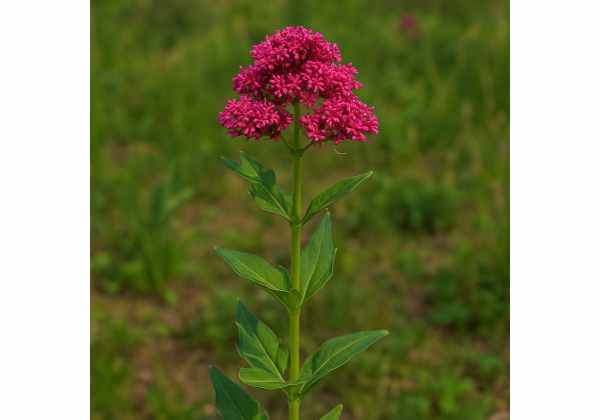
Red valerian is a flowering perennial native to Mediterranean regions and widely naturalized in other temperate climates. It thrives in dry, sunny places, often appearing in cracks of walls, rocky slopes, and old masonry. Gardeners value it for its long blooming season and clusters of red, pink, or occasionally white flowers, but its folk reputation goes beyond looks. In parts of Italy and nearby regions, the young leaves and shoots have been eaten raw or cooked, and the whole plant has appeared in traditional household remedies.
The first thing most readers need to know is that red valerian is not the same plant as common valerian. They belong to the same broader family group, which helps explain the name, but they are different genera with different levels of evidence behind them. Common valerian is Valeriana officinalis, usually used for its root, and it has a much longer medicinal history as well as a stronger clinical conversation around sleep and restlessness. Red valerian is Centranthus ruber, and its traditional use leans more toward mild folk applications, light food use, and regional herbal practice rather than standardized modern supplementation.
That matters in real life. A person searching for a proven herbal sleep aid may assume any “valerian” plant works in the same way. It does not. If your goal is a better-known sleep herb, true valerian root is the closer fit. Red valerian is better understood as a related but separate plant with interesting chemistry, modest traditional uses, and limited human research.
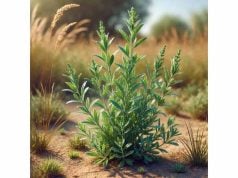
Botanically, red valerian usually grows 30 to 90 centimeters tall, with bluish-green leaves and branching stems. The flowers are mildly fragrant and attract pollinators. The parts most often discussed for food or folk use are the aerial parts, especially young shoots and leaves, though some historical sources also mention the whole plant or rhizome in decoctions and infusions.
A sensible modern view is to place red valerian somewhere between edible wild green, ornamental herb, and lightly medicinal folk plant. It has enough traditional use to justify attention, but not enough modern evidence to justify the certainty often seen in promotional herb writing. That balanced perspective helps prevent two common problems: dismissing the plant completely, or treating it as if it were interchangeable with well-studied valerian preparations.
Key ingredients and medicinal properties of red valerian
Red valerian attracts herbal interest because its chemistry overlaps partly with other valerian-family plants while also standing on its own. The most talked-about compounds are valepotriates, a group of iridoid-type constituents associated with calming and antispasmodic activity in the valerian family. Older pharmacological work on isolated valtrate from Centranthus ruber suggests central nervous system–depressant and anxiolytic-like effects in preclinical models. That helps explain why traditional medicine sometimes treated the plant as a mild sedative or calming herb.
At the same time, red valerian is not just a valepotriate plant. Modern phytochemical work has identified several other relevant groups:
- Phenolic compounds, which help explain antioxidant effects
- Flavonoids, including compounds such as rutin
- Phenolic acids, including chlorogenic acid
- Fatty acids, especially in nonpolar fractions
- Terpenes and terpenoids
- Phytosterols
This mixed chemistry matters because herbs rarely work through one single compound. If red valerian has useful effects, they are likely to come from a broader pattern of mild nervous-system modulation, antioxidant activity, and irritation-lowering effects rather than one dramatic molecule acting like a drug.
In practical herbal language, the plant’s likely medicinal properties can be described as follows:
- Mild calming potential, especially in traditional sedative use
- Antispasmodic potential, particularly for digestive tension or cramp-like discomfort
- Antioxidant activity seen in laboratory testing
- Anti-inflammatory or irritation-modulating potential suggested by nitric-oxide and protein-denaturation assays
- Gentle digestive support, especially where tension and spasm play a role
Still, chemistry cuts both ways. The same valepotriate family that makes red valerian interesting also raises caution. Some valepotriates have shown mutagenic and carcinogenic concerns in laboratory contexts. That does not automatically mean ordinary food-level use is dangerous, but it does argue against casual high-dose or long-term internal use, especially with concentrated extracts. It is one reason a careful article on red valerian should avoid treating it like a daily wellness supplement.
Another helpful detail is that red valerian does not seem to be a rich essential-oil herb in the way peppermint, thyme, or lavender are. Its volatile fraction is present, but it is not the plant’s main practical identity. That is why teas, fresh plant use, and simple topical preparations make more sense than essential-oil style claims.
The bottom line is that red valerian contains enough active chemistry to justify traditional interest, but not enough standardized modern evidence to support strong promises. Its most credible medicinal identity is as a mild, low-confidence folk herb with plausible calming, digestive, and antioxidant properties rather than a clinically established botanical therapy.
Potential health benefits and what the evidence shows
The most useful way to discuss red valerian benefits is to separate traditional use, preclinical evidence, and human evidence. When those categories get blurred, herbs start sounding far more proven than they are.
1. Mild calming and occasional sleep support
This is the best-known traditional use. Ethnobotanical records from Italy describe Centranthus ruber in infusions or decoctions for mild sedative purposes, and older pharmacology on isolated valtrate supports the possibility of anxiolytic-like or central-depressant activity. That said, there are no strong modern randomized clinical trials showing that red valerian reliably improves insomnia, shortens sleep latency, or reduces anxiety in humans. So the fairest conclusion is that calming use is traditionally credible but clinically underproven.
If sleep is your main concern, red valerian is probably not the first herb to test. For readers comparing options, passionflower is often a more direct discussion with a clinician because its calming reputation is more established in modern herbal practice.
2. Digestive spasm and post-meal tension
Traditional sources describe the leaves as antispasmodic, which fits with the family’s broader reputation for easing smooth-muscle tension. In practical terms, this could mean mild support for crampy digestion, tension-related stomach discomfort, or uneasy digestion after stress. The evidence here is mostly inferential rather than clinical. Still, this is one of the more reasonable folk uses, especially when the plant is taken as a mild infusion rather than a strong extract.
3. Antioxidant and inflammation-modulating support
This is where laboratory research is more active than human research. Red valerian extracts have shown antioxidant effects in test systems and some activity in assays linked to inflammatory signaling, nitric oxide production, and protein denaturation. Those findings are interesting because they give the plant a plausible biochemical basis for wider supportive use. They do not prove that drinking red valerian tea will noticeably reduce inflammation in a person with arthritis, eczema, or other inflammatory disorders. The translation from test tube to daily life is still uncertain.
4. Light food and wellness value
Because red valerian has also been eaten traditionally as a spring green or salad ingredient, one of its most realistic benefits may be the simplest one: it can serve as a modestly bioactive edible plant. Used this way, its value is less about a targeted medicinal effect and more about broad phytochemical variety.
A practical summary looks like this:
- Most plausible benefit: mild calming
- Next most plausible benefit: gentle antispasmodic digestive support
- Laboratory promise: antioxidant and irritation-lowering effects
- Least proven claims: major sleep, weight, or anti-inflammatory outcomes in humans
So does red valerian “work”? It may, but probably in a modest, traditional, and context-dependent way. It is not a high-certainty herbal remedy. It is better thought of as a gentle folk plant that may fit mild symptoms, not a substitute for evidence-based treatment.
How to use red valerian in food tea and topical care
Red valerian makes the most sense when used in simple, low-intensity preparations. Because modern standardized products are uncommon and the safety profile is not fully settled, conservative forms are the most practical.
Food use
The young leaves and shoots have a tradition of being eaten raw in salads or cooked as a green. Flavor is often described as slightly bitter. Food use is important because it gives a clue about how many communities approached the plant: not as a powerful drug herb, but as a seasonal edible with some medicinal overlap.
Good food-use ideas include:
- mixing a small amount of young leaf into spring salads
- adding tender shoots to soups or vegetable pies
- briefly wilting the greens with olive oil and garlic
Used this way, red valerian is closer to a bitter green than to a therapeutic supplement.
Tea or infusion
A warm infusion is the most straightforward traditional-style medicinal preparation. This is the form that best suits mild calming or digestive-spasm support. For gentle use, steeping the herb in hot water keeps the approach mild and easier to adjust. Tea also helps you notice tolerance quickly. If it tastes too harsh, causes nausea, or feels too sedating, you can stop without having committed to a concentrated dose.
Decoction
Some folk records mention decoctions, especially where the whole plant or rhizome was used. In modern practice, a decoction is harder to standardize and may extract a heavier profile than most casual users need. For that reason, infusion is usually the better first choice.
Tincture or extract
This is the least appealing form for home use. With red valerian, there is no strong consensus on standardized active markers, ideal extract ratio, or clinically supported dosing. Concentrated extracts also raise more concern when a plant contains valepotriates that already deserve cautious respect. If someone wants a daily calming tincture, there are better-characterized herbs to consider first.
Topical care
A cooled infusion can be used as a simple wash or compress on intact skin when the goal is mild soothing rather than intensive treatment. This is a lower-risk use than internal concentration, but the evidence is still modest. If your main interest is skin support, calendula preparations are usually easier to standardize and explain.
A practical way to choose the form is simple:
- Use food if you are mainly curious and want a low-stakes introduction.
- Use tea if you want gentle calming or digestive support.
- Use topical infusion for mild experimental skin comfort on intact skin.
- Skip strong extracts unless guided by a trained clinician.
That ladder respects both the plant’s traditional use and its evidence limits. Red valerian seems most appropriate when used gently, occasionally, and with realistic expectations.
Red valerian dosage timing and duration
The most important dosage fact is this: there is no established, evidence-based standard adult dose for red valerian. That means any practical range should be understood as conservative traditional guidance, not as a clinically proven regimen.
If someone still wants to try the plant, the safest strategy is to stay close to food-level or mild infusion-level use and avoid prolonged internal use.
A cautious starting framework
- For infusion
- Use 1–2 g dried aerial parts in 250 mL hot water
- Steep for 5–10 minutes
- Start with 1 cup once daily
- If well tolerated, some adults may use up to 2 cups daily
- For fresh herb infusion
- Use roughly 2–4 g fresh herb per 250 mL hot water
- Steep covered, then strain
- For food use
- Keep servings modest at first, such as a small handful of young leaves or shoots mixed with other greens
- Occasional use is more sensible than daily heavy intake
- For topical compresses
- Prepare a stronger infusion with 5–10 g dried herb in 250–500 mL water
- Cool fully before applying to intact skin for 10–15 minutes
Best timing depends on the goal
- For a calming or evening trial, take the infusion 30–60 minutes before bed
- For digestive tension, try it after a meal
- For topical use, apply only when needed rather than on an open-ended schedule
Reasonable duration
Because the research base is limited and some constituents deserve caution, short trials are best:
- try it for 3–7 days first
- if tolerated and useful, extend only to about 1–2 weeks
- avoid long-term daily internal use without professional guidance
When to stop
Stop sooner if you notice:
- unusual drowsiness
- headache
- nausea
- loose stools
- vivid dreams
- mental fog
- skin irritation after topical use
It is also wise not to combine your first trial with several other new herbs at the same time. Keep the experiment simple so you can tell what is helping and what is not.
One more practical point: do not borrow dosage ideas from common valerian products and assume they apply here. Red valerian is a different plant with a thinner research base. For that reason, the smartest dosage philosophy is start low, stay mild, and keep the trial short.
Safety side effects interactions and who should avoid it
Safety is where red valerian needs the most restraint. The plant has genuine traditional use, but its modern evidence base is too limited to support broad, routine internal use across all groups.
Possible side effects
Most likely side effects from internal use would be similar to those seen with other mildly calming herbs, though specific human data are sparse:
- drowsiness
- headache
- light dizziness
- stomach upset
- loose stools
- unusual dreams
- mild mental slowing
Topical use may cause local irritation or rash in sensitive people.
Why extra caution is reasonable
Red valerian contains valepotriates, and those compounds are part of what makes the plant interesting. They are also part of what makes it less suitable for casual, concentrated, long-term use. Laboratory concerns around this class of compounds are one reason many cautious herbal writers prefer short-term, low-dose, traditional-style use over aggressive supplementation.
Who should avoid internal use
Avoid internal red valerian if you are:
- pregnant or breastfeeding
- giving herbs to a child or teenager
- older and at high risk of falls or excessive sedation
- using prescription sleep medicines or sedatives
- using benzodiazepines, opioids, sedating antihistamines, or alcohol regularly
- scheduled for surgery
- living with significant liver disease
- sensitive to calming herbs or easily made groggy by supplements
Because human interaction data are poor, it is safest to assume that red valerian could have additive sedative effects when combined with other central nervous system depressants.
Interaction watch list
Use extra caution or avoid combining red valerian with:
- sleep medicines
- anxiety medicines
- opioid pain drugs
- alcohol
- cannabis products
- kava
- strong valerian products
- multi-herb “nighttime” blends
If a person is already taking several calming agents, the real risk is not that red valerian is extremely potent on its own, but that it becomes part of a stack that causes next-day sedation, poor coordination, or impaired judgment.
Topical safety
For topical experiments:
- use only on intact skin
- patch-test a small area first
- avoid eyes, mucous membranes, and broken skin
- stop if redness, burning, or itching appears
In short, red valerian is not an herb to fear, but it is also not one to treat casually. The safest readers are those who either keep it at food level or use short, mild preparations with clear stop rules. Anyone seeking strong sleep or anxiety relief should look first at more established options and involve a qualified clinician.
Common mistakes and practical tips for better results
Most problems with red valerian do not come from the plant itself. They come from confusion, overreach, or poor sourcing.
Mistake 1: assuming red valerian and true valerian are interchangeable
This is the biggest one. The names sound close, but the plants are not the same. If you buy or harvest red valerian expecting the same effect as a common valerian root capsule, you are likely to be disappointed or to dose badly.
Mistake 2: using too much too fast
Because some herbal websites exaggerate benefits, people sometimes jump straight to concentrated extracts or daily long-term use. Red valerian is a plant where restraint is more intelligent than enthusiasm. Mild tea, light food use, and short trials make more sense than heroic dosing.
Mistake 3: harvesting from contaminated places
Red valerian often grows from walls, roadsides, pavement cracks, and old building edges. That makes it easy to spot, but not automatically safe to eat or brew. Avoid harvesting from areas exposed to traffic pollution, pesticide drift, pet waste, or crumbling painted masonry.
Mistake 4: expecting a dramatic sleep effect
Even if red valerian helps, it is more likely to feel gentle than dramatic. Think “slightly calmer” or “less crampy” rather than “powerful natural sleeping pill.” If your real problem is persistent insomnia, panic, or major digestive disease, this herb is too small a tool for the job.
Mistake 5: stacking it with other calmers
New users sometimes combine red valerian with valerian, melatonin, passionflower, antihistamines, and alcohol all at once. That makes it impossible to tell what works and increases the chance of feeling overly sedated.
Practical tips that improve the experience
- confirm the Latin name: Centranthus ruber
- prefer young, clean aerial parts for food use
- use dried aerial parts, not improvised mystery plant material, for tea
- keep your first trial simple and short
- write down the dose, timing, and effect for a few days
If your real goal is digestive comfort rather than calming, a herb such as peppermint is often a more direct starting point. If your main interest is ornamental value, growing red valerian yourself can be the smartest option. It likes sun, lean soil, and excellent drainage, and once established it is notably resilient.
The best overall mindset is this: red valerian is a thoughtful-use herb, not a convenience supplement. Treat it as a mildly interesting traditional plant, keep expectations realistic, and you are much more likely to benefit from it safely.
References
- Centranthus ruber (L.) DC. and Tropaeolum majus L.: Phytochemical Profile, In Vitro Anti-Denaturation Effects and Lipase Inhibitory Activity of Two Ornamental Plants Traditionally Used as Herbal Remedies 2022. (Open study)
- Plant Species of Sub-Family Valerianaceae—A Review on Its Effect on the Central Nervous System 2021. (Review)
- Traditional Herbal Remedies Used for Managing Anxiety and Insomnia in Italy: An Ethnopharmacological Overview 2021. (Review)
- Phytochemical and biological investigations on Centranthus kellereri (Stoj., Stef. and T. Georgiev) Stoj. and Stef. and C. ruber (L.) DC. and their potential as new medicinal and ornamental plants 2023. (Open study)
- [Pharmacological studies of Centranthus ruber] 1981. (Preclinical study)
Disclaimer
This article is for educational purposes only and is not medical advice. Red valerian is not as well studied as true valerian or other established herbal medicines, and no standardized clinical dose has been confirmed for routine use. Do not use this guide to diagnose, treat, or replace care for insomnia, anxiety, digestive disease, skin disorders, or any other medical condition. Speak with a qualified healthcare professional before using red valerian internally if you are pregnant, breastfeeding, taking prescription medicines, preparing for surgery, or managing a chronic illness.
If this guide helped you, please consider sharing it on Facebook, X, or your preferred platform so more readers can approach herbal remedies with clear expectations and safer habits.