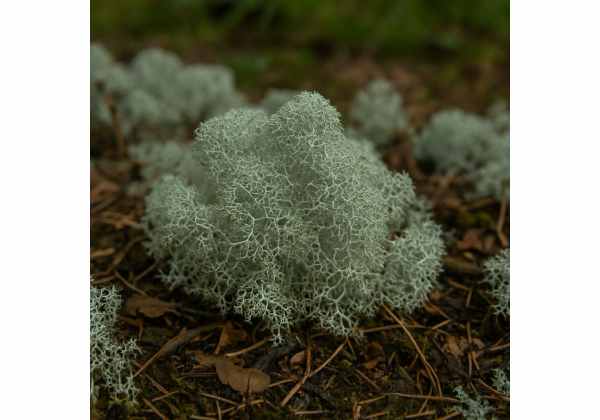
Reindeer lichen, Cladonia rangiferina, is a pale, branching lichen of northern forests and tundra. It is not a moss and not a true herb, yet it has a long history as emergency food, traditional soothing remedy, and source of pharmacologically interesting lichen acids. Modern interest in reindeer lichen centers on its antimicrobial compounds, protective polysaccharides, antioxidant activity, and possible anti-inflammatory effects. People most often look to it for throat and cough support, gentle digestive soothing, topical cleansing, and broader wellness formulas built around wild northern botanicals. Still, it is important to separate tradition from proof. Human clinical studies are limited, chemical content can vary widely, and lichens can collect environmental contaminants from the places where they grow. That means reindeer lichen is best approached as a cautious, short-term traditional remedy rather than a heavily researched daily supplement. This guide explains what it contains, which medicinal properties are most plausible, how it is commonly used, what dosage ranges make practical sense, and who should avoid it.
Core Points
- Traditionally used to soothe irritated throat tissue and the upper digestive tract.
- Contains lichen acids and polysaccharides with antimicrobial, antioxidant, and anti-inflammatory potential.
- A cautious traditional range is 1 to 2 g dried lichen per cup, up to 1 to 2 cups daily for short-term use.
- Avoid internal use during pregnancy, breastfeeding, liver disease, kidney disease, or when the source is untested.
Table of Contents
- What reindeer lichen is and how it has been used
- Key compounds and medicinal properties
- Potential health benefits and what the evidence suggests
- Common uses and practical ways to prepare it
- Dosage, timing, and how long to use it
- Quality, sourcing, and common mistakes
- Safety, side effects, and who should avoid it
What reindeer lichen is and how it has been used
Reindeer lichen is a fruticose lichen, which means it grows in a branching, shrubby form rather than as a leaf or crust. It is made from a partnership between a fungus and a photosynthetic partner, usually an alga. That unusual biology helps explain both its resilience and its chemistry. It thrives in boreal forests, open heaths, and Arctic and sub-Arctic regions, where it forms soft, pale mats on poor soils. It is famous as an important winter food for reindeer and caribou, which is how it gained its common name.
For people, reindeer lichen has historically been more of a survival food and folk remedy than a staple medicinal herb. In traditional northern use, it was sometimes soaked, washed, and boiled to reduce bitterness before being added to broths, porridges, or famine foods. That processing mattered because raw lichens can be sharply bitter and may contain irritating compounds. In folk practice, reindeer lichen and related lichens were also used for dry cough, throat irritation, diarrhea, and minor skin complaints.
It helps to keep one important distinction in mind: reindeer lichen is not the same thing as Iceland moss. The two are both lichens and have overlapping traditional uses, but they are different species with different texture, chemistry, and modern commercial reputation. That confusion leads many people to assume the evidence for one can be transferred directly to the other. It cannot. Reindeer lichen deserves its own careful assessment.
Another point that often gets overlooked is ecology. Reindeer lichens grow slowly and can take years to recover after disturbance. Wild mats also support cold-climate ecosystems. That means harvesting should be light, selective, and legally allowed, or avoided altogether in favor of tested commercial material. Decorative “moss” sold for crafts is not appropriate for internal use.
In practical terms, reindeer lichen is best understood as a traditional northern lichen with modest but interesting medicinal promise. Its strongest historical themes are soothing, protective, and cleansing use rather than dramatic stimulant or tonic effects. That makes it potentially useful, but only when identification, preparation, and sourcing are handled with care.
Key compounds and medicinal properties
The medicinal value of reindeer lichen comes from two broad groups of constituents: water-soluble structural compounds and lichen-specific secondary metabolites. Together, they create the plant-like effects people notice in teas, decoctions, and extracts.
The first group includes polysaccharides and other water-soluble compounds that can give preparations a soft, coating feel. These compounds help explain why traditional users often reached for reindeer lichen in cases of irritated throat, dry cough, and mild digestive discomfort. They do not work like a strong pharmaceutical drug. Instead, they act more like a gentle protective layer, especially when the lichen is prepared in hot water.
The second group includes lichen acids and phenolic-type compounds. In reindeer lichen, fumarprotocetraric acid is often discussed as a major constituent, and atranorin may also be present. Usnic acid is frequently mentioned in lichen medicine more broadly, but its presence and amount in Cladonia rangiferina can vary by population, environment, and extraction method. That is important because many marketing claims focus on usnic acid alone, even though whole-lichen activity may depend on several compounds acting together.
These metabolites are responsible for most of the better-known medicinal properties associated with lichens:
- Antimicrobial activity: Lichen acids can slow the growth of certain bacteria and fungi in laboratory settings.
- Antioxidant activity: Reindeer lichen extracts can help neutralize reactive compounds in test systems.
- Anti-inflammatory potential: Some constituents appear to dampen inflammatory signaling in experimental models.
- Mild astringent and bitter effects: These can contribute to digestive and topical use, but they also explain why poorly prepared material can be harsh.
This chemistry also explains why reindeer lichen is not automatically a gentle everyday food. Many beneficial lichen compounds are biologically active precisely because they help the organism defend itself. A useful herb and an irritating herb can be the same substance at different doses, in different people, or in different preparations.
Whole-plant use also differs from isolated compound use. A low-strength decoction is not the same thing as a concentrated alcohol extract, and neither is equivalent to purified usnic acid. This distinction matters for both benefit and safety. Traditional water preparations usually emphasize soothing and milder support, while concentrated extracts may deliver stronger antimicrobial or bitter effects and a higher side-effect risk.
So, when people talk about the “key ingredients” of reindeer lichen, the most honest answer is this: its value likely comes from a combination of protective polysaccharides and pharmacologically active lichen acids, with the exact balance changing according to origin, preparation, and product quality.
Potential health benefits and what the evidence suggests
The most realistic way to think about reindeer lichen benefits is to rank them from most plausible traditional use to most experimental modern interest.
The first and most plausible benefit is mucosal soothing. When prepared as a warm decoction, reindeer lichen may help calm a scratchy throat, dry cough, and mild upper digestive irritation. This benefit is consistent with its traditional use and with the presence of water-soluble compounds that can coat irritated surfaces. In practice, its soothing profile is closer to a demulcent such as marshmallow root than to a stimulating immune herb.
The second likely benefit is mild antimicrobial support. Laboratory studies on reindeer lichen and related lichens show activity against some bacteria and fungi. That does not mean it can replace antibiotics or antifungal medicines in real infections, but it does support its traditional role in simple topical preparations and short-term wellness formulas aimed at cleanliness and surface-level irritation.
The third benefit is antioxidant and anti-inflammatory support. Extracts of Cladonia rangiferina and related lichens have shown the ability to reduce oxidative stress markers and influence inflammatory processes in experimental settings. This may help explain why the lichen appears in folk medicine for irritated tissues and why researchers continue to study it for broader therapeutic uses.
Beyond that, the evidence becomes more preliminary. Some animal and cell studies suggest hepatoprotective, cytoprotective, and antiproliferative effects from reindeer lichen extracts or isolated compounds. These findings are scientifically interesting, but they should not be turned into claims that reindeer lichen treats liver disease or cancer. Experimental models are not the same as clinical proof in people.
Topical support is another area of interest. Because reindeer lichen combines surface-soothing and antimicrobial properties, it may be reasonable as a mild wash or compress for minor skin irritation. Still, “minor” is the key word. Deep wounds, infected skin, burns, and persistent rashes need proper medical evaluation rather than folk treatment.
So where is the evidence strongest? It is strongest for traditional supportive use, not for disease treatment. Reindeer lichen may make sense for temporary throat irritation, mild digestive discomfort, and simple topical cleansing when used carefully. It makes less sense as a daily longevity supplement, a detox cure, or a replacement for standard care.
That balanced view protects against two common errors: dismissing the lichen as useless because clinical trials are limited, or overstating it as a miracle because lab studies are intriguing. The truth lies between those extremes.
Common uses and practical ways to prepare it
Reindeer lichen is usually used in simple, low-tech forms. The goal is not to extract every active compound as aggressively as possible. It is to get a preparation that is tolerable, reasonably gentle, and fit for the purpose.
The most traditional preparation is a decoction or strong infusion. The dried lichen is first shaken out and inspected for dirt, then briefly rinsed. Some traditional methods use soaking or repeated boiling to reduce bitterness. After that, the lichen is simmered or steeped in water until the liquid takes on a pale, earthy character. This approach is best suited to throat irritation, dry cough, mild stomach discomfort, or general short-term use during recovery from a cold.
Another common use is a cooled wash or compress. The same water preparation can be allowed to cool and then used on minor external irritation. This may be helpful when the goal is gentle cleansing rather than strong disinfection. It should be applied to intact or only superficially affected skin, not to deep or obviously infected wounds.
A third use is culinary support in very small amounts, especially in traditions where lichens were treated as famine foods or broth ingredients. For modern readers, this is more ethnobotanical than essential. Reindeer lichen is not a convenient everyday superfood, and it is not ideal for casual snacking or raw use.
Commercially, you may also see powders, capsules, and blended extracts. These can be convenient, but they raise an important quality issue: concentrated products can deliver more lichen acids, more variability, and more contamination risk if sourcing is poor. For that reason, simple tea-like use is often the safest entry point.
Practical ways people use it include:
- sipping a warm decoction for a dry, irritated throat
- taking a small amount before or after meals when mild digestive discomfort is present
- using a cooled preparation as a simple skin rinse
- combining it with other herbs in balanced seasonal formulas
For example, in a cold-season blend, a small amount of reindeer lichen can sit beside thyme to pair soothing qualities with a more aromatic respiratory profile.
What is usually not wise is making very concentrated homemade alcohol extracts or experimenting with purified lichen compounds. Those approaches move far away from traditional use and much closer to the territory where side effects become harder to predict. With reindeer lichen, simple preparations are usually the most sensible preparations.
Dosage, timing, and how long to use it
There is no universally accepted, clinically standardized human dose for reindeer lichen. That means dosage should be conservative, practical, and adjusted to the form being used.
For dried lichen in tea or decoction form, a cautious traditional-style starting range is 1 to 2 g per cup of water, taken once daily at first. If it is well tolerated, that can be increased to 1 to 2 cups daily for short-term use. This is a sensible range for people seeking throat, cough, or mild digestive support without pushing the chemistry too hard.
For powdered products, it is usually reasonable to stay near the equivalent of 2 to 4 g daily, divided if needed, unless a qualified practitioner advises otherwise. Powders are easy to overuse because they feel food-like, but they are still concentrated dried material.
For commercial liquid extracts, the best rule is to follow the label rather than invent a conversion from whole lichen to extract. Extract strength, solvent choice, and lichen-acid content vary too much to make a reliable universal dose. Avoid products that advertise high usnic acid content as if that alone proves quality.
Timing matters too:
- For throat support, sip slowly between meals or whenever irritation is most noticeable.
- For digestive use, start after food if you have a sensitive stomach, because the bitterness can bother some people on an empty stomach.
- For topical use, apply the cooled preparation once or twice daily to the affected area and stop if redness worsens.
Duration should stay short unless supervised. A practical self-care window is 5 to 10 days for an acute issue such as a dry throat or temporary stomach irritation. Some people may extend to 2 to 3 weeks, but that is already moving beyond the most cautious approach. Longer continuous daily use is hard to justify because the clinical evidence is limited and the chemistry is variable.
It is also wise to separate reindeer lichen from medicines and supplements by about 2 hours, especially if you are using it as a tea. Its coating and fiber-like qualities could theoretically interfere with absorption in some people.
Stop use and reassess if you develop:
- nausea or stomach pain
- unusual fatigue
- dark urine
- rash or itching
- persistent bitter burning in the stomach
The main rule is simple: with reindeer lichen, more is not automatically better. A low dose, short duration, and clear reason for use are usually the safest and most effective approach.
Quality, sourcing, and common mistakes
Quality matters enormously with reindeer lichen because this is a wild-type material with variable chemistry and a strong tendency to reflect its environment. Lichens can accumulate metals and airborne pollutants, which means a clean-looking specimen is not necessarily a clean specimen. For internal use, the safest choice is a supplier that identifies the species clearly and provides contaminant testing or at least transparent sourcing from low-pollution regions.
Correct identification is another major issue. Reindeer lichen is often confused with other pale, branching lichens and with craft-store “moss.” That confusion can lead people to use the wrong material entirely. If you are not experienced in lichen identification, buying from a reputable supplier is far better than harvesting casually.
A third quality question is processing. Reindeer lichen is naturally bitter, and traditional preparation often included washing, soaking, or repeated boiling. That is not old-fashioned fussiness. It is part of making the material more tolerable. Using unprocessed raw material is one of the easiest ways to end up with stomach upset and disappointment.
The most common mistakes with reindeer lichen are:
- Using it as if it were a fully validated modern supplement.
It is better treated as a cautious traditional remedy with promising but limited evidence. - Relying on it for serious infection or chronic illness.
A lichen tea is not a substitute for evaluation of pneumonia, urinary infection, ulcer disease, or worsening skin lesions. - Choosing concentrated products without understanding the chemistry.
Strong extracts may carry more risk than simple decoctions. - Harvesting from roadsides or disturbed land.
That increases the chance of contamination. - Taking it continuously for months.
That goes beyond what most traditional use would support.
There is also the question of whether reindeer lichen is the best herb for the job. Often it is not. If your main goal is predictable throat and upper-digestive soothing, slippery elm may be easier to source and easier to tolerate. Reindeer lichen becomes more attractive when you specifically want its northern ethnobotanical profile or its combination of coating and lichen-acid activity.
In other words, quality use of reindeer lichen depends less on enthusiasm and more on restraint: verified material, simple preparation, short duration, and realistic expectations.
Safety, side effects, and who should avoid it
Safety is where reindeer lichen deserves the most caution. It is not automatically dangerous, but it is also not a casual, consequence-free herb. The same compounds that make lichens medicinally interesting can make them irritating or risky when overused, concentrated, or poorly sourced.
The most common short-term side effects are likely to be:
- bitter aftertaste
- mild nausea
- stomach irritation
- loose stools or digestive discomfort
- topical irritation in sensitive skin
People with liver disease, a history of supplement-related liver injury, or heavy alcohol use should be especially cautious. Some lichen compounds, especially usnic acid in concentrated products, have a documented history of liver safety concerns in the broader lichen-supplement world. Even though reindeer lichen may not always contain high or consistent usnic acid, that uncertainty is itself a reason for caution.
People with kidney disease should also be careful, not only because of the lichen’s chemistry but because lichens can accumulate environmental metals. If the source is uncertain, internal use is hard to justify.
It is wise to avoid internal use in:
- pregnancy
- breastfeeding
- young children unless professionally advised
- active liver or kidney disease
- people taking multiple medications with known liver stress potential
Potential interactions are not fully mapped, but several common-sense precautions are reasonable. Use extra caution with hepatotoxic medicines, heavy alcohol intake, or other supplements marketed for fat burning, cleansing, or antimicrobial intensity. Also separate reindeer lichen from oral medicines by about 2 hours.
Topical use is usually lower risk, but patch testing is still smart. If the skin becomes more inflamed, itchy, or swollen, discontinue it immediately.
Another safety issue is delayed care. Reindeer lichen should not be used to self-manage red-flag symptoms such as fever with chest pain, jaundice, blood in stool, deep wounds, severe vomiting, or persistent urinary symptoms. For urinary-focused self-care, some people look toward more specific traditional herbs such as uva ursi, but even that should not replace medical assessment when infection is possible.
Seek prompt medical attention if symptoms during use include:
- yellowing of the eyes or skin
- dark urine
- marked fatigue
- right upper abdominal pain
- facial swelling or wheezing
- severe rash
The bottom line is straightforward. Reindeer lichen may be suitable for short, careful, traditional-style use in healthy adults, but it is not the right herb for everyone. If you are medically complex, taking prescription drugs, or considering daily use, professional guidance is the safer path.
References
- Nutritional and Health-Promoting Effects of Lichens Used in Food Applications 2023 (Review)
- Lichens: An update on their ethnopharmacological uses and potential as sources of drug leads 2022 (Review)
- Hepatoprotective activity of depsidone enriched Cladonia rangiferina extract against alcohol-induced hepatotoxicity targeting cytochrome P450 2E1 induced oxidative damage 2020 (Experimental Study)
- Hepatotoxicity of usnic acid and underlying mechanisms 2025 (Review)
- Interplay of heavy metal accumulation, physiological responses, and microbiome dynamics in lichens: insights and future directions 2024 (Review)
Disclaimer
This article is for educational purposes only and does not replace medical advice, diagnosis, or treatment. Reindeer lichen is not a first-line treatment for infection, liver disease, digestive disease, or skin disorders. Its traditional uses and early laboratory findings are interesting, but human clinical evidence remains limited, and product quality can vary widely. Speak with a qualified healthcare professional before using reindeer lichen if you are pregnant, breastfeeding, have liver or kidney disease, take prescription medicines, or plan to use concentrated extracts.
If you found this article helpful, please consider sharing it on Facebook, X, or your preferred platform.