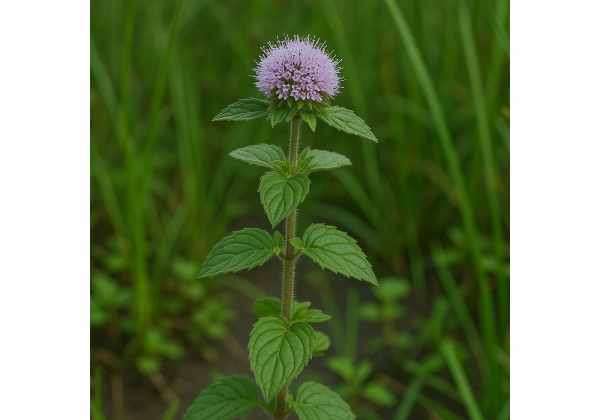
River mint, better known botanically as Mentha aquatica, is one of the wild, moisture-loving mints that gives the mint family much of its cooling aroma and herbal versatility. It grows near streams, wetlands, and damp meadows, and it has long been valued as both a fragrant culinary herb and a traditional remedy. What makes river mint especially interesting is the way it bridges familiar mint qualities with its own distinct chemical profile. Depending on the plant and growing conditions, its leaves and essential oil may lean toward cooling, digestive, aromatic, or gently soothing uses.
Today, river mint is best understood as a traditional herb with promising but still developing scientific support. Its aerial parts contain volatile terpenes, rosmarinic acid, flavonoids, and other phenolic compounds that help explain its antioxidant, antimicrobial, digestive, and aromatic value. At the same time, it is important not to overstate the evidence. Most research on Mentha aquatica is laboratory or animal based, not large human clinical trials. Used thoughtfully, river mint can be a useful herb for teas, aromatic blends, and gentle digestive support. Used carelessly, especially as a concentrated essential oil, it deserves more caution.
Essential Insights
- River mint is most useful as a gentle aromatic herb for digestive comfort and cold-season herbal support.
- Its extracts and essential oil show antioxidant, antimicrobial, and anti-inflammatory potential in preclinical research.
- A practical infusion uses about 1 g dried aerial parts per 100 mL water, which scales to roughly 2 to 2.5 g for a 200 to 250 mL mug.
- Avoid internal use of concentrated essential oil without professional guidance, and use extra caution during pregnancy, breastfeeding, and in young children.
Table of Contents
- What river mint is and how it differs from other mints
- Key ingredients in river mint
- Potential health benefits and what the evidence supports
- Traditional uses and practical applications
- How to prepare and use river mint
- Dosage timing and duration
- Safety side effects interactions and who should avoid it
What river mint is and how it differs from other mints
River mint, or water mint, is a perennial herb in the Lamiaceae family, the same aromatic family that includes lavender, rosemary, lemon balm, and the better-known garden mints. Its botanical name, Mentha aquatica, points directly to its favorite habitat. This is a plant that naturally thrives in wet ground, along riverbanks, in marshy edges, and anywhere soil stays reliably moist. The leaves are usually soft, fragrant, and oval, and the flowers often gather in rounded lilac to purplish heads that make the plant easy to recognize in summer.
One of the most useful things to know about river mint is that it is not simply “peppermint growing near water.” It belongs to the same genus, but its chemistry can vary more widely than many people expect. Some samples are rich in carvone, others in 1,8-cineole, linalool, or menthofuran, and that means the scent and effect profile can shift from one population to another. This is one reason river mint is interesting to herbalists, botanists, and cosmetic formulators alike. It can smell cooler, greener, sweeter, or more camphor-like depending on the chemotype.
That variability also explains why river mint should not be described too loosely. A fresh leaf infusion, a dried herb tea, and a distilled essential oil are not interchangeable preparations. The tea tends to behave like a mild aromatic herb. The essential oil is far more concentrated and chemically variable. A person who enjoys river mint tea for digestion or as a cooling summer herb is not having the same experience as someone using its volatile oil in a diffuser or topical blend.
From a practical perspective, river mint sits somewhere between culinary mint and medicinal aromatic. It is less standardized in common commerce than peppermint, but it still carries the familiar mint strengths people look for: freshness, digestive ease, and respiratory aroma. At the same time, its wild identity and variable chemistry make it more appropriate to describe as a traditional herb with growing scientific interest rather than a fully standardized medicinal mint.
That balanced view matters. River mint is approachable and useful, but it is also a species worth respecting on its own terms rather than treating as just another interchangeable mint leaf.
Key ingredients in river mint
River mint owes its medicinal and aromatic value to two broad groups of compounds: volatile terpenes in the essential oil and phenolic compounds in the leaf and aerial-part extracts. Together, these create the cooling scent, the herbal taste, and much of the plant’s biological activity.
The volatile fraction is where river mint shows its greatest variability. Depending on where the plant grows and how it is analyzed, its oil may be dominated by compounds such as carvone, 1,8-cineole, linalool, linalyl acetate, menthofuran, or related monoterpenes and oxygenated monoterpenes. This is important because these compounds help shape how the plant feels in use. A carvone-rich plant may feel brighter and more digestive. A 1,8-cineole-rich sample may smell more open and respiratory. A menthofuran-rich oil may be more intense and require more caution in concentrated form.
Beyond the essential oil, river mint is also rich in phenolic acids and flavonoids. Rosmarinic acid is especially important here, because it appears again and again across the mint family as a major contributor to antioxidant and anti-inflammatory action. In addition, studies of Mentha aquatica extracts have identified a broad mix of flavonoid glycosides, coumarins, and related phenolic constituents. These non-volatile compounds matter because they are more relevant to teas, infusions, and hydroethanolic extracts than to the essential oil alone.
This mixed chemistry explains why river mint can be both a culinary herb and a research interest. The essential oil supports aroma, freshness, and antimicrobial potential. The phenolic compounds support antioxidant activity and may help explain why traditional preparations were used for digestive, respiratory, and general soothing purposes. River mint therefore behaves less like a single-compound remedy and more like a layered herb whose preparation determines which side of its chemistry becomes most noticeable.
A useful way to think about the plant is this:
- Essential oil gives river mint its aroma and fast sensory effects.
- Phenolics and flavonoids give it much of its extract-based antioxidant and soothing value.
- Chemotype variability means one batch may not match another perfectly.
That last point is especially important for safety and realistic expectations. The same plant species can produce noticeably different aroma profiles in different environments. This is why broad mint-family comparisons can be helpful, but species-specific understanding is better. People interested in the wider chemistry of aromatic digestive herbs often compare river mint with fennel for digestive and aromatic support, but river mint remains distinct because of its strong leaf phenolics and highly variable oil profile.
Potential health benefits and what the evidence supports
The most responsible way to discuss river mint benefits is to separate traditional use, preclinical evidence, and human clinical certainty. The herb has promising qualities, but the strongest claims are not yet the best-proven claims.
The first likely benefit is digestive support. This is one of the most believable and practical roles for river mint because it fits both traditional mint usage and modern species-level research. In one recent preclinical study, Mentha aquatica essential oil showed gastroprotective effects in ulcer models and influenced gastric acidity without worsening motility. That does not make river mint a proven ulcer treatment in humans, but it does support the idea that this plant has real gastrointestinal relevance. As with many aromatic herbs, its value is likely greatest when used early and gently, such as in tea form for heaviness, mild queasiness, or post-meal discomfort.
The second plausible benefit is antioxidant and anti-inflammatory support. River mint extracts have shown free-radical scavenging activity, protection against oxidative damage in laboratory models, and inhibition of enzymes linked with carbohydrate metabolism. These findings suggest the herb contains bioactive compounds with meaningful potential, especially phenolic compounds such as rosmarinic acid and related flavonoids. Still, this is the point where many herb articles go too far. Antioxidant potential in extracts does not automatically translate into broad disease prevention in real-world users.
The third promising area is antimicrobial activity. River mint essential oil and extracts have shown antibacterial and, in some studies, antifungal activity in lab settings. This supports its traditional role as an aromatic cleansing herb and partly explains why mint-family plants appear so often in old food, throat, and household remedies. But again, lab antimicrobial action is not the same thing as treating an infection in the body.
A fourth possible benefit is aromatic respiratory comfort. Traditional use strongly connects water mint with cold-season herbal care, especially for common-cold type discomfort. The aromatic terpenes help explain why. In practical use, this usually means inhaled aroma, steam, or warm tea rather than a strong claim that the herb treats respiratory disease.
So what does the evidence really support?
- Most practical: mild digestive and aromatic support.
- Promising in research: antioxidant, antimicrobial, and anti-inflammatory actions.
- Interesting but not confirmed in humans: broader metabolic, neuroactive, or hepatoprotective potential.
- Important caveat: human clinical evidence on Mentha aquatica itself remains limited.
This hierarchy helps keep the plant in its proper lane. River mint is a promising traditional herb with real phytochemical depth, not a proven cure-all. Readers who want gentle digestive herbs often rotate it conceptually with chamomile for soothing digestive support, but river mint offers a more aromatic, greener, mint-forward profile.
Traditional uses and practical applications
River mint has a long reputation as a practical herb rather than a dramatic one. Traditional uses center on the parts of daily life where aromatic plants shine: unsettled digestion, heavy meals, stale indoor air, common-cold discomfort, and the need for something gently cooling, cleansing, or uplifting. That makes it less of a specialist medicinal herb and more of a versatile household botanical.
Historically, Mentha aquatica was used mainly for respiratory complaints such as colds, but it also appears in digestive and general soothing traditions. That pattern makes sense. Aromatic mints are naturally suited to situations where warmth, fragrance, and mild stimulation are welcome. A warm infusion after food, a steam bowl during seasonal congestion, or a fresh herb addition to food and drinks all fit the plant’s character.
In modern practical use, river mint works best in four ways.
First, as a tea herb.
This is the most accessible and generally the safest form. A tea made from the aerial parts delivers aroma, flavor, and water-soluble phenolics without the force of a concentrated essential oil.
Second, as a culinary herb.
Fresh leaves can brighten salads, sauces, cold drinks, and fruit preparations. This is more than flavoring. Culinary use is often how gentle medicinal herbs are woven into real life.
Third, as an aromatic support herb.
The scent of river mint can feel clearing and refreshing, especially in steam or diluted aromatic blends. In this role it behaves like a bridge between digestive mint and cold-season herb.
Fourth, as a cosmetic or topical ingredient.
The species has drawn interest for refreshing, purifying, and soothing cosmetic applications. That fits its mint-family profile, though topical products still need sensible dilution and patch testing.
One of the more useful modern insights is that river mint does not have to be used alone. It often makes sense in simple blends. For example, its fresh, cooling profile can complement warmer herbs in digestive formulas or softer herbs in evening teas. It also makes sense alongside aromatic household herbs used for seasonal comfort, much like eucalyptus in aromatic cold-season routines, though the character of the two plants is quite different.
A final practical point is expectation. River mint is best used for mild needs: a sense of digestive stagnation, a desire for a fresher herb tea, a comforting aromatic cup during a cold, or a cooling addition to topical and cosmetic routines. When symptoms are severe, prolonged, or medically important, this herb belongs in a supportive role at most, not as the main answer.
How to prepare and use river mint
River mint can be used fresh or dried, but the preparation should match the goal. For most people, the right starting point is the leaf or aerial-part infusion. This reflects how the herb is traditionally consumed and how one recent extract study prepared a human-style infusion: dried aerial parts boiled in water for a short time.
The simplest way to prepare river mint at home is as a tea:
- Measure the dried aerial parts.
- Add hot water or briefly boil the herb in water.
- Cover the cup or pot while the aroma develops.
- Strain and drink warm.
That short covered preparation matters because much of the plant’s character comes from volatile compounds that can easily dissipate. If the goal is aromatic digestive comfort, an uncovered pot left steaming for too long loses part of what makes the herb valuable.
Fresh leaves work well too, especially if the plant has been harvested recently and still smells lively. Fresh river mint is especially nice in summer infusions, lightly crushed in water, or combined with fruit and citrus. Dried herb is often more reliable for medicinal-style use because the amount is easier to measure.
Other preparation options include:
- Hydroethanolic extract or tincture, which may emphasize phenolic compounds.
- Topical preparations, where the herb or its diluted oil is used for cooling or cleansing purposes.
- Aromatic use, such as steam inhalation or diffuser-style fragrance, though essential oil use requires more caution than leaf tea.
The biggest preparation mistake is treating the essential oil as if it were just a stronger tea. It is not. Essential oil is a concentrated and chemotype-dependent product that may vary substantially from one sample to another. That means river mint oil should be approached carefully, especially for internal use, which is not a beginner practice.
Blending river mint can be a smart way to use it. In tea, it pairs naturally with calming and digestive herbs. A soft evening blend with lemon balm for stress and digestive ease makes more sense than forcing river mint into a strong therapeutic role it was never meant to fill. In food, it pairs well with cucumber, yogurt, citrus, peas, soft cheeses, and summer fruits.
As a rule, river mint is most rewarding when prepared simply. It is a herb that does not need complicated extraction to be useful. The less you force it, the more naturally its cooling, aromatic, and digestively supportive qualities tend to come through.
Dosage timing and duration
River mint does not have a well-established, standardized human clinical dosing system in the way that some official herbal medicines do. That is important to say clearly. Most practical dosing guidance comes from traditional use, culinary-herbal norms, and preparation methods used in experimental work rather than from large clinical trials.
A very useful anchor comes from recent extract research using the aerial parts of Mentha aquatica. In that work, the infusion was prepared by boiling 1 g of dried material in 100 mL of water for 5 minutes, specifically to mimic human consumption. That gives a realistic, species-specific preparation reference. For everyday use, it scales well:
- 100 mL cup: about 1 g dried herb
- 200 mL mug: about 2 g dried herb
- 250 mL mug: about 2.5 g dried herb
For most people, that is a sensible tea-strength range. It is enough to deliver aroma and extract-based compounds without turning the herb into an overly strong preparation. Fresh herb can also be used, though it is harder to standardize because the water content varies.
Timing depends on the purpose. River mint usually makes the most sense:
- after meals for digestive comfort,
- during the day when you want something cooling and refreshing,
- during a cold or heavy feeling when warm aromatic tea is welcome.
It is less ideal in large amounts right before sleep if the aroma feels stimulating rather than calming. Some people find mint-like herbs mentally freshening. Others find them soothing. River mint can lean either way depending on the chemotype and the blend.
Duration should also be practical. River mint is best treated as a short-term or situational herb for teas, culinary use, and occasional support. That does not mean a person cannot enjoy it regularly in modest food-like amounts. It means there is no strong reason to treat concentrated preparations as a daily long-term regimen without a clear purpose.
A few dosing principles keep its use grounded:
- Start with tea before extracts.
- Use food-like amounts unless you have a reason not to.
- Do not assume essential oil follows the same dosing logic as leaf infusions.
- Stop or scale back if the herb irritates reflux, the stomach, or the skin.
- Seek guidance before using concentrated products in pregnancy, breastfeeding, or childhood.
That is the right mindset for river mint. It is a herb for measured use, not maximal use. More is not necessarily better, and the pleasantness of the leaf tea does not justify careless experimentation with stronger forms.
Safety side effects interactions and who should avoid it
River mint is generally much safer as a leaf infusion or culinary herb than as a concentrated essential oil. That distinction should guide nearly every safety decision. The aerial parts in tea form are usually approached like other mild aromatic herbs: useful, modest, and usually well tolerated when taken sensibly. The essential oil belongs in a different category because it is concentrated and chemically variable.
The most likely mild problems with tea or fresh herb are the familiar ones seen with other mints:
- stomach irritation in very sensitive people,
- worsening of reflux in some users,
- rare allergy in those sensitive to Lamiaceae plants,
- dislike of the strong cooling or pungent taste.
Topical use also deserves routine caution. Even though mint-family herbs are common in skincare and cleansing products, any concentrated preparation can irritate skin if it is not diluted properly. Patch testing is sensible, especially for people with eczema, reactive skin, or fragrance sensitivity.
The stronger safety boundary concerns the essential oil. River mint oil is not standardized in the way many consumers assume. Different chemotypes may emphasize different terpenes, and that changes both scent and tolerability. Because of that variability, internal essential oil use should not be treated casually. A pleasant-smelling leaf tea does not mean the essential oil is automatically gentle enough to swallow.
The groups who should use extra caution or avoid self-directed concentrated use include:
- pregnant or breastfeeding people,
- infants and young children,
- people with strong reflux or chronic stomach irritation,
- those with known mint-family allergy,
- people using multiple medicines and wanting regular concentrated extracts.
Interaction data specific to Mentha aquatica are limited, which means humility is more appropriate than certainty. It is safest to assume the leaf tea is a mild herb and the oil is a concentrated aromatic substance that deserves respect. That is especially true when using commercial products that do not clearly describe the plant part, extract type, or dilution.
A final safety principle is easy to remember: match the preparation to the goal. If the goal is a pleasant, cooling, digestive herb, use tea or fresh leaves. If the goal is topical freshness, choose a well-formulated diluted product. Do not jump straight from a culinary herb mindset to internal essential oil use. People who mainly want a gentle topical botanical often do better exploring options such as witch hazel for simple external care rather than assuming every aromatic herb needs to be concentrated.
River mint is not an especially frightening herb, but it is one that rewards proportion. In leaf form it is usually mild and useful. In concentrated aromatic form it becomes a plant that should be handled with more skill and restraint.
References
- Mentha aquatica (Water Mint) as a Source of Active Pharmaceutical and Cosmetic Ingredients: A Critical Review 2024 (Review)
- Antioxidant, Phytochemical, and Pharmacological Properties of Algerian Mentha aquatica Extracts 2024 (Research Article)
- Gastrointestinal effects of Mentha aquatica L. essential oil 2022 (Preclinical Study)
- Antioxidant, anticholinesterase and antibacterial activities of Stachys guyoniana and Mentha aquatica 2017 (Preclinical Study)
- Chemical composition of the essential oil from Corsican Mentha aquatica–combined analysis by GC(RI), GC-MS and 13C NMR spectroscopy 2011 (Phytochemistry)
Disclaimer
This article is for educational purposes only and does not replace medical advice, diagnosis, or treatment. River mint is a traditional herb with promising research support, but most evidence for Mentha aquatica is still preclinical rather than based on large human trials. Tea made from the aerial parts is generally a milder form than the essential oil. Do not use concentrated preparations, especially essential oil taken internally, without qualified guidance. Seek professional advice before use during pregnancy, breastfeeding, in children, or if you have ongoing digestive, respiratory, skin, or medication-related concerns.
If you found this article useful, please share it on Facebook, X, or your preferred platform.