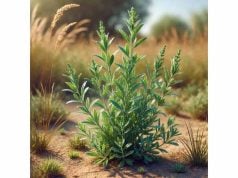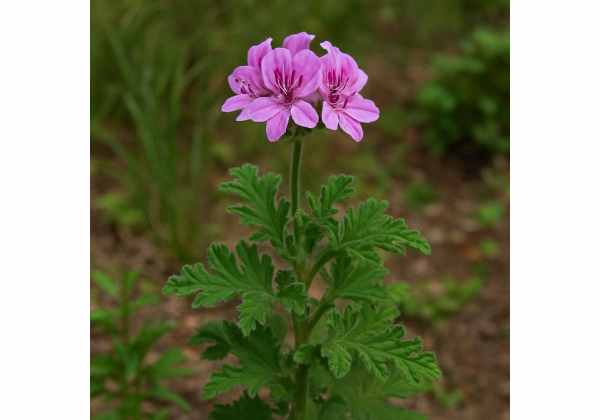
Rose geranium, or Pelargonium graveolens, is one of those herbs that feels familiar even before you know its name. Its leaves release a soft floral-citrus aroma with green, minty edges, and that scent explains much of its long appeal in perfumery, skin care, and traditional herbal use. Yet rose geranium is more than a fragrant plant. Its leaves and essential oil contain a rich mix of volatile terpenes, phenolic compounds, and flavonoids that help explain its soothing, antimicrobial, antioxidant, and skin-friendly reputation.
Modern interest in rose geranium sits at the meeting point of herbal tradition and essential-oil science. The plant has been used in teas, food flavoring, aromatic rituals, and topical preparations, while newer studies have explored its oil and extracts for mood support, antimicrobial action, antioxidant effects, and skin-related applications. Still, this is an herb best understood with balance. The leaves are gentler than the concentrated oil, and promising lab findings do not automatically equal strong clinical proof. Used thoughtfully, rose geranium can be a versatile herbal ally. Used carelessly, especially as an undiluted oil, it deserves real caution.
Quick Facts
- Rose geranium is most useful for aromatic calm, gentle skin support, and topical freshness.
- Its essential oil and extracts show antioxidant, antimicrobial, and anti-inflammatory potential in preclinical studies.
- A gentle tea-style infusion often uses about 1 to 2 g dried leaves per 250 mL hot water.
- Avoid internal use of concentrated essential oil without guidance, and use extra caution during pregnancy, breastfeeding, and in young children.
Table of Contents
- What rose geranium is and why it stands apart
- Key ingredients in rose geranium
- Potential health benefits and what the evidence supports
- Traditional uses and practical applications
- How to prepare and use rose geranium
- Dosage timing and duration
- Safety side effects interactions and who should avoid it
What rose geranium is and why it stands apart
Rose geranium is an aromatic shrub from the Geraniaceae family, native to southern Africa and now cultivated widely for its scented leaves and valuable essential oil. Its botanical name, Pelargonium graveolens, is closely tied to the oil industry, but the whole plant has a longer and broader story than perfume alone. The leaves are soft, often deeply lobed, and strongly fragrant when crushed. That fragrance is what makes the plant instantly recognizable: rosy without being heavy, citrus-like without being sharp, and green in a way that keeps it fresh rather than sweet.
One of the most useful things to understand about rose geranium is that it is not the same as the showy ornamental geraniums many people know from balconies and garden borders. It belongs to the same wider genus, but it is cultivated mainly for aroma and chemical composition rather than for flowers. It is also not interchangeable with all “geranium oils” on the market. Commercial labels may use the word geranium loosely, yet oil chemistry varies with cultivar, region, harvest stage, and processing. That is why a rose geranium leaf tea, a fresh-leaf compress, and a bottle of essential oil can feel like related but very different herbal experiences.
The plant also stands apart because it bridges two worlds. On one side, it is a household herb that can flavor beverages, desserts, and gentle herbal infusions. On the other, it is a concentrated aromatic resource used in cosmetics, topical preparations, massage blends, and aromatherapy. Many herbs lean mostly one way or the other. Rose geranium genuinely belongs to both, which makes it appealing but also easy to misunderstand.
Its reputation rests on several overlapping qualities. It is fragrant, mildly astringent, pleasant in culinary amounts, and interesting in modern phytochemical research. That combination explains why it turns up in traditional digestive use, skin care, mood-oriented aromatics, and modern lab studies on microbes, oxidation, and inflammation. If a reader approaches it only as a perfume ingredient, they miss the herbal side. If they approach it only as a medicinal herb, they may miss how preparation changes the experience.
That is the best starting point for rose geranium: it is a fragrant medicinal-aromatic herb whose identity depends heavily on whether you are using the leaves, a water extract, or the essential oil. Understanding that difference makes everything else in the article easier to interpret.
Key ingredients in rose geranium
Rose geranium’s chemistry is one reason the plant remains so interesting. Its profile is built from both volatile oil compounds and non-volatile phenolic compounds, and each group shapes a different side of the herb’s activity. The essential oil is what gives the plant its prized scent and many of its fast, aromatic effects. The broader leaf extract contributes antioxidant and enzyme-related activity that matters more in teas, decoctions, and hydroalcoholic preparations.
Among the most important volatile compounds are citronellol and geraniol, which often dominate the oil and create much of its rosy, floral-citrus scent. Other common constituents include linalool, citronellyl formate, citronellyl acetate, isomenthone, menthone, and related oxygenated monoterpenes. These compounds help explain why the oil is used in fragrance, topical care, and aromatherapy. They also contribute to the plant’s antimicrobial and anti-inflammatory interest.
The non-volatile side of rose geranium is just as important, even though it receives less attention in everyday herbal writing. Studies of leaf extracts have identified phenolic acids, flavanols, flavanones, flavan-3-ols, tannins, and coumarins, along with glycosides of quercetin, kaempferol, and myricetin. This matters because many traditional leaf-based uses are not about the essential oil alone. Water or hydroalcoholic extracts carry these polyphenolic compounds, which support antioxidant potential and may help explain the herb’s reputation for skin soothing, mild astringency, and broader herbal value.
Another important nuance is chemotype variability. Rose geranium oil is not chemically identical from one region or cultivar to another. Some oils emphasize citronellol more strongly, while others show more geraniol, linalool, or eudesmol-type compounds. That means product quality and origin matter more than people often assume. Two bottles both labeled “geranium essential oil” may smell similar, yet not behave exactly the same in fragrance, intensity, or skin feel.
This chemical range is why rose geranium can appear in so many different types of products. The oil supports aromatic, cleansing, and scent-driven applications. The leaf and extract chemistry supports tea, food flavoring, and broader herbal research. In a practical sense, the plant is best understood as layered rather than single-purpose. People interested in the chemistry of fragrant botanical oils often compare it with lavender and other aroma-rich herbs, but rose geranium remains distinct because of its rosy-citrus terpene balance and its useful polyphenol-rich leaf profile.
Potential health benefits and what the evidence supports
Rose geranium has a broad reputation, but the strongest way to discuss its benefits is to rank them by evidence type. Some are well grounded in traditional use and chemistry. Some are supported by laboratory or animal studies. A few have early human data, especially in aromatherapy and topical use. Very few should be framed as settled clinical facts.
The first likely benefit is skin and topical support. This is one of the herb’s most practical lanes. Rose geranium essential oil and extracts have shown antimicrobial, antioxidant, and anti-inflammatory properties in preclinical work, and clinical interest has reached into topical gel use and oral-mucosal applications such as denture stomatitis. These findings do not mean the plant cures skin disease, but they do make it credible as a supportive herb in carefully formulated external products. Its mild astringency and refreshing aroma also help explain why it remains popular in cosmetic care.
The second plausible benefit is aromatic mood support. Rose geranium oil is often used in inhalation or massage blends aimed at calm, emotional balance, or reduced mental fatigue. A randomized controlled trial in critical care nurses found that inhalation aromatherapy with Pelargonium graveolens essential oil reduced perceived fatigue, though it did not clearly improve sleep quality. That is a modest but useful finding. It supports the idea that rose geranium may have a role in aromatherapy-based self-care, especially when stress and sensory overload are part of the picture.
The third promising area is antioxidant and antimicrobial activity. Rose geranium essential oil and extracts have shown meaningful in vitro effects against bacteria, fungi, oxidative stress models, and enzyme targets. These findings support traditional uses related to freshness, preservation, topical cleansing, and general herbal defense. But this is exactly where articles tend to drift into exaggeration. Antimicrobial action in a lab dish is not the same as treating infection in the human body.
A fourth area is digestive and general herbal support from the leaves. Traditional use includes food, beverages, tea, and soothing digestive or respiratory applications. That is credible, but it remains gentler and less clinically established than the topical and aromatic lanes.
So the evidence hierarchy looks like this:
- Most practical: topical and aromatic support.
- Reasonably supported: antioxidant and antimicrobial potential.
- Traditionally credible: mild digestive and household herbal use.
- Less certain: broad internal therapeutic claims.
That hierarchy matters because rose geranium is easy to oversell. In reality, it is a versatile herb with promising evidence, especially for aroma and external use, not a proven remedy for every condition it is traditionally associated with. Readers who want a softer, less fragrance-driven calming herb often compare it with chamomile for gentle soothing support, but rose geranium brings a brighter, more floral, more skin-oriented profile.
Traditional uses and practical applications
Rose geranium has always lived comfortably at the border of herbal medicine, fragrance, and domestic use. That is part of what makes it enduring. Unlike some herbs that are clearly medicinal first and culinary second, rose geranium has long been used in ways that feel integrated into daily life. It flavors beverages and desserts, freshens rooms and linens, perfumes the skin, and appears in folk remedies aimed at minor digestive, respiratory, and skin complaints.
Traditional uses vary by region, but several patterns repeat consistently. The leaves have been used in food and tea, especially where scented herbs are valued for both taste and gentle herbal action. They have also been applied in household skin care, where their fragrance and mild astringency make them suitable for refreshing compresses, washes, and scented waters. In some traditional settings, rose geranium was also used for digestive unease, minor throat discomfort, and general calming, though these uses tend to be more supportive than strongly medicinal.
In practical modern use, rose geranium fits best into four main categories.
First, as an aromatic herb.
This is one of its clearest strengths. The scent can feel balancing, clean, and emotionally steadying without being overly sedating. That makes it useful in diffusers, steam, or simple leaf-based aromatic rituals.
Second, as a topical botanical.
Rose geranium is widely used in facial waters, oil blends, creams, and targeted external preparations. Its popularity here comes not only from scent but also from its skin-friendly reputation.
Third, as a culinary fragrance herb.
Fresh leaves can flavor syrups, cakes, teas, jellies, and fruit dishes. This use is often overlooked, yet it is one of the gentlest and most traditional ways to enjoy the plant.
Fourth, as a leaf-based household remedy.
In modest forms such as warm infusions or aromatic baths, the herb functions as a supportive plant for everyday discomforts rather than as a heavy medicinal intervention.
One of the most helpful modern insights is that rose geranium does not need to be forced into one use category. It works well because it is versatile. A person interested in fragrant skin rituals may value it for different reasons than someone who enjoys leaf infusions or scented pastries. Yet both are using genuine aspects of the plant.
The same flexibility also explains why comparisons can be useful. For example, people interested in floral aromatic skin rituals often think of damask rose in traditional fragrant care, but rose geranium usually feels greener, brighter, and more herb-like. That difference makes it more adaptable in some formulas and less overtly perfumed in daily use.
Overall, rose geranium is best seen as a multifunctional aromatic herb whose traditional value lies in freshness, topical support, and gentle everyday usefulness rather than in aggressive internal therapy.
How to prepare and use rose geranium
The right way to use rose geranium depends almost entirely on which plant form you are using. This is the most important practical point in the whole article. The fresh or dried leaves, water-based preparations, and essential oil are not interchangeable. Each has a different intensity, purpose, and safety profile.
For most people, the best place to begin is with the leaf. Fresh leaves can be steeped in hot water, added to herbal blends, infused into syrups, or used as a fragrant culinary ingredient. A gentle infusion lets the plant behave like an herb rather than like a concentrated aromatic extract. The taste is lightly rosy, green, and slightly astringent, making it pleasant in modest amounts. Fresh leaves can also be bruised lightly and added to bath water or aromatic household preparations.
The second common form is the decoction or stronger aqueous extract. This has been studied in research settings and may pull out more non-volatile antioxidants, tannins, and polysaccharide-rich components than a light infusion. In practical household use, though, most readers do not need to make medicinally strong decoctions unless there is a specific reason. A mild tea or simple hot infusion usually fits the plant better.
The third form is the essential oil, and this is where caution matters most. Rose geranium oil is highly concentrated. It is most appropriate for inhalation, dilution in a carrier for topical use, or professional formulation. It should never be treated as simply a “stronger leaf tea.” That mistake is common and unsafe. The oil carries the plant’s chemistry in a very different proportion, which means both benefits and risks change sharply.
Here are the most practical use forms:
- Tea or infusion for mild aromatic and culinary-herbal use.
- Bath or steam use for scent and seasonal comfort.
- Diluted topical blends for skin-focused external care.
- Food flavoring in desserts, syrups, jellies, or fruit dishes.
- Diffuser or inhalation use for mood and sensory support.
One of the more useful ways to position rose geranium is as a “precision aromatic.” It is more refined than many kitchen herbs, but milder than harsher concentrated essential-oil plants. In external care, people often compare it with witch hazel in gentle topical routines, though the feel is different: witch hazel is more astringent and functional, while rose geranium adds fragrance and sensory richness.
The simplest rule is this: use the leaves for food and tea, and reserve the essential oil for cautious, diluted, external or aromatic use. That single distinction prevents many of the most common misuse problems.
Dosage timing and duration
Rose geranium does not have a single standardized medicinal dosage supported by large clinical monographs, and it is better to say that plainly than to invent false precision. The plant is used in several ways, and the dose depends on whether you are working with leaves, a water extract, a topical formula, or an essential oil for inhalation.
For tea-style use, a practical range is about 1 to 2 g dried leaves per 250 mL hot water. Fresh leaves can also be used, usually in a small handful for a pot or a few leaves for a single fragrant cup. This is not a strong medicinal dose in the pharmaceutical sense. It is better understood as a food-like or traditional herbal amount that lets the plant remain pleasant and gentle. People using the leaves mainly for enjoyment, digestion, or fragrance generally do not need anything stronger.
For decoction-style preparations, research has explored hotter and more concentrated water extraction to maximize antioxidant-rich fractions. That is interesting scientifically, but it does not mean every home user should drink strong decoctions daily. Rose geranium is often at its best when used lightly and consistently rather than intensively.
For aromatherapy, the most grounded clinical reference comes from research in which participants inhaled one drop of pure Pelargonium graveolens essential oil for 20 minutes per session. That does not create a universal aromatherapy dose, but it does show what a minimal, structured inhalation intervention can look like in human research. It also reinforces an important point: essential oil use is measured in drops, not spoonfuls.
For topical use, conservative dilution is usually the safer rule. Rose geranium oil is often best used as part of a well-formulated product or a diluted blend rather than applied directly. A person seeking routine skin-friendly use does not need maximal intensity.
Timing depends on the goal:
- After meals works well for leaf tea when digestive comfort is the aim.
- During stressful periods or before rest may suit inhalation or diffuser use.
- As needed in topical care makes sense for external preparations.
Duration should also be moderate. Leaf tea can be used in a food-like way over time, but concentrated essential oil use should not become automatic daily self-treatment without a clear purpose. If a person wants an herb for constant daily drinking, something like lemon balm for calmer daily tea use may be easier to use generously than rose geranium, which often works better in smaller, more intentional amounts.
The overall dosing philosophy is simple: mild with the leaves, careful with the oil, and always proportionate to the intended use.
Safety side effects interactions and who should avoid it
Rose geranium is usually much safer as a leaf herb than as a concentrated essential oil, and that difference should guide nearly every safety decision. The leaves, when used in culinary or tea-like amounts, are generally treated as a mild aromatic herb. The essential oil is far more potent and deserves a more cautious mindset.
The most likely mild side effects from the leaves are limited and familiar: occasional stomach upset in very sensitive people, dislike of the strong floral-green taste, or rare allergy in someone who reacts to aromatic plants. In tea form, rose geranium is usually gentler than many people expect, especially when the infusion is mild rather than concentrated.
The essential oil introduces the more important safety issues. Potential problems include:
- skin irritation if applied undiluted,
- fragrance sensitivity,
- headache or nausea from overexposure to strong aroma,
- mucosal irritation if misused,
- unnecessary risk from internal use without guidance.
Topical use should always begin with dilution or a professionally prepared product. Even oils that feel gentle can irritate reactive skin. Patch testing is sensible, particularly for people with eczema, rosacea, fragrance intolerance, or a history of contact dermatitis. Rose geranium may be admired for skin care, but “skin-friendly” does not mean “risk-free.”
The groups who should use extra caution or avoid self-directed concentrated use include:
- pregnant or breastfeeding people,
- infants and young children,
- people with a history of fragrance-triggered headaches or asthma-like sensitivity,
- those with very reactive skin,
- anyone planning internal essential-oil use.
Interaction data specific to rose geranium are limited, which means it is smarter to be cautious than overly confident. This is especially true when the oil is used often or alongside many other essential oils. Poly-herbal aromatic routines can quickly become more intense than the user realizes.
A final safety principle is worth emphasizing: preclinical promise is not a license for stronger dosing. Because rose geranium shows antimicrobial, antioxidant, and anti-inflammatory activity in lab work, some people assume more oil must mean more benefit. In reality, stronger exposure often just means greater chance of irritation. If someone wants a more distinctly antimicrobial topical herb, tea tree in carefully topical use is usually the clearer comparison, and even that herb demands respect for dilution and formulation.
For most readers, the safest conclusion is clear. Rose geranium is a lovely and useful herb in leaf form, a refined topical and aromatic ingredient when diluted properly, and a poor candidate for casual internal essential-oil experimentation. Used proportionately, it is rewarding. Used too aggressively, it loses much of what makes it valuable in the first place.
References
- Pelargonium graveolens: Towards In-Depth Metabolite Profiling, Antioxidant and Enzyme-Inhibitory Potential 2024 (Research Article)
- An In-Depth Study on the Chemical Composition and Biological Effects of Pelargonium graveolens Essential Oil 2023 (Research Article)
- The Effect of Aromatherapy with Pelargonium graveolens (P. graveolens)on the Fatigue and Sleep Quality of Critical Care Nurses during the Covid-19 Pandemic: A Randomized Controlled Trial 2023 (RCT)
- Chemical Markers and Pharmacological Characters of Pelargonium graveolens Essential Oil from Palestine 2022 (Research Article)
- Pelargonium graveolens Aqueous Decoction: A New Water-Soluble Polysaccharide and Antioxidant-Rich Extract 2018 (Research Article)
Disclaimer
This article is for educational purposes only and does not replace medical advice, diagnosis, or treatment. Rose geranium is a traditional aromatic herb with promising research support, but much of the evidence for Pelargonium graveolens still comes from laboratory, topical, or aromatherapy studies rather than broad clinical use. Leaf preparations are generally milder than the essential oil. Do not ingest concentrated essential oil without qualified guidance, and seek professional advice before use during pregnancy, breastfeeding, in children, or if you have sensitive skin, fragrance reactivity, or ongoing medical concerns.
If you found this article useful, please share it on Facebook, X, or your preferred platform.