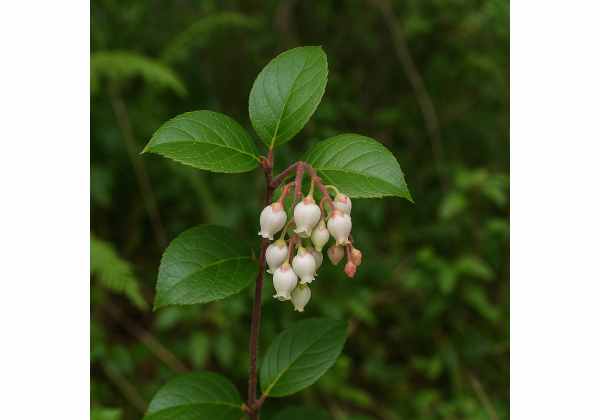
Salal, or Gaultheria shallon, is a glossy evergreen shrub native to the Pacific coast of North America, where it has long been valued as both a food plant and a traditional remedy. Its dark blue to purple berries are edible and rich in polyphenols, while its leathery leaves have a notable astringent quality that shaped many of its historical uses. Today, salal is best understood not as a heavily researched supplement, but as a traditional botanical with promising chemistry, meaningful food value, and a smaller evidence base than more widely studied herbs.
That distinction matters. Salal does appear to offer useful antioxidant compounds, tannin-driven digestive support, and potential functional-food benefits, especially from its berries. At the same time, most modern research on salal is still centered on phytochemistry, food science, and traditional use rather than robust human clinical trials. For readers, the most practical approach is to treat salal first as a nutritious wild berry and second as a cautious, short-term herbal preparation, especially when using the leaves rather than the fruit.
Core Points
- Ripe salal berries are best used as a food-first source of polyphenols and antioxidant compounds.
- Salal leaf preparations are traditionally used for occasional loose stools and mild mouth or throat support because of their astringent tannins.
- A cautious traditional tea range is about 1 to 2 g dried leaf in 250 mL hot water for short-term use.
- Avoid medicinal salal use during pregnancy and breastfeeding, and do not rely on it alone for diabetes, chronic diarrhea, or skin injuries.
Table of Contents
- What salal is and why it matters
- Key compounds and medicinal properties of salal
- Potential health benefits and what the evidence really shows
- Traditional and modern uses of salal berries and leaves
- How to prepare salal as food, tea, and simple topical care
- Dosage, timing, and how long to use salal
- Safety, side effects, interactions, and who should avoid it
What salal is and why it matters
Salal is an evergreen shrub in the Ericaceae family, the same broad plant family that includes blueberries, cranberries, and other phenolic-rich berries. It grows naturally from Alaska down the Pacific coast to California, especially in coastal forests, edges, bluffs, and understory habitats. Its broad, shiny leaves, bell-shaped pink flowers, and dark berries make it easy to recognize once you know what to look for.
What makes salal especially interesting is that it sits at the intersection of food, tradition, and herbal use. For many Indigenous communities of the Pacific Northwest, salal was not a novelty plant or a minor wild snack. It was an important seasonal food. The berries were eaten fresh, dried, mashed, and preserved for later use. That long food history matters because it tells us salal was valued first for nourishment, storage potential, and practical daily use.
The leaves also developed a traditional reputation. They were prepared in teas or chewed for targeted purposes, especially where an astringent effect was useful. In older ethnobotanical records, salal leaf preparations are associated with occasional diarrhea, cough-related use, and simple topical folk applications. Modern summaries should treat those uses respectfully and cautiously. Traditional use can point us toward interesting actions, but it is not the same as proof from controlled human trials.
For modern readers, salal matters for three main reasons.
First, it is a legitimate food plant. The berries contain fiber and a substantial range of polyphenols, especially when fully ripe. That alone makes salal more relevant than many obscure herbs sold only as capsules.
Second, its chemistry is genuinely interesting. Studies of salal berries show high levels of proanthocyanidins, anthocyanins, and related phenolics. That does not automatically translate into strong clinical outcomes, but it does help explain why salal is being studied as a functional food and as an ingredient in fortified foods.
Third, salal is a good example of how traditional botanical knowledge and modern evidence can complement each other without being confused. The tradition tells us which parts were used and how. The lab and food-science data tell us what compounds may be involved. What is still missing, in large part, is a strong clinical literature showing that salal reliably treats specific conditions in people.
That evidence gap should not make salal uninteresting. It simply changes how it should be framed. Salal is most useful when thought of as a polyphenol-rich wild berry with modest, plausible herbal applications, not as a clinically established remedy. Readers who approach it that way tend to make better decisions about expectations, dosage, and safety.
Key compounds and medicinal properties of salal
Salal’s medicinal profile begins with its phytochemistry. The berry has attracted the most scientific attention, and the picture that emerges is one of a dark, phenolic-rich fruit rather than a single-compound herb. In practical terms, that means salal’s value comes from a pattern of compounds working together, not from one famous active ingredient.
The most important groups include:
- Proanthocyanidins, also called condensed tannins, which appear in especially high amounts in salal berries
- Anthocyanins, the pigments that help give ripe berries their blue-purple color
- Flavonols and phenolic acids, which add to the berry’s broader antioxidant profile
- Tannins in the leaves, which help explain the plant’s traditional astringent uses
These compounds help create salal’s most plausible medicinal properties.
Antioxidant activity is the easiest place to start. Salal berries show strong antioxidant potential in laboratory analysis, largely because of their polyphenol content. That does not mean salal “detoxes” the body in the marketing sense, but it does mean the fruit can contribute to a diet that supports normal oxidative balance and tissue resilience.
Astringent action is also important, especially for the leaves. Tannins bind to proteins and produce a tightening, drying sensation. This is why tannin-rich plants are often used for short-term digestive complaints, minor mouth and throat rinses, and simple folk topical care. If you are familiar with the logic behind tannin-rich astringents such as oak bark, salal leaf makes more sense. Its action is less about “feeding” the body and more about briefly toning or drying irritated tissues.
Possible enzyme-modulating effects are another area of interest. Food-science and in vitro work suggests salal berry extracts may inhibit enzymes such as alpha-amylase, alpha-glucosidase, and DPP-IV. These are relevant to carbohydrate digestion and post-meal glucose handling. This is one reason salal berries appear in discussions of functional foods aimed at metabolic support. Still, these findings are preliminary. A food model or enzyme assay is not the same thing as a proven treatment effect in humans.
Anti-adhesion and antimicrobial interest is more tentative but still worth noting. Some salal berry proanthocyanidins include forms that have been discussed in relation to anti-adhesion effects, especially in the broader conversation around berry compounds and urinary health. That does not make salal a urinary remedy, but it adds one more reason its chemistry has attracted attention.
Overall, salal’s medicinal properties are best described as:
- Polyphenol-rich and antioxidant
- Tannin-driven and astringent
- Potentially supportive for digestive and metabolic pathways
- Better supported by phytochemistry and food science than by clinical trials
That last point is the one people most often miss. Salal has real chemical interest, but “interesting chemistry” is only the beginning of a good herbal profile. The strongest modern claim is not that salal has been clinically proven for major diseases. It is that salal contains a useful mix of compounds that plausibly support certain traditional uses and justify further study. That is a grounded, more honest way to understand its medicinal character.
Potential health benefits and what the evidence really shows
When people search for salal health benefits, they usually want a simple answer: what does it actually help with? The honest answer is that salal has promise, but the evidence is uneven and still limited. Most published work focuses on berry chemistry, antioxidant capacity, and food applications, not large human trials.
The most defensible benefit is nutritive antioxidant support from the berries. Salal berries contain substantial phenolic compounds, including proanthocyanidins and anthocyanins. In food terms, that places salal in the same broad conversation as other dark berries. If you already understand why people value anthocyanin-rich berry profiles, salal fits that logic. The likely benefit is not dramatic symptom relief after one serving, but regular contribution to a plant-rich diet that supports vascular, metabolic, and cellular health over time.
A second plausible benefit is short-term astringent digestive support from the leaves. Traditional leaf teas were used for diarrhea and similar digestive disturbances, and that use aligns well with the tannin content and astringent feel of the plant. This is a classic herbal pattern: when tissues are overly loose, wet, or irritated, a tannin-rich preparation may help tighten and settle them for a short period. The key phrase is “for a short period.” Salal leaf is not well positioned as a daily tonic for chronic gut problems.
A third area of interest is post-meal glucose and enzyme inhibition, but this remains preliminary. In vitro and food-model studies suggest salal berry compounds may help inhibit carbohydrate-digesting enzymes and related metabolic targets. That is scientifically interesting and may partly explain why salal works well in fortified functional foods. Still, it should not be inflated into “salal treats diabetes.” At this stage, it is more accurate to say that salal berries show early metabolic potential that deserves more study.
There is also some urinary-health plausibility, though the evidence is indirect. Salal berries contain proanthocyanidins, and some berry proanthocyanidin structures are studied for their anti-adhesion behavior. This is part of the wider logic behind cranberry’s urinary proanthocyanidin research. With salal, though, the leap from chemistry to real-world urinary benefit has not been firmly made.
So what should readers conclude?
- Salal berries may support overall dietary antioxidant intake.
- Salal leaf may offer brief traditional support for occasional loose stools or irritated oral tissues.
- Salal berry extracts show promising lab activity in metabolic and functional-food research.
- There is not enough human evidence to call salal a proven medicinal herb for major conditions.
This is where expectation management becomes important. Salal is not a clinically standardized botanical with well-established treatment protocols. It is better understood as a traditional food-medicine plant whose strongest modern value lies in its berry polyphenols and mild astringent herbal logic. That may sound less dramatic than marketing language, but it is actually more useful. It tells you where salal belongs: in careful, practical self-care, not in exaggerated health promises.
Traditional and modern uses of salal berries and leaves
Salal is one of those plants that makes more sense when you look at it in terms of plant parts. The berries and the leaves are not interchangeable. They do different things, and confusing them leads to poor expectations.
The berries are primarily a food. Traditionally, they were eaten fresh, dried, or prepared into cakes and preserved forms. Modern use follows the same broad idea. Salal berries can be eaten out of hand when ripe, cooked into preserves, blended into sauces, or added to baked goods and fermented foods. Their deepest value is nutritional and functional rather than strongly medicinal. They offer fiber, color-rich polyphenols, and a more concentrated wild-berry character than many supermarket fruits.
The leaves are more clearly herbal. Their astringent quality makes them suited to short-term traditional uses such as simple teas, cooled rinses, or folk topical applications. In older herbal logic, a plant like salal leaf is chosen when tissues feel too loose, damp, or irritated. That is why it was associated with occasional diarrhea, simple throat use, or folk care for minor surface irritation. In this respect, salal behaves more like a modest tannin herb than a nutritive berry.
Modern use can be grouped into three practical categories.
- Food use of ripe berries
This is the most accessible and least risky way to use salal. Ripe berries can be incorporated into the diet much like other dark berries. They pair well with yogurt, porridge, compotes, and mixed-berry preserves. If your interest is long-term wellness rather than acute symptom relief, this is usually the best place to start. - Short-term herbal use of leaves
Salal leaves can be used as a mild infusion when astringency is the goal. The main modern caution is to avoid treating this as a casual everyday beverage. Astringent herbs are most sensible when used briefly and with a purpose. - Functional-food experimentation
Research has explored salal berry powders and extracts in yogurt beverages and related products. That does not mean commercial salal supplements are well standardized. It simply shows that salal has enough phenolic strength to function as a food ingredient with measurable antioxidant or enzyme-related effects.
There are also mistakes people commonly make.
- Expecting the leaves to behave like the berries
- Treating salal as a substitute for a more studied herb
- Using concentrated preparations when only food-level use is familiar
- Forgetting that traditional use was often situational and short term
One helpful modern frame is this: salal berries belong in the kitchen first, and salal leaves belong in cautious herbal practice second. If you enjoy working with dark berries, salal can sit comfortably beside other polyphenol-rich berry foods, but it is more niche and less standardized. That is not a flaw. It just means the plant rewards a careful, modest approach.
Used well, salal is practical, local in spirit, and more interesting than it first appears. Used carelessly, it is easy to overstate. The best use lies in respecting both sides of the plant: berry as nourishment, leaf as targeted astringent support.
How to prepare salal as food, tea, and simple topical care
Preparation makes a significant difference with salal because the plant can be approached in several ways, each with a different goal. A ripe berry preserve, a mild leaf infusion, and a concentrated extract are not equivalent. The simplest forms are usually the most sensible.
Salal berries as food
Ripe salal berries can be eaten fresh, though many people prefer them cooked or blended because the texture can be dry or slightly mealy compared with cultivated berries. They work especially well in:
- jams and preserves
- syrups and compotes
- berry leather or dried fruit mixtures
- sauces for grain bowls or roasted foods
- yogurt, porridge, and baking
A practical preparation method is to simmer the berries gently with a small amount of water until they soften, then mash or strain as desired. Because salal has a naturally rich, somewhat resinous berry flavor, it is often best combined with sweeter or juicier fruits rather than used in huge amounts on its own.
Salal leaf tea
For traditional herbal use, the leaves are usually dried and infused. A mild tea is the most reasonable place to begin. The goal is not to extract every possible compound but to create a gentle, tannin-forward preparation.
A simple approach looks like this:
- Use dried salal leaf rather than fresh if possible.
- Add a small amount to hot water, not a large fistful.
- Steep briefly rather than making a very strong decoction.
- Strain well and assess the taste and mouthfeel.
A properly made salal leaf tea should taste somewhat drying and firming. If it feels aggressively bitter or strongly puckering, it is probably stronger than it needs to be.
Simple external folk use
Traditional records also mention surface uses of the leaves. In a modern self-care context, the safest interpretation is very modest: a cooled, mild infusion may be used briefly as a rinse for minor mouth or throat discomfort, or as a simple compress for minor, non-serious skin irritation. This is not the same thing as treating burns, infections, or open wounds. For those situations, evidence-based care matters more than folklore.
If you are interested in the broader logic of herbal astringents for skin, salal leaf sits closer to well-known topical astringents than to oily or soothing emollient herbs. It tightens more than it softens.
Practical preparation tips
- Harvest only when you are certain of identification.
- Use ripe berries, not hard immature fruit.
- Dry leaves fully before storage if you plan to use them for tea.
- Store both dried berries and dried leaves away from heat, light, and moisture.
- Avoid making highly concentrated homemade extracts unless you have real herbal training.
The most useful preparation mindset is to match the form to the purpose. Want nutrition and polyphenols? Use the berries as food. Want brief astringent support? Use a mild leaf tea. Want a “supplement effect”? Salal is probably not the best plant to force into that model, because it simply is not well standardized that way.
Dosage, timing, and how long to use salal
Salal does not have an established clinical dosing system in the way that some better-studied herbs or supplements do. There is no well-validated standard extract, no widely accepted therapeutic capsule dose, and no strong human trial tradition to anchor firm numbers. That means dosage should stay conservative and purpose-driven.
For berries used as food, the safest guideline is to think in servings, not milligrams. A small handful, a spoonful in preserves, or a modest portion mixed into another berry preparation is the most realistic way to use salal. If you tolerate it well and enjoy the flavor, a larger food portion is reasonable. The key is that berry use should remain food-like, not medicinally concentrated.
For leaf tea, a cautious traditional-style range is around 1 to 2 g of dried leaf in 250 mL of hot water. That is a mild infusion rather than a strong medicinal brew. It is more sensible for occasional use than for routine daily drinking. Because salal leaf is astringent, stronger is not necessarily better. In fact, over-strong preparations are more likely to cause dryness, digestive discomfort, or a generally unpleasant experience.
Timing depends on the intended use:
- For occasional loose stools, a mild tea is usually taken between meals or after symptoms begin.
- For mouth or throat rinsing, the tea is cooled first and used briefly rather than sipped repeatedly all day.
- For berry food use, timing is flexible and works best when salal is part of a balanced meal or snack.
Duration matters just as much as dose. Salal leaf is best treated as a short-term herb. A few days of use for a clearly defined purpose is more reasonable than long, indefinite use. If symptoms continue, worsen, or recur often, salal is no longer the main question. The larger health issue needs attention.
Salal berry use can be longer term because it functions as food. Even then, variety matters. Rotating salal with other berries and fruits gives a broader nutritional pattern and reduces the temptation to view one plant as a complete solution. If your main goal is consistent fiber or bowel regularity, more standardized tools such as structured fiber strategies are easier to dose predictably than salal leaf.
A few dosing principles are worth keeping in mind:
- Start low, especially with the leaves.
- Prefer food use over concentrated extracts.
- Keep leaf use short term and goal specific.
- Do not increase strength just because the plant is natural.
- Reassess quickly if the response is unpleasant or unclear.
In practical terms, salal works best when used modestly. Its berries fit comfortably into food. Its leaves fit better into brief, traditional-style support. Once people try to turn it into a heavy daily supplement without a research base, they move beyond what the plant can honestly support.
Safety, side effects, interactions, and who should avoid it
Salal is generally low risk when ripe berries are eaten in ordinary food amounts, but medicinal use deserves more care than its gentle reputation might suggest. The main reason is not that salal is known to be highly toxic. It is that high-quality human safety data are limited, especially for repeated leaf use and concentrated preparations.
Ripe berries are the safest form for most healthy adults. As with many wild fruits, problems are more likely to come from poor identification, contamination, or excessive intake than from the berry itself. Large servings may be hard on sensitive digestion because of fiber, tannins, or the fruit’s dense texture.
Leaves are more likely to cause side effects because they are tannin-rich and more overtly herbal. Possible problems include:
- nausea or stomach tightness
- constipation if the tea is too strong or used too long
- dryness in the mouth or throat
- reduced enjoyment or appetite because of the puckering taste
There are also groups who should be more cautious or avoid medicinal use altogether.
- Pregnant and breastfeeding people: Salal lacks adequate safety data for medicinal use in these periods.
- Young children: Food-level berry use may be reasonable, but leaf tea or concentrated herbal use should be avoided unless specifically guided by a qualified clinician.
- People with chronic constipation or low-fluid intake: Tannin-heavy leaf preparations may worsen dryness and bowel sluggishness.
- People with ongoing diarrhea, persistent cough, diabetes, or skin injuries: Salal should not delay proper medical evaluation.
- People with plant allergies or strong reactions to astringent herbs: Introduce cautiously or avoid.
Interaction data are limited, which means caution is the safer default. Astringent herbs can sometimes affect how other substances feel in the gut, and concentrated homemade preparations can be unpredictable. This is another reason salal is better used as a food plant or a short-term mild infusion than as an improvised extract.
Wildcrafting safety also matters. Do not harvest from roadsides, polluted sites, or areas treated with chemicals. Make sure you are collecting true salal and not relying on vague memory or a photo alone. With wild plants, identification is part of safety.
One more point deserves emphasis: salal is not a substitute for clinical care. If you are dealing with blood sugar problems, repeated diarrhea, urinary symptoms, burns, infected skin, unexplained cough, or any persistent condition, salal is too lightly studied to carry that burden. At best, it may play a supportive role.
So who should avoid it? The shortest useful answer is this: avoid medicinal salal if you are pregnant, breastfeeding, treating a child, dealing with a significant ongoing illness, or planning to use it in concentrated forms without clear guidance. For everyone else, food-level berry use is the most sensible and lowest-risk entry point.
References
- Phytochemical analysis of salal berry (Gaultheria shallon Pursh.), a traditionally-consumed fruit from western North America with exceptionally high proanthocyanidin content – PubMed 2018.
- Incorporating salal berry (Gaultheria shallon) and blackcurrant (Ribes nigrum) pomace in yogurt for the development of a beverage with antidiabetic properties – PubMed 2018.
- Antioxidant Properties of a Yogurt Beverage Enriched with Salal (Gaultheria shallon) Berries and Blackcurrant (Ribes nigrum) Pomace during Cold Storage | MDPI 2019.
- Natural Antidiabetic Agents: Insights into Ericaceae-Derived Phenolics and Their Role in Metabolic and Oxidative Modulation in Diabetes – PubMed 2025 (Review).
- Gaultheria shallon 1990 (U.S. Forest Service species profile).
Disclaimer
This article is for educational purposes only and is not medical advice. Salal is a traditional food and herbal plant, but it has limited human clinical research and no well-established medicinal dosing standard. Do not use salal to diagnose, treat, or delay care for diabetes, chronic digestive symptoms, respiratory illness, skin injury, or any other medical condition. Speak with a qualified healthcare professional before using salal medicinally if you are pregnant, breastfeeding, taking medications, or managing an ongoing health condition.
If you found this article useful, please share it on Facebook, X, or your preferred platform to help others discover it.