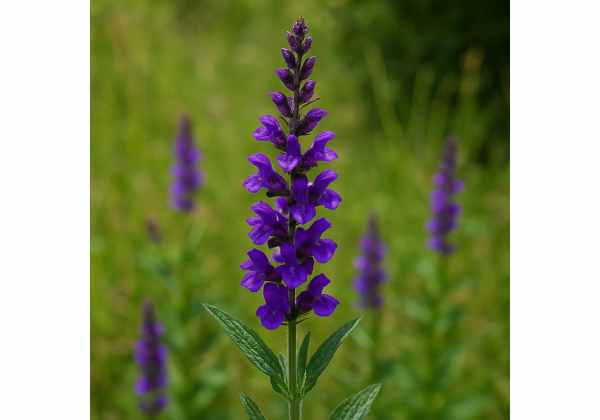
Salvia is not just one herb. It is a large botanical genus in the mint family that includes common sage, Spanish sage, clary sage, and many other species with very different traditional uses and chemical profiles. That variety is exactly why salvia can be both intriguing and confusing. Some species are culinary staples, some are valued in aromatherapy, some are used in traditional herbal medicine, and some should not be treated as casual wellness herbs at all.
For most readers, the most relevant medicinal salvia species are Salvia officinalis and, to a lesser extent, Salvia lavandulaefolia. These are the types most often linked with digestion support, mouth and throat care, sweating control, and modest cognitive or menopausal benefits. Other species, such as Salvia miltiorrhiza, belong to a different therapeutic tradition and should not be assumed to work the same way.
That distinction matters. Salvia can be useful, but its benefits, dosage, and safety depend heavily on the exact species, the plant part, and the form used. A tea, a standardized extract, and an essential oil are not interchangeable.
Essential Insights
- Common sage and Spanish sage may offer modest support for memory, attention, and mental clarity in some adults.
- Certain salvia preparations may help with mild digestive discomfort, mouth and throat irritation, and excessive sweating.
- A practical adult tea range for common sage leaf is 1 to 2 g dried leaf in 150 mL hot water, up to 3 times daily.
- Avoid medicinal salvia products during pregnancy, while breastfeeding, and in people with seizure risk unless a clinician approves them.
Table of Contents
- What salvia is and why species matter
- Key ingredients found across salvia species
- Salvia health benefits with the best support
- Medicinal properties and how salvia may work
- Common uses of salvia in daily practice
- Dosage ranges, timing, and common mistakes
- Side effects, interactions, and who should avoid salvia
What salvia is and why species matter
Salvia is one of the largest genera in the mint family, with hundreds of species distributed across Europe, Asia, the Americas, and the Mediterranean region. In everyday language, many people use “salvia” and “sage” as though they mean the same thing. That shortcut is understandable, but it can be misleading. In herbal practice, the species matters as much as the genus.
The salvia most people meet first is common sage, Salvia officinalis. It is the classic kitchen sage, the one used in savory foods, digestive teas, and many traditional European herbal preparations. Spanish sage, Salvia lavandulaefolia, is closely related and appears in some cognitive and aromatherapy research. Clary sage, Salvia sclarea, is mostly associated with fragrance and essential oil use rather than the same oral uses as common sage. Then there is Salvia miltiorrhiza, often called danshen, which belongs to a different medicinal tradition and has a very different safety and interaction profile. At the far edge of the genus is Salvia divinorum, a psychoactive species that should not be treated as a general wellness herb.
This species diversity explains why people often encounter contradictory claims about salvia. One article may describe memory support, another may focus on circulation, and another may discuss aromatherapy or ritual use. All of these may involve Salvia species, but not the same plant, not the same compounds, and not the same evidence base.
For general health purposes, the strongest everyday evidence concerns common sage and, in some cases, Spanish sage. These are the species most often associated with mild digestive support, mouth and throat comfort, reduction of excessive sweating, and possible modest benefits for cognition or menopausal hot flashes. That is where most practical discussions of salvia should begin.
Salvia also shares family traits with other aromatic herbs in the Lamiaceae group. Readers familiar with rosemary will notice some overlap in scent chemistry, antioxidant compounds, and traditional uses, but overlap does not mean equivalence. Salvia species vary widely in essential oil content, bitter principles, and polyphenol composition, so substitution should not be automatic.
A useful rule is simple: when you see a claim about salvia, ask which species, which plant part, and which form. A leaf tea from S. officinalis is one thing. A concentrated extract from S. lavandulaefolia is another. A tanshinone-rich root product from S. miltiorrhiza belongs in an entirely different category. That question alone can prevent much of the confusion that surrounds this genus.
Key ingredients found across salvia species
Salvia species are chemically rich, and their effects come from a network of compounds rather than a single “active ingredient.” Still, several groups of constituents appear again and again across the genus and help explain why salvia has drawn so much scientific and traditional interest.
One major group is the polyphenols. In common sage and related aromatic species, rosmarinic acid is especially important. It is associated with antioxidant activity and may contribute to soothing, anti-inflammatory, and tissue-protective effects. Caffeic acid derivatives and related phenolics also appear in many salvia preparations. These compounds help explain why salvia is often discussed for oxidative stress, oral comfort, and general tissue support.
Flavonoids form another key layer. Compounds such as luteolin and apigenin derivatives appear in several salvia species and may influence inflammation, vascular function, and nervous-system signaling. These are not unique to salvia, but in this genus they help build the broader therapeutic profile.
Then there are the volatile oils, which give many salvia species their distinctive aroma. Common sage may contain 1,8-cineole, camphor, borneol, and thujone, among other terpenes. These aromatic molecules help explain salvia’s traditional use for the mouth, throat, and digestion. They also explain why essential oils require caution. The same volatile constituents that make an herb fragrant and active can become irritating or even toxic in concentrated form.
Not every salvia species emphasizes the same chemistry. In Salvia miltiorrhiza, for example, diterpenes such as tanshinones and phenolic compounds such as salvianolic acids take on greater importance. That is one reason this species is discussed more often in circulation-oriented traditional medicine than in culinary or throat-care contexts. In other words, the genus shares a family resemblance, but the details matter.
Bitters and tannin-like constituents are also part of the picture, especially when salvia is used as tea or gargle. These compounds can create a tightening, drying, or toning sensation on tissues. That helps make sense of common sage’s longstanding use for excessive sweating and inflamed oral tissues.
The chemical profile of salvia overlaps in places with other strongly aromatic herbs such as thyme, especially in the way essential oils contribute to surface-level antimicrobial and soothing actions. But salvia’s chemistry is not identical, and the balance of polyphenols, ketones, and monoterpenes can shift substantially from one species to another.
For practical use, this means three things. First, chemistry helps predict action, but it does not replace clinical evidence. Second, whole-leaf teas, extracts, and essential oils can behave very differently because they emphasize different parts of the plant’s chemistry. Third, quality matters. Two products labeled “salvia extract” may not be comparable if one is rich in polyphenols and another is dominated by volatile oils. That is why product form and species identification should always come before assumptions about benefits.
Salvia health benefits with the best support
Salvia has a broad reputation, but the better-supported benefits are more specific than many supplement labels suggest. The most defensible way to discuss salvia is to separate traditional use from early clinical evidence and to keep species differences in view.
Cognitive support is one of the most discussed modern uses. Small human studies suggest that extracts of common sage, Spanish sage, or combinations of the two may modestly improve aspects of memory, working memory, attention, or mental accuracy in healthy adults. The effects are not dramatic, and the evidence is not strong enough to frame salvia as a treatment for dementia. Still, the signal is consistent enough to justify real interest, especially with standardized extracts rather than casual food doses.
Menopause support is another area where common sage stands out. Several small clinical trials and a later review suggest that Salvia officinalis extracts may reduce the frequency of hot flashes, with less certain effects on severity. This matters because many people are looking for nonhormonal options with a gentler side-effect profile. Salvia is not the only herb in that conversation, and some readers may also explore black cohosh, but sage remains one of the better-known plant options for vasomotor symptom support.
Digestive support belongs to the traditional side of the evidence base. Common sage tea has long been used for mild dyspeptic complaints such as bloating, fullness, and occasional heartburn. This use makes sense when you look at the herb’s aromatic bitter profile, even though the clinical literature is thinner here than the historical record. For many people, salvia works best as a mild digestive helper rather than as a primary treatment for ongoing gastrointestinal disease.
Mouth and throat care is another practical area. Gargles and rinses made from common sage leaf are traditional remedies for temporary inflammation in the mouth or throat. The herb’s astringent feel, aromatic compounds, and possible antimicrobial effects make this a logical local application. This is one of salvia’s clearest everyday uses because the preparation directly contacts the tissue in question.
There is also interest in blood sugar and lipid support. Some reviews suggest S. officinalis may improve certain glycemic or cholesterol markers, but the evidence is based on small datasets and should not be oversold. This is the kind of finding that is worth noting, but not the kind that justifies replacing prescribed metabolic care.
The main caution is overgeneralization. Benefits seen with common sage leaf cannot automatically be transferred to clary sage oil, to danshen root products, or to the genus as a whole. The most reasonable summary is that selected salvia species, especially S. officinalis and S. lavandulaefolia, may offer modest support for cognition, menopause symptoms, digestion, and oral comfort when matched to the right form and used with realistic expectations.
Medicinal properties and how salvia may work
Salvia is often described as antioxidant, anti-inflammatory, antimicrobial, astringent, and mildly neuroactive. These labels are useful, but they only become practical when you connect them to likely mechanisms.
Its antioxidant potential comes largely from phenolic compounds such as rosmarinic acid and related molecules. These compounds can help limit oxidative damage in laboratory settings and may contribute to the tissue-protective reputation of common sage. This does not mean salvia prevents aging or neutralizes disease on its own. It means the chemistry offers a plausible basis for some of its traditional and experimental uses.
Anti-inflammatory activity is another recurring theme. Polyphenols and some diterpenes appear to influence inflammatory signaling, which may help explain why salvia is used for irritated oral tissues, mild throat inflammation, and certain inflammatory skin preparations. This is especially relevant when salvia is used topically or as a rinse, where local tissue contact matters more than systemic absorption.
The antimicrobial story is tied strongly to aromatic constituents. In test systems, salvia essential-oil components can show activity against certain microbes. This helps explain why the herb appears in oral-care traditions and preservative-style preparations. It also explains why salvia shares some practical territory with other aromatic mints such as peppermint, although the two herbs differ in dominant compounds and clinical use.
For cognition, the most discussed mechanism is cholinesterase modulation. Some salvia extracts appear to influence enzymes that break down acetylcholine, a neurotransmitter important for attention and memory. That mechanism is one plausible reason why sage has shown modest benefits in cognitive testing. It is probably not the whole story. Antioxidant effects, blood-flow effects, and broader phytochemical interactions may also contribute.
Astringency is less glamorous but highly relevant. Salvia leaf infusions can create a drying, tightening sensation on tissues, likely related to tannins and bitter constituents. This may help explain its traditional use for excessive sweating and inflamed gums or throat tissues. In practice, the same property that makes salvia useful in these settings can also make it feel too drying if used too strongly or too often.
In species such as S. miltiorrhiza, medicinal properties are often described in terms of vascular and microcirculatory effects, driven by a different compound balance that includes tanshinones and salvianolic acids. That is another reminder that “how salvia works” depends partly on which salvia you mean.
The most sensible conclusion is that salvia works through overlapping actions rather than one dominant pathway. Aromatic molecules shape its immediate sensory and surface effects. Polyphenols support antioxidant and inflammatory balance. Nervous-system interactions may help with cognition. Bitters and astringents influence digestion and tissue tone. This layered chemistry is exactly why salvia feels versatile while still being most convincing when used for a few targeted purposes.
Common uses of salvia in daily practice
Salvia is easiest to use well when the preparation matches the goal. Many disappointments come from treating every salvia product as though it does the same thing.
For culinary use, common sage leaf remains the most familiar form. Added to beans, roasted vegetables, poultry, squash, mushrooms, and savory stews, it works mainly as a flavor herb. That said, regular food use still gives small exposures to aromatic compounds and polyphenols. It is the gentlest and most traditional entry point for most people.
For tea, common sage leaf is the practical medicinal form. A short infusion may be used after heavy meals, during periods of excessive sweating, or when someone wants a warming, resinous herbal tea with a more serious profile than a soft floral blend. Because sage can taste strong and slightly bitter, many people combine it with milder herbs. A blend with chamomile can make the cup easier to drink when the goal is comfort rather than intensity.
For the mouth and throat, a stronger infusion used as a gargle or rinse is often more appropriate than a tea meant for swallowing. This is one of salvia’s most practical applications. When the goal is local support for irritated tissues, direct contact matters.
For standardized extracts, the use becomes more targeted. Common sage and Spanish sage extracts have been used in studies related to memory, attention, and menopause symptoms. This is the form most likely to produce the kinds of effects described in research. The advantage is consistency. The limitation is that not all extracts are standardized in the same way, so one product’s 100 mg or 600 mg may not be functionally equal to another’s.
Aromatherapy and essential-oil use require more nuance. Clary sage and common sage essential oils are not automatically interchangeable with common sage leaf tea. They are chemically concentrated and often used for scent or topical dilution rather than as oral wellness products. Essential oils should never be treated like casual dietary supplements.
Traditional medicine also includes more specialized salvia uses. Danshen preparations, for example, belong to a separate therapeutic tradition with different indications, product types, and interaction concerns. They should be chosen deliberately, not because they happen to share the genus name.
A smart daily-use framework looks like this:
- Use common sage in food for flavor and gentle daily exposure.
- Use leaf tea for mild digestive or sweating support.
- Use a gargle for short-term mouth or throat irritation.
- Use standardized extracts only when the goal is specific and the product is clearly labeled.
- Treat essential oils and uncommon species as advanced tools, not beginner forms.
This approach keeps salvia practical and reduces the risk of using the right plant in the wrong way.
Dosage ranges, timing, and common mistakes
There is no single dosage for “salvia” because the genus contains many medicinally distinct species. The most usable adult dosing guidance applies to common sage leaf, Salvia officinalis, and even then the correct dose depends on whether the goal is digestion, sweating support, or throat care.
For mild digestive complaints, a common traditional tea range is 1 to 2 g of dried comminuted common sage leaf in 150 mL of boiling water, taken up to 3 times daily. This is a practical adult range for bloating, fullness, and similar minor complaints. It is usually best taken after meals rather than on an empty stomach.
For excessive sweating, a common leaf-tea range is about 2 g in 150 mL of boiling water up to 3 times daily. Some extract products are also used for this purpose, but extract dosing is formulation-specific and should follow the label rather than guesswork.
For mouth and throat use, a somewhat stronger infusion is typical: about 2.5 g of dried leaf in 100 mL of boiling water, used warm as a gargle or rinse 3 times daily. Because this is a local-use preparation, it does not need to be treated like a daily beverage.
For cognition, research extracts have varied. One placebo-controlled study used a 600 mg sage combination containing S. officinalis polyphenols and S. lavandulaefolia terpenoids. Menopause studies have used different proprietary or standardized preparations, often around 100 mg per tablet or capsule, sometimes once daily and sometimes several times daily. Those numbers are not interchangeable across brands, which is why the product identity matters as much as the milligram amount.
Duration matters too. A sensible self-care pattern is:
- Reassess mouth and throat use after about 1 week.
- Reassess digestive use after about 2 weeks.
- For sweating support, give it several weeks, but do not continue indefinitely without checking whether it is actually helping.
- Extract-based cognition or menopause use should be reviewed after the planned trial period on the product label.
The most common dosing mistakes are predictable. People use essential oil as though it were tea. They assume all salvia extracts are equivalent. They copy a study dose from one proprietary formula onto a completely different product. Or they keep using an herb long after it has stopped being useful.
The smarter approach is to pick one species, one form, one goal, and one defined time frame. With salvia, clarity is often more important than quantity.
Side effects, interactions, and who should avoid salvia
In food amounts, common sage is usually well tolerated. Problems become more likely when salvia is taken in concentrated medicinal forms, when the species is unclear, or when essential oils are used casually.
The most common mild effects are digestive irritation, nausea, dry mouth, a rough or overly bitter aftertaste, or a drying sensation in the throat. Salvia’s astringency is part of what makes it useful, but it can also become unpleasant when the infusion is too strong or used too often.
The biggest safety issue for common sage is concentrated oil exposure. Some Salvia officinalis preparations contain thujone, which can be neurotoxic at high doses. This is why swallowing sage essential oil is a poor idea and why high-dose or long-duration use of concentrated products deserves caution. Culinary use and moderate leaf tea are not the same risk category as essential oil.
Who should avoid medicinal salvia or use it only with clinical guidance?
- Pregnant people, because concentrated common sage products are generally not advised.
- Breastfeeding people, because safety data are limited and some sources advise avoidance of medicinal use.
- Children and adolescents, because adult medicinal dosing is not well established for them.
- People with seizure disorders, especially if concentrated sage oil or high-thujone products are involved.
- People with diabetes who take glucose-lowering medication, because salvia may affect glycemic markers and could complicate monitoring.
- People using multiple prescription medicines, especially if they are considering species such as S. miltiorrhiza, which has a more interaction-sensitive profile.
Interactions depend partly on species. With common sage, the concerns are usually about additive metabolic effects, product variability, and concentrated oil toxicity. With danshen-type salvia products, the interaction discussion becomes more serious, especially around anticoagulants, antiplatelet drugs, and cardiovascular therapies. This is a good example of why genus-level advice can be too broad to be safe.
Another important point is misuse of the genus name. Not every salvia is a kitchen herb, and not every salvia belongs in a self-care routine. Psychoactive species should not be treated as general wellness plants.
Stop self-treatment and get professional advice sooner if symptoms are severe, persistent, or unexplained. That includes ongoing hot flashes, significant throat pain, repeated digestive symptoms, unusual sweating, or any concerning neurological reaction after using a concentrated product.
Salvia is often a useful herb when handled respectfully. It becomes risky when species identity, concentration, and context are ignored.
References
- Bioactive chemical composition and pharmacological insights into Salvia species 2025 (Review). ([PMC][1])
- The Acute and Chronic Cognitive Effects of a Sage Extract: A Randomized, Placebo Controlled Study in Healthy Humans 2021 (RCT). ([PMC][2])
- The effect of Salvia officinalis on blood glycemic indexes and blood lipid profile in diabetic patients: a systematic review and meta-analysis 2022 (Systematic Review). ([PubMed][3])
- The Effect of Salvia Officinalis on Hot Flashes in Postmenopausal Women: A Systematic Review and Meta-Analysis 2023 (Systematic Review). ([PMC][4])
- European Union herbal monograph on Salvia officinalis L., folium 2016 (Official Monograph). ([European Medicines Agency (EMA)][5])
Disclaimer
This article is for educational purposes only and is not a substitute for medical advice, diagnosis, or treatment. Salvia species differ substantially in chemistry, benefits, and risk. Do not assume that one salvia product can be substituted for another, and do not use concentrated essential oils internally unless a qualified clinician specifically directs you to do so. Speak with a healthcare professional before using medicinal amounts of salvia if you are pregnant, breastfeeding, under 18, have a seizure disorder, have diabetes, take prescription medicines, or are considering species other than common sage. Seek prompt medical care for persistent symptoms, severe reactions, or signs of toxicity.
Please share this article on Facebook, X (formerly Twitter), or another platform you prefer if you found it useful.