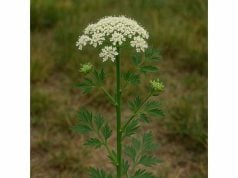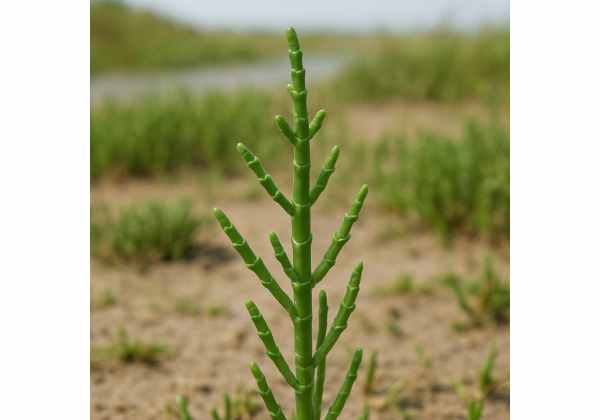
Samphire, especially Salicornia europaea, is a crisp, salty coastal plant that sits at an interesting crossroads between food and herbal medicine. Also called marsh samphire, sea asparagus, or glasswort, it is an edible halophyte, meaning it naturally thrives in salt-rich marshes and shorelines. That unusual habitat gives it a distinctive mineral profile and a naturally briny taste that has made it popular in modern kitchens as well as in traditional food cultures.
What makes samphire especially appealing is not one miracle compound, but a layered combination of polyphenols, fiber, minerals, and other plant constituents that suggest antioxidant, anti-inflammatory, and metabolic potential. Research has also explored extract forms for lipid balance, liver protection, and even cognition, though those more medicinal uses are still far less established than its role as a functional food. In practical terms, samphire is best understood as a nutrient-dense edible coastal plant with promising bioactive properties, not a fully standardized medicinal herb. That balance matters, because its benefits are real, but so are its limits, especially when sodium load, sourcing, and preparation are ignored.
Quick Facts
- Samphire offers polyphenols and antioxidant compounds that may help support cellular defense.
- Its natural salty flavor can help reduce added table salt in meals when used thoughtfully.
- A practical food portion is about 30 to 80 g fresh shoots, preferably rinsed or briefly blanched.
- People on sodium-restricted diets or with advanced kidney disease should avoid frequent large servings.
Table of Contents
- What Samphire Is and Why Salicornia europaea Stands Out
- Key Ingredients and Nutritional Profile of Samphire
- Potential Health Benefits and Medicinal Properties
- Culinary Uses, Preparation, and How to Get the Best from It
- Dosage, Serving Size, and What Counts as a Practical Amount
- Safety, Side Effects, and Common Mistakes
- Who Should Avoid Samphire and When Extra Caution Makes Sense
What Samphire Is and Why Salicornia europaea Stands Out
Samphire is one of those plants that can confuse people before they even begin reading about it, because the common name may refer to more than one coastal edible. In this article, the focus is Salicornia europaea, often called marsh samphire or common glasswort. It is not the same plant as rock samphire, Crithmum maritimum. Both are edible seaside plants, but they differ botanically, nutritionally, and in the way they are used.
Salicornia europaea is a succulent annual halophyte. That means it stores water in its fleshy green stems and is naturally adapted to highly saline habitats such as salt marshes, estuaries, tidal flats, and coastal mud. Instead of fighting salt the way most vegetables do, samphire has evolved around it. That gives the plant a striking identity: crisp texture, mineral intensity, and a flavor that is naturally saline even before cooking.
Its culinary appeal has helped introduce it to a wider audience, but samphire’s story is larger than taste alone. It has also drawn attention as a sustainable crop for saline soils, a source of bioactive plant compounds, and a candidate functional food. Researchers have examined its phenolic compounds, flavonoids, fatty acids, fiber, pigments, and mineral balance, while also exploring extract-based effects on inflammation, lipid metabolism, oxidative stress, and other pathways.
Still, it helps to keep expectations grounded. Samphire is not a classic “healing herb” in the same sense as peppermint, valerian, or echinacea. It is better described as an edible coastal plant with medicinal potential. In other words, its most reliable role today is as a nutrient-rich food ingredient, while many of its more impressive health claims still sit in the realm of laboratory, animal, or early-stage extract research.
Another thing that makes samphire stand out is how strongly source and harvest stage matter. Tender green shoots are the edible sweet spot. Older reddish shoots can be tougher, saltier, and less pleasant to eat. Because the plant grows in environments where mineral accumulation is part of its biology, taste, texture, and even safety can change depending on where and how it is grown. That makes samphire more interesting than the average leafy green, but also less uniform.
Seen clearly, samphire is not a fad vegetable and not a miracle herb. It is a highly adapted coastal food plant whose unusual environment has shaped both its nutritional promise and its practical cautions.
Key Ingredients and Nutritional Profile of Samphire
Samphire’s value comes from a combination of nutrients and phytochemicals rather than a single headline ingredient. Its edible shoots contain fiber, minerals, organic acids, pigments, phenolic compounds, and smaller amounts of lipids and proteins. In the research literature, the plant is repeatedly discussed as a functional food candidate because it combines low energy density with a surprisingly rich biochemical profile.
Among its most important constituents are polyphenols and flavonoids. These compounds help explain why samphire is often studied for antioxidant and anti-inflammatory potential. Researchers have identified multiple phenolic acids and flavonoid-related molecules in Salicornia europaea, and their presence supports the view that the plant may help counter oxidative stress at least as part of a varied diet. Chlorophylls, carotenoids, and other pigment-associated compounds also add to that antioxidant profile.
Samphire also contains useful structural nutrients. Its fiber content is relevant for satiety, gut regularity, and a slower digestive response to meals. While it is not a high-protein food in the way legumes are, it still offers modest amounts of protein and amino acids, particularly when examined on a dry-weight basis. Some studies also note fatty acids and betaine-related compounds that further broaden its functional-food appeal.
Minerals are where samphire becomes both attractive and complicated. It may provide magnesium, calcium, potassium, iron, and trace elements, but it also naturally accumulates sodium. That is part of why it tastes salty and why it can function as a culinary salt-reducer in some dishes. It is also part of why moderation matters. Samphire is not a sodium-free vegetable pretending to be salty. It is genuinely salty.
The plant’s nutritional picture therefore has two sides:
- it is mineral-rich and bioactive
- it can also be naturally high in salt
That dual nature is exactly why careful interpretation matters. Samphire can be framed as a smarter flavoring vegetable when it replaces added salt, but not as a blank-check food for people who need strict sodium control.
Its composition also varies with cultivation method, salinity, harvest timing, and processing. Fresh tender shoots are not identical to dried powders, desalted extracts, or concentrated nutraceutical products. That matters because the form you eat changes what you actually get. A lightly cooked serving at dinner is very different from a desalted ethanol extract used in a study.
In practical nutrition terms, samphire belongs closer to the world of mineral-dense greens and specialty vegetables than to conventional supplement capsules. Like watercress as a nutrient-dense leafy green, it offers more than calories and bulk, but its strongest case is still as a whole-food ingredient first and a medicinal product second.
Potential Health Benefits and Medicinal Properties
The most responsible way to describe samphire’s health benefits is to separate well-supported food value from still-emerging medicinal potential. That distinction helps avoid the two most common errors: overselling it as a cure-all, or dismissing it as nothing more than a salty garnish.
Its most credible current benefits are functional-food benefits. Samphire may help support a nutrient-dense eating pattern while contributing antioxidant compounds, fiber, and minerals. Because it brings natural salinity and texture, it can also make meals more satisfying with less added table salt. For some people, that may be one of its most practical advantages. Used in place of extra salt rather than on top of it, samphire can improve flavor while shifting the overall food matrix toward something more plant-rich.
Beyond that, several research directions look promising. Extracts and isolated compounds from Salicornia europaea have been studied for antioxidant, anti-inflammatory, hypolipidemic, hepatoprotective, and metabolic effects. Experimental work has suggested possible benefits in lipid handling, oxidative stress control, inflammatory signaling, and liver protection under stress conditions. There is also interest in cognitive and neuroprotective pathways, particularly with desalted extract preparations.
Potential benefit areas discussed in the literature include:
- antioxidant support through polyphenols and other secondary metabolites
- anti-inflammatory activity in cell and extract models
- support for lipid metabolism and fatty liver prevention in animal work
- potential neuroprotective or cognition-related effects from specialized extracts
- possible antibacterial activity in certain laboratory settings
The wording here matters. “Potential” is the correct word for most of these uses. Human evidence is still limited. For example, a 12-week clinical trial of a desalted Salicornia europaea ethanol extract suggested safety and some possible benefit in a subgroup with mild cognitive impairment, but it did not establish a broad therapeutic effect. That is interesting, but it is not the same as saying samphire is a proven brain-health supplement.
This is why samphire fits best into the category of “promising food plant with medicinal properties under investigation.” That may sound cautious, but it is actually useful. It tells the reader what the plant can honestly offer today while leaving room for future research.
If you zoom out, samphire is more similar to nutrient-forward edible plants than to standardized drugs. It sits closer to purslane as a succulent functional food than to a tightly dosed pharmaceutical extract. That means its biggest present-day role is probably in supportive dietary patterns, not in replacing medical care or formal treatment.
So yes, samphire has real health relevance. But the most defensible benefits right now are better food quality, plant diversity, antioxidant exposure, and possible support for metabolic health as part of a broader diet. The more dramatic medicinal claims remain interesting, but not yet settled.
Culinary Uses, Preparation, and How to Get the Best from It
Samphire is one of those rare vegetables whose cooking value comes as much from texture and salinity as from nutrition. Fresh shoots are crisp, juicy, and naturally briny, which makes them useful in seafood dishes, grain bowls, omelets, pasta, salads, and warm vegetable plates. They can also work as a salty green accent beside potatoes, beans, lentils, or mild white fish.
The best culinary rule is simple: treat samphire as a seasoning vegetable, not as an ordinary pile of greens. If you cook it like spinach or green beans without thinking about its salt load, the result can be too intense. But if you use it as a bright, mineral, oceanic note, it can be excellent.
Common preparation methods include:
- rinsing well to remove sand and surface salt
- briefly blanching for 30 to 90 seconds
- steaming lightly
- quick sautéing in olive oil
- eating young shoots raw in small amounts
- pickling or folding into condiments
Blanching is especially useful because it softens the stems slightly and can lower some of the surface salinity. It also helps if the plant tastes harsher than expected. After blanching, many people pair samphire with lemon, garlic, yogurt, butter, or a mild oil to balance its sharp saline edge.
A smart way to use it is to reduce or skip extra salt elsewhere in the dish. That is where samphire can actually become helpful rather than excessive. For example, a warm potato salad with samphire may need very little additional salt. The plant can do part of that work on its own.
It is also worth being selective about the part you eat. Tender green tips are usually the most pleasant. Tougher or red-tinged stems can become fibrous, woody, or overly salty. In that sense, samphire behaves more like a seasonal specialty vegetable than a standard supermarket green.
Samphire can also be used in broader coastal or sea-vegetable cooking. Its briny note overlaps somewhat with the savory appeal people enjoy in dulse and other salty marine ingredients, though samphire is a land-grown halophyte rather than a seaweed. That difference matters nutritionally, but in the kitchen they can sometimes play related roles.
Because it is often sold as a premium seasonal ingredient, overcooking is one of the easiest mistakes. Long boiling can strip its freshness and leave it flat. In most cases, brief cooking is enough. The aim is not to tame samphire into blandness, but to keep its crunch and distinctive identity while making it easier to pair with other foods.
In everyday practice, samphire works best when used deliberately, in modest amounts, with an eye on the whole meal. That is how you get its culinary value without turning dinner into a salt marsh.
Dosage, Serving Size, and What Counts as a Practical Amount
Samphire does not have a standardized medicinal dose in the way a well-studied botanical extract might. That point deserves emphasis. There is no agreed daily therapeutic intake for fresh Salicornia europaea shoots, and the plant is used far more reliably as a food than as a formal medicinal product.
Because of that, dosage needs to be discussed in two separate ways: food portions and extract-based research.
For food use, a practical serving is usually about 30 to 80 g fresh shoots. That is enough to contribute texture, flavor, and nutritional value without making sodium the dominant feature of the meal. Some people may comfortably eat closer to 100 g in a dish, especially if the samphire is rinsed or briefly blanched and the rest of the meal is lightly salted. Still, smaller portions are usually the more sensible starting point.
A practical pattern looks like this:
- Start with a modest portion, around 30 to 50 g fresh.
- Rinse or blanch if the plant tastes aggressively salty.
- Use it in place of some added salt rather than in addition to a very salty meal.
- Increase only if it suits your blood pressure, kidney health, and overall sodium goals.
For supplement-style use, the situation is less settled. Commercial samphire powders, desalted extracts, and salt-substitute blends vary greatly in composition. One product may mainly function as a seasoning, another as a desalted plant extract, and a third as a concentrated nutraceutical. Those are not interchangeable.
Human research has studied at least one desalted ethanol extract at 600 mg daily for 12 weeks, which helps show that specific extract forms can be investigated in a structured way. But that does not create a universal dosing rule for all samphire products. Fresh shoots, dried powder, salt-substitute granules, and desalted standardized extracts all belong to different practical categories.
So the clearest dosage guidance is:
- fresh food use: about 30 to 80 g per serving
- concentrated products: follow the product label
- medicinal use: no universally validated therapeutic dose exists
This matters because people often assume that “natural” automatically means “more is better.” Samphire does not reward that mindset. Its flavor is strong, its mineral profile is unusual, and its sodium load can rise faster than expected. A moderate serving tends to give you the benefits people actually want: texture, plant diversity, and bioactive value without overwhelming the meal.
When in doubt, think of samphire as a strong supporting ingredient, not a bulk vegetable and not a free-form supplement. That framing leads to better practical decisions and fewer disappointments.
Safety, Side Effects, and Common Mistakes
For most healthy adults, samphire is well tolerated when eaten as a food in moderate portions. Its biggest practical safety issue is not toxicity in the dramatic sense, but misunderstanding what kind of plant it is. Because it is green and crisp, people may assume it behaves like a neutral low-sodium vegetable. In reality, samphire is a salt-loving halophyte, and that changes how it should be used.
The most common side effects are mild and usually dose-related:
- digestive discomfort if eaten in large amounts
- excessive saltiness leading to thirst or bloating
- possible irritation in sensitive stomachs if consumed raw in large portions
- occasional disappointment in texture if older woody stems are used
The larger concern is total sodium exposure. Samphire can be a clever flavoring plant when it replaces added salt, but a poor choice when it is added to an already high-sodium diet. That distinction is easy to miss. A seafood dish, salted butter, sauce, and a large serving of samphire can turn into a sodium-heavy meal very quickly.
Another concern is sourcing. Because Salicornia europaea grows in challenging environments and can be studied for phytoremediation, wild plants should not automatically be assumed clean. Coastal plants can reflect the quality of the environment where they grew. Poorly sourced samphire may carry concerns related to polluted water, contaminated sediment, or unwanted mineral accumulation. Reliable cultivated or well-sourced culinary samphire is a better choice than casual harvesting from uncertain shorelines.
Older reviews also note anti-nutritional considerations such as oxalates and saponins. That does not make samphire dangerous for ordinary eaters, but it does help explain why preparation, moderation, and source matter. For people who are prone to kidney stones or who already manage oxalate intake carefully, this is worth remembering.
A frequent mistake is treating samphire like iodine-rich seaweed. It is not the same thing. While it shares the “salty coastal food” identity that people associate with kelp and related sea vegetables, samphire is a halophyte rather than a marine algae. Its main day-to-day caution is usually sodium load and sourcing, not extreme iodine exposure.
Other common mistakes include:
- skipping rinsing or blanching when the product is very salty
- seasoning the rest of the dish as if samphire adds no salt
- eating large portions daily despite sodium restrictions
- buying supplements without checking whether they are desalted or concentrated
- assuming all samphire products are nutritionally equivalent
In short, samphire is not a risky food for most people when used sensibly, but it is a plant that punishes careless assumptions. Its strengths and its cautions come from the same biological fact: it is built by salt-rich environments.
Who Should Avoid Samphire and When Extra Caution Makes Sense
Most healthy people can enjoy moderate portions of samphire without trouble, especially when it is treated as a flavor-forward vegetable rather than a daily staple. Still, there are groups for whom caution is more than a formality.
People who should limit or avoid frequent large servings include:
- those on medically sodium-restricted diets
- people with advanced kidney disease
- individuals with uncontrolled hypertension or fluid-retention problems
- anyone with a history of oxalate kidney stones who has been told to watch oxalate-rich foods
- people using uncertain wild-harvested material from polluted coastal areas
The most important group here is the sodium-sensitive group. For someone managing blood pressure, heart failure, kidney disease, or edema, samphire’s natural salinity can turn a potentially healthy plant into a poor fit. Even when the plant is otherwise nutrient-dense, the sodium issue may outweigh the advantages. In these cases, “it’s natural” is not a useful defense.
Extra caution also makes sense with concentrated products. Desalted extracts, powdered blends, and formulated supplements may sound more convenient than fresh shoots, but they create a new problem: less intuitive dosing. A person can usually tell when a vegetable portion is large. It is harder to judge a capsule, extract powder, or salt-substitute formula without reading the label carefully. That is especially true when products do not clearly state sodium reduction, concentration methods, or standardization.
Pregnancy and breastfeeding are a more moderate case. Culinary use in food-like amounts is generally the most reasonable frame, while concentrated supplemental use is harder to justify because the evidence base is thin and product composition varies. That does not mean samphire is uniquely dangerous in these settings. It means there is little reason to push it beyond normal food use.
There is also a practical lifestyle point worth making. If your main goal is to improve overall diet quality, you do not need to force samphire into daily use. It can be one helpful seasonal food among many. Rotating it with other plant foods is often wiser than leaning on one trendy ingredient.
A good rule is this: if samphire is acting like a garnish or side vegetable, it is usually in its safest role. If it is becoming a daily salt source, a heavy supplement, or a self-prescribed therapeutic extract, you are moving past the area where evidence is strongest.
That is the mature way to think about this plant. Samphire has real nutritional interest, culinary value, and research promise. But the best use for most people is still the simplest one: a well-sourced, modestly portioned edible coastal vegetable used with awareness.
References
- Assessment of the Antioxidant and Hypolipidemic Properties of Salicornia europaea for the Prevention of TAFLD in Rats 2024. (Preclinical Study)
- Nutritional Composition and Bioactivity of Salicornia europaea L. Plants Grown in Monoculture or Intercropped with Tomato Plants in Salt-Affected Soils 2022. (Open-Access Study)
- Chemical Structure and Biological Activities of Secondary Metabolites from Salicornia europaea L. 2021. (Review)
- Effect of desalted Salicornia europaea L. ethanol extract (PM-EE) on the subjects complaining memory dysfunction without dementia: a 12 week, randomized, double-blind, placebo-controlled clinical trial 2020. (RCT)
- Salicornia: evaluating the halophytic extremophile as a food and a pharmaceutical candidate 2016. (Review)
Disclaimer
This article is for educational purposes only and is not a substitute for medical or nutrition advice. Samphire is best approached as a food with promising bioactive properties, not as a proven treatment for disease. Because its natural sodium content can be significant and product forms vary widely, people with kidney disease, heart failure, sodium-restricted diets, or other medical conditions should seek personalized advice before using it regularly or in concentrated supplemental forms.
If you found this guide useful, please share it on Facebook, X, or any other platform you prefer.