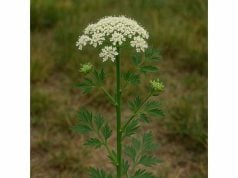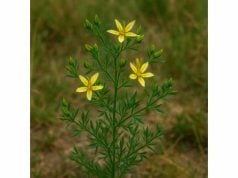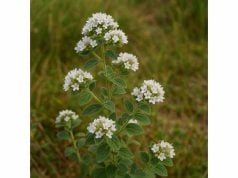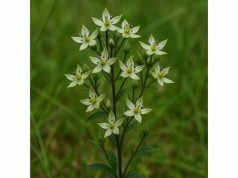
Summer savory, botanically known as Satureja hortensis, is a fragrant annual herb from the mint family that has long lived in the overlap between kitchen use and traditional medicine. It is best known for its peppery, warming flavor, but its appeal goes beyond cooking. Herbal traditions have used it as a stomach-settling, carminative, and mildly stimulating plant for digestive discomfort, heavy meals, and minor respiratory complaints. Modern research adds another layer, highlighting volatile compounds such as carvacrol, thymol, p-cymene, and gamma-terpinene, along with phenolics like rosmarinic acid that help explain its antioxidant and antimicrobial reputation.
What makes summer savory especially interesting is its versatility. It can be used as a culinary herb, a simple tea, a source of essential oil, or a component in topical and experimental preparations. At the same time, it should not be oversold. The most convincing modern evidence supports its chemistry, food value, and laboratory bioactivity, while direct human evidence remains limited. A balanced guide has to cover both its promise and its practical limits.
Quick Facts
- Summer savory may support digestion after heavy meals and help ease mild bloating or cramping.
- Its best-supported modern properties are antioxidant, antimicrobial, and anti-inflammatory rather than dramatic whole-body effects.
- A practical traditional tea range is about 1 to 2 g dried herb per cup, taken up to 2 to 3 times daily.
- Avoid casual medicinal use during pregnancy and breastfeeding, and be cautious with concentrated essential-oil products.
Table of Contents
- What summer savory is and what makes it distinct
- Key compounds and medicinal properties
- Health benefits and what the evidence really shows
- Common uses in food, tea, and topical preparations
- Dosage, timing, and how to choose a good product
- Safety, side effects, interactions, and who should avoid it
What summer savory is and what makes it distinct
Summer savory is an annual aromatic herb in the Lamiaceae, or mint, family. That family link matters because it helps explain both the plant’s fragrance and its chemistry. Like thyme, oregano, rosemary, and sage, summer savory stores volatile oils in its leaves and flowering tops. When crushed, the herb releases a sharp, peppery, slightly resinous aroma that signals the presence of biologically active terpenes and phenolic compounds.
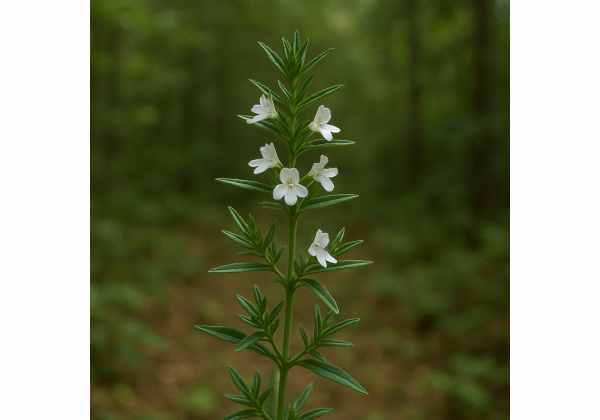
The plant itself is modest in appearance. It usually grows to a relatively small height, bears narrow green leaves, and flowers in the warmer part of the season. Its annual life cycle is one of the easiest ways to distinguish it from winter savory, which is a perennial and tends to taste more resinous and robust. Summer savory is usually described as lighter, brighter, and more flexible in cooking. That culinary identity is one reason the herb remains widely used even by people who never think of it as medicine.
Traditional uses are broader than its modern supermarket image suggests. Historical and ethnobotanical descriptions commonly frame summer savory as a stomachic, carminative, stimulant, expectorant, and mild antimicrobial herb. In plain language, that means it has long been used to support digestion, reduce gas, warm the stomach after heavy meals, and occasionally help with minor infectious or congestive complaints. These traditional roles are not random. They match the kind of herb it is: warming, aromatic, and concentrated in volatile compounds.
A useful way to understand summer savory is to think of it as a three-part plant:
- a culinary herb that improves the flavor of beans, lentils, meat dishes, roasted vegetables, and savory broths,
- a traditional digestive herb used after rich or heavy meals,
- an aromatic medicinal plant whose essential oil and extracts have attracted modern laboratory interest.
That combination is part of what makes it so practical. Some herbs are almost entirely medicinal, while others are mostly culinary. Summer savory sits comfortably in both categories, which is also why the quality question matters. A good culinary herb and a good medicinal herb are not always handled the same way. Harvest timing, drying method, storage, and species identification all change the final product.
It also helps to separate summer savory from other mint-family plants that share a similar Mediterranean feel. People familiar with oregano’s stronger medicinal and culinary character will recognize some overlap in aroma and chemistry, but summer savory is generally finer-textured, more peppery, and often more closely associated with digestive seasoning than with heavy aromatic intensity.
In practical terms, summer savory is best viewed as a traditional digestive and culinary herb with promising phytochemistry. It is not one of the herbs with a huge modern clinical evidence base, but it has a long record of real-world use, and that history fits surprisingly well with what its chemical profile suggests.
Key compounds and medicinal properties
Summer savory’s medicinal profile comes from a combination of volatile oils and polyphenols. The names that appear most often in research include carvacrol, thymol, p-cymene, gamma-terpinene, caryophyllene-related compounds, and rosmarinic acid, along with other phenolic acids and flavonoids. Each group contributes something different. The volatile fraction gives the herb its strong aroma and much of its antimicrobial character, while the phenolic fraction helps explain the plant’s antioxidant and inflammation-modulating behavior.
Carvacrol and thymol are the best-known aromatic constituents. Both are phenolic monoterpenes and are repeatedly associated with antimicrobial effects in laboratory studies. They are not unique to summer savory, but their presence helps place the herb in the broader category of pungent, aromatic medicinal plants whose oils can act against bacteria and fungi under controlled conditions. That does not mean eating summer savory will treat infection, but it does explain why the herb has been taken seriously in both food preservation and herbal medicine research.
P-cymene and gamma-terpinene are also important because they shape the oil profile and may work alongside the better-known compounds rather than acting alone. In aromatic plants, synergy matters. An essential oil often behaves differently from a single isolated constituent because the minor compounds can modify absorption, membrane effects, and overall biological activity.
The nonvolatile side is just as interesting. Rosmarinic acid is often described as one of the leading phenolic compounds in summer savory and helps explain its antioxidant reputation. It is part of a wider mint-family pattern and is one reason summer savory is sometimes discussed alongside other aromatic herbs with significant oxidative-stress and inflammation research. Readers who want a closer look at that specific compound can compare it with rosmarinic acid’s broader antioxidant and inflammation-modulating profile, though the whole herb should still be understood as more than the sum of one molecule.
These compounds support the herb’s most commonly described medicinal properties:
- antioxidant activity,
- antimicrobial and antifungal potential,
- mild anti-inflammatory effects,
- possible antispasmodic action,
- digestive support linked to its warming aromatic profile.
This is also where caution becomes important. Chemistry can explain why a plant deserves study, but it does not automatically prove clinical benefit in humans. A constituent may perform well in a petri dish, in cultured cells, or in animal models and still behave more modestly in a real person using a tea or seasoning. Summer savory is a good example of a herb whose chemistry is impressive and plausible, but whose human evidence remains narrower than its lab profile.
The form of the preparation matters a lot. A tea, a dried culinary herb, a hydroalcoholic extract, and an essential oil do not deliver the same chemical balance. For example, essential oils concentrate aromatic compounds and therefore shift the herb toward a more intense antimicrobial and irritant potential. Whole-herb teas and dried leaf preparations retain more of the polyphenol-rich, food-like profile and usually feel gentler.
So when summer savory is described as digestive, antimicrobial, antioxidant, or mildly antispasmodic, those claims are not coming from empty tradition. They fit the known chemistry. The more important question is not whether the herb is chemically active, but which form of the herb best matches the outcome you want.
Health benefits and what the evidence really shows
Summer savory is often credited with a wide range of benefits, but the strongest article is the one that separates likely effects from exaggerated ones. The most credible areas are digestion, antimicrobial support in laboratory settings, antioxidant activity, and mild anti-inflammatory or antispasmodic actions. Human evidence exists, but it is limited and usually narrower than marketing claims suggest.
Digestive support is one of the most grounded traditional uses. Summer savory has long been used as a stomachic and carminative herb, especially with beans, lentils, meat dishes, and other foods that can feel heavy or gas-forming. That use makes practical sense. Aromatic herbs often support digestion by stimulating saliva, digestive secretions, and a more comfortable post-meal response. Summer savory’s traditional use for intestinal discomfort and mild cramping also fits the experimental evidence showing antispasmodic potential.
The second major benefit area is antimicrobial activity. Laboratory and essential-oil studies show meaningful activity against a range of bacteria and fungi, and this helps explain why the herb has attracted interest in oral care, food preservation, and topical research. One human study found that a 1 percent topical gel containing summer savory essential oil improved denture stomatitis outcomes over two weeks, including reduction in erythema and Candida burden. That is a genuinely useful signal, but it should be kept in context. It supports a specific topical application, not a sweeping claim that summer savory can treat infections throughout the body.
Antioxidant potential is the third major area. Both extracts and phenolic-rich fractions show radical-scavenging activity, and rosmarinic acid is often singled out as a contributor. This matters because many of the herb’s broader claims, such as tissue protection or inflammation modulation, rest partly on its antioxidant behavior. Still, antioxidant activity in a study system is not the same thing as a guaranteed clinical outcome.
Anti-inflammatory and pain-related support also have some backing. Animal studies and experimental models suggest antinociceptive and anti-inflammatory actions, especially with seed extracts and certain concentrated preparations. These findings are promising, but they are still a step removed from proving that drinking a cup of savory tea will meaningfully reduce pain or inflammation in a person.
A balanced benefits summary looks like this:
- digestive comfort after heavy or gas-forming meals,
- mild support for bloating and intestinal spasm,
- topical antimicrobial promise in selected settings,
- antioxidant and food-preservation value,
- possible mild anti-inflammatory effects.
Where should expectations stay modest?
- it is not a proven treatment for systemic infection,
- it is not a replacement for medical care in significant GI or oral disease,
- it is not one of the best-validated herbs for chronic inflammatory disorders,
- it is not strongly proven as a stand-alone pain herb.
For readers comparing aromatic herbs, summer savory sits closer to peppermint for everyday digestive self-care than to a high-potency medicinal extract intended for a single disease target. That does not make it weak. It makes it practical. Summer savory is most convincing when used as a food-medicine herb with plausible support for mild digestive and topical uses, not as a dramatic cure-all.
Common uses in food, tea, and topical preparations
One of summer savory’s strengths is that it can be used in more than one sensible way. The same plant that seasons a pot of beans can also be brewed into a tea or studied as an essential oil. Those are not identical uses, though, and understanding the difference helps keep expectations realistic and use safer.
Culinary use is the most traditional and arguably the most evidence-aligned everyday form. Summer savory is commonly added to legumes, lentils, roasted vegetables, soups, egg dishes, poultry, and mixed herb blends. Part of the reason it works so well in these foods is flavor, but part is function. Aromatic herbs can make heavier foods feel easier to digest, and summer savory has a long reputation for doing exactly that. In this setting, the herb behaves like a food first and a gentle medicinal ally second.
Tea is the next most practical form. A simple infusion can be useful when someone wants a warming, digestive herb after meals or during mild bloating and intestinal heaviness. Tea also brings out a different side of the plant than essential oil does. It usually feels gentler, less sharply aromatic, and more suitable for everyday or short-course use.
Tinctures and extracts are less universal but can make sense for people who want a more concentrated preparation. The tradeoff is that the stronger and more specialized the preparation becomes, the more important quality and labeling become. A bottle that clearly identifies Satureja hortensis and states the type of extract is far more useful than a vague product labeled only as “savory extract.”
Topical and oral-care use should be approached more cautiously. The most interesting human evidence for summer savory involves a topical gel used for denture stomatitis, but that does not mean homemade essential-oil use is automatically wise. Essential oil is far more concentrated than tea or culinary herb, and casual direct application can irritate tissues. In real life, topical use works best when the preparation is professionally designed and the intended surface is appropriate.
A simple framework helps match the form to the goal:
- Use the dried herb in food for regular gentle support.
- Use tea for mild digestive discomfort or a warming post-meal herbal routine.
- Use extracts only when the labeling is clear and the reason for use is specific.
- Treat essential oil as a concentrated product, not as a casual upgrade.
Summer savory also fits naturally into the larger family of aromatic kitchen herbs. People who enjoy garden thyme’s culinary and respiratory tradition will likely appreciate summer savory’s sharper, more peppery place in similar foods. The difference is that summer savory tends to lean more strongly toward digestive seasoning, especially in legumes and richer savory dishes.
The real advantage of summer savory is not complexity. It is fit. This is an herb that makes the most sense when used simply and in the right context: with meals, as a tea, or in a carefully formulated topical product. It loses some of its value when marketed as a dramatic medicinal shortcut. Used in grounded ways, it can be both enjoyable and genuinely useful.
Dosage, timing, and how to choose a good product
Summer savory does not have one universally accepted medicinal dose, and that is the first point readers should understand. The herb is used as food, tea, extract, and essential oil, and those forms are not directly interchangeable. A practical amount for cooking cannot be compared neatly with an essential-oil preparation, and a tea made from dried leaf is not the same as a concentrated extract.
For food use, the dose is mostly culinary. Small amounts used repeatedly in cooking are normal and generally low risk for most adults. This is the most natural way to incorporate the herb. In soups, legumes, and roasted dishes, you are not chasing a precise therapeutic number. You are using the herb in a way that matches its traditional role.
For tea, a practical traditional range is about 1 to 2 g of dried herb per cup, often once to three times daily depending on need and tolerance. That is a common herbal-use framework rather than a rigorously established clinical standard, so it is best treated as a modest home-use range, not an official medical dose. Starting at the lower end is sensible, especially if you are unsure how strongly aromatic herbs affect your stomach.
Extracts are harder to dose generically because concentration varies so much. When using a liquid or capsule product, the label matters more than any one number quoted online. Look for the botanical name, plant part if available, extraction ratio if stated, and a clear serving suggestion. Without those details, comparison across products is mostly guesswork.
Essential oil is a special case. Because the volatile fraction is concentrated, essential-oil use should be handled more like a specialized product than like a food herb. Internal use without knowledgeable guidance is not a good starting point for most people. For topical or oral-care applications, commercially formulated products are usually safer than improvised home mixtures.
Timing depends on the goal:
- for digestive support, use with or shortly after meals,
- for warming tea use, try it after heavier foods,
- for topical or oral products, follow the product-specific instructions rather than improvising.
Product quality deserves more attention than many people give it. A strong summer savory product should tell you:
- that the herb is Satureja hortensis,
- whether it is dried herb, extract, or essential oil,
- what the serving size is,
- how the product is intended to be used.
Avoid products that rely on vague proprietary language, unclear species names, or exaggerated promises such as “natural antibiotic” or “instant cure.” Those claims are usually a sign that the seller is leaning on the herb’s laboratory antimicrobial reputation without respecting the gap between a study system and a human body.
For many people, the most rational way to use summer savory is also the simplest: start with the dried herb, use it consistently in food or tea, and judge it by practical outcomes such as less heaviness after meals, easier digestion, or a pleasant warming effect. If what you really want is a gentler daily infusion rather than a peppery digestive herb, chamomile for a softer tea-based routine may be easier to use regularly. Summer savory shines most when its aromatic intensity is treated as a feature, not a flaw.
Safety, side effects, interactions, and who should avoid it
Summer savory is generally well tolerated in culinary amounts, but medicinal use deserves a more careful lens. The herb’s dried leaf, tea, extract, and essential oil do not share the same risk profile. The basic rule is simple: the more concentrated the preparation, the more attention safety requires.
Food-level use is usually the least concerning for most healthy adults. That includes normal seasoning in meals and modest tea use. The main issues are more likely to be individual sensitivity, mint-family allergy, or irritation in people who already react to strongly aromatic herbs.
Possible side effects from stronger or repeated medicinal use may include:
- stomach irritation,
- heartburn or a warm burning sensation,
- nausea in sensitive users,
- mouth or tissue irritation with overly strong topical products,
- allergic reactions in people sensitive to Lamiaceae plants.
Essential oil deserves the most caution. It is much more concentrated than the dried herb and can irritate skin and mucous membranes if used too strongly or too casually. This is especially relevant for homemade uses in the mouth, on inflamed tissue, or near sensitive skin. The existence of one human study using a 1 percent topical gel for denture stomatitis should not be read as a green light for unsupervised essential-oil self-treatment.
Pregnancy and breastfeeding are the clearest situations where medicinal self-use should be conservative. Culinary use in ordinary food is different from taking concentrated extracts or oils, and the lack of robust safety data makes caution the smarter choice. The same logic applies to children. A family meal seasoned with savory is one thing. A concentrated medicinal product is another.
Interaction data for summer savory are not especially detailed, but limited evidence is not the same as no risk. Extra caution makes sense for people who:
- take multiple prescription medicines,
- have significant gastrointestinal irritation,
- are prone to allergic reactions to aromatic herbs,
- want to combine savory oil with other essential oils or concentrated extracts.
It also helps to avoid a common mistake: assuming that because the herb is culinary, every form of it is gentle. That is not how botanicals work. Cinnamon in oatmeal and cinnamon bark oil are not the same thing, and summer savory follows the same pattern. The dried herb is relatively forgiving. The essential oil is not casual.
A sensible safety approach looks like this:
- Keep ordinary food use separate from medicinal use in your mind.
- Start with dried herb or tea before thinking about stronger forms.
- Use professionally prepared topical products rather than homemade essential-oil experiments.
- Stop use if irritation, rash, unusual digestive symptoms, or clear intolerance appears.
- Seek medical care rather than self-treating persistent infection, ongoing abdominal pain, or significant oral lesions.
Summer savory is a useful herb when it stays in its lane. It is well suited to culinary use, short practical trials, and modest expectations. Problems tend to appear when concentration rises faster than caution. Respecting form, dose, and context does most of the safety work for you.
References
- A comprehensive review of summer savory (Satureja hortensis L.): promising ingredient for production of functional foods 2023 (Review). ([PMC][1])
- Physicochemical Characteristics, Phenolic Profile, Antioxidant Potential, and Antimicrobial Activity of Bulgarian Summer Savory (Satureja hortensis L.) 2025 (Phytochemistry Study). ([PMC][2])
- Phytochemical Traits and Biological Activity of Satureja hortensis and Satureja macrantha as Culinary Spices Using GC-MS/MS and LC-MS/MS Techniques 2025 (Bioactivity Study). ([PubMed][3])
- Clinical evaluation of the essential oil of “Satureja Hortensis” for the treatment of denture stomatitis 2012 (Clinical Trial). ([PubMed][4])
- Antinociceptive and anti-inflammatory activities of Satureja hortensis seed essential oil, hydroalcoholic and polyphenolic extracts in animal models 2012 (Preclinical Study). ([PubMed][5])
Disclaimer
This article is for educational purposes only and is not a diagnosis, treatment plan, or substitute for personalized medical advice. Herbs and essential oils can cause side effects, may interact with medicines, and are not appropriate for every person or every condition. Summer savory should not be used as a substitute for medical evaluation of persistent digestive symptoms, oral infections, allergic reactions, or pregnancy-related concerns. If you are pregnant, breastfeeding, taking prescription medicines, or considering concentrated extracts or essential-oil products, speak with a qualified healthcare professional before using it.
If this article helped you, please consider sharing it on Facebook, X, or another platform you prefer so more readers can find balanced, practical information about summer savory.