Shankhapushpi, usually identified in this context as Convolvulus pluricaulis, is one of Ayurveda’s best-known herbs for memory, attention, calmness, and mental resilience. It is traditionally classified as a medhya rasayana, a category associated with intellect, nervous-system support, and healthy mental function. That reputation has helped the herb move far beyond classical use, and today it appears in powders, syrups, capsules, teas, and “brain tonic” blends marketed for students, stress, sleep, and cognitive performance.
Modern interest in shankhapushpi centers on its reported nootropic, anxiolytic, antioxidant, and neuroprotective actions. Researchers have studied its alkaloids, flavonoids, coumarins, and sterols for possible effects on memory, mood, oxidative stress, and brain signaling. Still, the science is not as settled as marketing sometimes suggests. Much of the evidence remains preclinical, and product quality varies because different plants are sometimes sold under the same traditional name.
Used thoughtfully, shankhapushpi may be a valuable herb for calm focus and nervous-system support. Used casually, it can be misunderstood, overdosed, or confused with a different botanical entirely.
Quick Overview
- Shankhapushpi may support memory, concentration, and calmer mental performance, especially during periods of stress.
- Preclinical research also suggests antioxidant, anxiolytic, and neuroprotective activity.
- A practical adult range is often about 2 to 4 g daily of the whole-herb powder or its equivalent, depending on the product.
- Avoid unsupervised use during pregnancy, breastfeeding, and alongside prescription medicines that affect the brain or sedation.
Table of Contents
- What shankhapushpi is and why species clarity matters
- Key ingredients in Convolvulus pluricaulis
- Shankhapushpi health benefits with the best support
- Medicinal properties and how it may work
- Common uses in herbal practice and daily life
- Dosage ranges, timing, and practical use
- Side effects, interactions, and who should avoid it
What shankhapushpi is and why species clarity matters
Shankhapushpi is a small creeping herb used in Ayurvedic medicine for mental clarity, memory, emotional steadiness, and nervous-system support. In this article, the focus is specifically on Convolvulus pluricaulis, the botanical most often treated as the core reference for shankhapushpi in modern research. That distinction matters more than it first appears.
One of the recurring problems with shankhapushpi is that the traditional name has been applied to more than one plant in different regions and formulations. Depending on the source, products sold as shankhapushpi may contain Convolvulus pluricaulis, Evolvulus alsinoides, or sometimes even other botanicals. That means two products with the same common name may not have the same chemistry, the same research background, or the same expected effects. For readers trying to use the herb safely and intelligently, species clarity is not a minor detail. It is the starting point.
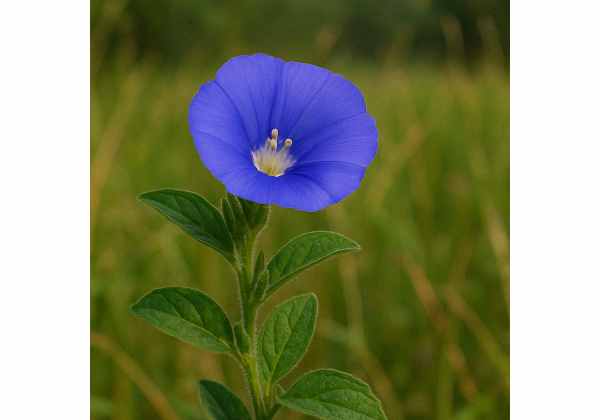
Convolvulus pluricaulis belongs to the bindweed family and grows as a low, spreading herb with delicate flowers and slender stems. In classical use, the whole plant is often valued rather than just one isolated part. Traditionally, it has been used for poor concentration, forgetfulness, mental fatigue, anxiety, disturbed sleep, and certain nervous complaints. It is often described as a brain tonic, but that phrase can be misleading if it suggests a fast or dramatic effect. Shankhapushpi is better understood as a gradual, regulatory herb than as a stimulant.
Its place in Ayurveda also helps explain its reputation. Shankhapushpi is classed among herbs used to nourish mind and intellect over time. That puts it in the same broad traditional conversation as bacopa, another herb frequently discussed for memory and cognition. Still, the two are not interchangeable. Their chemistry, clinical evidence, and sensory qualities differ, and product substitution should not be casual.
Another reason species clarity matters is quality control. Some shankhapushpi products are whole-herb powders, some are syrups, some are tablets made with repeated trituration, and others are modern extracts. The label may look familiar, but the actual herb, potency, and intended use can vary. This is one reason people sometimes report very different experiences with supposedly the same plant.
A sensible rule is simple: if the label does not clearly identify Convolvulus pluricaulis, the product deserves extra caution. With this herb, knowing the species is one of the best ways to avoid confusion, disappointment, and preventable misuse.
Key ingredients in Convolvulus pluricaulis
The medicinal identity of shankhapushpi comes from a mix of compounds rather than one dominant “magic ingredient.” That is common in traditional herbs, but it is especially relevant here because different papers and products sometimes emphasize different phytochemicals. Reported constituents of Convolvulus pluricaulis include alkaloids, flavonoids, coumarins, phenolic compounds, fatty substances, and plant sterols. The balance of these compounds can vary with geography, plant part, harvesting conditions, and extraction method.
Among the better-known reported constituents are convolamine and related alkaloids, scopoletin, kaempferol, beta-sitosterol, ceryl alcohol, and hydroxycinnamic-type compounds. Some of these are discussed for antioxidant and neuroactive effects, while others are tied to possible calming, sedative, or tissue-protective actions. That range helps explain why the herb has a reputation for both mental support and nervous settling.
Flavonoids are especially important because they are often linked with antioxidant and neuroprotective activity. These compounds may help reduce oxidative stress and influence inflammation-related signaling in the nervous system. Coumarins such as scopoletin are also of interest because they are frequently discussed in relation to mood, calmness, and nervous-system modulation, although their role in whole-herb effects is still not fully defined.
Alkaloids likely contribute to some of the herb’s more noticeable nervous-system actions. In traditional and preclinical discussions, these compounds are part of the reason shankhapushpi is described as both a cognitive support herb and a calming herb. That duality can sound contradictory at first, but it is not unusual in plants that aim to improve mental efficiency by reducing internal agitation rather than by overstimulating the brain.
The chemistry of shankhapushpi is quite different from herbs that are also marketed for stress or cognition. For example, ashwagandha is defined largely by withanolides, while shankhapushpi is discussed through alkaloids, flavonoids, coumarins, and sterols. The consumer takeaway is that herbs can share a use category without sharing the same mechanism or the same risk profile.
Another practical point is that whole-herb powders and modern extracts are not chemically identical experiences. A full-spectrum powder may provide a broader but gentler phytochemical mix, while a concentrated extract may emphasize a narrower cluster of compounds. This is one reason labels matter so much. If a product does not say whether it is whole herb, hydroalcoholic extract, aqueous extract, or a classical preparation, the number on the front of the bottle tells only part of the story.
In short, the herb’s chemistry helps explain its reputation for calm focus, memory support, and antioxidant protection. It also explains why shankhapushpi should be chosen with more care than a simple “brain booster” label suggests.
Shankhapushpi health benefits with the best support
Shankhapushpi is best known for benefits related to cognition, calmness, and stress-related mental fatigue. That said, not every claimed benefit is equally well supported. The strongest case for the herb still comes from traditional use combined with a large body of animal and mechanistic research, while human evidence remains relatively modest.
Memory and learning support are the claims most closely tied to the herb’s traditional identity. Preclinical studies suggest that Convolvulus pluricaulis may improve aspects of learning, retention, and memory performance in animal models. A small human clinical study in healthy young volunteers also found that shankhapushpi tablets were associated with improvement in some long-term memory measures over two months. That is encouraging, but it is still a limited evidence base. The most accurate summary is that shankhapushpi shows promise for memory support, yet stronger human trials are still needed.
Stress, anxiety, and mental tension are another major use area. Traditional texts describe the herb as calming and mind-settling, and modern animal research supports anxiolytic and central nervous system depressant-like effects at certain doses. This helps explain why some people describe shankhapushpi as improving focus indirectly, by reducing mental overactivity rather than by stimulating alertness. Readers exploring similar calm-cognition territory often compare it with centella, although the evidence and chemistry are not the same.
Sleep-related support is more nuanced. Shankhapushpi is not primarily a sleep herb in the same way valerian or passionflower is. However, when sleeplessness is driven by mental restlessness, stress, or persistent cognitive overdrive, a gently calming herb can sometimes help. That makes shankhapushpi more relevant to “tired but wired” patterns than to every form of insomnia.
There is also growing interest in antioxidant and neuroprotective potential. Experimental models suggest the herb may help reduce oxidative stress, support cholinergic balance, and protect neural tissue under certain forms of stress or injury. These findings are meaningful because they help explain the older reputation of the herb as a long-term intellect and nervous-system tonic. They do not yet prove that shankhapushpi prevents dementia or reverses neurodegenerative disease in humans.
Some broader claims, such as strong antidepressant, antihypertensive, anticonvulsant, or metabolic effects, remain much less secure. There are preclinical signals, but human confirmation is limited or inconsistent. Those uses belong more to the “interesting research direction” category than to the “established benefit” category.
The best-supported benefits of shankhapushpi are therefore:
- modest support for memory and cognitive performance
- calming support during stress and mental tension
- possible help with focus when agitation is part of the problem
- antioxidant and neuroprotective activity in preclinical research
That is a worthwhile profile. It simply works best when expectations stay measured and evidence-based.
Medicinal properties and how it may work
Shankhapushpi is often described as nootropic, anxiolytic, antioxidant, neuroprotective, and mildly sedative. These labels are helpful only if they are connected to how the herb may actually act in the body.
One major theme is cholinergic support. Several preclinical discussions of Convolvulus pluricaulis suggest that it may influence acetylcholine-related pathways or acetylcholinesterase activity. Because acetylcholine is central to memory, attention, and learning, this is one plausible route through which the herb could support cognition. This mechanism also helps explain why the herb is discussed more as a “mind-organizing” herb than as a stimulant.
Another key mechanism is antioxidant protection. Oxidative stress is strongly linked with neural fatigue, inflammation, and age-related damage in the nervous system. The flavonoids, coumarins, and related compounds reported in shankhapushpi appear capable of reducing free-radical burden and improving antioxidant defenses in experimental settings. This does not guarantee a noticeable short-term effect in every user, but it helps justify the herb’s reputation as a longer-horizon nervous-system support herb.
GABA-related and calming pathways may also be involved. Some authors have proposed that certain constituents of shankhapushpi interact with inhibitory brain signaling in ways that could account for its anxiolytic and mildly sedative profile. That would fit traditional descriptions of the herb as reducing mental tension and helping a restless mind settle. It also explains why shankhapushpi is sometimes chosen when someone feels mentally scattered rather than simply sleepy. In contrast, a gentler herb such as lemon balm may feel more obviously soothing in the short term, while shankhapushpi is often used for steadier and more layered mental support.
There is also evidence that the herb may affect stress biology more broadly. In experimental settings, shankhapushpi has been associated with reduced behavioral signs of stress, improved resilience, and modulation of mood-related pathways. The current human evidence is not strong enough to present this as a proven antidepressant mechanism, but it is enough to support cautious interest.
Inflammation is another part of the picture. Neuroinflammation can impair focus, mood, and neural resilience, and several reported constituents of the herb have been discussed for anti-inflammatory potential. This may be one reason it continues to attract attention in research on brain aging and neurodegenerative conditions, even though clinical application is still preliminary.
The most balanced conclusion is that shankhapushpi likely works through several overlapping actions: support of cholinergic function, antioxidant defense, calming neurotransmitter pathways, and stress-related neuroprotection. No single pathway fully explains the herb. Its traditional value seems to come from how these actions combine rather than from one isolated effect.
Common uses in herbal practice and daily life
In everyday herbal use, shankhapushpi is rarely chosen for just one isolated symptom. It is more often used when the picture includes mental overwork, reduced concentration, stress-related forgetfulness, nervous irritability, mild sleep disturbance, or a sense that the mind is not recovering well from ongoing demand. That broad but focused profile helps explain why it appears in formulas for students, professionals, older adults, and people going through periods of mental strain.
The herb is used in several forms. Classical use often relies on powders, decoctions, medicated ghee preparations, or syrups. Modern commercial products include tablets, capsules, liquid extracts, and branded “brain tonics.” Whole-herb powders tend to feel more traditional and may suit people who want a broader plant matrix. Standardized or semi-standardized products may be more convenient, but they require closer attention to species identity and label quality.
Common reasons people choose shankhapushpi include:
- memory lapses during periods of stress
- poor concentration without obvious overstimulation
- nervous restlessness with mental fatigue
- support during exam preparation or cognitively demanding work
- a desire for calmer focus rather than wired alertness
It is often combined with other Ayurvedic or nootropic herbs. For example, in modern formulations it may appear alongside rhodiola, bacopa, or ashwagandha, depending on whether the goal is cognition, resilience, or stress adaptation. Combination formulas can be helpful, but they also make it harder to know which ingredient is helping and whether the total nervous-system effect is too stimulating or too sedating.
Shankhapushpi is also sometimes used in children’s or student-focused syrups in some traditional systems, but that does not mean every over-the-counter product is appropriate for unsupervised use in younger populations. Age, dose, and formula strength matter.
A practical way to use this herb is to match it to the right pattern. It usually makes more sense for a person who feels mentally worn down, unfocused, and mildly tense than for someone who wants immediate energy or treatment for serious depression. Likewise, it may be better for ongoing nervous-system support than for rapid symptom suppression.
People who expect a dramatic effect after a single dose are often disappointed. Shankhapushpi seems more suited to steady use over days or weeks, with attention to subtle changes such as better retention, calmer study sessions, less mental chatter, or improved ability to stay on task without feeling overwhelmed.
That is also why good self-observation matters. With shankhapushpi, the most meaningful benefits are often gradual, cumulative, and easier to notice when there is a clear reason for using it.
Dosage ranges, timing, and practical use
Shankhapushpi dosing depends heavily on the form used. Whole-herb powders, classical tablets, syrups, and concentrated extracts do not translate cleanly into one another, so precision matters more than enthusiasm. In general, it is wise to start low and avoid copying a dose from one product to another unless the forms are clearly equivalent.
For the whole herb or traditional powder, a practical adult range is often around 2 to 4 g daily, usually divided into one or two doses. Some traditional practices go higher, but for general self-care this lower range is often enough to judge tolerance and usefulness. If the herb is being taken as a classical tablet rather than loose powder, the total daily amount may still end up in that same general range.
One human clinical study used shankhapushpi tablets made from the whole plant at a total of 4 g daily, delivered as 500 mg tablets, four tablets twice daily after food with milk, for 60 days. That does not establish a universal best dose, but it gives a useful real-world reference point. It also suggests that meaningful trials of the herb are often measured in weeks rather than days.
For teas or decoctions, dosing is less standardized. A modest traditional-style preparation may use a few grams of the herb simmered or steeped once or twice daily. Because the flavor can be somewhat bitter and herbal, some people prefer to combine it with milk or use it in formulas rather than as a stand-alone tea.
Timing depends on the goal. For memory and study support, morning and midday use usually makes the most sense. For nervous tension or stress-related restlessness, an evening dose may be reasonable if the product feels calming rather than mentally brightening. The herb is not typically taken as a pure sleep agent, so people using it late should first confirm that it suits their individual response.
A good practical routine often looks like this:
- choose one clearly identified Convolvulus pluricaulis product
- start at the lower end of the labeled or traditional range
- use it consistently for 2 to 6 weeks
- watch for changes in memory, focus, calmness, and sleep quality
- stop or adjust if digestive upset, excessive sedation, or no benefit appears
The most common dosing mistakes are taking too much too soon, mixing multiple cognitive herbs at once, using an unclear product, or expecting rapid stimulant-like results. Shankhapushpi is better approached as a gradual support herb than as a quick-performance supplement. That mindset usually leads to better results and fewer disappointments.
Side effects, interactions, and who should avoid it
Shankhapushpi is often described as gentle, and at customary doses it is generally better tolerated than many people expect. Still, “gentle” does not mean “risk free.” The herb has real neuroactive potential, and both plant identity and product quality can affect safety.
The most likely unwanted effects are mild digestive upset, nausea, stomach heaviness, or a sense that the herb feels too sedating or mentally dulling. Because some preparations are taken with milk, ghee, or syrup bases, part of the tolerance issue may come from the formulation rather than from the plant alone. Sensitive users may also notice daytime drowsiness if the dose is too high or the timing is poor.
Sedation and central nervous system quieting are important practical concerns. Preclinical studies suggest that the herb can show CNS-depressant and anti-anxiety effects, which is part of its appeal for mental overactivity. The same profile also means that people already taking calming medicines or sedative supplements should be more careful. Combining several “relaxing” agents can feel fine in theory but too heavy in practice.
Medication interaction data are not as robust as they are for herbs like St. John’s wort or schisandra, yet caution is still justified. The most sensible concern is additive effects with sedatives, anxiolytics, sleep medications, alcohol, or possibly other strong nootropics and adaptogens. Anyone on antidepressants, antiepileptic drugs, antipsychotics, or regular sleep medication should avoid casual self-experimentation.
Who should be especially cautious or avoid unsupervised use?
- pregnant people
- breastfeeding people
- children unless a qualified clinician directs use
- people taking prescription medications for mood, sleep, or seizures
- anyone with a history of strong reactions to sedating herbs
- people using unclear or multi-herb “brain tonic” formulas
Another safety issue is adulteration or substitution. Since more than one plant may be sold under the name shankhapushpi, the safety profile can shift if the product is misidentified. This is one of the best reasons to buy from manufacturers that state the botanical name clearly and avoid vague labels.
A final point is expectation management. Shankhapushpi is not a treatment for major depression, dementia, panic disorder, or severe insomnia. It may support certain patterns of cognitive fatigue and nervous tension, but persistent or serious symptoms need medical assessment.
The safest overall strategy is to use a clearly labeled product, start low, avoid stacking it carelessly with sedative or psychiatric agents, and stop if the herb makes you feel worse rather than better.
References
- Role of Shankhpushpi (Convolvulus pluricaulis) in neurological disorders: An umbrella review covering evidence from ethnopharmacology to clinical studies 2022 (Review)
- Phytochemical Profile, Pharmacological Attributes and Medicinal Properties of Convolvulus prostratus – A Cognitive Enhancer Herb for the Management of Neurodegenerative Etiologies 2020 (Review)
- Nootropic efficacy of Satvavajaya Chikitsa and Ayurvedic drug therapy: A comparative clinical exposition 2015 (Clinical Study)
- Evaluation of CNS Depressant and Anti-anxiety Activities of Leaves of Convolvulus pluricaulis 2023
- Convolvulus pluricaulis confers antidepressant and antioxidant effects through conserved metabolic and molecular pathways in Drosophila 2025
Disclaimer
This article is for educational purposes only and does not replace medical advice, diagnosis, or treatment. Shankhapushpi products vary widely in botanical source, strength, and formulation, and traditional uses do not automatically translate into proven medical benefits. Speak with a qualified healthcare professional before using shankhapushpi if you are pregnant, breastfeeding, taking prescription medicines, managing a mental-health condition, or considering use for a child. Seek prompt medical care for severe anxiety, major mood changes, persistent memory problems, seizures, or unexpected reactions after taking any herbal product.
Please share this article on Facebook, X (formerly Twitter), or any other platform you prefer if you found it helpful.