A Sjögren syndrome antibody panel looks for immune markers that can support the diagnosis of Sjögren disease, a systemic autoimmune condition best known for dry eyes and dry mouth. Anti-SSA/Ro is the most important antibody in current classification criteria. Anti-SSB/La can add context when SSA is also present, while ANA and rheumatoid factor are common but nonspecific. None of these results can confirm or exclude Sjögren disease on its own.
The diagnosis becomes more convincing when the antibody pattern matches objective evidence of reduced tear or saliva production, inflammatory damage on eye testing, or a characteristic minor salivary gland biopsy. Blood tests also help identify systemic activity and complications, including low blood counts, kidney or lung involvement, cryoglobulins, low complement, and a small but important lymphoma risk. Interpretation should therefore answer two questions: whether Sjögren disease is likely and whether it is affecting more than the glands.
- Anti-SSA/Ro is the main diagnostic antibody, but it also occurs in lupus, myositis, systemic sclerosis, and some healthy people.
- Anti-SSB/La usually appears with SSA; isolated SSB has little diagnostic value and may need confirmation.
- ANA and rheumatoid factor support immune activation but are not specific enough to diagnose Sjögren disease.
- A negative antibody panel does not rule out seronegative Sjögren disease when objective gland tests are abnormal.
- Persistent one-sided salivary gland swelling, enlarged lymph nodes, purpura, fever, night sweats, or weight loss needs prompt evaluation.
Table of Contents
- What the Sjögren antibody panel includes
- SSA/Ro is the key antibody but not a diagnosis
- How SSB/La, ANA, and rheumatoid factor should be read
- Objective tests that complete the diagnostic picture
- Blood results that show systemic activity or higher risk
- Common result patterns and diagnostic pitfalls
- Pregnancy, monitoring, and next steps after testing
What the Sjögren antibody panel includes
There is no single standardized “Sjögren panel.” Laboratories combine different tests, use different names for the same antigen, and set their own reference ranges. A common panel includes:
- Antinuclear antibody, or ANA
- Anti-SSA/Ro
- Anti-SSB/La
- Rheumatoid factor, or RF
- Sometimes quantitative immunoglobulins, C3 and C4 complement, complete blood count, and inflammatory markers
A broader evaluation may include anti-dsDNA, anti-Sm, anti-U1 RNP, anticentromere antibodies, myositis antibodies, thyroid antibodies, hepatitis testing, serum protein electrophoresis, immunofixation, cryoglobulins, urinalysis, urine protein, kidney function, and liver enzymes. These additional tests do not make the panel “more positive.” They help distinguish Sjögren disease from lupus, rheumatoid arthritis, systemic sclerosis, inflammatory myopathy, chronic infection, and other causes of dryness or systemic symptoms.
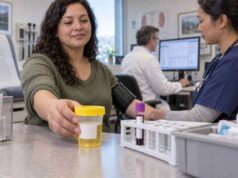
The blood draw usually requires no fasting. Antibody results are commonly reported as negative, equivocal, or positive, sometimes with an index or units. Those numbers cannot be compared directly between laboratories because enzyme immunoassays, multiplex bead systems, line immunoblots, and other methods use different antigens and cutoffs.
The panel works best when there is a clinical reason to suspect Sjögren disease. Typical clues include persistent gritty or burning eyes, frequent use of artificial tears, difficulty eating dry food without liquid, waking at night to drink, recurrent dental decay, oral thrush, salivary gland swelling, fatigue, inflammatory joint pain, neuropathy, purpura, Raynaud phenomenon, unexplained lung disease, or kidney tubular problems.
Dryness alone has many causes. Anticholinergic drugs, antihistamines, antidepressants, bladder medicines, dehydration, menopause, diabetes, thyroid disease, mouth breathing, contact lenses, eye-surface disease, prior head and neck radiation, hepatitis C, HIV, sarcoidosis, IgG4-related disease, and normal aging can produce similar symptoms. The purpose of the panel is to add immune evidence to this differential, not to replace it.
A general connective tissue disease blood test panel may be more useful when dryness is only one part of a broad autoimmune presentation.
SSA/Ro is the key antibody but not a diagnosis
Anti-SSA/Ro carries the greatest diagnostic weight in Sjögren disease. In the 2016 ACR/EULAR classification system, anti-SSA positivity contributes three points—the same weight as a positive minor salivary gland biopsy. A total score of four or more can classify an eligible patient when the other requirements and exclusions are addressed. Classification criteria create consistent research groups; clinicians still diagnose individuals using the full picture.
“SSA” is not one single protein. The Ro system includes Ro60 and Ro52, also called TRIM21. Some laboratories report one combined SSA result, while others measure Ro60 and Ro52 separately.
- Anti-Ro60 is closely tied to Sjögren disease and lupus.
- Anti-Ro52 occurs across a wider range of autoimmune conditions, including inflammatory myopathy and systemic sclerosis, and can accompany interstitial lung disease phenotypes.
- Combined Ro60 and Ro52 positivity is common in Sjögren disease and may be associated with stronger B-cell activation and glandular inflammation than isolated reactivity.
The exact assay matters. A person may have a positive Ro52 result but a negative combined SSA screen if the screening method emphasizes Ro60. Conversely, a positive “SSA” report may not reveal which component is responsible. Separate testing can be helpful when the clinical meaning would change, especially in a patient with muscle or lung disease rather than classic gland symptoms.
Anti-SSA can appear years before Sjögren disease is diagnosed, but it does not make future disease inevitable. It also occurs in systemic lupus erythematosus, subacute cutaneous lupus, neonatal lupus risk settings, inflammatory myopathies, systemic sclerosis, autoimmune liver disease, and a small proportion of people without a defined connective tissue disease.
The strength of the result can affect confidence but is not a disease-activity scale. High antibody levels may fit a well-established autoimmune phenotype, yet they do not quantify tear production, salivary injury, nerve damage, or lymphoma risk. Repeating SSA every few months usually adds less value than checking symptoms, organ function, blood counts, complement, immunoglobulins, and objective gland tests.
A detailed anti-SSA/Ro interpretation is especially important for anyone who is pregnant or planning pregnancy because fetal surveillance questions differ from the adult diagnostic workup.
How SSB/La, ANA, and rheumatoid factor should be read
Anti-SSB/La usually appears together with anti-SSA/Ro. When both are present in a person with compatible symptoms, the combined pattern supports a systemic autoimmune process. SSB can occur in Sjögren disease and lupus, but it was removed from the current Sjögren classification antibody item because isolated SSB did not improve classification performance.
An isolated SSB-positive, SSA-negative result deserves caution. Recent work using more rigorous confirmation methods found that true isolated SSB is rare and has little diagnostic or prognostic value. Weak isolated results can reflect assay-specific reactivity. Before labeling the patient, clinicians may review the ANA, repeat SSB with another method, confirm separate Ro52 and Ro60 testing, and look for objective gland disease. The anti-SSB/La result should not outweigh a discordant clinical picture.
ANA is positive in many people with Sjögren disease, often with a speckled pattern, but it is neither required nor specific. Positive ANA results occur in lupus, systemic sclerosis, autoimmune thyroid disease, liver disease, infections, medication exposure, and healthy individuals. A high titer in a symptomatic person increases the reason to investigate, but the pattern does not establish Sjögren disease.
Rheumatoid factor is an antibody directed against part of immunoglobulin G. It can be positive in Sjögren disease because of B-cell activation, even when rheumatoid arthritis is absent. RF also appears in rheumatoid arthritis, chronic infections, cryoglobulinemia, older adults, and other immune conditions. Joint swelling, erosions, and anti-CCP antibodies help distinguish rheumatoid arthritis from nonerosive Sjögren-related joint symptoms.
| Result | What it can support | What it cannot establish |
|---|---|---|
| SSA/Ro positive | Sjögren disease, lupus, or another systemic autoimmune phenotype | Sjögren disease without objective clinical assessment |
| SSA and SSB positive | A coherent Ro/La autoimmune pattern | Gland damage severity or current systemic activity |
| Isolated SSB positive | Possible assay reactivity requiring context or confirmation | Sjögren disease by itself |
| ANA positive | Systemic autoimmunity may be present | A specific disease or need for treatment |
| RF positive | B-cell activation, cryoglobulinemia, Sjögren disease, or rheumatoid arthritis | Rheumatoid arthritis without compatible joint evidence |
An antibody panel is therefore a pattern-recognition tool. The most persuasive pattern is not simply the one with the most positive lines; it is the one that aligns with objective gland or systemic findings.
Objective tests that complete the diagnostic picture
Sjögren disease can be seronegative. When SSA is absent but clinical suspicion remains high, objective testing becomes especially important. It also prevents overdiagnosis in people who have antibodies but dryness from another cause.
The 2016 ACR/EULAR classification items are:
- Anti-SSA/Ro positivity: 3 points
- Minor salivary gland biopsy showing focal lymphocytic sialadenitis with a focus score of at least 1 focus per 4 mm²: 3 points
- Ocular staining score of at least 5, or van Bijsterveld score of at least 4, in at least one eye: 1 point
- Schirmer test of 5 mm or less in 5 minutes in at least one eye: 1 point
- Unstimulated whole salivary flow of 0.1 mL per minute or less: 1 point
The criteria require a total of at least four points in an appropriate patient after exclusions are considered. Symptoms of dryness help establish who should be evaluated, but symptoms themselves are not scored because perception and measured gland function can differ.
Schirmer testing measures how far tears wet a paper strip placed at the lower eyelid over five minutes. It is simple but variable. Room conditions, medications, irritation, contact lenses, and technique can influence the result.
Ocular surface staining uses dyes to identify corneal and conjunctival damage. An ophthalmologist or trained eye professional interprets the pattern and score. A patient can have severe discomfort with modest staining or substantial staining with less dramatic symptoms.
Unstimulated salivary flow measures saliva collected over a set time without chewing or flavor stimulation. Hydration, smoking, time of day, medications, and recent eating can affect flow. Standardized preparation improves reliability.
Minor salivary gland biopsy usually samples several small glands from the inside of the lower lip. The pathology report should state whether focal lymphocytic sialadenitis is present and provide a focus score based on adequate glandular tissue. Nonspecific chronic inflammation, atrophy, fibrosis, or poor specimen size should not be treated as the same finding. Biopsy can be especially useful in anti-SSA-negative patients, but it has risks such as pain, bruising, numbness, and sampling variation.
Salivary gland ultrasound can show reduced homogeneity, hypoechoic areas, and structural damage in the parotid and submandibular glands. It is noninvasive and increasingly useful, though it is not currently a scored item in the 2016 criteria and depends on equipment and operator training.
Newer “early Sjögren” antibodies such as salivary protein-1, carbonic anhydrase VI, and parotid secretory protein remain investigational or inconsistently validated. An early Sjögren antibody panel should not replace SSA testing, objective eye and saliva measures, or a well-read biopsy.
Blood results that show systemic activity or higher risk
Sjögren disease is more than a dryness disorder. It can affect joints, lungs, nerves, kidneys, blood vessels, skin, and blood cells. The antibody panel is often expanded to look for systemic immune activity and complications.
Complete blood count: Leukopenia, lymphopenia, anemia, or thrombocytopenia may reflect autoimmune activity, medication effects, infection, nutritional deficiency, bleeding, or a hematologic disorder. Persistent unexplained cytopenias need evaluation rather than being assumed to be “from Sjögren.”
Quantitative immunoglobulins and serum protein studies: Polyclonal hypergammaglobulinemia is common and reflects broad B-cell activation. Serum protein electrophoresis and immunofixation help distinguish a polyclonal rise from a monoclonal protein. A monoclonal gammopathy does not equal lymphoma, but it can change surveillance.
Complement C3 and C4: Low C4 is especially important in Sjögren disease because it can accompany immune-complex activity, cryoglobulinemia, vasculitis, and higher lymphoma risk. A single low result should be confirmed and interpreted with the person’s baseline, liver function, infection status, and possible inherited complement variation.
Cryoglobulins: These are immunoglobulins that precipitate in the cold. Collection and handling are technically demanding because the sample must remain warm until serum separation. A falsely negative result can occur if handling is poor. Cryoglobulinemic vasculitis may cause palpable purpura, neuropathy, joint symptoms, kidney disease, weakness, and low complement.
Kidney and urine tests: Creatinine, electrolytes, bicarbonate, urinalysis, and urine protein help identify glomerular disease or tubulointerstitial nephritis. Distal renal tubular acidosis can present with low potassium, low bicarbonate, kidney stones, muscle weakness, or abnormal urine pH.
Lung assessment: Cough, breathlessness, abnormal examination, reduced oxygen saturation, or risk factors may prompt pulmonary function tests and high-resolution CT. Anti-SSA alone does not diagnose interstitial lung disease.
Sjögren disease carries a higher relative risk of B-cell non-Hodgkin lymphoma, but most patients never develop lymphoma. Risk is not predicted by SSA or RF alone. More concerning features include persistent or asymmetric parotid swelling, enlarged lymph nodes or spleen, palpable purpura, cryoglobulins, low C4, monoclonal gammopathy, persistent cytopenias, constitutional symptoms, and certain high-risk biopsy findings.
Prompt evaluation is appropriate for a salivary gland that remains enlarged or becomes hard, especially on one side; unexplained fever; drenching night sweats; weight loss; new lymph nodes; worsening purpura; or rapidly changing blood counts. Imaging or biopsy may be needed, but routine repetitive scans in low-risk, asymptomatic patients are not a substitute for clinical monitoring.
Common result patterns and diagnostic pitfalls
SSA positive, dry eyes and mouth, abnormal Schirmer or salivary flow: This is a strong Sjögren pattern, but medication causes, eye disease, dental history, and systemic features still need review. Objective results help determine whether the dryness is glandular and clinically significant.
SSA positive with photosensitive rash, low complement, anti-dsDNA, or kidney inflammation: Lupus may be the primary diagnosis, with or without secondary Sjögren features. A lupus blood test pattern and the organ phenotype may carry more diagnostic weight than dryness alone.
SSA negative but biopsy and ocular tests positive: Seronegative Sjögren disease is possible. A negative panel should not end the workup when the objective evidence and symptoms are compelling.
SSA positive without dryness or objective gland dysfunction: The person may have another anti-Ro-associated autoimmune disease, preclinical autoimmunity, or an incidental antibody. Treatment is not indicated solely to “lower the antibody.” Follow-up should be based on symptoms and organ findings.
Isolated weak SSB positive: This pattern has limited diagnostic value. Confirm the assay, check separate Ro52 and Ro60 testing, and avoid diagnosing Sjögren disease without objective evidence.
ANA positive and RF positive, but SSA and SSB negative: This can occur in Sjögren disease, rheumatoid arthritis, another connective tissue disease, infection, or no defined autoimmune disease. Objective gland tests and the broader clinical phenotype are essential.
Dryness with normal objective tests: Symptoms may still be severe, but the cause may be medication-related, neurologic, hormonal, environmental, metabolic, or a non-Sjögren eye or oral disorder. Repeating broad autoantibody panels is less useful than investigating the most likely alternative.
A “negative early Sjögren panel” used to exclude disease: Novel salivary antibodies are not sufficiently established to rule disease in or out. Conventional SSA testing, objective gland function, imaging, and biopsy remain more important.
Two common mistakes are treating classification criteria as a self-diagnosis score and treating every positive antibody as proof of active disease. The more reliable approach is to document symptoms, measure function, verify the antibody method, exclude mimics, and evaluate systemic organs when indicated.
Pregnancy, monitoring, and next steps after testing
Anti-SSA/Ro and anti-SSB/La have pregnancy implications because maternal antibodies cross the placenta. Most anti-SSA-positive pregnancies do not result in neonatal lupus. The estimated risk of congenital heart block in a first affected pregnancy is about 1% to 2%, while recurrence risk after a previously affected child is substantially higher, often estimated around 13% to 18%.
Anyone known to have anti-SSA or anti-SSB should discuss pregnancy plans with rheumatology and maternal-fetal medicine before conception or early in pregnancy. Medication review matters because some disease treatments are compatible with pregnancy and others require advance changes. Fetal heart monitoring strategies vary by history and local protocol. Hydroxychloroquine may be recommended in selected anti-SSA-positive pregnancies, especially when recurrence risk is higher, but the decision is individualized.
For the adult patient, follow-up is based on manifestations rather than repeated antibody titers. A reasonable monitoring plan may include:
- Dental prevention, fluoride, and assessment of cavities or oral infection
- Eye-surface care and ophthalmology review when symptoms or staining are significant
- Review of salivary swelling, lymph nodes, skin purpura, neuropathy, joints, lungs, and kidney symptoms
- Periodic complete blood count, kidney and liver tests, urinalysis, immunoglobulins, complement, and protein studies according to risk
- Cryoglobulin testing when vasculitis, neuropathy, low C4, purpura, or kidney findings raise concern
- Pulmonary, neurologic, renal, or hematologic testing when symptoms indicate
Treatment also follows the manifestation. Artificial tears, saliva substitutes, secretagogues, dental care, and environmental changes address dryness. Hydroxychloroquine or other systemic medicines may be considered for selected inflammatory manifestations, while organ-threatening disease can require immunosuppressive or biologic therapy. Fatigue without objective inflammation often needs a broader approach that addresses sleep, pain, anemia, thyroid disease, mood, activity, medication effects, and autonomic symptoms.
After an abnormal panel, the most useful next step is not to order the same panel again. It is to decide what evidence is still missing: separate Ro52 and Ro60 testing, objective eye testing, salivary flow, biopsy, ultrasound, evaluation for another connective tissue disease, or systemic-risk laboratories. That approach turns a group of antibodies into a defensible diagnosis and a practical care plan.
References
- 2016 ACR-EULAR Classification Criteria for primary Sjögren’s Syndrome: A Consensus and Data-Driven Methodology Involving Three International Patient Cohorts 2017 (Guideline)
- British Society for Rheumatology guideline on management of adult and juvenile onset Sjögren disease 2025 (Guideline)
- Association of Combined Anti-Ro52/TRIM21 and Anti-Ro60/SSA Autoantibodies With Clinical, Biological, and Transcriptomic Features in Patients With Sjögren Disease 2024
- Isolated anti-SS-B (La) antibodies: rare occurrence and lack of diagnostic value 2025
- Diagnostic Utility of Minor Salivary Gland Biopsy for Primary Sjögren Syndrome in Patients With Negative Anti-SSA Antibodies 2023
- Predicting lymphoma in Sjögren’s syndrome and the pathogenetic role of parotid microenvironment through precise parotid swelling recording 2022
Disclaimer
This article is for general education and does not diagnose Sjögren disease or replace individualized care. Antibody results must be interpreted with symptoms, laboratory methods, objective eye and salivary testing, and systemic evaluation by qualified clinicians. Seek prompt medical attention for persistent asymmetric gland swelling, enlarged lymph nodes, purpura, unexplained fever or weight loss, severe weakness, breathing problems, or pregnancy-related concerns.