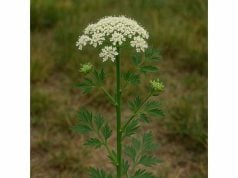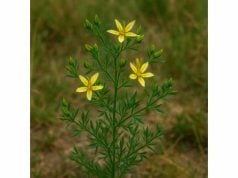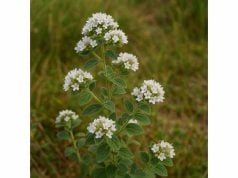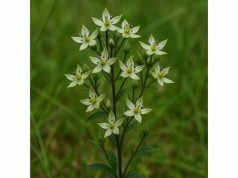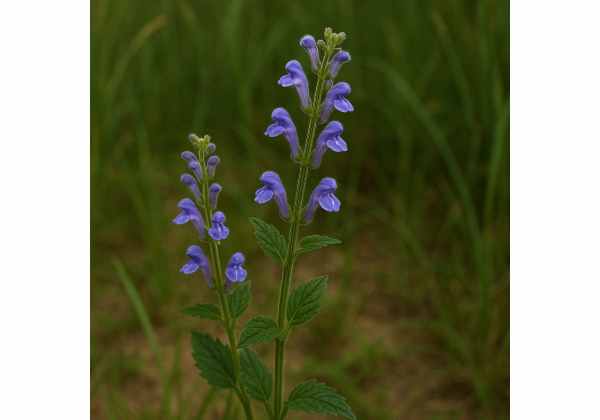
Skullcap, or Scutellaria lateriflora, is a North American herb best known for its long reputation as a calming “nervine.” Traditionally, herbalists used its aerial parts to ease nervous tension, restlessness, and occasional sleeplessness. Modern interest in skullcap comes from the same place: people want to know whether it can genuinely support stress resilience, sleep quality, and a steadier mood without the heavy feel of stronger sedatives.
The answer is promising, but more modest than many supplement labels suggest. American skullcap has a small but meaningful clinical record, with early human trials pointing to possible benefits for mood and sleep. It also contains flavonoids such as baicalin, baicalein, wogonin, and scutellarin, which help explain its antioxidant, neuroactive, and anti-inflammatory reputation. At the same time, this is not a fully standardized mainstream remedy, and it is often confused with Chinese skullcap, a different species with different traditions and chemistry.
Used carefully, skullcap can be a thoughtful herb for mild tension and sleep support. Used carelessly, it can be disappointing, or occasionally risky.
Key Takeaways
- Skullcap may help reduce nervous tension and support calmer mood in some people.
- Standardized extracts may also improve sleep quality and sleep efficiency when used consistently.
- Human study doses have included 350 mg three times daily and 400 mg daily.
- People who use sedatives, have liver concerns, or are pregnant or breastfeeding should avoid self-prescribed use.
- Product identity matters because American skullcap can be confused with other species or adulterated materials.
Table of Contents
- What skullcap is and how it differs from other Scutellaria species
- Skullcap health benefits and where the evidence is strongest
- Key ingredients and medicinal properties of skullcap
- How skullcap is used in teas, tinctures, capsules, and blends
- Skullcap dosage, timing, and how long to use it
- How to choose a good product and avoid common mistakes
- Safety, side effects, interactions, and who should avoid skullcap
What skullcap is and how it differs from other Scutellaria species
American skullcap is a flowering member of the mint family, valued mainly for the leaves, stems, and flowering tops harvested above ground. It grows in moist woodland and meadow settings across parts of North America, and in traditional Western herbalism it developed a reputation as a gentle remedy for overactive nerves, muscular tension, and trouble settling into sleep. That history is useful, but it also creates a common problem: people often hear “skullcap” and assume all skullcap species are basically interchangeable. They are not.
The plant in this article is Scutellaria lateriflora, often called American skullcap. It is different from Chinese skullcap, Scutellaria baicalensis, which is used in traditional Chinese medicine and is usually discussed for very different reasons, such as immune, inflammatory, or liver-related applications. Chinese skullcap is mostly associated with the root. American skullcap is associated with the aerial parts and is used far more often as a relaxing herb. When the species is not clearly named on a product label, people can end up buying something quite different from what they intended.
That distinction matters for both effectiveness and safety. American skullcap is the form tied most directly to traditional “nervine” use and to the small human trials on mood and sleep. Chinese skullcap has a larger biochemical and pharmacological literature overall, but it should not be treated as a direct stand-in for S. lateriflora. Confusing the two can lead to sloppy claims, bad comparisons, and the false impression that skullcap as a category is backed by much more direct clinical evidence than it really is.
The herb is also sometimes called blue skullcap, mad-dog skullcap, or scullcap, and the last spelling appears often in older herb texts and product names. The term “scullcap” is not a different herb; it is simply a spelling variant. For readers comparing relaxing botanicals, it may help to think of American skullcap as occupying a similar conversation space to lemon balm for calm support, though the plants are not the same and the chemistry is different.
Another important identity issue is adulteration. Historically, American skullcap products have sometimes been mixed with or substituted by germander species, especially when raw plant material was poorly identified. This matters because suspected skullcap toxicity cases have sometimes been complicated by adulteration or by multi-herb blends rather than clearly pure Scutellaria lateriflora. In other words, before people argue about what skullcap “does,” they first need to make sure the bottle really contains the correct herb.
That identity-first mindset makes the rest of the article easier to understand. Skullcap can be useful, but only when the right species, the right plant part, and the right product are being discussed. That is the foundation for sensible use.
Skullcap health benefits and where the evidence is strongest
The most credible modern use for American skullcap is support for mild nervous tension, stress-related unease, and sleep difficulty. That does not mean it works like a prescription sedative, and it does not mean the evidence is large. It means the direction of the evidence fits the traditional use, which is more than can be said for many herbs sold for mood.
The best human evidence is small but relevant. One placebo-controlled crossover study in healthy volunteers found that American skullcap affected mood in a way consistent with calming action, although the trial population was not severely anxious and the results were not a blanket proof that skullcap treats anxiety disorders. Another more recent randomized, double-blind trial studied a chemically characterized Scutellaria lateriflora extract in people with mild to moderate primary insomnia and found improvements in sleep quality measures, sleep efficiency, and other sleep-related outcomes over time. Those are meaningful findings, but they still sit within a limited research base rather than a large, settled clinical literature.
That distinction helps keep expectations realistic. Skullcap may be helpful for:
- feeling mentally “wound up” at the end of the day,
- mild situational tension,
- difficulty winding down into sleep,
- occasional sleep fragmentation,
- herbal support alongside broader stress-management habits.
What it is not clearly proven for is equally important. There is not enough direct evidence to present American skullcap as a treatment for major depression, panic disorder, chronic insomnia of complex cause, seizure disorders, withdrawal syndromes, or chronic pain. Traditional texts may mention some of those uses, but modern clinical confirmation remains thin.
Many people compare skullcap with other calming herbs. That can be useful, as long as the comparison stays grounded. Skullcap is often described as gentler and less “heavy” than valerian for sleep support. Some people find that appealing because they want an herb that softens tension without leaving them groggy the next day. Others may prefer stronger sleep-focused herbs. This is one reason skullcap is so often used in blends rather than as a stand-alone product.
There is also growing interest in possible stress-hormone and neuroprotective mechanisms, but most of that work is mechanistic or preclinical. It may help explain how the herb works, yet it should not be mistaken for proof of broad clinical effect. The same applies to antioxidant claims. Skullcap does contain compounds with antioxidant activity, but people do not feel an “antioxidant effect” the way they may notice calmer sleep onset or less mental restlessness.
The cleanest way to summarize the benefit profile is this: skullcap looks most promising as a mild-to-moderate calming herb with small human evidence for mood and sleep support, especially when used as part of a larger routine. It makes less sense as a stand-alone remedy for severe psychiatric or neurological problems. That balanced view respects both the traditional reputation of the herb and the actual size of the modern evidence base.
Key ingredients and medicinal properties of skullcap
American skullcap is usually discussed in terms of its flavonoids, and for good reason. These compounds appear to be the main bridge between the plant’s traditional calming reputation and the way modern researchers think about its mechanisms. Among the best-known constituents are baicalin, baicalein, wogonin, scutellarin, oroxylin A derivatives, and related phenolic compounds. Even when different extracts vary somewhat in composition, these names come up again and again in the chemistry of Scutellaria lateriflora.
Why do these ingredients matter? The short answer is that they give skullcap its medicinal personality. Some appear relevant to antioxidant and anti-inflammatory effects. Others are discussed in relation to GABA-related signaling, receptor modulation, and overall nervous-system tone. That does not mean skullcap acts exactly like a benzodiazepine, and it should not be described that way. But it does help explain why the herb has remained in circulation for tension, restlessness, and sleep support rather than for something more obviously digestive or circulatory.
A useful way to think about skullcap’s medicinal properties is to group them into four themes.
First, there is its calming or anxiolytic potential. This is the property that defines the herb in practice. The most likely explanation involves flavonoid activity affecting inhibitory signaling pathways and stress reactivity, even if the full mechanism is not fully mapped.
Second, there is sleep-support potential. Skullcap is not just for daytime nerves. A standardized extract has now been studied in people with insomnia-like complaints, suggesting it may help sleep quality, sleep onset, and sleep efficiency. That makes it more than a purely traditional bedtime herb, though the research is still developing.
Third, there is antioxidant and anti-inflammatory activity. This matters more as biological background than as a user-facing promise. Like flavonoid-rich chamomile compounds, skullcap’s chemistry suggests the plant does more than simply “sedate.” It appears to have a wider protective biochemical profile, though people generally take it for felt effects rather than for abstract oxidative balance.
Fourth, there is stress-response interest. Newer mechanistic work has explored the possibility that skullcap extracts may influence cortisol-related pathways or related aspects of stress physiology. This area is intriguing because it could help explain why some users describe the herb as easing wired-but-tired states rather than only helping them sleep.
One caution is important here: the chemistry of American skullcap should not be lazily borrowed from Chinese skullcap. Some compounds overlap between species, but not in the same proportions, and the historical use pattern is different. Another caution is that extract chemistry is more reliable when a product is standardized. A tea, a tincture, and a dry extract can deliver very different amounts of these constituents.
That is why “key ingredients” matter in practice, not just on paper. They are the reason two skullcap products can feel very different, and they are the reason careful dosing and product selection matter more than generic herb marketing often suggests.
How skullcap is used in teas, tinctures, capsules, and blends
American skullcap is one of those herbs that people use in very different ways depending on what they want from it. Some prefer it as a traditional tea. Others use tinctures for flexibility, while many modern buyers choose capsules because they are easy to standardize and easier to compare with study doses. None of these forms is automatically best. The right form depends on whether the goal is a gentle evening wind-down, daytime emotional steadiness, or a more trackable supplement routine.
Tea is the most traditional approach. It suits people who like ritual and want a softer, slower style of support. A warm skullcap tea can work well as part of a bedtime routine, especially when the problem is not severe insomnia but difficulty shifting out of work mode or mental tension. The downside is variability. Tea strength depends on herb quality, freshness, steeping time, and the actual plant identity. For a person who wants predictability, tea can be too loose a tool.
Tinctures offer a middle ground. They act faster for some users, are easy to titrate, and can be combined with other calming herbs. This flexibility is one reason herbalists often like them. A tincture can also be taken in smaller, repeated doses rather than as one large bedtime serving. That pattern may suit people whose problem is daytime tension rather than sleep onset.
Capsules and standardized extracts are the most useful option for readers who want an evidence-based frame. Human studies have used extract-based formats, which makes capsules or tablets easier to relate to the published research. They are also easier to track. If a person wants to know whether skullcap helps after two or four weeks, a capsule product makes that experiment cleaner.
Skullcap is also frequently used in blends. It appears alongside relaxing herbs such as passionflower in sleep-focused formulas, and also with lemon balm, chamomile, oats, or valerian depending on the intended effect. Blends can be smart because they let formulators combine a gentle nervine with herbs that address sleep onset, muscle tension, or digestive unease. But blends also make it harder to know what is actually working and harder to assign side effects when something does not agree with you.
In practical use, skullcap tends to fit three patterns:
- Daytime calming support in low or divided doses.
- Evening wind-down support taken after dinner or before bed.
- Part of a broader calming blend rather than a stand-alone herb.
The herb is usually most satisfying when matched to mild or moderate needs. People sometimes expect it to knock them out like a strong hypnotic, then call it weak when it does not. That misses the point. American skullcap is better understood as a tone-setter than a sledgehammer. It can help shift the nervous system toward a quieter mode, but it is not designed to overpower severe insomnia or major anxiety by sheer force.
Skullcap dosage, timing, and how long to use it
Dosage is one of the most important parts of any skullcap article because it is where traditional use, modern extracts, and real-world expectations all collide. The simplest evidence-based way to approach dosage is to separate studied extract doses from traditional herbal use and then keep in mind that they are not interchangeable.
Human research gives two useful anchors. In a placebo-controlled mood study, healthy volunteers took 350 mg of Scutellaria lateriflora three times daily over two weeks. In a newer sleep-management trial, participants received 400 mg daily of a chemically characterized skullcap extract for 56 days. These numbers are useful because they are concrete, but they are not universal prescriptions. They apply to specific products studied under specific conditions.
That means the best practical dosage advice is comparative rather than absolute:
- if you are using a standardized extract, follow the label and compare it with the study range,
- if you are using a tincture or tea, think in gentler, traditional-use terms rather than trying to force an extract-equivalent calculation,
- if you are using a blend, do not assume the skullcap content matches a stand-alone clinical dose.
Timing matters just as much as dose. People who use skullcap for daytime tension often do best with smaller divided servings earlier in the day. People using it mainly for sleep may prefer evening use, often 30 to 90 minutes before bed. Those with mixed stress and sleep complaints sometimes respond well to a split pattern, with a smaller late-afternoon amount and a larger evening serving.
Duration should also stay realistic. Skullcap is not the kind of herb that needs months of blind use before you decide whether it helps. For mood and stress support, a two-to-four-week trial is reasonable. For sleep, four to eight weeks makes more sense because the better trial used an extended period. If you notice no meaningful change after a fair trial with a good product, more time is unlikely to solve the problem.
A sensible approach looks like this:
- Start with the lowest label dose of a clearly identified Scutellaria lateriflora product.
- Use it consistently for the goal you actually care about, not three goals at once.
- Match timing to the goal, daytime for calm support or evening for sleep support.
- Reassess after two to four weeks, or longer for sleep-focused use.
- Stop if you feel overly sedated, cognitively dulled, or simply unimpressed.
It also helps not to overstack skullcap at the start. If you take it together with several other relaxing herbs, it becomes impossible to tell whether skullcap is helping, whether another herb is doing the work, or whether the combination is making you too sleepy. Clean trials are boring, but they are informative.
In short, skullcap dosing works best when it is conservative, product-specific, and tied to one clear goal. That is a better strategy than chasing the strongest calming sensation.
How to choose a good product and avoid common mistakes
A good skullcap product starts with correct species identity. If the label does not clearly state Scutellaria lateriflora, the product may not be suitable for the uses most people have in mind. This matters because “skullcap” on its own is too vague. Some brands assume shoppers will not notice the difference between American skullcap and Chinese skullcap. Others hide the herb inside a proprietary blend with little detail about plant part, extraction method, or actual amount.
The next quality question is plant part. For American skullcap, the aerial parts are the traditional material of interest. A product that does not state whether it uses aerial parts, whole herb, or some kind of mixed extract leaves too much to guesswork. That does not automatically make it bad, but it makes it less transparent.
Standardization is also worth looking for. A chemically characterized extract is more useful than a vague “herbal complex” if you want predictable results. It does not mean the product will work for you, but it does mean you have a better chance of getting consistent chemistry from one batch to the next. This is especially important with skullcap because the herb’s calming reputation depends heavily on flavonoid content rather than on a dramatic taste or smell that guarantees potency.
One of the biggest mistakes is ignoring adulteration risk. Skullcap has a long history of confusion with germander and with other raw materials that do not belong in a true Scutellaria lateriflora product. This is not only a botanical nerd issue. It is one reason quality control matters so much for safety. If a product looks unusually cheap, poorly labeled, or suspiciously broad in its claims, it is not a good candidate for experimentation.
Another common mistake is buying skullcap in a multi-herb sleep formula and then blaming skullcap for every effect, good or bad. If a blend also contains valerian, melatonin, hops, or other sedating ingredients, the skullcap may be a minor player. Blends can be useful, but they are poor tools for learning how one herb affects you.
When choosing a product, look for these features:
- the full species name Scutellaria lateriflora,
- a clear list of ingredients and amounts,
- stated plant part or extract type,
- sensible calming or sleep claims rather than cure-all promises,
- third-party testing or other quality assurance language,
- a reputable manufacturer with contact information and lot details.
A final mistake is treating a gentle herb like a rescue drug. Skullcap may support the nervous system, but it is not designed to reverse a panic attack in minutes or solve severe insomnia overnight. The people who do best with it are usually the ones who use it thoughtfully: they choose a well-identified product, match the form to the goal, and give the herb a fair but not endless trial. Good selection and realistic expectations often matter more than the last 50 mg on the label.
Safety, side effects, interactions, and who should avoid skullcap
American skullcap is often described as a gentle herb, and for many people that is true. Still, “gentle” should never be mistaken for consequence-free. Side effects are usually mild when skullcap is used sensibly, but the herb deserves the same careful thinking as any other nervous-system support product.
The most common side effect is drowsiness or a heavy, slowed feeling, especially when the dose is too high or the product is combined with other sedatives. Some people also report mild digestive upset, headache, or feeling mentally flat rather than calm. Those effects are often a sign that the dose is too aggressive for the individual or that the product formula is not a good fit.
Interactions are more important than many people realize. Skullcap should be used cautiously with:
- sedative medications,
- sleep aids,
- anti-anxiety drugs,
- alcohol,
- antihistamines with strong sedating effects,
- other calming herbs taken in large amounts.
The concern is not that skullcap is unusually toxic on its own, but that layering multiple calming agents can produce more sedation, slower reaction time, and impaired judgment than expected. That matters for nighttime driving, early-morning grogginess, and people whose work requires sharp attention.
Liver safety deserves an honest note. Skullcap has been linked to rare reports of clinically apparent liver injury, but the story is complicated. Some cases involved multi-ingredient products, uncertain product quality, or possible adulteration. That means the herb is not proven to be broadly hepatotoxic in ordinary use, but it also means casual dismissal is unwise. People with existing liver disease, unexplained abnormal liver tests, or a history of supplement-related liver reactions should not self-prescribe skullcap casually.
Pregnancy and breastfeeding are also situations where self-directed use is best avoided. The evidence base is too small to support confident routine use. Children, frail older adults, and people on multiple central nervous system medications also deserve extra caution.
People who should be especially careful include:
- anyone using prescription sedatives or sleep medication,
- people with liver disease or a history of herb-related liver reactions,
- pregnant or breastfeeding individuals,
- children and teens,
- those with very low blood pressure or marked fatigue,
- anyone who becomes unusually sleepy from even mild calming supplements.
Good safety habits make a big difference. Start low. Do not mix skullcap with alcohol just to “make it work better.” Do not drive or do safety-sensitive tasks the first time you try it. Stop and reassess if you notice jaundice, dark urine, persistent nausea, significant fatigue, or a reaction that feels disproportionate to the dose.
The most sensible summary is this: American skullcap is usually a moderate-risk herb rather than a high-risk one, but product quality and context matter. It is most appropriate for adults seeking gentle calming support, least appropriate for people layering many sedatives or ignoring product identity, and never a substitute for proper care when symptoms are severe.
References
- Efficacy and Tolerability of a Chemically Characterized Scutellaria lateriflora L. Extract-Based Food Supplement for Sleep Management: A Single-Center, Controlled, Randomized, Crossover, Double-Blind Clinical Trial – PMC 2025 (RCT)
- American Skullcap (Scutellaria lateriflora): a randomised, double-blind placebo-controlled crossover study of its effects on mood in healthy volunteers – PubMed 2014 (RCT)
- In Vitro Assessment of Cortisol Release Inhibition, Bioaccessibility and Bioavailability of a Chemically Characterized Scutellaria lateriflora L. Hydroethanolic Extract – PMC 2024 (Mechanistic Study)
- Phytochemical Profiling and Bio-Potentiality of Genus Scutellaria: Biomedical Approach – PMC 2022 (Review)
- Skullcap – LiverTox – NCBI Bookshelf 2020 (Reference Monograph)
Disclaimer
This article is for educational purposes only and is not a substitute for medical advice, diagnosis, or treatment. Skullcap may be helpful for mild stress-related tension or sleep difficulty, but it is not a replacement for mental health care, insomnia treatment, liver evaluation, or medication review. Because product quality varies and the herb may interact with sedatives or appear in multi-ingredient formulas, it is wise to speak with a qualified healthcare professional before using it regularly, especially if you take prescription medicine, have liver concerns, or are pregnant or breastfeeding.
If you found this article useful, please consider sharing it on Facebook, X, or another platform you prefer.