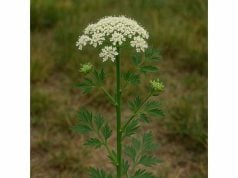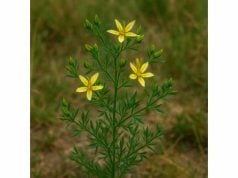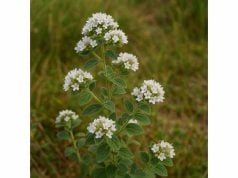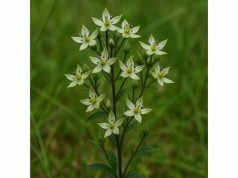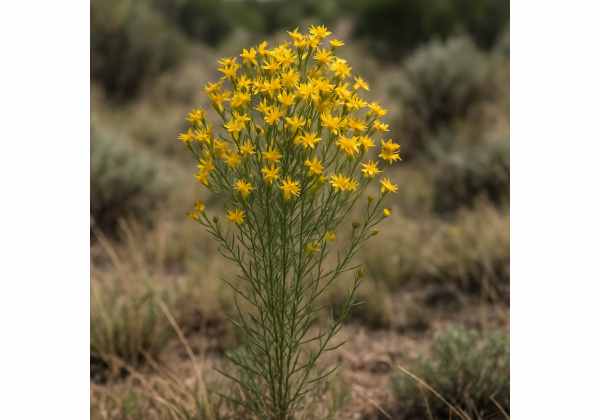
Snakeweed, more precisely broom snakeweed or Gutierrezia sarothrae, is a resinous yellow-flowered shrub of the North American drylands. It has a real history of traditional use, especially in parts of the Southwest and among several Indigenous communities, where it was prepared as a steam, poultice, wash, or decoction for complaints ranging from colds and sore muscles to bites, swellings, and skin troubles. That history makes the plant interesting, but it does not make it simple.
Modern writing about snakeweed often skips an important fact: this is not a well-established clinical herb. The strongest modern evidence centers on phytochemistry, essential oils, and livestock toxicology rather than on human trials. Snakeweed contains flavonoids, diterpenoids, and aromatic compounds that may help explain its folk reputation, yet it is also better known scientifically as a potentially toxic rangeland plant than as a standardized remedy.
A genuinely useful guide therefore needs to be both open-minded and cautious. Snakeweed has medicinal interest, but safety and uncertainty must stay at the center of the conversation.
Core Points
- Snakeweed has a real ethnobotanical history for poultices, washes, steam treatments, and short-term folk remedies.
- Its most plausible benefits today are topical soothing and experimental antimicrobial or anti-inflammatory potential, not proven internal treatment.
- No standardized human oral dose has been established for Gutierrezia sarothrae.
- Pregnant or breastfeeding people, children, and anyone with liver, kidney, or allergy concerns should avoid self-prescribed use.
- The plant is better documented as toxic to livestock than as a clinically validated human herb.
Table of Contents
- What snakeweed is and why it is a difficult herb to judge
- Potential health benefits and what the evidence really supports
- Key ingredients and medicinal properties of snakeweed
- How snakeweed has been used in folk practice
- Dosage, preparation, and why modern self-dosing is not established
- Common mistakes, identification problems, and when not to experiment
- Safety, side effects, interactions, and who should avoid it
What snakeweed is and why it is a difficult herb to judge
Snakeweed is one of those plants that looks straightforward until you begin reading about it. Botanically, Gutierrezia sarothrae is a small woody subshrub in the daisy family, native to large dry regions of western North America. It is often called broom snakeweed, broomweed, matchweed, or simply snakeweed. It grows in plains, uplands, disturbed soils, and rangelands, where it can become abundant after drought, overgrazing, or fire. In that ecological setting it is usually discussed as a hardy native plant, a range-management problem, or a livestock hazard.
Yet the same plant also has an ethnobotanical story. Traditional sources describe it being used for herbal steam, poultices, washes, and small internal preparations for colds, swelling, headaches, aches, insect bites, and other everyday complaints. That older practical use is the reason people still search for its medicinal benefits now. The difficulty is that the scientific literature on the plant does not line up neatly with modern supplement-style expectations. There are almost no human trials, no recognized therapeutic monographs, and no standardized modern dosing framework. Most of what researchers know comes from chemistry studies, essential-oil analysis, ethnobotanical records, and toxicology work.
That gap matters. Some herbs are easy to discuss because they have both a strong traditional reputation and a modern clinical track record. Snakeweed is not one of them. It sits in a more uncertain category: historically meaningful, chemically active, but medically under-validated. That does not make it useless. It means any honest article has to separate traditional use from proven effect.
It also helps to be clear about what snakeweed is not. It is not a mainstream capsule herb like turmeric or milk thistle. It is not a well-studied topical like calendula. It is not a validated internal botanical with a dependable safety profile. In practice, that means the burden of caution is higher. A plant can have interesting chemistry and a real folk history while still being a poor candidate for casual self-treatment.
Another reason snakeweed is hard to judge is variability. The species shows substantial chemical variation depending on geography, growing conditions, and perhaps taxonomic subdivision. That matters because two plants with the same name may not have exactly the same balance of flavonoids, diterpenoids, or volatile oils. It is one reason why folk experience can sound highly positive while scientific generalization stays limited.
The most grounded way to understand snakeweed is as a desert and plains herb with notable traditional external uses, emerging phytochemical interest, and a much stronger safety signal than many people expect. That combination makes it worth learning about, but not worth romanticizing. When a plant is better documented in toxicology than in clinical medicine, caution is not pessimism. It is good judgment.
Potential health benefits and what the evidence really supports
If someone asks what snakeweed “helps with,” the most honest answer begins with limits. There is no strong clinical evidence that Gutierrezia sarothrae reliably treats any human disease. No high-quality human trials show that it reduces pain, cures infections, clears respiratory illness, improves digestion, or speeds wound healing in a predictable way. That does not mean the plant has no medicinal value. It means its current benefit profile is still inferred from traditional use, laboratory chemistry, and related biological findings rather than established human proof.
Traditional use is the first place to look. Ethnobotanical records describe snakeweed being used in several ways: roots in herbal steam for respiratory complaints, the chewed or prepared plant on bites and wounds, washes for skin problems, external applications for swelling, and decoctions or teas for some cold and stomach-related complaints. More recent community-based ethnobotanical work in northeast Mexico also records G. sarothrae as a medicinal plant prepared by decoction, showing that the plant remains part of living regional herbal knowledge rather than only historical archives. That continuity matters, but it still does not turn the herb into a clinically proven treatment.
The most plausible present-day benefits are topical or supportive rather than systemic. Folk uses for sore areas, minor swelling, skin discomfort, and cleansing washes fit what we know about the plant’s aromatic and polyphenolic chemistry. In plain language, snakeweed is easier to imagine as a harsh but interesting external herb than as a gentle daily tonic. That distinction is important because many people approach every medicinal plant as though it should be safe to drink regularly. Snakeweed has never earned that assumption.
There is also some laboratory reason to stay interested. The plant contains compounds with antioxidant, aromatic, and potentially antimicrobial or antiparasitic relevance. Some diterpenes isolated from G. sarothrae have shown antiplasmodial activity in research settings, and its essential oils and resin chemistry suggest biological activity worthy of more study. Still, laboratory promise is not the same thing as a practical health outcome.
A realistic benefit ranking looks like this:
- Most plausible: traditional short-term topical use for minor discomfort, surface irritation, bites, or aching areas.
- Possible but unproven: support for minor respiratory or cold-type complaints in traditional settings.
- Research-interest only: antimicrobial, antiparasitic, antioxidant, and anti-inflammatory actions based on compounds or nonclinical models.
- Not established: evidence-based internal treatment for infection, arthritis, urinary issues, digestive disease, or chronic pain.
That ranking may sound restrained, but it is the most useful version for readers. It protects people from assuming that a desert folk remedy should be handled like a modern wellness herb. If your main goal is dependable skin support, a better-studied option such as calendula for skin support usually makes more sense. Snakeweed remains more of a specialist ethnobotanical plant than a first-line household herb.
Its real value today may be educational as much as practical. It shows how a plant can carry a long medicinal reputation and interesting chemistry while still demanding restraint. That is not a weakness in the plant. It is simply where the evidence stands.
Key ingredients and medicinal properties of snakeweed
Snakeweed is chemically richer than its modest appearance suggests. Studies on Gutierrezia sarothrae describe a plant containing flavonoids, diterpenoids, and volatile compounds that vary considerably by region and plant sample. This chemical diversity is one reason the herb continues to interest researchers even though it lacks a large human clinical literature.
Among the most discussed flavonoids are apigenin, luteolin, calycopterin, jaceidin, sudachitin, and sarothrin. These names matter because flavonoids often help explain why a plant has antioxidant, anti-inflammatory, or surface-protective effects in laboratory settings. On their own, they do not prove a therapeutic outcome in people, but they do make the plant more than an inert folk curiosity. Flavonoid-rich plants often show layered activity rather than one dramatic action, and snakeweed appears to fit that pattern.
The diterpenoid side of the plant is even more interesting from a safety standpoint. Researchers have identified compounds such as polyalthic acid, daniellic acid, nivenolide, and gutierrezial, along with a broader diversity of related diterpenoids. These compounds are relevant because they may help explain part of the plant’s toxic and abortifacient reputation in grazing animals. That same chemistry is why one cannot discuss snakeweed as though it were simply a mild wildflower tea. Its medicinal potential and its hazard profile are tied together.
The volatile fraction also deserves attention. Essential-oil work on Idaho collections of G. sarothrae shows substantial variation, but monoterpenes and related aromatic compounds repeatedly appear, including forms of α-pinene, β-pinene, limonene, camphor-like profiles, verbenone-related compounds, and other constituents depending on chemotype and geography. Older work from other regions also found marked variation. In practical terms, this means snakeweed is not chemically uniform. The smell of the plant hints at resin and volatility, but the precise profile can shift a great deal.
So what medicinal properties can reasonably be attached to this chemistry?
The safest answer is a narrow one:
- Aromatic and resinous properties that may contribute to traditional external uses.
- Antioxidant potential associated with the plant’s flavonoid content.
- Possible antimicrobial or antiparasitic relevance suggested by isolated compounds and laboratory observations.
- Counterirritant or rubefacient-style external action in strong preparations, which may partly explain why some folk applications feel warming or harsh.
That last point is especially important. Traditional external herbs are not always soothing in the modern cosmetic sense. Some plants work because they stimulate, heat, or strongly alter local sensation. Snakeweed may fit that kind of older herbal logic more than the modern “gentle botanical care” model. That is one reason it is easy to use badly.
Chemistry also explains why the plant can be medicinally interesting without being clinically friendly. A phytochemically active plant is not necessarily one that belongs in daily self-care. In snakeweed, the same compound families that create potential benefit also help create uncertainty and risk. That is why the smartest conversation about its medicinal properties always ends in the same place: this is a plant to respect, not to overuse.
How snakeweed has been used in folk practice
The traditional uses of snakeweed are varied, but they also follow a clear pattern: most make more sense as short-term, practical folk applications than as standardized internal therapy. Historical and ethnobotanical records describe the plant being used as a steam, poultice, wash, chewed topical application, or decoction, depending on the community and the complaint.
Some of the most frequently cited uses involve the skin and soft tissues. The plant was applied to wounds, bites, insect stings, swellings, and sore spots. In some traditions, boiled leaves or plant material wrapped in cloth were used as a poultice for sprains, rheumatic pain, or aching limbs. Other uses involved washes or topical liquid preparations for skin discomfort and cleansing. This makes sense in practical herbal terms. A resinous aromatic shrub from a dry climate is exactly the sort of plant many traditions test first on the surface of the body.
Respiratory use also appears repeatedly. Roots used in herbal steam for respiratory trouble, decoctions for colds, and related folk applications suggest that snakeweed had a place in home treatment for ordinary seasonal illness. That does not prove respiratory efficacy by modern standards, but it does show a coherent traditional pattern rather than random one-off claims.
There are also more surprising uses. Ethnobotanical sources mention decoctions for dizziness, indigestion, urinary or gynecologic categories, and even a few highly specific folk applications that modern readers may find unusual. The important point is not to treat every one of these uses as validated. It is to notice the broader herbal logic: snakeweed was part of a working local materia medica, especially in regions where people relied on tough desert and plains plants for everyday needs.
Modern readers can still learn from those patterns. External use is the most understandable bridge between traditional practice and present-day caution. If a plant has a stronger toxicology profile than a clinical record, surface use is generally easier to justify than internal use. That does not make external experimentation automatically safe, but it lowers the stakes. It also places snakeweed closer to the old world of washes and poultices than to the modern world of capsules and tincture marketing.
This is also where comparison helps. If someone mainly wants an astringent or cooling external herb for irritated skin, witch hazel topical care is better studied and easier to handle. Snakeweed belongs to a rougher, more regional tradition. It was often used because it was available, respected, and known locally, not because it had been optimized for safety or standardization.
That is an important difference. Folk use does not mean crude superstition, but it does mean context matters. A plant used skillfully by people who knew it well is not always a plant that translates cleanly into unsupervised modern use. Snakeweed’s traditional record is real and worth preserving. It just needs to be read with restraint.
Dosage, preparation, and why modern self-dosing is not established
This is the section where many herb articles overpromise, and it is exactly where snakeweed demands the most honesty. There is no standardized modern human dose for Gutierrezia sarothrae. No accepted clinical monograph sets a daily amount, no mainstream trial tells readers how many milligrams to take, and no good modern evidence supports routine internal use in the way people often expect from a supplement guide.
That absence is not a minor gap. It is the central fact that should shape how the plant is approached.
Traditional records do describe decoctions, teas, washes, poultices, and steam treatments, but they do not produce a modern, transferable dosage framework. Ethnobotanical surveys often preserve the use category and preparation method while omitting exact quantities, frequency, or treatment duration. Even when a historic report gives a small household-style amount, that does not create a clinically safe dose for today. It only tells us how one community used the plant in a particular context.
The most defensible modern position is this:
- No validated oral dose exists.
- No standardized extract is established for clinical use.
- External folk-style use is easier to understand than internal dosing, but still not risk-free.
If someone is determined to experiment despite the limited evidence, the safest principle is not to start with oral use at all. A cautious person would begin by deciding whether the plant is needed in the first place. In many cases it is not. There are usually better-studied herbs for skin, aches, or respiratory comfort.
When traditional external use is discussed, it usually involves one of four approaches:
- Boiled plant as a wash for skin or surface discomfort.
- Poulticed or wrapped boiled leaves for localized aches or swelling.
- Herbal steam for respiratory or head-related complaints.
- Short-term decocted preparations in specific folk settings.
What should a modern reader do with that information? Mostly, use it as context rather than instruction. Snakeweed is better understood as a historically used herb without a modern self-dosing framework. That means the dosage question is less “How much should I take?” and more “Why would I choose this plant at all when the safe internal range is not defined?”
The strongest advice here is practical:
- do not improvise an oral dose from internet anecdotes,
- do not treat livestock toxicology thresholds as human guidance,
- do not assume that a mild-smelling tea equals a mild herb,
- do not scale up from small folk use into repeated modern supplementation.
In other words, the absence of a standardized dose is not an empty detail. It is the reason the plant should stay in the category of ethnobotanical interest rather than everyday internal use. A careful herbal approach is not only about knowing when to use a plant. It is also about recognizing when the evidence does not support turning a traditional remedy into a modern regimen.
Common mistakes, identification problems, and when not to experiment
One of the biggest mistakes people make with snakeweed is assuming that all “desert medicine” plants are naturally suited to casual home use. That romantic view ignores an important reality: many desert plants are chemically assertive precisely because they evolved in harsh environments. Snakeweed is one of them. Its folk reputation should make people more careful, not less.
Another common mistake is confusion of identity. Broom snakeweed can be mixed up with related snakeweed species, rabbitbrush-like plants, or other yellow-flowering shrubs by non-specialists. In a medicinal context, that is not a small error. If the chemistry of G. sarothrae is already variable within the species, a mistaken identification only increases uncertainty. For anyone considering real use rather than academic interest, correct botanical identification is the first gate, not an optional detail.
A third mistake is borrowing expectations from better-known herbs. Readers sometimes see folk mentions of poultices, aching muscles, or swelling and assume snakeweed belongs in the same practical category as arnica for bruise-oriented topical care. That comparison is useful only up to a point. Arnica has clearer boundaries in topical use. Snakeweed is less standardized, less commercially consistent, and more entangled with toxicity concerns.
There is also a subtler mistake: treating historical use as equivalent to endorsement. Ethnobotanical records tell us what people used, not always what was safest, most effective, or best tolerated by everyone. Traditional medicine includes experimentation, local adaptation, strong preparations, and sometimes harsh remedies. Respecting that history means reading it carefully, not flattening it into “used for centuries, therefore safe.”
People also go wrong by assuming that “topical” means harmless. Snakeweed preparations may be warming, irritating, or overly strong on sensitive skin. A plant with aromatic resins and biologically active diterpenes is not automatically suitable for broken skin, delicate tissue, or repeated large-area application. Even a folk poultice that worked well in one context could be too irritating in another.
The best times not to experiment with snakeweed are clear:
- when the problem is serious, infected, rapidly worsening, or unexplained,
- when the user is pregnant, breastfeeding, elderly, or medically fragile,
- when the plant has not been confidently identified,
- when the only available information comes from informal herbal anecdotes,
- when safer, better-studied options already exist.
There is a broader lesson here. Not every medicinal plant needs to become a personal remedy. Some are better appreciated as part of botanical history, regional herbal knowledge, or future research. Snakeweed may be one of those plants for many readers. The goal of a careful article is not to flatten every herb into a product recommendation. It is to help people choose wisely, including the choice not to use a plant when the evidence is not ready.
Safety, side effects, interactions, and who should avoid it
Safety is the most important part of any snakeweed discussion because this plant is better established in toxicology than in clinical herbalism. Broom snakeweed has been associated with poisoning and abortion in cattle, sheep, and goats, especially when animals consume enough of it under poor grazing conditions. That does not automatically tell us what will happen in humans, but it does make one thing clear: this is not a plant that deserves casual internal experimentation.
The livestock data matter for two reasons. First, they show that snakeweed contains biologically potent compounds rather than harmless filler chemistry. Second, they warn us that reproductive toxicity concerns cannot be brushed aside. When a plant is repeatedly discussed as abortifacient in animals, pregnant individuals should not be advised to use it internally. That is a firm boundary, not a gray area.
Potential human side effects are harder to define because direct studies are limited. Even so, several reasonable concerns stand out:
- skin irritation or burning, especially with strong external preparations,
- allergic reaction, particularly in people sensitive to plants in the daisy family,
- digestive irritation if taken internally,
- unknown liver and kidney burden with repeated or concentrated use,
- possible reproductive risk based on animal toxicology.
Another practical issue is that snakeweed may not fail gently. Some folk descriptions suggest strong local heat or irritation from poulticed preparations. That means even external use can cross from “stimulating” into “too harsh” if preparation strength, contact time, or skin sensitivity are ignored.
Interactions are poorly mapped, which is its own kind of warning. Unknown does not mean safe. A plant with active diterpenes, flavonoids, and volatile constituents should not be casually combined with multiple medicines, especially in someone with chronic illness, autoimmune disease, pregnancy, or fragile digestion. The absence of a known interaction list simply reflects the lack of human study, not a guarantee of compatibility.
People who should avoid self-prescribed snakeweed include:
- pregnant or breastfeeding individuals,
- children,
- people with significant liver or kidney disease,
- anyone with Asteraceae allergy or easily irritated skin,
- people taking multiple medications,
- those seeking internal use for infection, pain, or urinary complaints.
The safest modern position is conservative. Snakeweed may have historical medicinal value, but its risk profile and evidence gaps make it a poor choice for routine oral use. External historical use is easier to understand, but still deserves patch testing, restraint, and a strong preference for intact skin and short duration. If a problem is serious enough to make you consider a hard-to-dose plant with known animal toxicity, it is serious enough to justify medical advice instead.
That conclusion may seem cautious, but it is the only one that fits the evidence. With snakeweed, restraint is not a lack of appreciation. It is the correct form of respect.
References
- The Essential Oil Compositions of Ambrosia acanthicarpa Hook., Artemisia ludoviciana Nutt., and Gutierrezia sarothrae (Pursh) Britton & Rusby (Asteraceae) from the Owyhee Mountains of Idaho – PMC 2024 (Research Article)
- Diterpenoids from Gutierrezia sarothrae and G. microcephala: Chemical diversity, chemophenetics and implications to toxicity in grazing livestock – PubMed 2020 (Research Article)
- BROOM SNAKEWEED 2002 (USDA Plant Guide)
- Broom and Threadleaf Snakeweed (Gutierrezia sarothrae, G. microcephala) : USDA ARS 2018 (Official Safety Reference)
- Medicinal plants used by rural communities in the arid zone of Viesca and Parras Coahuila in northeast Mexico – PMC 2022 (Ethnobotanical Study)
Disclaimer
This article is for educational purposes only and is not a substitute for medical advice, diagnosis, or treatment. Snakeweed is not a clinically established self-care herb, and its documented traditional uses do not override its uncertain human dosing and known toxicological concerns in animals. Do not use Gutierrezia sarothrae as an internal remedy for infection, pain, respiratory illness, urinary symptoms, or pregnancy-related concerns without qualified professional guidance. Seek medical care promptly for bites, infected wounds, severe swelling, persistent digestive symptoms, or unexplained illness.
If this article was useful, please share it on Facebook, X, or any platform where thoughtful herbal education belongs.