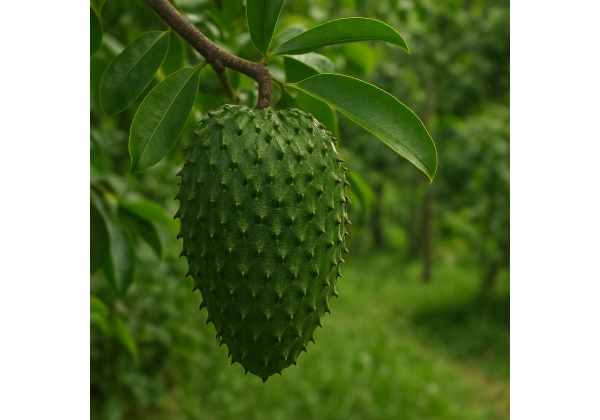
Soursop, or Annona muricata, is a tropical tree known for its large green fruit, fragrant white pulp, and long history in traditional medicine. It is also called graviola or guanábana, and different parts of the plant have been used very differently: the fruit is eaten as food, while the leaves, bark, roots, and seeds are more often used in folk remedies and concentrated supplements. That distinction matters because the fruit’s nutritional value and the leaf’s medicinal reputation are not the same thing.
Modern interest in soursop usually centers on antioxidant compounds, acetogenins, flavonoids, and traditional claims related to inflammation, blood sugar, infections, and even cancer. But the strongest and most honest view is more balanced. Soursop fruit can fit well into a nutrient-rich diet, while soursop leaf products remain much more experimental and carry more safety questions. Promising laboratory findings do not automatically translate into proven human benefits. Used carefully, soursop may offer selective value. Used carelessly, especially in long-term supplement form, it can expose people to risks that deserve serious attention.
Fast Facts
- Soursop fruit provides vitamin C, fiber, and plant antioxidants as a food-first option.
- Soursop leaf extracts show anti-inflammatory and anticancer interest mainly in laboratory and animal studies, not proven human treatment.
- A cautious short-term tea range is about 1 to 2 g dried leaf in 240 mL water, once daily, though no safe long-term supplement dose has been established.
- People who are pregnant, have Parkinson’s disease or tremor, use diabetes or blood pressure medicines, or are being treated for cancer should avoid self-prescribing soursop supplements.
Table of Contents
- What Soursop Is and Why the Plant Parts Are Not Interchangeable
- Soursop Key Ingredients and Medicinal Properties
- What Benefits Are Most Plausible and Where the Evidence Stops
- How Soursop Is Used as Fruit Tea Extract and Traditional Remedy
- Dosage Timing and Duration
- Common Mistakes and Misleading Cancer Claims
- Safety Side Effects Interactions and Who Should Avoid It
What Soursop Is and Why the Plant Parts Are Not Interchangeable
Soursop is a tropical evergreen tree in the Annonaceae family, native to the Caribbean and Central and South America and now widely grown in Africa and Southeast Asia. Its fruit is easy to recognize: large, heart-shaped, and covered with soft spines. Inside is a fragrant white pulp with a sweet-sour flavor that people use in juices, desserts, frozen treats, and fresh fruit preparations. In many households, that edible pulp is the most familiar part of the plant and also the safest place to begin any conversation about soursop.
The confusion starts when the word “soursop” is used as though it means one thing. It does not. Different parts of Annona muricata are used for very different purposes:
- Fruit pulp is mainly food.
- Leaves are the most common part used in teas, capsules, and extracts.
- Bark and roots belong more to traditional medicine than to modern everyday use.
- Seeds are not equivalent to the pulp and should not be treated as a casual edible ingredient.
This distinction matters because the chemistry is not evenly distributed across the plant. The fruit provides fiber, vitamin C, potassium, and a range of antioxidant compounds. The leaves, bark, seeds, and roots contain more concentrated bioactive substances, including annonaceous acetogenins, which are part of the reason the plant attracts so much laboratory interest. Those same compounds are also part of the reason safety concerns exist.
That split helps explain why soursop is often discussed in two very different ways. One conversation is about fruit nutrition. The other is about herbal or supplement use, especially leaf tea or leaf extract. Those are not interchangeable. A serving of fruit pulp in a smoothie is not the same as taking a concentrated capsule made from leaves. Even when both come from the same tree, their likely benefits and risks are not equal.
This is common in medicinal plants that also produce edible fruit. Readers who already understand the difference between a tropical fruit eaten for nourishment and a plant part used more like medicine may see a similar pattern in papaya’s food and therapeutic uses. In both cases, the fruit is much easier to recommend broadly than concentrated non-fruit preparations.
Soursop also carries a reputation problem. It is widely promoted online as though the whole plant were a gentle, universal remedy. That is misleading. The safest and most practical way to understand soursop is to treat the fruit as a food first, and the leaves and extracts as more pharmacologically active preparations that require much more caution. Once that distinction is clear, the rest of the evidence begins to make much more sense.
Soursop Key Ingredients and Medicinal Properties
The medicinal interest in soursop comes from a diverse chemical profile, not from one single “miracle molecule.” Annona muricata contains several groups of compounds that appear repeatedly in reviews of the fruit, leaves, bark, and seeds. The most discussed are acetogenins, alkaloids, flavonoids, phenolic acids, and tannins. Each group helps explain why soursop is studied for antioxidant, antimicrobial, anti-inflammatory, anticancer, and metabolic effects.
The best-known compounds include:
- Annonaceous acetogenins, such as annonacin and related molecules
These are central to soursop’s reputation. They are often linked to the plant’s strong cytotoxic activity in laboratory studies, especially against cancer cell lines. They are also one of the main reasons safety concerns exist, especially around long-term or high-dose leaf and seed use. - Flavonoids and phenolic compounds
These contribute antioxidant and anti-inflammatory activity and are more familiar to readers because they appear in many plant foods and herbs. - Alkaloids
These may contribute biological activity but also add to the complexity of the plant’s safety profile. - Tannins and related polyphenols
These may help explain some traditional uses for digestive or antimicrobial support.
The plant’s medicinal properties are usually described in broad terms:
- antioxidant
- anti-inflammatory
- antimicrobial
- hypoglycemic or glucose-lowering in preclinical models
- antihypertensive in preclinical models
- cytotoxic in laboratory cancer models
That list sounds impressive, but it needs interpretation. A plant can show strong activity in a cell culture or animal study and still fail to become a useful or safe human therapy. Soursop is a good example of that gap. Its chemistry is genuinely active, but activity is not the same as established clinical benefit.
A particularly important nuance is that the compounds driving interest are not always the compounds you want in unlimited amounts. Acetogenins help explain why soursop is studied against cancer cells, but they are also tied to neurotoxicity concerns. This is why stronger is not automatically better. The same chemical class can be both pharmacologically interesting and toxicologically relevant.
This makes soursop different from gentler food-like botanicals. For example, green tea polyphenols and safe daily use are often discussed in terms of antioxidant support, but green tea’s most common forms and exposures are much more familiar and better characterized than soursop leaf extracts. With soursop, the distance between traditional use and reliable supplement guidance is wider.
The most useful way to understand soursop’s chemistry is to separate food value from extract strength. The fruit offers a nutritional matrix. The leaves and supplements offer a more concentrated pharmacological exposure. That is why the phrase “key ingredients” should not lead readers to assume the plant is automatically beneficial. In soursop’s case, the key ingredients explain both the potential and the caution.
What Benefits Are Most Plausible and Where the Evidence Stops
Soursop’s most plausible benefits are not all equally strong. Some belong comfortably in a nutrition conversation. Others are still mostly laboratory findings. The best way to read the evidence is to rank claims from most realistic to most speculative.
1. Nutritional support from the fruit pulp
This is the easiest benefit to defend. Soursop fruit provides vitamin C, fiber, and a variety of plant compounds. As a fruit, it can contribute to hydration, antioxidant intake, and general diet quality. This is not glamorous, but it is one of the most practical reasons to eat soursop. It belongs in the same food-first category as other tropical fruits that are useful because they improve the diet rather than because they act like drugs.
2. Antioxidant and anti-inflammatory potential
This is plausible, but most of the evidence is preclinical. Leaf and fruit extracts show antioxidant activity and anti-inflammatory effects in laboratory and animal models. That supports cautious language such as “may offer antioxidant support” or “shows anti-inflammatory potential.” It does not justify saying soursop treats inflammatory disease.
3. Blood sugar and blood pressure support
There is growing preclinical interest here, especially for leaf and peel extracts. Some studies suggest effects on glucose metabolism, enzyme inhibition, and blood pressure regulation. But the evidence in people is limited and not strong enough to present soursop as a reliable tool for diabetes or hypertension management. At most, it is an experimental adjunct, not a substitute for established care.
4. Antimicrobial activity
Soursop extracts have shown antibacterial and antifungal activity in experimental settings. This may help explain traditional uses, but it remains far from proving that a tea or supplement will meaningfully treat infections in humans.
5. Anticancer claims
This is the area where the gap between hype and proof is greatest. Soursop leaf and other plant-part extracts have shown cytotoxic effects against cancer cells in laboratory studies, and animal work has added to the interest. There are also small human cancer studies and one recent systematic review of human data, but the evidence remains weak, heterogeneous, and at high or critical risk of bias. That means soursop is not a proven cancer treatment and should never be marketed or used as a replacement for oncology care.
A realistic evidence ladder looks like this:
- strongest and safest: fruit as food
- plausible but not well confirmed: antioxidant and anti-inflammatory support
- experimental: blood sugar and blood pressure support
- highly overmarketed: anticancer treatment claims
This is why soursop does not fit neatly beside gentler digestive or daily herbs. For a reader seeking a more established kitchen-to-remedy bridge, ginger’s evidence-backed digestive uses are far easier to interpret. Soursop is more controversial because its boldest claims rest heavily on preclinical science and its safety questions are more serious.
So what can honestly be said? Soursop may offer useful nutrition as a fruit, and its leaves contain compounds with clear biological activity. But the evidence stops well short of supporting the most dramatic claims attached to it. With this plant, the biggest benefit often comes from resisting exaggeration.
How Soursop Is Used as Fruit Tea Extract and Traditional Remedy
Soursop is used in several very different forms, and each one changes both the experience and the risk profile. The most practical and lowest-risk use is the fruit itself. Ripe soursop pulp is commonly eaten fresh or blended into juices, smoothies, frozen desserts, and custard-like preparations. In this form, the plant behaves mainly as a tropical fruit food rather than as a concentrated medicinal herb.
That food-first role matters because many people meet soursop through pulp or juice and then assume that leaf tea or capsules are simply stronger versions of the same thing. They are not. The most common forms are:
- fresh fruit pulp
- strained juice
- leaf tea or infusion
- capsules and tablets
- liquid extracts
- traditional decoctions of leaves or bark
Fruit pulp is the easiest form to understand. It fits normal eating patterns and usually does not involve the same level of concentrated exposure that leaf products do. Even here, preparation matters. Whole-fruit blending should avoid crushing the seeds, since the seeds are not the same as the edible pulp.
Leaf tea is often marketed as a calming, cleansing, or immune-supportive drink. In traditional practice, it has been used for fever, sleep, inflammation, digestive complaints, and general wellness. Modern supplement use often pushes it further, especially toward anticancer claims. That leap is where problems begin. A leaf tea may feel gentle, but the leaf is also the part most strongly associated with acetogenins and neurotoxicity concerns.
Capsules and extracts go even further. They make dosing look precise, but in reality they often create more uncertainty:
- Which plant part was used?
- Was it a leaf-only product or a mixed-part extract?
- Is it standardized?
- How much acetogenin exposure is included?
- Was the product tested for identity and contaminants?
This is why the “how to use it” question is inseparable from the “should you use it?” question. For most healthy adults, the fruit is the most reasonable place to stop. Leaf products belong to a narrower and more cautious category.
A helpful comparison is guava fruit versus guava leaf use. Like soursop, guava has both a food identity and a leaf-remedy identity, but with soursop the safety gap between fruit and leaf preparations is even more important.
A practical guide looks like this:
- Use the fruit as food if you simply want to enjoy soursop.
- Treat leaf tea as a short-term herbal experiment, not a daily indefinite tonic.
- Be extra skeptical of capsules marketed with cancer language.
- Avoid seeds, bark, and root products unless supervised by someone appropriately trained.
- Stop immediately if a product causes dizziness, tremor, nausea, or worsening weakness.
With soursop, form changes everything. The plant can be a wholesome fruit in one context and a questionable supplement in another. Keeping those roles separate is one of the smartest ways to use it safely.
Dosage Timing and Duration
There is no universally established safe or effective medicinal dose for soursop supplements. That is one of the most important facts readers should know. The plant is sold in too many forms and with too much variation to reduce it to one reliable number. The fruit, leaf tea, powdered capsules, and concentrated extracts do not behave as interchangeable products.
For practical purposes, dosing should be divided by form.
Fruit as food
This is the simplest category. A moderate serving of ripe pulp, roughly 100 to 200 g, is a reasonable food amount for most adults. In this role, soursop is being used like fruit rather than like medicine.
Leaf tea or infusion
Because no well-established safe long-term intake exists, any home use should stay conservative. A cautious short-term range is about 1 to 2 g of dried leaf in 240 mL of hot water, used once daily rather than several times a day. Even this should not be treated as risk-free, especially if someone plans to use it for weeks or months.
Capsules and extracts
These are the hardest to dose responsibly. Labels may use different plant parts, extraction methods, and serving sizes. Some clinical cancer-adjunct studies have used specific extract products, including 300 mg doses, but that does not create a general rule for every commercial supplement.
Timing also matters less than people often think. Soursop is not a fast-acting performance herb. Most users take leaf products once daily, often in the evening because the tea is sometimes marketed as calming. But there is no strong evidence that one time of day is clearly superior. What matters more is duration and cumulative exposure.
That is where the caution becomes stronger:
- short-term use is easier to justify than long-term use
- food use is easier to justify than extract use
- light tea is easier to justify than concentrated capsules
- repeated daily exposure raises more safety questions than occasional use
A sensible self-limiting approach might look like this:
- Start with the fruit, not a supplement.
- If using leaf tea, keep the preparation light.
- Limit use to a short defined period rather than turning it into a daily routine.
- Avoid combining multiple soursop products.
- Stop if you notice dizziness, tremor, nausea, low appetite, or unusual weakness.
For readers seeking a gentler evening tea or stomach-calming herb, chamomile for sleep and digestive comfort is much easier to recommend than soursop leaf. That does not mean soursop has no value. It means the dosage conversation is inseparable from the safety conversation.
The most honest dosing advice is therefore simple: enjoy the fruit in normal food amounts, and be very conservative with leaf products because the evidence does not support routine, long-term, or aggressive supplement use.
Common Mistakes and Misleading Cancer Claims
Soursop is one of the easiest plants to misuse because it sits at the intersection of fruit, folk medicine, and online miracle-claim culture. Many of the worst mistakes come from collapsing those three categories into one. The fruit seems wholesome, the leaf seems natural, and the marketing sounds urgent. That combination can mislead even careful readers.
The most common mistake is assuming laboratory anticancer results prove clinical benefit. Soursop extracts do show cytotoxic effects in test tubes and animal models. That is real science. But cancer cell death in a lab dish is not the same as safe, effective treatment in humans. Human studies remain small, inconsistent, and generally low quality. Presenting soursop as a proven cancer remedy is not evidence-based.
A second mistake is treating leaf supplements as stronger fruit. They are not. The leaf has a different chemical profile and a different risk profile. The same person who tolerates soursop pulp well may not respond the same way to daily leaf tea or concentrated extract.
Other common errors include:
- blending the seeds with the pulp and assuming the whole fruit is equally suitable for consumption
- using multiple soursop products at once, such as tea, capsules, and liquid extract
- taking it daily for months because it is “natural”
- using it alongside diabetes or blood pressure medicines without accounting for possible additive effects
- delaying medical care for serious symptoms while experimenting with leaf remedies
- believing product labels that promise detox, immune cure, or cancer reversal
A more subtle mistake is thinking uncertainty means harmlessness. In reality, uncertainty often means the opposite: there is not enough evidence to know the safest dose, the safest duration, or the safest population. With soursop, that uncertainty matters because the plant contains compounds that are not merely mild antioxidants. Some are potent enough to raise real toxicological questions.
Marketing language also deserves attention. When a product promises that it “kills cancer cells 10,000 times better than chemotherapy” or similar phrases, it is almost always collapsing preclinical findings into a false clinical claim. That is not just exaggerated. It can be dangerous.
A helpful rule is to separate claims into three buckets:
- reasonable: fruit nutrition, preclinical antioxidant activity
- possible but unproven: short-term supportive roles in research settings
- misleading: proven cancer cure, safe universal detox, limitless daily leaf use
Soursop does not need invented miracles to be interesting. It is already a notable tropical fruit with a chemically active leaf. But the more dramatic the claim becomes, the more likely it is to outrun the evidence. With this herb, skepticism is not cynicism. It is part of safe use.
Safety Side Effects Interactions and Who Should Avoid It
Safety is the most important section in any honest article on soursop. The fruit pulp used as food is usually the lowest-risk part of the plant. The leaves, seeds, bark, roots, and concentrated supplements raise more serious concerns. The central issue is the presence of acetogenins, especially annonacin, which have been associated with potential neurotoxicity and have raised concern about prolonged use of Annonaceae-based supplements.
Possible side effects from leaf products or extracts may include:
- nausea
- stomach upset
- dizziness
- low appetite
- weakness
- lower blood pressure
- lower blood sugar
- headache
The bigger concern is not just short-term stomach intolerance. It is long-term exposure, especially in concentrated supplement form. Risk assessments have concluded that the currently available data are too limited to establish a safe intake level for Annona muricata supplements. That is a major caution, not a minor detail.
People who should avoid self-directed soursop supplement use include:
- pregnant or breastfeeding people
- children
- anyone with Parkinson’s disease, tremor, neuropathy, or other movement-disorder concerns
- people with low blood pressure
- people using diabetes medicines
- people using blood pressure medicines
- anyone actively being treated for cancer
- people with unexplained weight loss, persistent vomiting, or severe illness who need proper diagnosis rather than supplement experimentation
Interaction concerns are not fully mapped, but caution is reasonable in several situations:
- Antidiabetic drugs because some extracts may lower blood sugar
- Antihypertensive drugs because some extracts may lower blood pressure
- Sedating or neurologically active medicines where overlapping effects or underlying neurologic vulnerability matter
- Cancer therapy because the herb is often used in this setting without strong evidence and with uncertain interaction risk
Another practical safety point is product identity and part used. A capsule labeled “graviola” may not make it obvious whether it contains leaf, stem, mixed herb, or a poorly standardized extract. That uncertainty matters more with soursop than with many gentler herbs. Poor labeling can turn a questionable product into a much riskier one.
This is also where context matters. Someone enjoying fresh soursop fruit a few times in season is in a very different situation from someone drinking strong leaf decoctions every day while taking medication for diabetes or cancer. Those two uses should never be treated as equally safe.
The overall bottom line is clear: soursop fruit can be a reasonable food, but soursop leaf and supplement use deserve real caution, especially with repeated, long-term, or high-dose exposure. With this plant, restraint is part of responsible use.
References
- Annona muricata: Comprehensive Review on the Ethnomedicinal, Phytochemistry, and Pharmacological Aspects Focusing on Antidiabetic Properties 2023 (Review)
- A Review on Annona muricata and Its Anticancer Activity 2022 (Review)
- Effect of Annona muricata (Soursop) on Patients with Cancer: A Systematic Review 2024 (Systematic Review)
- Risk assessment regarding the use of Annona muricata in food supplements 2020 (Risk Assessment)
- The safety and tolerability of Annona muricata leaf extract: a systematic review 2020 (Systematic Review)
Disclaimer
This article is for educational purposes only and is not medical advice, diagnosis, or treatment. Soursop fruit can be part of a healthy diet, but soursop leaf teas, extracts, and supplements are not proven treatments for cancer, diabetes, infections, or chronic inflammatory disease. Because safety questions remain, especially around long-term supplement use and potential neurotoxicity, do not use soursop products to replace professional medical care. Speak with a qualified healthcare professional before using soursop leaf products if you are pregnant, breastfeeding, taking prescription medicines, living with a neurologic condition, or receiving cancer treatment.
If this article helped you, please share it on Facebook, X, or any platform where accurate health information matters.