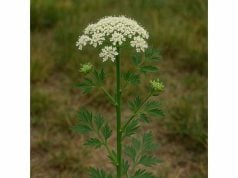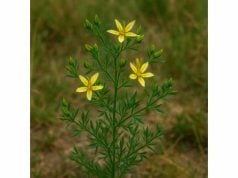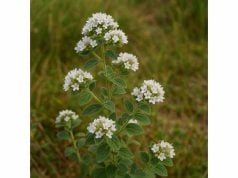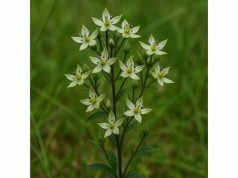
Spignel, or Meum athamanticum, is a highly aromatic mountain herb in the carrot family that has long been valued as both a medicinal root and a culinary plant. Older European traditions used it for digestive discomfort, urinary complaints, catarrh, and gentle restorative support, while rural food cultures prized its leaves and roots in spirits, liqueurs, and strongly scented dishes. Modern research remains limited, but it does show why the plant attracted attention in the first place. Spignel contains essential-oil compounds, phthalides, cinnamic acid derivatives, flavonoids, and other phenolic substances that may help explain its carminative, antioxidant, and mildly anti-inflammatory reputation.
Still, this is not a well-standardized modern herb with strong human trial data. Its strongest current support comes from phytochemical work, ethnobotanical records, and early laboratory studies rather than large clinical trials. That makes a careful, evidence-aware approach especially important. A helpful article on spignel should explain what the plant is, what is actually in it, which benefits are most plausible, how it has traditionally been used, and why dosage and safety need more restraint than many herbal summaries suggest.
Key Facts
- Spignel is best known for traditional digestive and aromatic uses rather than for strong modern clinical evidence.
- Its volatile oil and phenolic compounds give it plausible carminative, antioxidant, and mildly anti-inflammatory potential.
- Experimental topical extracts have been studied at 0.5 to 5%, but no standardized oral medicinal dose has been established.
- Avoid concentrated self-use during pregnancy, breastfeeding, childhood, or if you have Apiaceae allergies.
- Wild harvesting of the root is a poor idea in vulnerable habitats because underground collection can damage local populations.
Table of Contents
- What spignel is and where its reputation comes from
- Key ingredients and what gives it its aroma
- Medicinal properties and the most plausible health benefits
- Traditional uses, modern forms, and how spignel is taken
- Spignel dosage, timing, and what to do when no standard dose exists
- Safety, side effects, and who should avoid it
- How to think about spignel realistically
What spignel is and where its reputation comes from
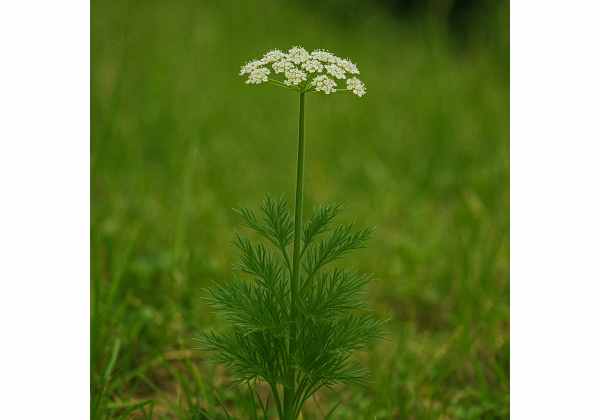
Spignel is a perennial aromatic herb in the Apiaceae family, the same broad plant group that includes caraway, fennel, angelica, and many other strongly scented kitchen and medicinal plants. It grows naturally in cool upland and mountain regions, and its feathery foliage, white umbels, and intensely fragrant roots have made it memorable in both folk botany and regional cuisine. Common names such as spignel, meu, baldmoney, and bearwort all reflect how widely the plant was known in older European herbal culture.
Its medicinal reputation is older than its scientific one. In Central European and alpine traditions, spignel was used as an aromatic digestive, a warming root, and a support herb for urinary or catarrhal complaints. More recent ethnobotanical records show that knowledge of the plant survives most clearly in food and drink traditions, especially in mountain areas where it was added to spirits or used as a spice for vegetable dishes. Some Italian ethnobotanical work also records leaves and stems being eaten for their deflating and digestive properties rather than treated as a strong formal medicine.
This blend of medicinal and culinary use is important because it shapes how the plant should be understood today. Spignel is not a modern “supplement superstar” with an extract industry behind it. It is better thought of as a traditional aromatic herb whose older uses were tied to smell, warmth, digestion, and gentle stimulation. That sort of profile is common in the carrot family, where strongly scented roots and seeds were often used to wake up sluggish digestion or support the body in cold, damp, or heavy conditions.
Spignel’s mountain identity also matters. It was never a mass-market herb on the scale of peppermint or chamomile. In many regions it became a local specialty rather than a universal household remedy. That may be one reason why modern clinical research is sparse. A plant can remain culturally important for centuries and still never become a major subject of pharmaceutical development.
It also helps to avoid confusing spignel with lookalike aromatic Apiaceae species. Historically, plants in this family were sometimes grouped together too loosely in folk naming and liquor traditions. That means the exact species matters. Meum athamanticum has its own aroma, its own chemistry, and its own ethnobotanical record. The safest way to approach it is as a distinct herb, not as a generic “mountain caraway” or substitute for better-known root medicines.
For readers who want a clearer point of comparison, spignel occupies a similar aromatic tradition to angelica and other classic Apiaceae roots, though it is much less studied and much less standardized. That is a useful frame for the rest of the article: a traditional mountain aromatic with real phytochemical interest, but limited direct clinical proof.
Key ingredients and what gives it its aroma
The reason spignel attracted both cooks and healers is simple: it is intensely aromatic. Much of its character comes from its volatile oil, especially the monoterpene-rich fractions found in aerial parts and root-associated tissues. A species-specific essential-oil analysis of leaves and stems from Spain found a predominantly monoterpene profile, with very little sesquiterpene material by comparison. The principal constituents in that study were (E)-beta-ocimene, gamma-terpinene, terpinolene, and p-cymene. Those names may sound technical, but they explain a lot of what people experience as pungent, bright, resinous, warming, and almost sweet-spicy aroma.
That essential-oil profile gives spignel much of its likely functional identity. Monoterpenes in aromatic herbs are often linked with carminative, mildly antimicrobial, and decongesting actions, especially when a plant has traditionally been used for bloating, sluggish digestion, or upper-airway heaviness. They do not prove medical effectiveness on their own, but they make the older uses easier to understand.
Spignel also contains more than volatile oil. Chemical work and later reviews point to other groups that matter:
- flavonoids
- phenolic compounds
- cinnamic acid esters
- phthalide derivatives
- resinous and gum-like fractions
- carbohydrate-rich root material
Older phytochemical studies identified cinnamic acid esters such as methyl ferulate and methyl caffeate, along with quinic-acid-related compounds. These are important because phenolic acids and their derivatives often contribute antioxidant and enzyme-modulating activity. Spignel also contains phthalide derivatives, including ligustilide-related compounds. In medicinal plant chemistry, phthalides are especially interesting because they often show smooth-muscle, aromatic, or circulation-related pharmacological promise, though the details depend very much on the exact compound and dose.
That means spignel’s chemistry is layered rather than simple. The essential oil explains its fragrance and much of its traditional aromatic appeal. The phenolic and phthalide fractions help explain why the plant has attracted laboratory interest beyond culinary use. Meanwhile, the root’s starch and resin components fit with its history as a decocted or infused mountain root rather than a delicate tea herb.
This combination of volatile and nonvolatile compounds is one reason spignel feels more like a root tonic and spice herb than a fragile leafy infusion. It behaves chemically like a plant that can be used in spirits, decoctions, and aromatic preparations, not just in quick teas.
For readers comparing it with other digestive aromatics, the chemistry makes spignel feel closer in style to caraway and other volatile-oil-rich Apiaceae plants than to mucilaginous or bitter-only herbs. The difference is that caraway has far more everyday clinical familiarity, while spignel remains a niche plant with a strong traditional profile and a lighter modern evidence base.
Medicinal properties and the most plausible health benefits
Spignel is often described in older sources as digestive, diuretic, warming, and aromatic. Those labels still make sense, but they need to be translated carefully into modern evidence language. The best current description is that spignel has plausible medicinal properties supported by traditional use, phytochemistry, and limited laboratory data, rather than strong human-trial proof.
The most credible potential benefits are these:
- digestive comfort
- gentle carminative support
- mild urinary or draining support
- aromatic support for catarrhal heaviness
- antioxidant and skin-protective potential in laboratory settings
The digestive angle is the strongest historically. Ethnobotanical records and traditional herb use repeatedly connect spignel with flatulence, digestive heaviness, and stomach discomfort. That fits well with its essential-oil chemistry. Strongly aromatic Apiaceae herbs are often used to reduce gas, stimulate digestive secretions, and make heavy foods easier to tolerate. Spignel appears to belong naturally in that group, even though it lacks the volume of clinical data available for better-known herbs.
Urinary and renal support is another recurring traditional theme. Older descriptions link spignel with urinary tract complaints and diuretic-style action. Modern readers should interpret that cautiously. “Diuretic” in historical herbal language often meant a plant was used in conditions involving retained fluid, sluggish elimination, or irritative urinary symptoms. It does not mean the plant has been clinically established as a treatment for infection, stones, or kidney disease.
Respiratory and catarrhal uses also appear in traditional records, and recent review work on historical treatments for nasal congestion notes root decoctions of Meum athamanticum in that context. Again, this should be treated as a traditional use signal, not as modern proof that the herb is an expectorant or decongestant with predictable results.
The most interesting modern research angle is probably skin and antioxidant activity. In vitro work using water-glycerin extracts found that spignel-containing preparations showed cytocompatibility with fibroblasts and keratinocytes and had measurable elastase and collagenase inhibitory activity. At 5%, spignel extract inhibited elastase activity by about 74% in that experimental model, and it also showed enzyme inhibition relevant to skin-aging research. That is encouraging for cosmetic and topical exploration, but it does not automatically justify oral anti-aging claims.
This is where realism matters. Spignel may deserve respect as a traditional aromatic digestive and a chemically active plant. But there is still a large gap between “biologically interesting” and “clinically proven.” The most honest takeaway is that its benefits are likely to be modest, traditional, and best understood within the context of gentle digestive and aromatic support.
If your main goal is relief from everyday bloating or post-meal cramping, peppermint has a much clearer modern digestive evidence base. Spignel may still be worthwhile, but it belongs more in the heritage-herb category than in the evidence-led first-choice category.
Traditional uses, modern forms, and how spignel is taken
Spignel has never had one single use pattern. Instead, it has lived in the overlap between medicine, food, mountain liqueur culture, and household aromatics. That mixed identity is part of its charm, but it also means modern readers need to distinguish clearly between culinary use, traditional herbal use, and experimental topical use.
Historically, the root was the medicinal centerpiece. It was boiled into decoctions, infused into spirits, or included in aromatic herbal preparations intended for digestion, urinary complaints, and general warming support. In some regions, the leaves and stems were also valued, especially as flavoring ingredients. Slovenian ethnobotanical work shows that spignel was once used in spirits and as a spice for vegetable dishes in alpine communities. Italian field research records leaves and stems being eaten specifically for digestive and deflating purposes.
That food-medicine overlap matters because spignel is not simply a remedy. It is also a regional flavor plant. In practice, that means some people may encounter it first in liqueurs or bitters rather than in teas or capsules. It also means its traditional dose was often woven into food or drink rather than rigidly standardized.
Today, spignel is most likely to appear in five forms:
- Dried root for decoction
This is the most traditional medicinal format. It suits a woody aromatic root better than a quick infusion. - Alcoholic bitters or herbal drops
These fit the plant’s historical use in spirits and liqueur culture, though quality varies greatly. - Powdered root or mixed digestive formulas
Convenient, but harder to authenticate and easier to substitute. - Fresh or dried leaves as culinary flavoring
This is more a food use than a medicinal one, but still historically meaningful. - Experimental extracts for cosmetic or topical work
This is the newest and most research-driven use case.
A practical point that often gets missed is that the root and aerial parts are not interchangeable in tradition. The root carries the stronger medicinal reputation. Leaves are more often associated with flavor, seasonal use, and lighter digestive or culinary roles.
Another overlooked point is conservation. Ethnobotanical literature stresses that harvesting underground parts of perennial wild plants is especially problematic because the plant cannot recover if the root is removed. That makes casual root foraging a poor choice, especially in regions where the plant is rare, legally protected, or locally declining. In modern use, cultivated or responsibly sourced material is far preferable.
For readers thinking in culinary-herbal terms, spignel sits naturally beside fennel and related aromatic carminative herbs, though its flavor is often stronger, wilder, and more mountain-root-like. That comparison helps clarify its best modern role: not a miracle supplement, but a traditional aromatic with both culinary and gentle medicinal relevance.
Spignel dosage, timing, and what to do when no standard dose exists
This is the section where honesty matters most. There is no well-established modern oral medicinal dose for spignel based on strong human trials. That does not make the herb unusable, but it does mean the smartest approach is traditional, low-intensity, and cautious.
In other words, the absence of a standard dose is not a small technical gap. It shapes how the herb should be used. Without robust human dosing studies, the safest path is to think in terms of form, strength, and purpose, rather than pretending there is a universally correct number of grams or milliliters.
A useful way to frame spignel dosing is by category:
For culinary use
Use small amounts of leaf or root as a flavoring herb, bittering ingredient, or aromatic addition to food or spirits. This is the most conservative and historically grounded modern use.
For traditional decoction use
A light decoction of authenticated root is more consistent with older herbal practice than capsules or highly concentrated extracts. Because no validated oral range has been established, any self-trial should be modest, short, and not stacked with multiple other aromatic roots at the same time.
For topical or experimental cosmetic use
Laboratory work studied water-glycerin extracts in the range of 0.5 to 5%, especially when looking at skin-cell compatibility and elastase or collagenase inhibition. That range is useful for understanding the research, but it is not an automatic do-it-yourself formula.
Timing
When used as a traditional digestive aromatic, spignel makes the most sense:
- before or with heavy meals
- after meals associated with bloating or cold digestive discomfort
- in divided, modest preparations rather than one large dose
Because it is strongly aromatic, some people may find it more tolerable with food than on an empty stomach. That is especially true if the preparation is bitter, resinous, or alcohol-based.
How long to use it
Spignel is not a “rescue” herb with a well-defined rapid action in modern evidence terms. A cautious self-trial, if someone chooses to make one, should be short and goal-specific. Think in terms of a simple question: does this seem to help digestion, heaviness, or aromatic comfort within a week or two? If not, there is little reason to continue.
What not to do
- do not assume that stronger bitters equal better results
- do not translate topical extract percentages into oral doses
- do not use wild-harvested root from uncertain habitats
- do not rely on commercial drops or powders without species identification
If your main interest is aromatic digestive support with clearer household-level preparation logic, chamomile and other well-established tea herbs are easier to use with confidence. Spignel is better treated as a traditional specialty herb whose dose should remain modest because the evidence still is.
Safety, side effects, and who should avoid it
Spignel does not have a large modern side-effect literature, which means the safest approach is guided by chemistry, traditional use, and basic caution rather than false reassurance. A lack of reported harm is not the same as strong proof of safety.
The most likely concerns come from three areas:
- aromatic essential-oil content
- plant-family sensitivity
- uncertainty around identity and preparation strength
Because spignel is a strongly scented Apiaceae herb, the most plausible side effects are digestive or sensory rather than dramatic. A concentrated preparation could potentially cause:
- stomach irritation
- reflux or warming discomfort
- nausea in sensitive users
- headache from overly strong aromatic exposure
- dislike or intolerance because of its pungent, resinous taste
People with Apiaceae allergies should be more cautious than average. The carrot family includes several aromatic plants that can trigger contact reactions, oral irritation, or broader sensitivity in susceptible individuals. That does not mean spignel is highly allergenic, only that family-level caution is sensible.
Pregnancy and breastfeeding are clear situations where restraint is appropriate. Safety data are too limited to recommend medicinal self-use. The same applies to children. A culinary trace in food is one thing; concentrated herbal use is another.
Drug interaction data are also thin. That means it is unwise to combine concentrated spignel preparations casually with multiple medicines, especially when treating urinary complaints, chronic digestive disorders, or inflammatory disease. A person already taking prescription therapy should not substitute spignel for appropriate care simply because it sounds natural or traditional.
A second kind of safety issue is source quality. Commercial or homemade preparations may not always be what they claim to be. Confusion with other aromatic roots, variable extraction strength, and wild-collected material from polluted or protected habitats all raise problems that have nothing to do with the herb’s inherent chemistry and everything to do with real-world use.
A third issue is ecological safety, which is often ignored. Ethnobotanical conservation discussions are clear that collecting underground parts from perennial wild plants can be especially damaging. If the root is the medicinal part, harvesting it destroys the individual plant. That makes responsible cultivation and careful sourcing part of the safety conversation, not a separate issue.
For readers who want a stronger, better-defined essential-oil herb, thyme and other established aromatic herbs usually offer clearer safety guidance than spignel. With spignel, modesty is the safest rule: modest sourcing, modest preparations, and modest expectations.
How to think about spignel realistically
Spignel is a heritage herb, not a miracle herb. That may be the single most helpful way to understand it.
It has several genuine strengths. It has a long traditional record, especially in mountain and rural European settings. It has a chemistry profile that makes aromatic digestive and mild topical interest plausible. It has enough ethnobotanical continuity to show that people valued it for more than flavor alone. And it has just enough modern in vitro work to suggest that its older reputation was not purely imaginary.
But it also has important limits. It lacks the human clinical evidence needed to support bold claims. It is poorly standardized in trade. It can be confused with other aromatic roots. And its strongest historical use belongs to specific cultural and ecological contexts rather than to modern, one-size-fits-all supplement culture.
A realistic expectation for spignel looks like this:
- as a traditional digestive aromatic, it is plausible
- as a culinary and spirit herb, it is well supported by ethnobotany
- as a mild topical research plant, it is interesting
- as a strongly proven medicinal herb, it is not there yet
This balanced view protects the plant from two opposite mistakes. One is dismissing it because it is old-fashioned and locally rooted. The other is exaggerating it into a hidden super-herb simply because it is unusual. Both miss the point.
Spignel’s best modern value may be in reminding us that some plants belong on the boundary between food, medicine, and cultural tradition. They are not irrelevant because the trials are small. They are simply better approached through careful sourcing, respectful use, and honest limits.
If someone wants a highly evidence-led digestive herb, spignel would not be the first recommendation. If someone is interested in traditional mountain aromatics, carefully sourced herbal bitters, or the older European root-herb tradition, then it becomes much more meaningful.
That is ultimately where spignel fits best: as a distinctive aromatic root with real heritage, useful chemistry, modest modern evidence, and a clear need for caution. It is worth knowing, worth preserving, and worth using thoughtfully, but not worth overstating.
References
- Meum athamanticum – an interesting plant with multifunctional effects 2024 (Review)
- Traditional Use of Wild Edible Plants in Slovenia: A Field Study and an Ethnobotanical Literature Review 2024 (Ethnobotanical Review)
- Saving the local tradition: ethnobotanical survey on the use of plants in Bologna district (Italy) 2024 (Ethnobotanical Study)
- Comparison of the Antiaging and Protective Properties of Plants from the Apiaceae Family 2020 (In Vitro Study)
- Essential oil composition of the leaves and stems of Meum athamanticum Jacq., from Spain 2004 (Phytochemical Study)
Disclaimer
This article is for educational purposes only and is not medical advice, diagnosis, or treatment. Spignel is a traditional aromatic herb with limited modern clinical evidence, and no standardized oral medicinal dose has been established. Speak with a qualified healthcare professional before using it medicinally if you are pregnant, breastfeeding, taking prescription medicines, managing chronic digestive or urinary symptoms, or have known allergies to plants in the Apiaceae family. Use only well-identified, responsibly sourced material, and avoid harvesting wild roots from vulnerable habitats.
If you found this article helpful, please consider sharing it on Facebook, X, or another platform you prefer so more readers can discover careful, evidence-aware herbal guidance.