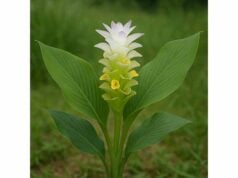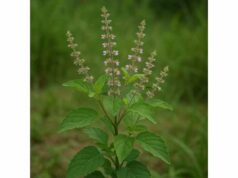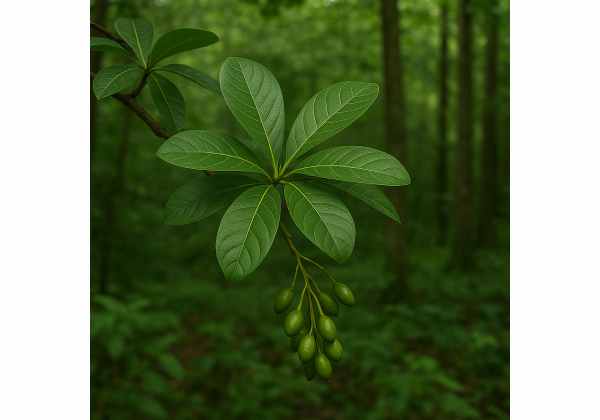
Terminalia chebula is the dried fruit of a traditional medicinal tree widely known in Ayurveda as haritaki. Although the title uses the broader name “Terminalia,” the evidence behind most health claims refers specifically to Terminalia chebula fruit, not to the entire Terminalia genus. That distinction matters, because this herb has a long history of use for digestion, bowel regularity, oral care, and general restorative formulas, yet the strength of modern evidence varies sharply by preparation and by health goal.
What makes Terminalia chebula especially notable is its unusually dense content of hydrolyzable tannins, polyphenols, and related compounds such as chebulagic acid, chebulinic acid, gallic acid, and ellagic acid. These help explain why the fruit is studied for antioxidant, anti-inflammatory, antimicrobial, and tissue-protective effects. At the same time, it is important not to overstate what is known. Some benefits are traditional and plausible, some have early clinical support, and others still rest mainly on laboratory or animal data.
A practical guide is essential here, because the fruit powder, extract, mouth rinse, and multi-herb formula do not behave in exactly the same way.
Key Insights
- Terminalia chebula may support bowel regularity and post-meal digestive comfort, especially when used as fruit powder rather than as a highly processed extract.
- Its strongest human evidence is emerging in oral health, skin appearance, and joint comfort, while broader metabolic and longevity claims remain less certain.
- A practical oral range for fruit powder is about 1 to 3 g once or twice daily, usually started low and taken with warm water or after meals.
- People who are pregnant, breastfeeding, taking diabetes medicines, or using high-dose concentrated extracts should be cautious.
- Repeated high-dose tannin-rich extracts may create safety concerns that do not apply to modest culinary or traditional use.
Table of Contents
- What Terminalia chebula is and why the fruit matters
- Key ingredients and medicinal properties of Terminalia chebula
- Terminalia chebula health benefits with realistic expectations
- Traditional uses and how modern evidence lines up
- How to use Terminalia chebula in powders, teas, rinses, and extracts
- Dosage, timing, and how long to use it
- Safety, side effects, and who should avoid it
What Terminalia chebula is and why the fruit matters
Terminalia chebula is a deciduous tree in the Combretaceae family. Its dried fruit is the part most often used in classical Ayurvedic, Tibetan, and regional Asian medicine. English names such as chebulic myrobalan and black myrobalan appear in older literature, but haritaki remains the name many readers recognize. It is often described as one of the foundational fruits in traditional herbal practice because it has been used across a wide range of digestive, oral, skin, and restorative applications.
A key point, however, is that “Terminalia” is a genus, not a single medicinal identity. Other species such as Terminalia arjuna and Terminalia bellirica have their own properties and should not be treated as interchangeable with Terminalia chebula. Most of the research relevant to this article focuses on the fruit of T. chebula, especially whole fruit powder, aqueous extracts, hydroalcoholic extracts, and topical or oral health preparations made from the fruit.
The fruit matters because it is the best-studied part. Traditional systems have mainly relied on the mature dried fruit, and modern phytochemical work confirms that it contains a dense concentration of tannins and phenolics that likely drive much of the herb’s reputation. This is also the form that appears in classic formulas such as Triphala, where it is combined with two other fruits, one of which is often discussed as amalaki in traditional restorative formulas.
In practical use, people usually encounter Terminalia chebula in one of five forms:
- dried fruit powder
- tablets or capsules made from powder
- standardized extracts
- mouth rinses or oral-care formulations
- multi-herb blends such as Triphala
These forms matter because the herb’s effect can shift with concentration and delivery. A fruit powder used for bowel regularity is not the same as a concentrated tannin-rich extract used in a skin or joint trial. Likewise, a mouth rinse designed for plaque control should not be used as evidence for general internal health claims.
The fruit’s taste also offers a clue to its function. It is characteristically astringent, bitter, and somewhat sour. That sensory profile often points to a tannin-rich herb that can tighten tissues, influence the gut, and interact strongly with mucosal surfaces. This helps explain why Terminalia chebula appears in oral rinses, digestive formulas, and traditional preparations intended to “tone” rather than simply stimulate the body.
The most useful starting view is to think of Terminalia chebula as a fruit-based medicinal herb with broad traditional use and selective modern support. It is neither just another generic antioxidant nor a universal cure. The fruit itself is the real medicinal focus, and understanding that keeps the rest of the article grounded.
Key ingredients and medicinal properties of Terminalia chebula
The reputation of Terminalia chebula depends largely on its chemistry. The fruit is especially rich in hydrolyzable tannins, a class of polyphenols with strong astringent and antioxidant properties. Among the most frequently discussed compounds are chebulagic acid, chebulinic acid, corilagin, gallic acid, ellagic acid, chebulic acid, and various galloyl glucose derivatives. These names may sound technical, but together they explain why the fruit shows such a wide range of biological effects in the laboratory.
Hydrolyzable tannins are central to the herb’s personality. They help create the fruit’s drying, puckering taste and are often linked to tissue-protective, antimicrobial, and antioxidant behavior. Tannins can also affect the gut in noticeable ways. In smaller or balanced doses, they may support bowel tone and digestive comfort. In larger doses or more concentrated forms, they may feel too drying or irritating for some users.
The fruit also contains flavonoids and phenolic acids, which add to its antioxidant profile. These compounds are frequently studied for their ability to reduce oxidative stress and influence inflammatory signaling. This is one reason Terminalia chebula is sometimes compared conceptually with curcumin and other polyphenol-rich anti-inflammatory botanicals, although the chemistry and practical use are quite different. Curcumin is a defined yellow pigment from turmeric, while Terminalia chebula is a tannin-heavy fruit with broader astringent and mucosal effects.
A useful way to understand the medicinal properties of Terminalia chebula is to group them by likely action:
- Antioxidant: The fruit has strong free-radical-scavenging potential in many experimental models.
- Anti-inflammatory: Several compounds appear to influence inflammatory pathways, though the strength of human evidence varies by condition.
- Antimicrobial: Extracts have shown activity against certain oral and gut-related microbes in laboratory and oral-care contexts.
- Mucosal and tissue protective: The fruit’s tannins may help explain its traditional use in bowel, mouth, and skin care.
- Digestive-regulating: Traditional use suggests it can support bowel regularity and digestive comfort, especially in powder form.
That said, chemistry alone does not prove clinical benefit. Many plant compounds behave impressively in cell studies but only modestly in real people. This is especially true when the active molecules are not well standardized, when the herb is part of a multi-herb formula, or when absorption changes across products.
Another subtle point is that Terminalia chebula is not a typical essential-oil herb. Its value comes much more from polyphenols and tannins than from fragrant volatile oils. That gives it a different feel from aromatic digestive herbs. Instead of warming, fragrant stimulation, its action is more astringent, toning, and restorative.
In practical terms, the chemistry suggests why this fruit has been used for such diverse purposes: it interacts with tissues, microbes, inflammation, and oxidative stress all at once. But the same chemistry also explains why dose and preparation matter so much. A broad-spectrum fruit herb can be helpful, yet the balance between support and excess depends heavily on how much is taken and in what form.
Terminalia chebula health benefits with realistic expectations
The health benefits of Terminalia chebula are often presented too broadly. A more useful approach is to separate areas where there is direct human evidence, areas where traditional use is plausible but not well tested, and areas where enthusiasm comes mostly from laboratory research.
Digestive support and bowel regularity
This is one of the herb’s oldest and most credible traditional uses. The fruit is often used for sluggish digestion, incomplete bowel movement, mild constipation patterns, and the heavy feeling that can follow overeating. The likely explanation involves a mix of tannins, fiber-like bulk from the powder, and regulatory effects on gut motility. It is not a harsh stimulant laxative. In practice, it behaves more like a bowel-regulating herb that may help some people move toward regularity, especially when used consistently in modest doses.
Still, it should not be treated as the same thing as soluble-fiber support for regularity. Psyllium works mainly through bulk-forming soluble fiber, while Terminalia chebula works through a more complex blend of tannins and fruit constituents. For some people, that makes it feel more “toning.” For others, it can be less predictable.
Oral health
This is one of the more convincing modern areas. Human trials on mouthwash formulations suggest that Terminalia chebula extract may help reduce plaque, gingival inflammation, and oral microbial burden. That does not prove that swallowing the herb improves all aspects of dental health, but it does support its traditional role in the mouth.
Skin and tissue appearance
A newer human trial on standardized oral fruit extract found improvements in facial sebum output, erythema, and wrinkle appearance over several weeks. This is promising, though it is still early and product-specific. It should be understood as emerging evidence, not a universal anti-aging claim.
Joint comfort and inflammatory tone
Some standardized fruit extracts have been studied for joint comfort and mobility in active or overweight adults, with encouraging results. This does not make Terminalia chebula a replacement for proven joint therapies, but it suggests a possible role in mild discomfort patterns where oxidative stress and low-grade inflammation are relevant.
Metabolic and broader protective claims
This is where caution matters most. The fruit is often promoted for blood sugar, liver support, neuroprotection, immune resilience, and longevity. These ideas are scientifically interesting, but much of the evidence remains preclinical. They are better described as promising areas of study than as proven benefits.
A balanced summary looks like this:
- strongest traditional support: digestion and bowel regulation
- stronger human support: oral health, selected skin endpoints, and some joint outcomes
- plausible but less certain: metabolic, liver, and neuroprotective effects
- not yet justified: sweeping “detox” or anti-aging promises
The fruit clearly has biological activity. The mistake is assuming that biological activity automatically means broad clinical certainty. Used wisely, Terminalia chebula can be a useful herb. Used carelessly as a cure-all, it becomes another exaggerated supplement story.
Traditional uses and how modern evidence lines up
In traditional medical systems, Terminalia chebula has been used for an unusually wide range of conditions. Classical descriptions often portray it as a regulating, cleansing, and strengthening fruit rather than as a single-purpose remedy. It has been used for constipation, bloating, poor appetite, hemorrhoids, sore throat, gum issues, skin conditions, wound care, and support during recovery from chronic imbalance.
That broad use can sound exaggerated to modern readers, but it becomes more understandable when the herb is viewed as a mucosal and digestive regulator. A fruit that affects bowel tone, oral tissues, inflammation, and microbial balance could reasonably end up in many traditional formulas without being a miracle plant.
The place where tradition and modern evidence align most clearly is digestion. Traditional use emphasizes bowel regulation rather than forceful purging, and that fits the way many people still use haritaki powder today. Oral care is another good match. The astringent, antimicrobial character of the fruit makes its use in rinses and gum care plausible, and human mouthwash studies now support that direction.
A second alignment appears in restorative formulas. Terminalia chebula is commonly paired with other herbs and fruits rather than used alone for every goal. This is especially true in formulas for gut function, tissue repair, and longer-term balance. Readers familiar with neem’s traditional oral and tissue-support uses will recognize the same pattern: an herb may be individually interesting, yet its most enduring use often happens inside broader formulations rather than as a stand-alone modern supplement.
Where modern evidence does not fully support tradition is in the more expansive claims. Traditional literature may describe benefits for many organs and conditions, but modern research has not yet translated those claims into large, high-quality clinical proof. This does not mean the old uses were meaningless. It means they were developed in a different medical framework and often relied on long-term pattern-based prescribing, not isolated outcome measures.
Another useful distinction is between whole fruit use and concentrated extracts. Traditional practice usually leaned toward powders, decoctions, and combinations. Modern products often isolate or standardize specific tannin fractions. That can improve reproducibility, but it also changes the character of the intervention. A proprietary extract used in a joint or skin study is not identical to the whole herb a practitioner might choose for bowel regularity.
In real-life terms, traditional use gives Terminalia chebula credibility and direction, but it does not remove the need for modern judgment. The herb still looks strongest where traditional logic, phytochemistry, and human evidence overlap:
- bowel regularity
- digestive support
- oral care
- mild tissue and inflammation-related support
That overlap is where this fruit is most useful today. Beyond that, the herb becomes more exploratory, which is not a bad thing, but it does require more honesty about limits.
How to use Terminalia chebula in powders, teas, rinses, and extracts
The best way to use Terminalia chebula depends on the goal. This is not a herb where one form suits every purpose. The same fruit can be used as a bowel-regulating powder, a mouth rinse, a standardized extract, or part of a traditional multi-herb blend, and those forms are not interchangeable.
Fruit powder
This is the most traditional and flexible form. Powdered fruit can be taken with warm water, mixed into honey or ghee in traditional settings, or included in Triphala-like blends. Powder is usually the most sensible option when the goal is bowel regularity or broader digestive support. It is also the form most likely to reflect classical use.
Tea or decoction
A tea made from crushed fruit or powder can be useful for light digestive support, though it is usually less convenient than capsules. Because the fruit is astringent and bitter, tea is not always the most pleasant form for new users, but it can work well when someone wants a gentler, lower-dose introduction.
Mouth rinse
This is one of the clearest targeted uses. Extract-based mouth rinses have been studied for plaque and gingival inflammation, and this form makes sense because the herb acts directly on the tissues being treated. In this respect, it behaves more like a focused oral-care herb than like a general wellness tonic.
Standardized extracts
Extracts are the most common form in modern trials on skin and joint support. They are useful when dose precision matters, but they also create the most confusion because labels may emphasize marketing names more than meaningful chemistry. A reader comparing whole fruit powder to extract capsules should think of them the way they might compare fresh ginger with concentrated ginger preparations: same plant, different effect profile, different intensity, and different practical use.
Multi-herb formulas
Many people encounter Terminalia chebula not by itself, but inside classical formulas. This can be appropriate, especially for digestive or restorative goals, but it also makes it harder to know which ingredient is responsible for a benefit or side effect. Multi-herb formulas can be effective, yet they are less transparent for self-testing.
A practical matching guide helps:
- Use fruit powder for bowel regularity and traditional digestive support.
- Use tea when you want a lighter trial and can tolerate the taste.
- Use mouth rinse for oral hygiene goals.
- Use standardized extracts only when the product clearly states dose and composition.
- Be careful with multi-herb blends if you are trying to evaluate your response precisely.
In daily life, the herb works best when the form fits the problem. People often get poor results not because the herb is useless, but because they pick a preparation designed for a different goal. A good herb becomes much more useful when it is matched to the right tissue and the right kind of symptom.
Dosage, timing, and how long to use it
There is no single official dose for Terminalia chebula, because the literature includes whole fruit powder, aqueous extracts, hydroalcoholic extracts, mouth rinses, and proprietary standardized products. Still, practical ranges can be described if the form is kept clear.
Whole fruit powder
For ordinary self-care, a reasonable starting range is:
- 1 to 3 g once daily
- sometimes increased to 1 to 3 g twice daily if tolerated
This is often taken with warm water, after meals, or at bedtime depending on the goal. Lower doses may suit people using it for general digestive support. Some people prefer evening use when bowel regularity is the main concern.
Tea or decoction
A tea made from roughly 1 to 2 g of powder or crushed fruit per cup is a modest place to begin. Because the taste is strongly astringent, tea is often used more for short trials than for long-term daily use.
Standardized extracts
Modern clinical trials have used very specific products. In some studies, doses around 250 mg twice daily or 500 mg twice daily were used for several weeks to support skin or joint-related outcomes. These numbers are helpful as context, but they do not authorize substitution with any random extract on the market. Product standardization matters.
This is the same logic used when comparing plant powders with targeted extracts in other supplement categories, such as boswellia extract dosing for joint-focused use. The form determines the range, not just the herb name.
Mouth rinses
Oral-care studies used formulated rinses, not casual homemade swishes from kitchen powder. When the goal is gum or plaque support, it is better to use a product designed for that purpose than to improvise strength and contact time.
Timing and duration
Timing should match the goal:
- after meals for digestive heaviness
- in the evening for bowel support
- regularly for several weeks when testing extract-based goals like skin or joint comfort
- briefly and symptom-targeted for mouth-rinse use
A sensible self-trial lasts two to four weeks for powder-based digestive use and six to twelve weeks for more systemic goals using standardized extracts. If no benefit appears within that kind of window, the herb may not be the right fit.
Two final dose principles matter:
- start lower than you think you need
- do not confuse research doses from standardized extracts with whole-fruit powder doses
That distinction prevents a lot of avoidable frustration. With Terminalia chebula, thoughtful dosing matters more than aggressive dosing.
Safety, side effects, and who should avoid it
For most healthy adults, modest use of Terminalia chebula fruit powder is generally better tolerated than concentrated extracts. Still, safety is not a simple yes-or-no issue. The herb’s tannin-rich chemistry means that dose, frequency, and product form all affect risk.
Common side effects
At practical oral doses, the most likely problems are digestive:
- stomach discomfort
- cramping
- loose stools or, less often, excessive dryness
- nausea if taken in a very concentrated form on an empty stomach
These reactions usually reflect dose mismatch rather than true toxicity. A lower dose or a better-timed dose often solves the problem.
High-dose extract concerns
This is where caution becomes more important. Animal toxicity work on hydrolyzable tannin-rich fractions suggests that repeated high doses may create mild disturbances in liver and kidney markers. That does not mean the ordinary fruit powder is unsafe when used reasonably. It means concentrated tannin-rich extracts should not be treated casually just because the underlying herb is traditional.
Pregnancy, breastfeeding, and fertility questions
Normal food-like exposure inside traditional formulas may be different from medicinal dosing, but the evidence is not strong enough to recommend self-prescribed therapeutic use during pregnancy or breastfeeding. There are also experimental data that raise broader reproductive questions at certain doses, which is another reason to stay conservative.
Medication and health-condition cautions
People should use extra care if they:
- take diabetes medicines or insulin
- have chronic liver or kidney disease
- are prone to dehydration or unstable bowel habits
- are using multiple tannin-rich herbal products at once
- plan to use a high-potency extract rather than fruit powder
The caution with diabetes treatment comes from the herb’s possible metabolic activity. Even if the effect is modest, combining supplements with medication without monitoring can create confusion or risk.
Product quality matters
Because Terminalia chebula appears in powders, capsules, proprietary extracts, and multi-herb blends, quality varies widely. Strongly marketed products may not disclose enough about tannin content, extraction method, or the part used. This is another reason to begin with a simple, reputable fruit powder or a clearly labeled extract rather than a vague “detox” product.
A balanced safety view looks like this:
- low to moderate risk in modest traditional use
- higher uncertainty with concentrated repeated-dose extracts
- more caution needed in pregnancy, breastfeeding, chronic disease, and medication use
In other words, Terminalia chebula is not a reckless herb, but it is also not a “more is better” herb. It rewards careful dosing and realistic goals. For most readers, the safest strategy is to begin with small amounts, stay close to the fruit form, and avoid turning a traditional tonic into an unsupervised high-intensity supplement experiment.
References
- Comprehensive Review on Fruit of Terminalia chebula: Traditional Uses, Phytochemistry, Pharmacology, Toxicity, and Pharmacokinetics 2024 (Review)
- A comprehensive review on the diverse pharmacological perspectives of Terminalia chebula Retz 2022 (Review)
- Randomized Double-Blind Placebo-Controlled Supplementation with Standardized Terminalia chebula Fruit Extracts Reduces Facial Sebum Excretion, Erythema, and Wrinkle Severity 2023 (RCT)
- Comparative evaluation of terminalia chebula extract mouthwash and chlorhexidine mouthwash on plaque and gingival inflammation – 4-week randomised control trial 2015 (RCT)
- Repeated oral dose toxicity study on hydrolysable tannin rich fraction isolated from fruit pericarps of Terminalia chebula Retz in Wistar albino rats 2018 (Toxicology Study)
Disclaimer
This article is for educational purposes only and is not a substitute for medical advice, diagnosis, or treatment. Terminalia chebula is a traditional medicinal fruit with promising properties, but the strength of evidence depends on the preparation and the health claim. Speak with a qualified healthcare professional before using it therapeutically if you are pregnant, breastfeeding, managing a chronic illness, or taking prescription medicines, especially for blood sugar, kidney, or liver conditions.
If you found this article useful, please share it on Facebook, X, or another platform that helps others discover reliable herbal health information.