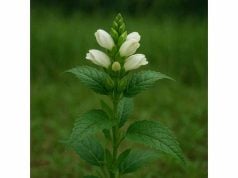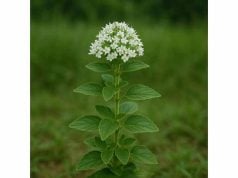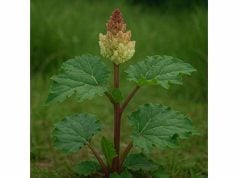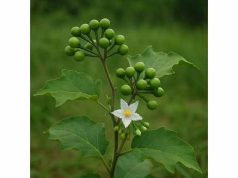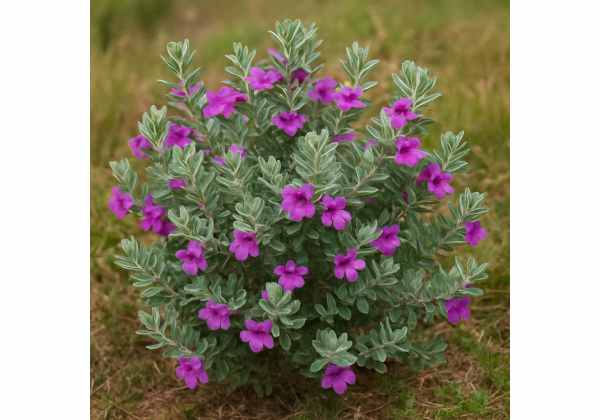
Texas sage, Leucophyllum frutescens, is a silvery, drought-tolerant shrub best known as a striking ornamental of the American Southwest and northern Mexico. Yet behind its garden reputation lies a quieter herbal story. In traditional Mexican medicine, the plant has been used for complaints such as cough, fever, rheumatic discomfort, and certain liver and bladder troubles. Modern laboratory research now suggests that Texas sage contains a noteworthy mix of phenolic compounds, diterpenoids, and volatile constituents that may help explain its antioxidant, anti-inflammatory, antimicrobial, and tissue-protective effects.
Still, this is not a plant with strong human clinical evidence or a standardized self-care dose. It should not be confused with culinary sage, and it should not be treated as a routine tea herb simply because its common name sounds familiar. The most useful way to understand Texas sage is as a promising but still under-studied medicinal shrub: one with real phytochemical interest, meaningful traditional context, and a safety profile that calls for thoughtful restraint rather than casual use.
Core Points
- Texas sage shows promising antioxidant and anti-inflammatory activity in extract-based and laboratory research.
- Traditional use and early studies suggest possible value for respiratory comfort, rheumatic pain, and liver support, but human evidence remains limited.
- Research-only dosing has used isolated verbascoside at about 20 mg/kg in rats for 4 days; no validated human therapeutic dose has been established.
- Pregnant or breastfeeding people, children, and anyone with liver disease or complex medication use should avoid unsupervised medicinal use.
Table of Contents
- What Texas sage is and why it is often misunderstood
- Key ingredients and medicinal properties
- Potential health benefits and what the research actually supports
- Traditional and modern uses of Texas sage
- Dosage and how to approach it carefully
- Safety, side effects, and interactions
- How to set realistic expectations and choose better options when needed
What Texas sage is and why it is often misunderstood
Texas sage is one of those plants that suffers from its own common name. Although it is often called Texas sage, purple sage, or cenizo, it is not a true culinary sage from the Salvia genus. Instead, it belongs to Leucophyllum, a group of hardy shrubs adapted to dry, sunny landscapes. Its gray-green leaves, soft texture, and purple blooms give it a calm, elegant look that fits desert gardens beautifully, but its medicinal story is much less familiar than its ornamental one.
That gap creates confusion. Many readers assume Texas sage must behave like kitchen sage, which has a long history in cooking, gargles, and household herbalism. Others assume that because it is a popular landscape shrub, any medicinal use must be minor or purely folkloric. In reality, the picture is more interesting. Texas sage has documented traditional use in parts of Mexico for cough, fever, asthma-like symptoms, rheumatic pain, and some liver-related complaints. At the same time, it remains an under-studied medicinal plant with relatively little human clinical research.
The first practical point is that plant identity matters. Texas sage should not be treated as a substitute for culinary sage, white sage, or clary sage. Those plants have different chemical profiles, different traditional roles, and different safety expectations. Confusion between common names can lead to poor decisions, especially when people use advice meant for one “sage” species on another.
The second practical point is that form matters. A garden shrub with folk-medicinal history does not automatically become a good candidate for everyday tea, capsules, or tinctures. With Texas sage, the most relevant scientific work has focused on leaf and aerial-part extracts, essential oils from leaves and flowers, and isolated constituents such as verbascoside and leubethanol. That tells us the plant is pharmacologically interesting. It does not automatically tell us that home use is standardized, simple, or risk-free.
Texas sage is best understood in three overlapping roles:
- An ornamental shrub with strong ecological and landscaping value
- A traditional medicinal plant in regional practice
- A phytochemical source of compounds with intriguing biological activity
That combination makes it worth serious attention, but also careful framing. Readers looking for an everyday household herb may be disappointed by how much is still uncertain. Readers interested in medicinal plant research, on the other hand, may find Texas sage especially appealing because it bridges folk knowledge and modern phytochemistry in a way that still feels active and unfinished.
If you enjoy aromatic, resinous, and phenolic-rich shrubs, it may help to compare Texas sage conceptually with other aromatic shrubs such as rosemary. The comparison is not chemical identity, but it helps place Texas sage in the broader world of strongly adapted, bioactive, dryland plants whose medicinal potential goes beyond their ornamental appeal.
Key ingredients and medicinal properties
Texas sage draws interest because it appears to contain more than one meaningful class of bioactive compounds. This is not a one-molecule plant. Its chemistry includes phenolic compounds, lignans, volatile constituents, and specialized diterpenoids, each contributing to a broader medicinal profile. That helps explain why the plant shows activity in more than one research area, including antioxidant, antimicrobial, anti-inflammatory, and tissue-protective models.
One of the most important compounds identified from Leucophyllum frutescens is verbascoside, a caffeoyl phenylethanoid glycoside. Verbascoside is already known from other medicinal plants and is often associated with antioxidant and anti-inflammatory effects. In Texas sage, it matters because it offers a plausible bridge between traditional use and modern pharmacology. When researchers isolated verbascoside from the aerial parts, they found a constituent substantial enough to merit direct pharmacologic study rather than mere mention in a phytochemical list.
Another notable group includes lignans and related phenolic compounds. Earlier work on the plant identified lignans with biological activity, and more recent profiling has continued to show a broad mixture of antioxidant-relevant molecules. These compounds may not be famous in consumer herbalism, but they are exactly the kind of substances researchers watch when a plant shows possible tissue-protective or anti-inflammatory action.
Texas sage also contains volatile compounds in its leaves and flowers. Essential-oil analysis has identified differing chemical profiles between plant parts, with leaf and flower oils showing distinct dominant constituents. These volatile fractions are relevant because they appear to contribute to enzyme-inhibitory activity in skin-aging models, particularly against collagenase and elastase. That makes Texas sage somewhat unusual: it is not only a candidate for traditional internal medicine research, but also a plant of possible cosmetic and topical interest.
A further point of interest is leubethanol, a serrulatane diterpenoid associated with antimycobacterial activity. This compound has helped move Texas sage beyond general antioxidant discussion into more targeted antimicrobial research. Even more importantly, its biosynthesis has been studied, which suggests the plant is chemically distinctive enough to matter beyond a single screening assay.
In practical terms, the main medicinal properties linked to Texas sage are:
- Antioxidant activity
- Anti-inflammatory potential
- Antimicrobial and antimycobacterial activity
- Hepatoprotective or liver-supportive potential in animal models
- Enzyme inhibition relevant to skin structure and aging research
The caution, however, is just as important as the promise. Most of these properties come from laboratory studies, extract studies, compound isolation, or animal research. That means Texas sage has credible pharmacologic signals, but not the kind of human clinical depth that would justify sweeping claims. It is a promising medicinal plant, not a settled one.
For readers interested in broader plant chemistry, Texas sage fits naturally into the category of phenolic-rich botanicals that attract interest for inflammation and oxidative stress. In that respect, it can be compared loosely with better-known anti-inflammatory herbs such as boswellia, though Texas sage remains much less clinically established and far more exploratory at this stage.
Potential health benefits and what the research actually supports
The biggest mistake in writing about Texas sage is to treat every traditional claim as a confirmed health benefit. The better approach is to separate what is biologically plausible, what has been shown in early research, and what remains unproven in people. Once that distinction is made, the plant becomes much easier to understand.
1. Antioxidant support
This is one of the clearest areas of promise. Texas sage extracts have shown meaningful antioxidant activity in laboratory assays, especially in relation to phenolic and flavonoid content. That matters because antioxidant activity often helps explain why a plant shows potential in inflammation, tissue protection, and broader stress-response models. On its own, this does not prove a practical benefit in daily human use, but it gives the plant a credible foundation rather than a purely folkloric reputation.
2. Anti-inflammatory potential
Texas sage also appears promising in anti-inflammatory research. Some studies have linked extracts or isolated compounds to inhibition of pathways associated with inflammatory damage and oxidative stress. Traditional use for rheumatic pain, fever, or respiratory irritation becomes easier to understand when viewed through this lens. Still, “anti-inflammatory” should not be read as equivalent to “works like a proven over-the-counter medicine.” The signal is encouraging, but it is still early.
3. Liver-protective activity
One of the more striking findings comes from animal work on verbascoside isolated from Texas sage. In a rat model of post-necrotic liver injury, the compound reduced key markers associated with liver damage. This is an important signal because it partly supports older traditional use of the plant for liver-related complaints. But it is still a research model, not a human clinical recommendation. It suggests potential value; it does not yet establish a self-care protocol.
4. Antimicrobial and antimycobacterial activity
This is another area where Texas sage stands out. Extracts and isolated compounds from the plant have shown activity against Mycobacterium tuberculosis in laboratory settings, and the diterpenoid leubethanol has attracted attention for this reason. That does not make Texas sage a treatment for tuberculosis or respiratory infection. It does, however, place the plant among medicinal species with serious enough antimicrobial potential to be studied beyond basic screening.
5. Skin and tissue-aging relevance
Leaf and flower essential oils have shown inhibitory activity against collagenase and elastase in vitro. This is not the strongest reason to explore Texas sage medicinally, but it does suggest that external and cosmetic applications may deserve more attention than they currently receive.
The best summary is that Texas sage shows multi-directional early promise. It does not appear limited to one narrow property. Yet the evidence remains uneven. There are no large human trials showing how much to take, for how long, or for which condition it works best. That is why the plant is most honestly described as promising rather than proven.
For readers whose main concern is inflammation-linked discomfort, a more established option may be arnica for localized pain and bruise support or another better-studied herb. Texas sage may eventually earn a larger place in evidence-based herbal practice, but for now, its strongest role is as a research-backed traditional plant with interesting but still limited translational evidence.
Traditional and modern uses of Texas sage
Texas sage is not a classic pantry herb, and that shapes how it has been used. Its traditional role is more medicinal than culinary, and more regional than globally standardized. In northern Mexico and nearby regions, different parts of the plant have been used in folk medicine for fever, cough, asthma-like complaints, rheumatic pain, and certain liver or bladder disorders. These uses form the cultural background for modern pharmacologic interest.
Traditional use usually centers on the aerial parts rather than any single commercial extract. That matters because older plant use rarely divided compounds the way laboratories do now. A folk practitioner worked with leaves, stems, and general preparations; a modern scientist isolates verbascoside, characterizes volatile oils, and names serrulatane diterpenoids. Both views matter, but they are not interchangeable.
In practical terms, Texas sage seems to have occupied three overlapping traditional lanes:
- Support for respiratory discomfort such as cough or chest irritation
- Use in feverish or inflammatory states
- Use for pain or discomfort described as rheumatic
It may also have been valued for broader protective effects, especially where the liver was concerned. Modern animal work gives that older reputation a more plausible mechanistic frame, but not yet a clinical one.
In contemporary use, Texas sage is still much more likely to be encountered as a landscape shrub than as a finished herbal product. That means modern “use” often falls into one of four categories:
1. Ethnobotanical interest
Researchers and herbal historians use Texas sage as an example of a regionally important plant whose folk uses deserve documentation and pharmacologic follow-up.
2. Experimental extract research
Scientists investigate leaf, flower, and aerial-part extracts for antioxidant, enzyme-inhibitory, cytotoxic, or antimicrobial effects.
3. Isolated-compound research
Verbascoside and leubethanol are studied more directly for specific biological actions.
4. Possible topical or cosmetic exploration
Because the essential oils show collagenase and elastase inhibition, Texas sage may have a future in carefully formulated skin-support products.
Where Texas sage is not especially strong is as a normalized consumer herb with clear capsules, teas, or tincture instructions. That is a useful warning sign. When a plant is promising in the lab but still rare in standardized consumer use, it usually means one of two things: the field is still immature, or the plant is harder to use safely and consistently than early enthusiasm suggests.
That does not make traditional use irrelevant. It makes it contextual. Texas sage’s folk history offers a strong clue about what communities found useful: respiratory support, pain relief, fever management, and general protective action. But modern users should not treat those traditional lanes as ready-made treatment plans.
For readers drawn to the respiratory side of Texas sage’s history, eucalyptus as a more established aromatic respiratory herb provides a useful comparison. Texas sage is interesting partly because it touches similar themes, but it does not yet have the same degree of modern practical clarity.
Dosage and how to approach it carefully
This is the section where honesty matters most. There is no validated human therapeutic dose for Texas sage that can be recommended with real confidence. That is the clearest dosage fact in the literature. The plant has pharmacologic promise, but it has not yet been translated into a reliable household dosing framework.
The most concrete dose reported in the recent literature is not a human herbal dose at all. It comes from animal research on isolated verbascoside from Leucophyllum frutescens, where rats were given about 20 mg/kg orally for 4 days before toxin exposure. That study helps researchers think about mechanism and potency, but it should not be casually converted into a self-prescribed human dose. Research dosing in animals and home dosing in people are not the same thing.
That leaves readers with a practical question: how should Texas sage be approached outside research settings?
The safest answer is to treat it as a plant without a standardized internal self-care dose. That means:
- Avoid guessing at capsule or tincture amounts
- Avoid concentrated homemade extracts
- Avoid essential-oil-style use unless a product is specifically formulated and clearly intended for that purpose
- Avoid long-term daily oral use without qualified guidance
If someone is using the plant in a traditional way, the most conservative approach would be dilute, occasional, and short-term, not strong, daily, or concentrated. But even this should be framed as caution, not endorsement. The lack of human dose-finding studies matters because it means we do not know the best effective amount, the upper safe range, or the ideal duration for use.
A useful way to think about Texas sage dosing is to separate three levels:
Research dose
- Example: isolated verbascoside at 20 mg/kg in rats
- Useful for science, not for self-prescribing
Traditional folk use
- Mild plant preparations used regionally
- Historically interesting, but not standardized
Modern evidence-based dose
- Not established at this time
That middle category is where many herbal articles become misleading. They take a traditional use pattern and present it as if it were a clinically validated dose. Texas sage does not support that kind of certainty. The responsible message is that the plant remains pre-standardization from a human-use standpoint.
If your goal is simply a mild, better-studied tea or relaxation herb, Texas sage is probably not the best starting point. A gentler and much clearer option would be chamomile as a better-defined infusion herb, which comes with far more practical dosing tradition and a stronger consumer safety history.
In short, the most accurate dose guidance for Texas sage is not a number. It is a boundary: no validated human medicinal dose has been established, so concentrated self-treatment is not a wise use of the plant.
Safety, side effects, and interactions
Texas sage is not known as a dramatic poison plant, but that does not make medicinal use simple. The core safety problem is not obvious toxicity from casual contact with the shrub in a garden. The real issue is the absence of well-developed human safety data for therapeutic use. That gap changes how the plant should be discussed. When human evidence is thin, caution is not pessimism. It is good practice.
The first rule is straightforward: ornamental familiarity is not medicinal safety. A plant can be common in yards and still be poorly characterized as an internal remedy. Texas sage should not be treated casually just because it looks harmless in landscaping.
Possible concerns include:
- Stomach upset from concentrated internal use
- Individual sensitivity or allergic reaction
- Unpredictable exposure from homemade extracts
- Unknown interaction potential in people using multiple medications
- Extra uncertainty in pregnancy, breastfeeding, childhood, and chronic disease
One useful point from current research is that isolated verbascoside from Texas sage did not show acute cytotoxicity in the referenced animal study, and the reported median lethal dose was well above the research dose used. That is reassuring, but only up to a point. It supports the idea that one isolated compound is not acutely dangerous in that specific model. It does not prove that whole-plant self-medication is broadly safe, especially over time or in vulnerable groups.
Who should be especially cautious or avoid unsupervised medicinal use?
- Pregnant or breastfeeding people
- Children and teenagers
- People with liver disease
- People managing asthma or chronic respiratory disease
- People taking multiple prescription medicines
- People with significant kidney, autoimmune, or inflammatory disease
- Anyone using concentrated extracts from uncertain sources
Side effects have not been characterized as clearly as they have for mainstream herbs. That means the safest expectation is to watch for general intolerance rather than wait for a species-specific warning list. If someone were to react poorly, the most plausible problems would be gastrointestinal discomfort, rash, unusual fatigue, headache, or worsening of the original complaint.
Interaction data are also limited. Because Texas sage contains active phenolic compounds and has been studied for multiple biological effects, it is reasonable to assume interaction potential exists, even if it has not been mapped in detail. That is especially important for people using medicines that affect the liver, immune response, inflammation, or sedation.
Topical exploration also deserves care. Although enzyme-inhibitory research on the essential oil is interesting, essential-oil or concentrated botanical use on skin should still begin with a patch test and should not be applied to broken skin, eyes, or mucous membranes without appropriate formulation.
If your need is simple topical calming rather than experimental plant use, witch hazel for basic external care or another better-known topical herb may be more sensible. Texas sage is promising, but promise is not the same as a wide safety margin.
How to set realistic expectations and choose better options when needed
Texas sage is a plant worth respecting, but it is also a plant that benefits from realistic expectations. The most honest way to value it is not as a secret cure or a neglected miracle herb. Its value lies in three quieter strengths: it has real traditional roots, real phytochemical interest, and real early pharmacologic signals. That is already meaningful. It does not need to be exaggerated.
If your goal is scientific curiosity, Texas sage is fascinating. It has a stronger research profile than many ornamental shrubs and contains compounds substantial enough to attract compound-isolation work, biosynthesis studies, and animal research. From that perspective, it is a serious medicinal-plant candidate.
If your goal is practical self-care, the answer becomes more selective. Texas sage is probably not the best first herb for daily internal use because the dosing and safety framework are still immature. In that situation, the wiser move is often to choose a herb that already has:
- Clearer human-use history
- Better-defined product forms
- More predictable dosing
- Better characterized safety
That does not mean Texas sage lacks value. It means it may be better appreciated as an under study plant than as a routine self-prescribed one.
If your goal is localized discomfort, you might compare it with more established topical herbs. If your goal is respiratory support, there are better-known aromatic plants. If your goal is anti-inflammatory support, there are standardized extracts with more practical guidance. Texas sage may eventually join those ranks, but it is not fully there yet.
There is also a broader lesson here. Common names can mislead. Garden availability can mislead. Folk use can mislead when it is detached from context. Texas sage reminds us that good herbal decision-making is not about collecting the most unusual plants. It is about matching the right plant to the right purpose with the right level of evidence.
So what should a reader take away?
- Texas sage has real medicinal potential.
- Its strongest evidence is still preclinical.
- Its traditional uses are meaningful but not self-validating.
- Its dose is not standardized for people.
- Its safest role today is cautious, informed interest rather than enthusiastic self-experimentation.
That conclusion may sound less exciting than a bold “benefits” list, but it is more useful. Herbal medicine improves when it becomes more honest, not more dramatic. If you want a more established herb for inflammation-linked pain while Texas sage research continues to mature, boswellia as a better-standardized anti-inflammatory option is often the more practical choice.
References
- Hepatoprotective Activity, In Silico Analysis, and Molecular Docking Study of Verbascoside from Leucophyllum frutescens in Rats with Post-Necrotic Liver Damage 2023
- Essential oils from the leaves and flowers of Leucophyllum frutescens (Scrophulariaceae): phytochemical analysis and inhibitory effects against elastase and collagenase in vitro 2022
- GC-MS profiling, phytochemical and biological investigation of aerial parts of Leucophyllum frutescens (Berl.) IM Johnst (Cenizo) 2022
- Traditional Medicinal Plants as a Source of Antituberculosis Drugs: A System Review 2021 (Review)
- The biosynthesis of the anti-microbial diterpenoid leubethanol in Leucophyllum frutescens proceeds via an all-cis prenyl intermediate 2020
Disclaimer
This article is for educational purposes only and is not medical advice, diagnosis, or treatment. Texas sage is an under-studied medicinal plant with promising laboratory and animal data, but it does not have a validated human therapeutic dose or a well-defined self-care safety profile. Do not use Texas sage as a substitute for medical evaluation of cough, asthma, fever, liver symptoms, persistent pain, or chronic disease. Pregnant or breastfeeding people, children, and anyone taking prescription medicines or managing a liver condition should avoid unsupervised medicinal use.
If you found this article helpful, please share it on Facebook, X, or any other platform where careful herbal information can reach the right readers.