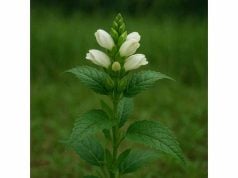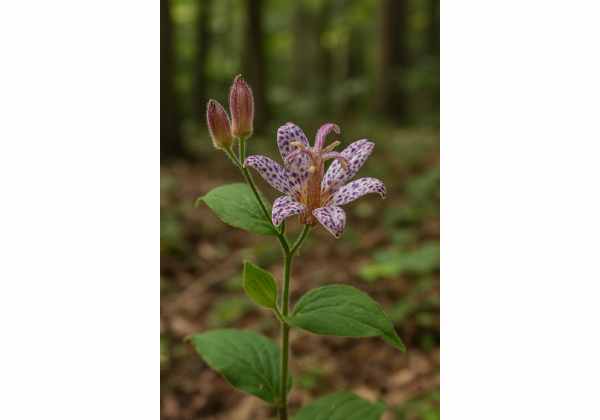
Toad lily, Tricyrtis hirta, is one of those plants that surprises people twice. First, it attracts attention as an elegant shade perennial with orchid-like spotted flowers. Then, on closer look, it raises an unexpected herbal question: does this ornamental plant also have medicinal value? The most honest answer is that toad lily is botanically interesting and pharmacologically suggestive, but still only lightly developed as a modern medicinal herb.
Unlike well-established herbal species, Tricyrtis hirta is known far more clearly as a woodland ornamental than as a standardized remedy. Even so, recent research has linked the species to flavonoid biosynthesis pathways associated with compounds such as eriodictyol, while related Tricyrtis species have shown anti-inflammatory and endothelial-protective activity in experimental work. That gives toad lily a real scientific foothold, even if the evidence remains indirect for most human wellness uses.
So this is not a plant to approach as a proven home remedy. It is better understood as a promising, under-studied botanical whose strongest current value lies in careful interpretation: what it may offer, what remains unproven, and why safety and dosage need more restraint than enthusiasm.
Essential Insights
- Toad lily is mainly an ornamental plant, but its chemistry suggests possible antioxidant and anti-inflammatory relevance.
- The strongest medicinal clues come from flavonoid-related research and from other Tricyrtis species rather than direct human studies on Tricyrtis hirta itself.
- No validated human therapeutic dose has been established for tea, tincture, powder, or extract.
- Pregnant or breastfeeding people, children, and anyone hoping to self-treat a chronic condition should avoid unsupervised medicinal use.
Table of Contents
- What toad lily is and why it is not a standard herbal remedy
- Key ingredients and what may matter medicinally
- Potential health benefits and how strong the evidence really is
- Traditional uses, modern interest, and practical limitations
- Dosage and why no established human dose exists
- Safety, side effects, and who should avoid it
- How to set realistic expectations and when to choose other herbs
What toad lily is and why it is not a standard herbal remedy
Toad lily, Tricyrtis hirta, is a perennial plant native to Japan and admired primarily for its unusual late-season flowers. Its stems arch gracefully, its leaves clasp the stem, and its blooms often appear white to pale lavender with deep purple spotting. In shade gardens, it is valued for bringing drama and texture to places where most flowering plants have already finished. That horticultural identity is important because it explains the first major reality about toad lily: most reputable plant references describe it as an ornamental species first, not as a familiar medicinal herb.
This matters more than it may seem. Many plants with attractive flowers also have long, well-documented medicinal traditions. Toad lily does not occupy that position in mainstream herbal practice. Unlike plants that show up consistently in modern apothecaries, clinical herb texts, or standardized supplement catalogs, Tricyrtis hirta remains largely outside ordinary evidence-based herbal use. That does not mean it has no medicinal interest. It means the plant has not yet crossed the line from botanical curiosity into dependable self-care herb.
Part of the confusion comes from the way common names shape expectations. People hear “toad lily” and assume it must be either toxic, magical, folkloric, or medicinally obscure. In reality, it is mostly a woodland ornamental with a small but growing research footprint. Its medicinal relevance appears to come not from a strong folk-remedy tradition in common consumer references, but from modern biochemical and genus-level pharmacologic interest.
Another reason caution matters is that Tricyrtis hirta is not one of the plants most people have experience preparing. There is no widely accepted consumer template for how it should be used medicinally, how strong a tea should be, what an extract should contain, or what marker compound should define a finished product. These missing pieces are exactly what separate a research-interest plant from a practical home herb.
A good way to understand toad lily is to place it in the category of “promising but pre-standardized” botanicals. Plants in this category may have:
- Intriguing phytochemistry
- Useful biosynthetic or compound-level research
- Early pharmacologic signals
- Sparse direct human evidence
- No clear self-care dose
That is a very different profile from a plant such as chamomile as a better-defined everyday infusion herb, where ordinary use, dose expectations, and safety boundaries are much clearer.
So what is toad lily, medicinally speaking? At present, it is best understood as a research-relevant ornamental species with possible wellness potential, not as a validated household remedy. That framing may sound cautious, but it is actually helpful. It allows readers to appreciate the plant’s interesting chemistry without assuming that beauty, rarity, or novelty automatically translate into useful or safe herbal practice.
Key ingredients and what may matter medicinally
Toad lily is not well known for a consumer-facing list of “active ingredients” in the way turmeric, ginger, or peppermint are. Even so, the plant has entered scientific discussion because of its role in flavonoid-related biosynthesis and because Tricyrtis species appear capable of producing biologically interesting compounds. The challenge is that much of this knowledge comes from molecular biology, metabolic engineering, and related-species pharmacology rather than from direct herbal standardization of Tricyrtis hirta extracts.
One of the most relevant findings involves ThF3′H, a flavonoid 3′-hydroxylase identified from Tricyrtis hirta. In research settings, this enzyme has been used in microbial engineering systems to help convert naringenin into eriodictyol, a flavanone of increasing interest for antioxidant, anti-inflammatory, vascular, and tissue-protective activity. This does not automatically prove that dried toad lily leaf is a rich medicinal source of eriodictyol for home use. But it does show that the species has meaningful biochemical relevance in the pathway toward a compound with recognized pharmacologic value.
That distinction matters. When a plant contributes a well-characterized biosynthetic enzyme to the production of a health-relevant flavonoid, it becomes more than a decorative species. It becomes a biologically interesting plant whose internal chemistry deserves attention, even if no finished herbal tradition has been standardized around it.
At a broader level, the constituents most worth discussing are:
- Flavonoid-biosynthesis enzymes, especially those involved in eriodictyol-related pathways
- Flavonoid-linked compounds, whether present directly in usable amounts or relevant through species metabolism
- Genus-level glycosides such as nicotiflorin, which are more clearly documented in other Tricyrtis species
- General phenolic metabolites, which are commonly associated with plant defense, oxidative balance, and tissue interactions
From a medicinal-properties standpoint, the most reasonable categories are:
- Antioxidant potential
- Anti-inflammatory relevance
- Endothelial or tissue-protective interest
- Experimental antimicrobial or cellular-protective potential
- Research value for natural-product biosynthesis
The biggest caution is that species-level proof and compound-level promise are not the same thing. It is one thing to say that Tricyrtis hirta contributes a specific enzyme to a pathway that generates eriodictyol. It is another to claim that a home-prepared infusion of toad lily will reliably deliver the same pharmacologic profile. That leap is too large for current evidence.
There is also a useful genus-level clue. Another Tricyrtis species, Tricyrtis maculata, has been studied for nicotiflorin, a flavonoid glycoside with anti-inflammatory and endothelial-protective effects in experimental settings. This does not give T. hirta automatic medicinal equivalence, but it does suggest that the genus is not pharmacologically empty.
Readers who are used to thinking about herbs through named compounds can compare this situation to polyphenol-rich plants such as green tea, where well-known molecules help explain biological interest. The difference is that green tea has a mature evidence base, while toad lily remains much closer to the discovery stage.
So the core medicinal story is this: toad lily’s chemistry is interesting enough to justify research, but not settled enough to support confident consumer dosing or broad therapeutic claims. Its ingredients suggest possibility, not proof.
Potential health benefits and how strong the evidence really is
When people search for a plant’s “health benefits,” they usually want a practical list. With toad lily, the more useful answer is a ranked list of possibilities, starting with what is most plausible and ending with what remains mostly speculative. That prevents the common mistake of presenting a lightly studied plant as if it were already clinically validated.
1. Antioxidant potential
This is the most reasonable starting point. The main reason is indirect but still meaningful: Tricyrtis hirta is tied to the biosynthesis of eriodictyol, a flavanone widely studied for antioxidant activity. Antioxidant compounds are often relevant because they help reduce oxidative stress, protect cellular structures, and support tissues under inflammatory pressure. Yet it is important to be precise. Current evidence supports antioxidant interest around the plant’s biochemical machinery and likely flavonoid context, not a verified consumer preparation with known antioxidant dose.
2. Anti-inflammatory relevance
Again, the strongest support is indirect or genus-level. Eriodictyol has a growing anti-inflammatory literature, and nicotiflorin from Tricyrtis maculata has shown anti-inflammatory and endothelial-protective effects in experimental work. This makes it reasonable to discuss anti-inflammatory promise around Tricyrtis hirta, but only carefully. It would be too strong to say that toad lily itself is an established anti-inflammatory herb in the same sense as standardized boswellia or curcumin preparations.
3. Vascular and endothelial protection
This is one of the more interesting clues from related-species work. Nicotiflorin has been studied for effects linked to endothelial protection and acute myocardial injury models. Because this work involves T. maculata, not T. hirta, it should be treated as genus-level evidence rather than species confirmation. Still, it supports the idea that Tricyrtis plants may contain compounds worth studying for vascular resilience.
4. Skin and tissue-protective potential
This benefit is mostly inferred from the broader pharmacology of flavonoids such as eriodictyol, which have attracted interest for skin, oxidative stress, and tissue-support research. It would be premature to market toad lily as a skin herb, but it is fair to say that its phytochemical relevance may someday matter in topical or tissue-focused formulations.
5. General research value as a medicinal-plant lead
This may not sound like a consumer health benefit, but it is an honest one. Some plants are valuable not because they are ready-made remedies, but because they help scientists identify useful enzymes, pathways, and compounds. Toad lily seems to belong partly in this category.
What the evidence does not currently support is just as important:
- No established benefit for treating infections at home
- No validated use for pain, sleep, digestion, or mood
- No proven immune-support role
- No human trial-backed claim for any chronic condition
- No standard extract with known clinical effect
That is why toad lily should not be framed as a hidden cure. A better comparison is with better-studied anti-inflammatory herbs such as boswellia, which already have much clearer human-use evidence. Toad lily is still earlier in the evidence journey.
The practical summary is that toad lily has possible antioxidant, anti-inflammatory, and tissue-protective relevance, but most of the signal comes from compound and related-species research rather than direct clinical proof in Tricyrtis hirta. That makes it promising for science, but still tentative for self-care.
Traditional uses, modern interest, and practical limitations
One of the hardest parts of writing responsibly about toad lily is that the plant sits in an awkward middle space. It is not completely absent from medicinal discussion, yet it is not securely established either. In practical terms, that means the modern interest around Tricyrtis hirta often comes from researchers and plant enthusiasts rather than from a long, well-documented stream of modern herbal use.
There are two main lanes of interest.
The first is species-level interest. This focuses on Tricyrtis hirta itself: its identity, habitat, genetics, morphology, and especially the biochemical machinery that makes it useful in flavonoid-related research. In this lane, toad lily is more a source of scientific insight than a commonly used remedy. It helps researchers understand how a specific enzyme can contribute to the synthesis of eriodictyol and related flavonoid pathways.
The second is genus-level medicinal interest. This is where plants from the broader Tricyrtis group, especially T. maculata, begin to matter. Here the discussion becomes more pharmacologic, with named compounds such as nicotiflorin receiving attention for anti-inflammatory and endothelial-related effects. This does not create direct proof for T. hirta, but it does suggest that the genus may deserve more medicinal study than its ornamental reputation alone would predict.
These two lanes create a practical limitation. When readers ask, “How is toad lily used medicinally?” the evidence does not support a simple answer such as “traditionally for digestion” or “modern use for sleep.” Instead, the most honest answer is:
- Mostly as an ornamental plant
- Increasingly as a research-interest plant
- Only tentatively as a medicinal species
- Without standardized consumer herbal use
That limitation is not a flaw in the article. It is the reality of the plant.
There may also be a temptation to over-read the word “lily.” Many true lilies and lily-like plants have old food or medicine associations, and readers may assume toad lily belongs in the same household-herb category. It does not. Its main value at present is not culinary familiarity or broad folk-practice consistency. It is its underappreciated biochemical and genus-level pharmacologic interest.
Modern practical uses of toad lily today are therefore quite modest:
- Ornamental cultivation in shade gardens
- Botanical collection and conservation interest
- Scientific study of plant genes and flavonoid pathways
- Limited exploratory discussion of medicinal potential
That means home-herb use remains constrained. A person looking for a reliable tea, tincture, syrup, or topical herb would usually be better served by a better-defined species. Someone looking for a scientifically intriguing plant, however, may find toad lily unusually rewarding.
For immune or respiratory support, for example, a more established option such as echinacea as a better-known medicinal herb is easier to justify in practice. Toad lily is valuable, but more as a plant to understand than a plant to casually dose.
So the modern use story is clear: toad lily is a plant of high botanical interest, rising phytochemical interest, and still-limited practical herbal use. That is not a weak conclusion. It is a careful one.
Dosage and why no established human dose exists
This is the section where accuracy matters most. There is no validated human therapeutic dose for Tricyrtis hirta as a tea, tincture, capsule, powder, or extract. That is the single clearest dosing fact available. Any article that pretends otherwise risks giving the appearance of authority without the evidence to support it.
The problem is not that the plant lacks all biological interest. The problem is that the research has not been translated into a standardized, consumer-facing medicinal dose. The work on T. hirta is heavily weighted toward plant biology, metabolic engineering, and compound-pathway relevance. That is useful science, but it does not tell a reader how many grams of dried herb to steep, how many milliliters of tincture to take, or how long to use it.
Even when numbers do appear in the literature, they belong to a different category. For example:
- Enzyme studies identify how T. hirta contributes to flavonoid conversion
- Microbial production work quantifies flavonoid yields in engineered systems
- Related-species studies may test isolated compounds in cell or animal models
Those are not home-use doses. They are research measurements.
This leads to a practical rule that many herbal articles ignore: research relevance does not equal dosing readiness. A plant may be fascinating in the lab and still be unsuitable for casual self-prescribed use. Toad lily seems to fit that description.
The safest dosing guidance is therefore boundary-based:
- No established oral medicinal dose exists.
- No standardized consumer extract is widely recognized.
- Do not invent a dose by comparing it to unrelated herbs.
- Do not assume the flower, leaf, and rhizome share the same safety profile.
- Avoid concentrated homemade extracts.
That last point deserves emphasis. When evidence is thin, concentrated preparations increase uncertainty. A weak infusion is one thing; a strong alcohol extract from an under-studied plant is another. The more concentrated the preparation, the less defensible guesswork becomes.
Some readers may feel disappointed by this, especially when they arrive expecting a clean dosage range. But “no established dose” is often the most useful answer. It prevents people from building false confidence around an unfamiliar plant.
A second important point is that compound-level literature cannot be reverse-engineered into herb dosing. Even if eriodictyol or nicotiflorin has been studied in specific experimental amounts, that does not tell us how much Tricyrtis hirta plant material would deliver a similar exposure, whether the compound is even present in the same usable quantity, or whether the whole plant behaves the same way.
If a reader wants a gentler plant with a far clearer infusion tradition, lemon balm as a more practical household herb is a much better model. Toad lily may someday earn clearer dosing guidance if extract research progresses, but today it does not support confident self-treatment instructions.
So the final dose advice is simple: there is no established human medicinal dose for toad lily, and the responsible response is caution rather than improvisation.
Safety, side effects, and who should avoid it
Toad lily does not currently stand out as a notorious poison plant, but that should not be confused with proven medicinal safety. The main issue is not dramatic toxicity from brushing past the plant in a garden. The real issue is that medicinal safety data for intentional internal use are extremely limited. With under-studied herbs, that gap matters just as much as any known side effect.
The first safety principle is straightforward: a lack of reported problems is not the same thing as a well-established safety profile. Many plants remain lightly studied simply because they have not been widely used medicinally, not because they have been carefully proven safe.
Possible concerns with unsupervised medicinal use include:
- Gastrointestinal upset from concentrated preparations
- Individual allergic or sensitivity reactions
- Unpredictable exposure from self-made extracts
- Unknown compound interactions with prescription medicines
- Misidentification or confusion with other ornamental lilies
Because Tricyrtis hirta is not a mainstream medicinal herb, there is no large body of practical use documenting what happens when people take it regularly, in high doses, or alongside common medications. This is especially relevant for people who already take medicines with narrow safety windows, including drugs affecting blood pressure, blood sugar, inflammation, clotting, or sedation.
The groups who should be especially cautious are:
- Pregnant or breastfeeding people
- Children and adolescents
- People with chronic disease
- People with multiple prescription medicines
- People with a history of strong plant allergies
- Anyone planning long-term or concentrated internal use
Side effects, if they occur, are most likely to be non-specific at first. That means symptoms such as nausea, abdominal discomfort, headache, rash, or unusual fatigue should be taken seriously rather than ignored as harmless adjustment. With a poorly characterized plant, even a mild adverse reaction can be a signal to stop.
Another practical issue is the temptation to treat ornamental plants as inherently safe because they are widely sold. Garden safety and medicinal safety are different. A plant may be perfectly acceptable to grow, touch, divide, or transplant while still being a poor candidate for ingestion or concentrated herbal processing.
There is also the broader issue of unrealistic substitution. When people see early evidence for antioxidant or anti-inflammatory relevance, they sometimes skip safer, better-known plants and jump directly to novelty. That is rarely the best path. The wisest herbal practice usually starts with plants whose identity, dosage, and safety are already much clearer.
For simple external support, for example, witch hazel as a better-understood topical option offers a much safer and more practical starting point than experimenting with a lightly studied ornamental perennial.
So the safety summary is not that toad lily is proven dangerous. It is that it is proven insufficiently characterized for confident medicinal self-use. That is a meaningful distinction. It does not rule out future value, but it does rule out casual certainty in the present.
How to set realistic expectations and when to choose other herbs
Toad lily becomes much easier to appreciate once the goal is clear. If the goal is to find a clinically grounded herbal remedy, this is probably not the plant to reach for first. If the goal is to understand an ornamental species with emerging medicinal relevance, it is genuinely interesting. That difference is the key to setting realistic expectations.
The best way to think about Tricyrtis hirta is as a plant with scientific promise but limited practical readiness. It has a role in the biosynthesis of a health-relevant flavonoid. It belongs to a genus with at least some experimental pharmacologic support. It has enough biochemical significance to matter in natural-products research. But it does not yet have the standard consumer features that make a medicinal plant easy to recommend:
- No validated human dose
- No widely used standardized extract
- No clear clinical niche
- No strong safety database for herbal self-use
- No major human trials
That does not make the plant unimportant. It just changes the kind of importance it has.
There are at least three reasonable ways to value toad lily today.
As a botanical and horticultural plant
It remains an exceptional ornamental for shaded gardens and woodland borders.
As a research-interest plant
Its enzymes and genus-level compounds make it relevant to flavonoid science and natural-product discovery.
As a cautionary example in herbal decision-making
It reminds readers that not every promising plant is ready for everyday medicinal use.
For most people, the third lesson may be the most valuable. Herbal enthusiasm is strongest when it stays tethered to evidence. Some plants deserve immediate practical use because their tradition, chemistry, and safety align. Others deserve more study before they move from the greenhouse to the medicine shelf.
If the reader’s actual goal is one of the following, better options already exist:
- For mild calming infusions, chamomile or lemon balm
- For local bruise and strain support, arnica
- For broader anti-inflammatory support, boswellia or ginger
- For simple topical astringent care, witch hazel
That does not diminish toad lily. It simply places it where it currently belongs. A plant does not need to be a proven remedy to be worth learning about. Sometimes the most useful article is the one that tells you not just what a plant might do, but what it cannot yet honestly promise.
For readers interested in anti-inflammatory support with a much stronger evidence base, ginger as a more established anti-inflammatory botanical is usually the more practical choice. Toad lily may one day move closer to that level of usability, but today its role is still exploratory.
The fairest conclusion is that Tricyrtis hirta is not a forgotten miracle herb. It is a botanically beautiful, pharmacologically suggestive, and still underdeveloped medicinal candidate. Respecting that middle ground is what makes the article helpful rather than merely optimistic.
References
- Tricyrtis hirta (Hairy Toad Lily, Japanese Toad Lily, Toad Lily) | North Carolina Extension Gardener Plant Toolbox 2026
- Restricting Promiscuity of Plant Flavonoid 3′-Hydroxylase and 4′- O-Methyltransferase Improves the Biosynthesis of (2 S)-Hesperetin in E. coli – PubMed 2023
- Systems Metabolic Engineering of Saccharomyces cerevisiae for the High-Level Production of (2 S)-Eriodictyol – PubMed 2024
- The Extraction, Biosynthesis, Health-Promoting and Therapeutic Properties of Natural Flavanone Eriodictyol – PMC 2024 (Review)
- Mechanism of Action of Nicotiflorin from Tricyrtis maculata in the Treatment of Acute Myocardial Infarction: From Network Pharmacology to Experimental Pharmacology – PubMed 2021
Disclaimer
This article is for educational purposes only and is not medical advice, diagnosis, or treatment. Toad lily is primarily an ornamental plant with limited direct medicinal evidence, no validated human therapeutic dose, and an incomplete safety profile for intentional herbal use. Do not use Tricyrtis hirta to self-treat pain, inflammation, infection, heart symptoms, or any chronic condition. Pregnant or breastfeeding people, children, and anyone taking prescription medicines or managing a serious health condition should avoid unsupervised medicinal use.
If you found this article helpful, please share it on Facebook, X, or any other platform where careful, evidence-aware herbal information can reach the right readers.