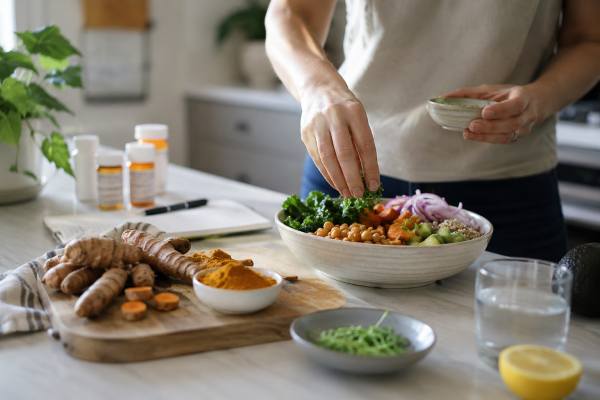
Turmeric sits in an unusual spot between kitchen staple and wellness product. In food, it is familiar, fragrant, and usually low-risk. In supplement form, especially as concentrated curcumin extracts, it becomes a much more serious decision. That shift matters because most of turmeric’s immune-health appeal is not about “boosting” immunity in a simple way. It is more about how curcumin may influence inflammation, oxidative stress, and signaling pathways that shape immune activity over time.
That distinction helps explain why turmeric gets so much attention and why it also deserves caution. Some human studies suggest benefits for inflammatory symptoms and certain biomarkers, but the evidence is uneven, product formulas vary widely, and better absorption can also mean greater interaction risk. If you are considering turmeric for immune or inflammatory support, the real questions are not just whether it works, but for whom, in what form, and at what cost to safety.
Essential Insights
- Turmeric may help reduce inflammatory signaling, but it is not a proven immune booster or a reliable way to prevent infections.
- Human benefits look strongest for some inflammatory symptoms, especially joint pain, while immune claims remain broader than the evidence.
- Better-absorbed curcumin products may be more potent, but they can also raise the risk of side effects, liver problems, and drug interactions.
- Turmeric supplements deserve extra caution with blood thinners, diabetes medicines, cancer treatment, immunosuppressants, liver disease, gallstones, and planned surgery.
- A food-first approach is the safer starting point; if you use a supplement, choose a clearly labeled product, review your medications, and reassess after 8 to 12 weeks.
Table of Contents
- What turmeric can and cannot do
- How curcumin shifts inflammation
- What the human evidence shows
- Food, supplements, and absorption
- Drug interactions that matter most
- A practical way to decide
What turmeric can and cannot do
Turmeric is often described as an immune-support ingredient, but that phrase can be misleading. The immune system is not a muscle that always benefits from being pushed harder. In real life, healthy immunity depends on balance: enough response to fight threats, but not so much that the body stays stuck in a state of unnecessary inflammation. Turmeric’s main active compounds, especially curcumin, seem more relevant to that balance than to any dramatic “boost.”
That is why turmeric makes the most sense in conversations about inflammatory load rather than miracle prevention. A person with poor sleep, a stressful routine, a highly processed diet, little physical activity, and chronic metabolic strain is more likely to benefit from broad lifestyle changes than from any single supplement. In that context, turmeric may be one small tool, not the center of the plan. The idea is closer to reducing friction inside the system than flipping on extra immune power.
It also helps to separate turmeric in food from turmeric in capsules. Using the spice in soups, stews, rice, lentils, or roasted vegetables usually means a modest intake inside a mixed meal. A supplement can deliver far more curcuminoids, often in engineered forms designed to increase absorption. Those are not equivalent exposures, and they should not be judged by the same safety standard.
What turmeric can reasonably do is support an anti-inflammatory strategy for some people. What it cannot do is diagnose a weak immune system, replace medical treatment for autoimmune disease, compensate for poor sleep or heavy alcohol use, or reliably stop you from catching colds. Readers who are trying to sort marketing from reality may find it helpful to compare common immune boosting claims with the more durable idea of immune resilience.
That distinction matters even more if you are living with complex illness. If you have frequent infections, unexplained fevers, weight loss, swollen lymph nodes, inflammatory bowel symptoms, or persistent fatigue, the next step is not to self-prescribe turmeric. It is to figure out what is driving the problem. A spice or supplement cannot safely stand in for evaluation when the symptoms point to immune deficiency, autoimmune disease, liver disease, medication effects, or another condition that deserves proper workup.
Seen clearly, turmeric is neither useless nor magical. It is a biologically active plant product with plausible anti-inflammatory effects, a real but limited evidence base, and enough interaction risk that “natural” is not the same as “casual.”
How curcumin shifts inflammation
The reason turmeric attracts so much scientific interest is curcumin, the yellow polyphenol that gives turmeric much of its signature color and much of its research profile. Curcumin appears to influence several pathways involved in inflammation and immune signaling. In plain language, it seems able to turn down some of the chemical messages that keep inflammatory activity running too high for too long.
Researchers have focused on pathways linked to transcription factors, inflammatory enzymes, oxidative stress, and cytokine signaling. That matters because chronic, low-grade inflammation is not just a lab concept. It shows up in everyday patterns such as sore joints, metabolic dysfunction, vascular strain, and inflammatory conditions that can make people feel unwell long before anything dramatic appears on a scan. If you have read about chronic inflammation, turmeric fits into that conversation as a possible helper, not a cure.
Curcumin’s immune relevance is therefore mostly indirect. It does not act like a vaccine, an antibiotic, or a replacement for sleep and nutrition. Instead, it may help modulate the environment in which immune cells operate. In some settings, that could mean lower production of pro-inflammatory messengers such as CRP-related pathways, IL-6, or TNF-alpha. In other settings, it may simply do very little. Context matters. Dose matters. Formulation matters. The health condition matters.
There is another important wrinkle: curcumin has notoriously poor natural oral bioavailability. A large share of what you swallow is absorbed poorly, metabolized quickly, or cleared before it reaches meaningful levels in circulation. That limitation explains why so many supplement companies use piperine, phospholipid complexes, micelles, liposomal systems, or nanoparticles to increase absorption. Better delivery may improve the chance of benefit, but it also increases the chance that curcumin behaves more like a drug than a spice.
That is one reason mechanistic promise should be kept in perspective. A supplement can look impressive in cell studies and still disappoint in people. Real human bodies are messier than controlled lab systems. Diet, gut function, medication use, body size, liver metabolism, genetics, and disease state all change the outcome.
So where does this leave turmeric in practice? It leaves it in the same category as many anti-inflammatory nutrition tools: potentially useful, especially when paired with a broader anti-inflammatory diet, but not something that should be judged on pathway diagrams alone. The science is interesting because it explains why turmeric might help. It does not, by itself, prove that it will help you, or that more is better.
For readers trying to use turmeric thoughtfully, the key insight is that immune health is often about reducing unnecessary inflammatory burden. Curcumin may support that goal for some people. It is simply not a shortcut around the rest of the work.
What the human evidence shows
When you move from theory to human trials, the picture becomes much more restrained. The best-supported benefits of turmeric and curcumin are not broad claims about immunity. They are narrower findings around inflammation-related symptoms and selected biomarkers, with the clearest signal showing up in conditions like osteoarthritis. In those studies, some turmeric or curcumin preparations have improved pain and function, and some meta-analyses have found reductions in markers such as CRP or ESR in certain inflammatory populations.
That sounds encouraging, but the details matter. Many studies are small, short, and difficult to compare because the products are so different. One trial may use a standard curcumin capsule, another may use a piperine-enhanced formula, another a phospholipid complex, and another a whole turmeric extract. Those are not interchangeable. A positive result with one product does not automatically transfer to every bottle on a supplement shelf.
The duration of use is another limitation. Many human studies run for roughly 8 to 12 weeks, and common daily amounts often fall somewhere around 250 to 1,500 mg of curcumin or curcuminoids, depending on the condition and the formula. That gives a reasonable picture of short-term trial use, but it does not tell us that long-term daily supplementation is necessary or wise for the average person.
The immune-health question is even softer. There is not strong evidence that turmeric supplements reliably reduce infection rates in generally healthy adults, prevent common viral illnesses, or correct an underlying weak immune system. The more defensible takeaway is that turmeric may modestly improve some inflammation-related outcomes in selected conditions, especially when used as an adjunct rather than a stand-alone solution.
Biomarkers also need context. A small drop in CRP can be interesting, but it does not always translate into a meaningful change in how someone feels or functions. And a normal or abnormal CRP is only one piece of the picture. If you want a clearer sense of how inflammation markers fit into health decisions, understanding CRP and related blood tests can prevent overreading a single number.
The biggest lesson from the human evidence is not that turmeric fails. It is that it works, when it works, in a narrower and less universal way than the marketing suggests. Some people notice less joint stiffness or less inflammatory discomfort. Others notice nothing. For general immune support, the evidence is still too mixed to treat turmeric as a core strategy.
That is why turmeric belongs in the “maybe helpful, condition-specific, worth individualizing” category. It is not in the “everyone should take this every day” category. A supplement can have real biological activity and still be a poor fit for routine, unsupervised use across the population.
Food, supplements, and absorption
One of the most useful ways to think about turmeric is to decide first which version you actually mean. Culinary turmeric and concentrated curcumin supplements have overlapping chemistry, but they do not behave the same way in practice.
Food use is the simpler starting point. Adding turmeric to curries, grain bowls, eggs, legumes, soups, or stewed vegetables gives you exposure in a familiar dietary pattern with much lower odds of causing problems. It also nudges you toward a broader eating style built around plants, fiber, herbs, and polyphenol-rich foods. In many cases, that is a smarter long-term immune-health move than chasing a high-dose capsule. People looking for a lower-risk nutrition approach may get more durable value from polyphenol-rich foods than from treating one supplement as the answer.
Supplements are different because manufacturers try to solve curcumin’s poor absorption. Many products pair curcumin with piperine from black pepper, bind it to phospholipids, or use micellar and other enhanced-delivery systems. That may increase blood levels, but it also changes the risk conversation. Better absorption can improve the odds of an effect, yet it may also increase side effects, raise interaction potential, and play a role in the rare liver injuries now being reported with some high-bioavailability products.
That means a label claiming “advanced absorption” should not be read as automatically superior. It may simply mean the product deserves more respect.
A practical way to approach turmeric supplements is to keep the trial conservative:
- Choose a single-ingredient product with a clearly stated amount of curcuminoids or curcumin.
- Prefer brands with independent quality checks or third-party verification, especially if you are using the product for more than a few weeks. A guide to third-party tested supplements can help you know what to look for.
- Avoid starting multiple new supplements at once, because that makes side effects and interactions harder to identify.
- Reassess after 8 to 12 weeks. If nothing meaningful has changed, continuing indefinitely is hard to justify.
- Treat any “bioavailability enhancer” as a reason for more caution, not less.
Common side effects are usually gastrointestinal: reflux, stomach upset, nausea, bloating, diarrhea, or constipation. These may be mild, but persistent symptoms are a sign to stop or step back. A supplement that causes daily discomfort is not supporting health, even if its marketing emphasizes anti-inflammatory benefits.
For many adults, the cleanest strategy is food first, supplements second, and only after checking whether the problem you are trying to solve is actually one turmeric is likely to help.
Drug interactions that matter most
This is the section people most often skip, and it is the section that matters most. Turmeric is easy to underestimate because it begins as a spice. But concentrated turmeric and curcumin products can interact with medicines in ways that are clinically important, especially when the dose is medicinal and the formulation is built for higher absorption.
The most widely discussed interaction is bleeding risk. Curcumin may reduce platelet aggregation, which means it can overlap in an unwanted way with anticoagulants, antiplatelets, and some pain medicines that already affect bleeding. That includes people taking warfarin, direct oral anticoagulants, clopidogrel, aspirin, and frequent NSAIDs. The risk is not the same for every person or every product, but the overlap is significant enough that this should never be a casual combination. Anyone on blood thinners should review turmeric supplement use the same way they would review a new medication. Readers looking broadly at supplement and medication interactions should place turmeric near the top of the caution list.
The next major category is glucose lowering. Turmeric and curcumin may reduce blood sugar, which sounds appealing until it is layered onto diabetes medicines or insulin and creates unexpected hypoglycemia. That does not mean the combination is always forbidden. It means it should be planned, monitored, and not improvised.
Cancer treatment deserves even greater caution. Some guidance advises against taking turmeric or curcumin supplements during active anti-cancer therapy unless the oncology team has explicitly reviewed it. That is because curcumin may alter the effect, metabolism, or exposure of some treatment agents. The same conservative logic applies to immunosuppressants and to medicines with a narrow therapeutic range, where small blood-level changes can matter a lot. If you take warfarin, tacrolimus, phenytoin, digoxin, or lithium, assume turmeric deserves review first.
Better-absorbed formulas can intensify these questions. Piperine and other absorption-enhancing systems do not just change turmeric exposure. They may also affect enzymes and transport systems involved in how other drugs move through the body. In practice, that means a “stronger” turmeric product can also be a more interaction-prone product.
There are also non-drug safety warnings that deserve equal attention. Turmeric supplements should be used cautiously, or avoided, in people with gallstones, bile duct obstruction, cholangitis, or other biliary disease. They also deserve caution in people with liver disease or unexplained abnormal liver tests. Rare but real cases of liver injury have now been reported, particularly with certain enhanced-bioavailability products.
Two other practical rules stand out:
- Do not start turmeric supplements during pregnancy without clinician guidance, and be cautious during breastfeeding.
- Stop oral turmeric supplements at least two weeks before elective surgery because of bleeding concerns.
Urgent warning signs include unusual bruising, black stools, dark urine, jaundice, severe fatigue, poor appetite, or persistent upper abdominal pain. At that point, the right move is not to switch brands. It is to stop the supplement and get medical advice.
A practical way to decide
The best turmeric decision is usually the least dramatic one. Instead of asking, “Should I take turmeric for my immune system?” it is better to ask, “What exact problem am I trying to solve, and is turmeric a sensible fit for that problem?”
Turmeric may be worth considering if your goal is modest support for inflammation-related symptoms, you are not on a complicated medication regimen, you do not have liver or biliary disease, and you are willing to judge results honestly rather than assume a supplement must be helping because it sounds healthy. In that setting, turmeric can be a reasonable adjunct.
It is a poor self-directed choice if you are on blood thinners, active cancer treatment, immunosuppressants, or several prescription drugs at once, or if you are pregnant, preparing for surgery, or dealing with gallstones or liver issues. In those cases, the “natural” label does not lower the threshold for caution. It raises the need for review.
A simple decision framework looks like this:
- Start with food. Use turmeric in normal cooking before deciding you need capsules.
- Define the target. Joint pain, inflammatory discomfort, or a food-based anti-inflammatory routine is more concrete than vague “immune support.”
- Check the medication list. If the list is long or includes high-risk drugs, ask a pharmacist or clinician first.
- Choose one product and one trial period. Do not stack turmeric with three other new supplements and then guess what happened.
- Stop if the risk outweighs the gain. No meaningful benefit after 8 to 12 weeks, or any warning signs, is a good reason to move on.
For many people, the higher-yield strategy is not a turmeric supplement at all. It is a broader plan built on sleep, movement, protein adequacy, fiber, fewer ultra-processed foods, and steady routines. If your goal is durable immune health, evidence-based immune habits and a practical food-first immune support plan usually carry more weight than a single capsule.
That does not make turmeric irrelevant. It simply puts it in the right place. Turmeric can be a thoughtful add-on for selected adults. It should not be mistaken for a stand-alone immune strategy, and it definitely should not be added without review when medications or higher-risk conditions are already in the picture.
Used well, turmeric is a small, targeted tool. Used casually, it can become an avoidable problem.
References
- Turmeric: Usefulness and Safety | NCCIH 2025 (Fact Sheet). ([NCCIH][1])
- Bioavailability of Oral Curcumin in Systematic Reviews: A Methodological Study 2024 (Methodological Review). ([PubMed][2])
- Curcumin on Human Health: A Comprehensive Systematic Review and Meta-Analysis of Randomized Controlled Trials 2024 (Systematic Review and Meta-Analysis). ([PubMed][3])
- Turmeric: potential interactions 2024 (Medicines Guidance). ([Welsh Medicines Advice Service][4])
- Turmeric: potential adverse effects 2024 (Medicines Guidance). ([Welsh Medicines Advice Service][5])
Disclaimer
This article is for educational purposes only and is not medical advice. Turmeric and curcumin supplements can affect medication response, bleeding risk, blood sugar, liver health, and surgical planning. Do not use this article to diagnose or treat an immune disorder, liver problem, gallbladder condition, or chronic inflammatory disease. If you take prescription medicines, are pregnant or breastfeeding, have upcoming surgery, or have liver or biliary disease, review turmeric supplement use with a qualified clinician or pharmacist before starting it.
If you found this article useful, please consider sharing it on Facebook, X, or your preferred platform.