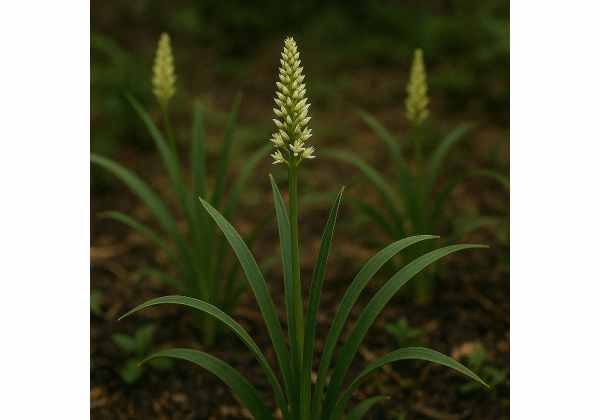
Zhi-mu, the dried rhizome of Anemarrhena asphodeloides, is a longstanding herb in East Asian medicine, especially in Chinese, Korean, and Japanese traditions. It is best known for its cooling, bitter profile and for its traditional use in patterns associated with internal heat, dryness, thirst, irritability, and dry cough. In classical practice, it is also used to support fluid balance, ease certain inflammatory states, and complement other herbs in formulas aimed at feverish conditions, metabolic imbalance, or yin deficiency.
Modern research has added another layer of interest. Zhi-mu contains steroidal saponins, xanthones such as mangiferin, polysaccharides, and other compounds that are being studied for anti-inflammatory, antioxidant, neuroprotective, glucose-regulating, and bone-supportive effects. Even so, the evidence is still stronger in laboratory and animal models than in large human trials. That makes Zhi-mu a compelling but still careful herb to discuss. Its best use is not as a miracle solution, but as a traditional rhizome with a clear medicinal character, practical applications, and important boundaries around dose, preparation, and safety.
Core Points
- Zhi-mu is traditionally used for internal heat, dry cough, thirst, and dryness-related discomfort.
- Its best-studied compounds include timosaponins and mangiferin, which are linked to anti-inflammatory and metabolic effects.
- A common traditional decoction range is 6 to 12 g of dried rhizome per day.
- People who are pregnant, breastfeeding, prone to loose stools, or using glucose-lowering medicines should avoid self-treating with medicinal doses.
Table of Contents
- What Zhi-mu is and how it is understood in traditional use
- Key ingredients and medicinal properties
- Health benefits and what the evidence suggests
- Zhi-mu for heat, thirst, dry cough, and metabolic support
- How Zhi-mu is used in decoctions, formulas, powders, and processed forms
- Dosage, timing, duration, and preparation notes
- Safety, side effects, interactions, and who should avoid it
What Zhi-mu is and how it is understood in traditional use
Zhi-mu is the dried rhizome of Anemarrhena asphodeloides, a perennial plant native to East Asia. Unlike many Western culinary herbs, it is not primarily a kitchen herb that later became medicinal. It entered medicine as medicine. In traditional Chinese medicine, Zhi-mu is classically described as bitter and cold, with a reputation for clearing heat, draining fire, nourishing yin, and moistening dryness. Those phrases can sound opaque if you are not used to traditional herbal language, but they describe a surprisingly coherent clinical profile.
In plain terms, Zhi-mu is usually chosen when symptoms suggest too much internal heat combined with not enough moisture. That may include dry cough, dry throat, dry mouth, irritability, thirst, constipation from dryness, feverish restlessness, or night sweats in certain traditional patterns. It is not normally the first herb for chilled digestion, watery diarrhea, or weakness made worse by cold foods and cooling plants. Its direction is cooling, moistening, and settling.
This traditional framework also explains why Zhi-mu is rarely used in isolation for complex conditions. In East Asian practice it often appears in formulas, where its cold and bitter character is balanced by companion herbs. A formula may use Zhi-mu to cool and moisten while another herb supports the lungs, another protects the stomach, and another directs the blend toward the right organ system. That is one reason the herb has been used in classical prescriptions for feverish thirst, lung heat, diabetes-like wasting and thirst patterns, and dryness that affects the bowel or respiratory tract.
Readers who know the language of Western herbalism can think of Zhi-mu as a cooling rhizome that helps temper inflammatory heat and dryness rather than stimulate sluggishness. In that sense, it sits in a very different place from warming digestives such as ginger for cold and stagnant digestion. That contrast is useful. Ginger moves and warms. Zhi-mu cools and moistens. Confusing that difference is one of the easiest ways to misuse the herb.
Another important point is that traditional use does not map perfectly onto modern disease categories. A phrase like “clears heat” may overlap with inflammation, fever, agitation, or dryness-related irritation, but it is not identical to any one biomedical diagnosis. That is why Zhi-mu can sound broader in traditional literature than it should in modern self-care. The herb has depth, but it still needs careful interpretation.
A sensible modern summary is that Zhi-mu belongs to a group of traditional cooling herbs used when dryness, heat, and depletion occur together. That logic remains helpful today, even if the modern evidence base is still catching up.
Key ingredients and medicinal properties
Zhi-mu has attracted modern research largely because its chemistry is unusually rich. The best-known compounds are steroidal saponins, especially timosaponins such as timosaponin AIII and timosaponin BII. These compounds are often treated as marker constituents because they help define both the identity and the biological activity of the rhizome. They are joined by xanthones such as mangiferin and neomangiferin, along with flavonoids, polysaccharides, phenylpropanoids, alkaloids, and smaller supporting constituents.
From a practical standpoint, two groups matter most for most readers. The first is the steroidal saponins. These are closely tied to many of the herb’s laboratory-observed effects, including anti-inflammatory, metabolic, immune-modulating, and neuroactive actions. They also help explain why processing methods matter. In traditional pharmacy, salt-processing of Zhi-mu has been used to alter its behavior, and modern work suggests processing may influence the content and absorption of certain saponins.
The second key group is mangiferin and related xanthones. Mangiferin is one of the better-known plant polyphenols in Zhi-mu and is often discussed for antioxidant, anti-inflammatory, neuroprotective, and glucose-related activity. That does not mean mangiferin alone explains the herb. It means Zhi-mu is one of several plants where a notable xanthone works alongside a broader chemical matrix.
Traditional descriptions of Zhi-mu as cooling, moistening, and heat-clearing may sound symbolic, but they can be partly translated into modern functional language. The herb appears to have:
- anti-inflammatory potential
- antioxidant effects
- possible glucose-regulating activity
- neuroprotective and cognition-related interest
- bone and cartilage research relevance
- some antimicrobial and immune-modulating activity
That list needs caution. It reflects preclinical and mechanistic research more than settled human outcomes. Still, it helps explain why Zhi-mu remains pharmacologically interesting after centuries of use.
The herb’s medicinal profile is also shaped by its texture and taste. Bitter and cold herbs often reduce excess, calm overheated processes, and counter dryness linked to internal depletion. Zhi-mu has that profile, but its moistening side matters just as much as its cooling side. It is not simply a harsh bitter. Its traditional use often aims to cool without stripping too much fluid away, especially when dry lungs, parched mouth, or dryness-related constipation are present.
This is where comparison can help. Some herbs are cooling but light and dispersing. Others are moistening but not strongly heat-clearing. Zhi-mu tries to do both. That partly explains why it is often grouped with yin-supportive herbs such as rehmannia in traditional cooling formulas, even though the two are not interchangeable. Rehmannia is heavier and more nourishing, while Zhi-mu is more bitter, clearer in direction, and more explicitly tied to heat and dryness.
In short, Zhi-mu’s medicinal identity rests on the overlap between tradition and chemistry: bitter cooling action on one side, saponins and xanthones on the other.
Health benefits and what the evidence suggests
The most responsible way to describe Zhi-mu’s health benefits is to separate traditional confidence from modern proof. Traditional use is broad and longstanding. Modern evidence is promising, but still dominated by laboratory, animal, and constituent-focused studies. That means Zhi-mu deserves serious attention, but not inflated claims.
One of the most frequently discussed areas is inflammation. Extracts of Anemarrhena asphodeloides and isolated saponins such as timosaponin AIII have shown anti-inflammatory effects in multiple preclinical models. These include effects on inflammatory signaling pathways, cytokine activity, and tissue injury in settings such as lung inflammation and colitis models. This supports the herb’s long-standing use in feverish, inflamed, or irritated conditions, especially those involving the lungs.
Metabolic support is another major area. Traditional texts connect Zhi-mu with thirst, wasting, and internal heat patterns that overlap loosely with some modern metabolic complaints. Modern studies suggest glucose-regulating potential through effects on insulin sensitivity, carbohydrate metabolism, and related pathways. Some researchers also discuss lipid, vascular, and anti-obesity effects. These findings are interesting, but they do not justify treating Zhi-mu as a standalone solution for diabetes.
The nervous system is a third area of strong research interest. Mangiferin and some timosaponins have been studied for neuroprotective, anti-inflammatory, and memory-related actions. This has led to interest in Zhi-mu for cognitive decline, neuroinflammation, and mood-related formulas. Again, this is best understood as early-stage evidence with biological plausibility, not as proof of clinical effectiveness for dementia or depression.
Bone and musculoskeletal research has also expanded. Zhi-mu appears in traditional formulas used for joint pain and deficiency-heat patterns, and modern studies suggest certain compounds may support osteoblast function, reduce osteoclast activity, and influence bone turnover. These signals are relevant, but they are still far from large, decisive human trials.
So what seems most reasonable to say?
- Zhi-mu has the strongest traditional logic for heat, thirst, lung dryness, and certain dryness-related inflammatory states.
- Modern research supports anti-inflammatory, antioxidant, metabolic, and neuroprotective interest.
- Human clinical evidence remains limited for most major uses.
- The herb is more convincing as a formula herb and traditional rhizome than as a self-prescribed “superherb.”
This measured view matters because the herb is sometimes marketed too aggressively for blood sugar, cognition, or anti-aging. A better comparison is with herbs like bitter melon in blood sugar support: interesting, traditionally meaningful, and potentially useful, but not a substitute for diagnosis, monitoring, or evidence-based care.
The real value of Zhi-mu lies in how well its traditional uses and modern mechanisms overlap. The danger lies in overstating what preclinical research can prove.
Zhi-mu for heat, thirst, dry cough, and metabolic support
If you want to understand when Zhi-mu is most likely to make sense, focus on four themes: heat, thirst, dry cough, and metabolic dryness. These themes are rooted in traditional practice, but they also help organize the modern discussion in a way that is practical for readers.
For heat-related discomfort, Zhi-mu is not mainly used the way a fever reducer would be used in a medicine cabinet. It is traditionally selected when heat is persistent, draining, and paired with dryness or irritability. That might include recurring thirst, dry mouth, dry throat, restless heat, or deficiency-type fever patterns in traditional language. The point is not simply “too hot.” It is “too hot and too dry.”
For dry cough and lung irritation, Zhi-mu is especially relevant. Traditional texts often place it in formulas for lung heat, dry cough, coughing with scanty mucus, or throat dryness. This is where its moistening side becomes important. Unlike sharper drying herbs, it aims to calm irritation without stripping fluid away. Readers who know soothing herbs from Western traditions may think of marshmallow root for dry irritated tissues, but Zhi-mu is more cooling and more explicitly linked to internal heat.
Thirst is another classic indication. In East Asian medicine, excessive thirst can reflect more than simple dehydration. It may point toward internal heat, fluid injury, or wasting-thirst patterns that overlap imperfectly with modern metabolic disease. Zhi-mu is often discussed in this space because it cools heat while also supporting moisture. This traditional logic helps explain why it remains a subject of research in glucose regulation.
Metabolic support is where modern readers often become most interested and most vulnerable to overstatement. Some animal and cell studies suggest Zhi-mu compounds may help improve insulin signaling, reduce oxidative stress, and influence glucose-handling pathways. That is enough to make the herb scientifically interesting, but not enough to replace conventional diabetes care or justify casual unsupervised use alongside prescription medicines.
Zhi-mu may also be used when dryness reaches the bowels, especially in traditional formulas meant to moisten the intestines and ease hard stools. That is a less famous use than fever or cough, but it is consistent with the herb’s broader medicinal profile. It cools and moistens rather than forcing movement aggressively.
The practical thread tying these uses together is simple:
- overheated tissues
- dryness or fluid depletion
- irritation rather than deep stagnation
- formulas that need a cooling, moistening rhizome
This also explains when Zhi-mu may be the wrong fit. If a person is chilled, low in appetite, loose in stool, and made worse by cold drinks and cold foods, the herb may feel too cold and bitter. That is one reason classical formulas balance it carefully rather than using it casually.
Zhi-mu works best when the traditional pattern is respected, not when it is reduced to a trendy single-issue supplement.
How Zhi-mu is used in decoctions, formulas, powders, and processed forms
Zhi-mu is most often used as a sliced dried rhizome in decoctions and multi-herb formulas. This matters because the form influences both the experience and the likely effect. Unlike many capsule-friendly modern supplements, Zhi-mu still belongs strongly to a traditional pharmacy culture where slicing, simmering, combining, and processing shape the final result.
The classic form is the decoction. In this method, the sliced rhizome is simmered in water with other herbs so its saponins, bitter principles, and other compounds can be extracted gradually. Decoction is especially appropriate when the herb is part of a broader formula aimed at dry cough, thirst, dryness, feverish irritability, or deficiency-heat patterns. The taste is notably bitter, which is not accidental. Bitter taste is part of the herb’s identity.
Powdered forms also exist, though they are somewhat less common in everyday traditional use than decoctions. Powder may be added to formulas or pressed into pills, but quality and digestion can vary. Capsules and extract products are now widely available, yet these can create the false impression that Zhi-mu is a one-size-fits-all supplement. In reality, commercial extracts vary widely, and many are used as part of combination products rather than alone.
One especially important traditional detail is processing. Zhi-mu may be used raw or salt-processed. Salt-processing has long been used in traditional Chinese pharmacy to modify direction, absorption, and emphasis. Modern studies suggest salt-processing may alter levels and bioavailability of key saponins, which may help explain why processed Zhi-mu is sometimes preferred in formulas aimed at yin deficiency, lower burner patterns, or metabolic dryness. This does not mean one form is always superior. It means preparation matters.
Zhi-mu is also frequently paired with other herbs rather than taken alone. It may be combined with moistening herbs, lung herbs, stomach-protective herbs, or heat-clearing partners depending on the formula’s goal. For example, pairing it with licorice in harmonizing herbal formulas can help soften bitterness and moderate a formula’s overall effect, though the exact clinical meaning depends on the prescription.
A useful way to think about forms is this:
- Raw sliced rhizome suits traditional decoctions and clear formula-based use.
- Salt-processed rhizome may be chosen when traditional practice wants to deepen certain yin and kidney-related actions.
- Powders and capsules are convenient but less individualized.
- Extracts can be potent yet are harder to compare from product to product.
For most readers, the biggest lesson is that Zhi-mu is a preparation-sensitive herb. A capsule on a shelf may contain the same plant, but not the same therapeutic logic, as a properly built decoction. That is one reason formula context often matters more than the herb’s name alone.
Dosage, timing, duration, and preparation notes
For traditional decoction use, a common dried rhizome range for Zhi-mu is 6 to 12 g per day. This is the most practical medicinal dose range to know because it aligns with conventional pharmacopeial-style use and avoids the confusion created by highly variable capsule products. In formulas, the exact amount may be adjusted lower or higher depending on the pattern, the companion herbs, and whether the rhizome is raw or processed.
Timing depends on the form. In a decoction, Zhi-mu is usually taken as part of a formula once or twice daily rather than singled out for precise meal timing. If the goal is dryness, thirst, or dry cough, consistency often matters more than whether it is taken before or after meals. If a person has a sensitive stomach, taking a decoction after food may be easier. If the herb is part of a formula aimed at metabolic regulation, the practitioner may time it more intentionally, but that becomes formula-specific rather than universal.
Duration also matters. Zhi-mu is not usually approached as an indefinite daily tonic in self-care. A more sensible pattern is targeted use over days to a few weeks, followed by reassessment. This is especially true when it is being used for cough, irritability, dry mouth, or heat-related symptoms that should show some direction of change. If the symptom picture does not improve, the answer is not simply a higher dose.
A few practical notes help prevent misuse:
- Start with the lower end of the range if using the herb alone.
- Use professional guidance when combining it with multiple formula herbs.
- Do not assume that concentrated extracts are equivalent to decoction grams.
- Respect preparation style, since raw and processed forms may differ in effect.
- Reassess quickly if coldness, bloating, or loose stools appear.
Commercial products often complicate dosage. Some list whole-rhizome equivalents, others list extract strength, and others hide Zhi-mu inside blends. This makes label reading essential. A product claiming “500 mg” may not tell you whether that amount refers to crude herb weight, concentrated extract, or a mixed formula. For that reason, capsule dosing is less intuitive than decoction dosing.
This is also where comparison with other traditional herbs becomes useful. Cooling and bitter herbs can be very effective when the pattern is right, but they are not automatically gentle. A person who would benefit from a warming aromatic may be worsened by a cold bitter. That is why Zhi-mu needs a different mindset than herbs like cinnamon in warming circulation support.
As a rule, Zhi-mu dosing works best when it stays anchored to purpose: dry cough, thirst, internal heat, or formula-based use. When the reason becomes vague, dosing usually becomes sloppy too.
Safety, side effects, interactions, and who should avoid it
Zhi-mu has a long history of use, and official traditional sources have often described it as relatively safe. Even so, modern caution is still necessary because most strong claims about long-term safety, interactions, and special populations have not been settled by high-quality human trials. That means safety should be discussed with respect, not assumption.
The first practical issue is constitution and symptom fit. Because Zhi-mu is bitter and cold, it may aggravate people who already tend toward cold digestion, loose stools, low appetite, or abdominal discomfort made worse by cold foods. This is not a dramatic toxicity issue. It is a mismatch issue. The herb may simply be too cooling for the person or the pattern.
The second issue is medication overlap. Since Zhi-mu and its compounds are being studied for glucose-lowering, anti-inflammatory, hormone-related, and antiplatelet effects, it makes sense to be cautious with diabetes medicines, anticoagulants, antiplatelet drugs, anti-inflammatory regimens, and complex prescription combinations. Documented clinical interactions are limited, but limited evidence is not the same as no risk.
Pregnancy and breastfeeding are another clear caution area. Reliable safety data are not adequate for routine self-use in these groups, so medicinal dosing should generally be avoided unless guided by a qualified clinician. The same conservative logic applies to young children.
There is also a distinction between the whole herb and isolated compounds. Some studies suggest isolated constituents such as timosaponin AIII may carry toxicity concerns at certain doses or under certain experimental conditions, including hepatotoxicity questions. This does not prove that ordinary traditional decoction use is unsafe, but it does reinforce a useful principle: concentrated compounds are not the same as balanced traditional use of the whole rhizome.
Possible side effects or unwanted responses may include:
- loose stool or worsening diarrhea
- abdominal coldness or digestive discomfort
- poor appetite if the herb is taken when the digestive system is already weak
- unpredictable effects when combined with strong glucose-lowering or multi-herb regimens
- sensitivity to overly concentrated extracts
Self-treatment should be avoided when:
- you are pregnant or breastfeeding
- you have chronic diarrhea or marked digestive coldness
- you use diabetes medicines or blood-thinning medicines and are not being monitored
- symptoms are severe, persistent, or medically unexplained
- you are trying to manage a diagnosed chronic illness without professional supervision
The safest way to think about Zhi-mu is not “ancient means harmless” and not “cold herb means dangerous.” It is “pattern-specific, likely useful for the right person, and deserving of care when used outside traditional formula practice.” That is a balanced standard for a herb with real depth but still limited modern clinical certainty.
References
- Polysaccharides from Anemarrhena asphodeloides Bge, the extraction, purification, structure characterization, biological activities and application of a traditional herbal medicine 2025 (Review)
- A review of the botany, ethnopharmacology, phytochemistry, pharmacology, toxicology and quality of Anemarrhena asphodeloides Bunge 2023 (Review)
- Pharmacological Activity, Pharmacokinetics, and Toxicity of Timosaponin AIII, a Natural Product Isolated From Anemarrhena asphodeloides Bunge: A Review 2020 (Review)
- Therapeutic Potential of the Rhizomes of Anemarrhena asphodeloides and Timosaponin A-III in an Animal Model of Lipopolysaccharide-Induced Lung Inflammation 2018 (Preclinical Study)
- Research progress on classical traditional Chinese medicine formula Baihe Zhimu (Lilium lancifolium bulb and Anemarrhena asphodeloides rhizome) decoction in the treatment of depression 2024 (Review)
Disclaimer
This article is for educational purposes only and is not medical advice, diagnosis, or treatment. Zhi-mu is a traditional medicinal rhizome with promising research behind several compounds, but most of the evidence for major health claims remains preclinical or formula-based rather than established by large human trials. Do not use it as a substitute for treatment of diabetes, chronic lung disease, severe constipation, persistent fever, or any condition that needs medical evaluation. If you are pregnant, breastfeeding, use prescription medicines, or have digestive weakness or chronic illness, seek guidance from a qualified healthcare professional before using medicinal doses.
If this article helped you, please share it on Facebook, X, or another platform where careful herbal information can reach the right readers.