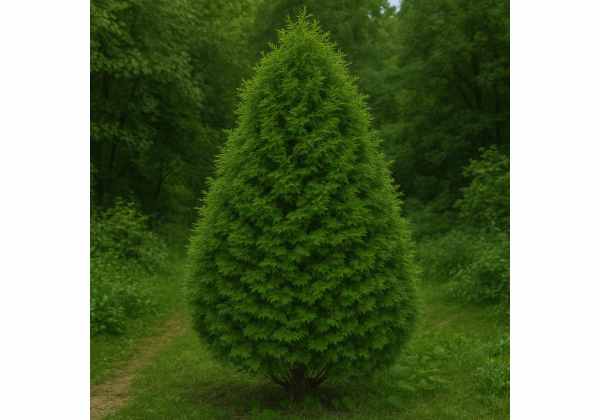
Tree-of-Life, better known botanically as Thuja occidentalis, is an evergreen conifer with a long medicinal history and a much more limited modern self-care role than many herbal profiles suggest. Traditionally, its leaves and young twigs were used for warts, respiratory catarrh, rheumatic complaints, and other folk uses. Today, the most defensible applications are narrower. Topical preparations are used for common warts on the hands and feet and for superficial fungal infections such as ringworm, while older combination formulas have explored a role for Thuja in upper-respiratory support. What makes the plant medically interesting also makes it risky: it contains thujone-rich essential oil along with flavonoids, tannins, and other constituents that may show antimicrobial and immune-related activity, but thujone can also be neurotoxic in higher exposures. That means Tree-of-Life is not a casual wellness herb. Its strongest modern use is external, short-term, and targeted. Understanding the difference between traditional reputation, laboratory promise, and realistic safe use is essential before anyone considers it medicinally.
Core Points
- Tree-of-Life is most realistically used topically for hand and foot warts and for some superficial fungal infections.
- Its chemistry suggests antimicrobial and immune-related activity, but oral self-treatment is limited by thujone safety concerns.
- A typical topical range is a product formulated to provide the equivalent of 100 to 200 mg crude dried herb tops per 1 g of finished product.
- For wart products, directions commonly say to apply 1 drop to each wart, up to 3 times daily.
- Avoid internal self-use, avoid use during pregnancy and breastfeeding, and do not apply topical products to the face or genital area.
Table of Contents
- What Tree-of-Life Is and How It Has Been Used
- Key Ingredients and Medicinal Properties
- Tree-of-Life Health Benefits and What the Evidence Really Supports
- Topical Wart Care, Fungal Relief, and Respiratory Context
- How to Use Tree-of-Life Preparations
- Dosage, Timing, and Duration
- Safety, Side Effects, Interactions, and Who Should Avoid It
What Tree-of-Life Is and How It Has Been Used
Thuja occidentalis is a North American conifer in the cypress family, commonly called arborvitae, white cedar, or Tree-of-Life. The medicinal material is usually made from the herb tops, meaning the leafy twigs rather than the trunk or wood. Historically, the plant occupied an unusual space between folk remedy, ceremonial plant, and later commercial phytotherapy. Older records describe it for bronchial catarrh, rheumatic complaints, urinary symptoms, skin eruptions, and wart-like lesions, but those uses came from traditions that did not always distinguish between safe external use and riskier internal exposure.
That distinction matters now. In current evidence-based herbal practice, Tree-of-Life is not mainly a general tonic, a daily immune herb, or a routine oral supplement. Its best-supported place is narrower and more practical: topical use for common warts on the hands and feet, and topical use for fungal infections such as ringworm. Canada’s current topical natural health product monograph recognizes exactly those uses and frames them as external adult applications, not open-ended internal remedies.
The plant’s older respiratory reputation is also worth understanding, but carefully. Thuja has appeared in combination formulas for upper-respiratory complaints, especially alongside herbs such as echinacea in immune-support formulas. The important limitation is that these are combination-product traditions and studies, not strong evidence that Thuja alone should be taken orally for colds or sinus symptoms. That is a recurring theme throughout this herb’s profile: traditional and preclinical interest is broad, but responsible self-care use is much narrower.
This narrower interpretation actually makes Tree-of-Life more credible. Many herbs become less trustworthy when every traditional use is repeated as though it were equally validated. With Thuja, the most honest framing is that it is a potent botanical with a history of topical use, some laboratory-demonstrated biological activity, and meaningful safety limits due to thujone. That places it far from a casual kitchen herb and closer to a targeted medicinal preparation that needs to be used with a clear purpose.
Key Ingredients and Medicinal Properties
Tree-of-Life owes its medicinal identity mainly to its essential oil and accompanying polyphenols. The best-known constituent is thujone, present as alpha- and beta-isomers and often described as the dominant component of the essential oil fraction. Depending on the plant material and extraction method, dried herb may contain about 1.4% to 4% essential oil, and thujone can make up a large share of that fraction. The herb also contains borneol, camphene, fenchone, limonene, myricene, terpinolene, thujyl alcohol, coumarins, flavonoids, tannins, catechins, and proanthocyanidins. In other words, Thuja is chemically much more than just thujone, but thujone is the compound that most strongly shapes the herb’s safety profile.
That chemistry explains both the herb’s promise and its limits. On the promising side, extracts and essential-oil fractions have shown antimicrobial, antifungal, antioxidant, anti-inflammatory, and immune-related activity in laboratory and preclinical settings. This helps explain why Tree-of-Life has long been associated with wart preparations, fungal skin care, and immune-oriented combination formulas. In this way, Thuja shares some broad topical and antimicrobial logic with oregano’s aromatic antimicrobial profile, although Thuja is much less suitable for routine internal culinary use.
On the limiting side, thujone is not a trivial constituent. Toxicological reviews describe it as neurotoxic, with animal data showing GABA-A receptor inhibition, excitation, and dose-dependent convulsions. That does not mean every tiny exposure is dangerous, but it does mean extraction strength matters enormously. Water-based preparations tend to extract much less thujone than high-ethanol extractions, while distilled essential oil can concentrate the very fraction most associated with toxicity. This is one reason it is misleading to talk about Thuja as though tea, tincture, and essential oil were interchangeable.
So the core medicinal properties of Tree-of-Life can be summarized in a balanced way:
- Topical antimicrobial and antifungal potential
- Immune-related and antiviral laboratory activity
- Mild anti-inflammatory and antioxidant effects in preclinical work
- Possible contribution to respiratory herbal combinations
- Significant toxicity concerns when thujone exposure rises
That last point belongs in the same sentence as the benefits because it changes how the herb should be used. Tree-of-Life is not best understood as a gentle herb that happens to have antimicrobial properties. It is better understood as a pharmacologically active conifer preparation whose potentially helpful actions are tied to the same chemistry that creates meaningful safety boundaries.
Tree-of-Life Health Benefits and What the Evidence Really Supports
The strongest practical benefit claim for Tree-of-Life is not broad immune enhancement or detox. It is topical support for common warts and some superficial fungal infections. That conclusion is not based on folklore alone. Current topical monographs recognize Thuja occidentalis for helping remove warts on the hands and feet and for helping relieve fungal infections such as ringworm. This is one of the clearest examples of an herb whose safest and most supportable role is external rather than internal.
Beyond topical use, the evidence becomes more qualified. Reviews of Thuja describe broad preclinical activity, including antibacterial, antifungal, antiviral, antioxidant, anti-inflammatory, and immune-related effects. Those signals make the herb scientifically interesting, but they do not automatically justify self-treatment claims. A lab finding against microbes or inflammatory pathways is not the same as a clinically validated oral therapy for infections or chronic disease. This gap between intriguing mechanisms and real-world safety is especially important for Thuja because stronger extracts can also raise thujone exposure.
Respiratory benefit claims sit in a middle zone. Older clinical research discussed in reviews involved herbal combination products containing Thuja together with other immune-oriented plants, especially echinacea and baptisia, for acute upper-respiratory infections and common cold symptoms. Those studies suggest that a Thuja-containing formula may have helped shorten or ease symptoms, but they do not prove that Thuja alone was responsible. For an evidence-minded reader, that means Tree-of-Life has some historical respiratory context but not strong stand-alone oral evidence. It would be more accurate to say that it contributed to combination phytotherapy than to say it is a proven solo cold remedy.
Preclinical research has gone even further, exploring anticancer, radioprotective, metabolic, and tissue-protective pathways. These lines of research are scientifically interesting and may explain why the plant continues to attract attention in pharmacology. But they do not change present-day self-care guidance. For a general reader, the realistic evidence ranking is simple:
- Most defensible: topical wart and ringworm support
- Possible but not well isolated: respiratory support in combination formulas
- Preclinical only: broad immune, metabolic, antiviral, and anticancer claims
That narrower ranking keeps the article honest. Tree-of-Life may have genuine medicinal potential, but in current practical herbal use, its benefits are strongest when the application is local, limited, and carefully controlled.
Topical Wart Care, Fungal Relief, and Respiratory Context
If someone is deciding whether Tree-of-Life belongs in a home herbal cabinet, the most useful question is not what it has ever been used for, but where it makes practical sense now. The first and clearest answer is topical wart care. The herb’s official topical indication specifically targets warts on the hands and feet. That matters because it narrows use to a familiar and common problem and keeps application away from more delicate or higher-risk areas. It also suggests a form of use that is easy to monitor: either the lesion improves over time, or it does not.
The second reasonable topical setting is superficial fungal irritation such as ringworm. Again, the key is that this is external and limited. A thin layer on a localized fungal patch is a very different proposition from swallowing concentrated Thuja or trying to use it for diffuse, unexplained skin disease. People often compare this sort of use with tea tree for topical antimicrobial support. That comparison is helpful because both plants are strongly bioactive topicals, but Thuja brings a narrower official indication and a higher need for strict site-of-use caution.
Respiratory context deserves separate treatment because it is easy to misunderstand. Thuja has appeared in phytotherapeutic formulas for acute and chronic upper-respiratory infections, but those formulas were multi-ingredient combinations rather than isolated Thuja products. This means the respiratory story is real in a historical and formulation sense, yet limited in an evidence-isolation sense. Someone interested mainly in immune or cold-season herbal support would usually make more sense starting with herbs whose evidence and safety are better aligned to oral use. That is why the respiratory section of a Thuja article should be informative, not promotional.
Equally important is knowing where Thuja does not belong. It is not a sensible self-care herb for:
- deep or spreading skin infections
- lesions on the face or genital area
- unexplained growths or pigmented skin changes
- chronic cough, fever, or breathing difficulty
- routine internal immune boosting
This not-for-everything framing protects the herb’s credibility. Tree-of-Life may be useful, but it is useful in the way a targeted medicinal topical can be useful, not in the way a broad everyday tonic can be.
How to Use Tree-of-Life Preparations
The safest way to approach Tree-of-Life is to think in terms of formulations rather than raw plant enthusiasm. Current official topical preparations include creams, gels, liquids, lotions, ointments, pastes, salves, solutions, and topical liquids. In each case, the intended route is external. This is not a plant that should push people toward casual do-it-yourself internal dosing. If the goal is wart or superficial fungal care, a finished topical product is the form most aligned with current official guidance.
For wart products, the practical directions are straightforward: wash the affected area, dry it thoroughly, and apply one drop at a time to cover each wart, letting it dry, up to three times daily. For fungal infections, the directions typically say to wash and dry the affected area, then apply a thin layer up to three times daily, without bandaging. These are concrete and usable instructions, which is one reason topical Thuja has a more realistic modern place than oral Thuja.
The part that often confuses readers is the existence of tinctures, mother tinctures, essential oils, and homeopathic preparations. These are not the same thing. A highly diluted homeopathic product does not behave like a topical extract, and a concentrated essential oil does not behave like a mild plant infusion. This article is about herbal use, not homeopathic doctrine, so the most responsible emphasis stays on standardized topical products and on the safety implications of thujone-rich extracts. When people want a gentler topical plant with a more skin-soothing reputation, witch hazel for topical skin use is often a better first comparison than another aggressive essential-oil herb.
A few practical rules help prevent misuse:
- Match the product form to the official topical goal.
- Do not improvise oral use from topical directions.
- Avoid concentrated essential-oil experimentation at home.
- Stop and reassess if the area becomes more inflamed, painful, or unusual-looking.
- Keep the herb away from delicate body sites and from children.
This matters because Tree-of-Life is the kind of herb people can misuse precisely by assuming that natural means flexible. With Thuja, flexibility is not the virtue. Precision is. It is best used in well-defined topical circumstances, with restrained expectations and careful attention to where it is applied.
Dosage, Timing, and Duration
Tree-of-Life dosage is one of the areas where readers most need specificity, because the safest evidence-backed guidance is topical and formulation-based rather than oral and general. Current topical monographs for adults 18 years and older describe finished products expected to provide the equivalent of 100 to 200 mg crude dried herb tops per 1 g of finished product. For non-standardized liquid extracts, the monograph allows 10% to 100% dried herb top extract preparation in the final topical product, with extract ratios between 1:1 and 1:10. For dry extracts, it allows 0.5% to 10% extract preparation in the final product, with extract ratios between 2:1 and 20:1, again formulated to deliver the equivalent of 100 to 200 mg crude dried herb tops per gram.
Those technical numbers matter because they make clear that dosage for Thuja is not about swallowing a random capsule. It is about how much crude-herb equivalent is present in a topical preparation and how often that finished product is applied. For wart care, the direction is typically 1 drop per wart, up to 3 times daily. For fungal infection support, the direction is a thin layer over the affected area, up to 3 times daily, and the instructions also say do not bandage.
There is no equally clear modern official oral self-care dosing framework in the sources used for this article. That absence is meaningful. It reflects the fact that Thuja’s safest present-day role is topical, while oral use raises more significant safety questions because of thujone exposure. Older respiratory combination products in the literature used small daily amounts of Thuja within a multi-herb preparation, but those studies do not create a safe, transferable self-dosing rule for isolated oral Thuja.
Timing is simple for topical products: clean skin, dry skin, then apply. Duration is less neatly standardized. The monograph does not require a specific duration statement, but that should not be interpreted as a green light for indefinite use. A reasonable real-world rule is to reassess if the lesion does not improve, if the diagnosis is uncertain, or if the condition worsens. For any fungal-looking rash that spreads, becomes painful, or fails to improve, medical confirmation matters more than increasing the amount of product.
In practical terms, the dosing lesson is straightforward: Tree-of-Life is not a herb where more is better. It is one where the correct product strength, site of application, and route of use matter far more than aggressive frequency or experimentation.
Safety, Side Effects, Interactions, and Who Should Avoid It
Safety is the defining section of any serious Tree-of-Life article. Current topical monographs are explicit: for external use only. They also instruct users not to apply Thuja products to the face or genital area, to keep them out of reach of children, and to seek help immediately if swallowed. The same monograph advises checking with a healthcare professional before use if the person has diabetes or poor circulation, because those conditions can change how skin and minor lesions should be managed.
The broader toxicology picture explains why these cautions exist. Thujone, the best-known constituent of Thuja essential oil, has documented neurotoxic potential. Toxicological reviews describe thujone as a GABA-A receptor antagonist that can produce excitation and convulsions in dose-dependent animal studies. Older reviews of Thuja also report that overdose or abuse of oral extracts has been associated with severe gastrointestinal irritation, liver and kidney toxicity, nervous agitation, and convulsive symptoms. These are not the sorts of safety signals that belong to a casual everyday herb.
Pregnancy and breastfeeding deserve special caution. Historical sources describe Thuja preparations as contraceptive or abortifacient in folk use, and there is no good basis for recommending medicinal use during pregnancy or lactation. Even though the current official topical monograph focuses on external use and does not list a pregnancy-specific dosing section, the combination of thujone-related toxicology and lack of modern reproductive safety evidence makes avoidance the prudent stance.
Who should avoid Tree-of-Life or use it only with professional guidance?
- people who are pregnant or breastfeeding
- children
- anyone considering internal use
- anyone with diabetes or poor circulation using topical products
- anyone with lesions on the face, genital area, or uncertain diagnosis
- anyone using strong essential-oil preparations without clear professional advice
The most realistic safety summary is this: topical, localized, adult use is the most defensible route. Internal self-treatment is the least defensible route. If a reader wants a milder plant-centered option for routine skin comfort rather than a stronger lesion-directed botanical, a gentler topical herb or clinician-guided skin evaluation is usually the better move. Tree-of-Life can be useful, but only when its risk profile stays in view the whole time.
References
- THUJA – THUJA OCCIDENTALIS – Topical 2025 (Monograph)
- Medicinal and biological potential of Thuja occidentalis 2023 (Review)
- Thuja occidentalis: An Unexplored Phytomedicine with Therapeutic Applications 2023 (Review)
- Thujone and thujone-containing herbal medicinal and botanical products: toxicological assessment 2013 (Toxicological Review)
- Thuja occidentalis (Arbor vitae): A Review of its Pharmaceutical, Pharmacological and Clinical Properties 2005 (Review)
Disclaimer
This article is for educational purposes only and does not replace medical advice, diagnosis, or treatment. Tree-of-Life is not a casual internal supplement. Its most supportable role is external and localized, and even topical use has important site restrictions and safety warnings. Do not use it to self-treat unexplained skin growths, spreading infection, chronic respiratory illness, or internal health problems. Speak with a qualified healthcare professional before using Thuja medicinally if you are pregnant, breastfeeding, have diabetes or poor circulation, or are thinking about any non-topical form.
If this guide helped, please consider sharing it on Facebook, X, or your preferred platform so others can approach Tree-of-Life with safer expectations and better information.