Water dropwort, Oenanthe aquatica, is a wetland herb in the parsley family that has a far more complicated medicinal profile than its soft white flowers suggest. Historical European sources describe its fruits and preparations as expectorant, diuretic, and supportive in chronic respiratory and digestive complaints. Modern laboratory work adds another layer, pointing to antioxidant, enzyme-inhibiting, antiviral, and cytoprotective activity in extracts and essential oils. Yet that promise comes with an unusually important caution: this is not one of the easy, food-like herbs that can be recommended casually.
Part of the challenge is identity. The common name “water dropwort” is used for several species, and online health claims often blur the line between Oenanthe aquatica and other plants in the same genus. Part of the challenge is safety. Historical descriptions already warned about dizziness and narcotic symptoms in excess, and the broader Oenanthe group includes plants with serious toxic potential.
That means the most helpful way to approach Oenanthe aquatica is with balance: respect its chemistry, understand the limits of the evidence, and treat safety as central rather than secondary.
Essential Insights
- Water dropwort extracts show antioxidant and enzyme-inhibiting activity in laboratory studies.
- Historical use centered on respiratory and digestive complaints, but modern human evidence remains very limited.
- Historical mixed-herb infusions containing this species have used about 200 mL per dose, 2 to 3 times daily, but that is not a validated stand-alone self-use dose.
- Pregnant people, children, foragers, and anyone unsure of the plant’s identity should avoid self-use.
Table of Contents
- What water dropwort is and why correct identification matters
- Key ingredients and medicinal properties of Oenanthe aquatica
- What health benefits look plausible and where the evidence stops
- Traditional and modern uses of water dropwort
- Dosage, timing, and why no standard self-care dose exists
- Safety, side effects, interactions, and who should avoid it
- How to source it responsibly and avoid common mistakes
What water dropwort is and why correct identification matters
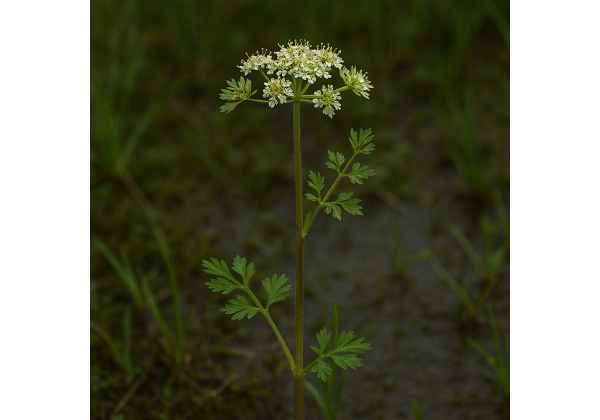
Oenanthe aquatica, often called fine-leaved water dropwort or water fennel, is an aquatic or semi-aquatic herb in the Apiaceae family. That family includes many familiar plants such as parsley, fennel, celery, and coriander, but it also includes several species with narrow safety margins. The plant usually grows in wet ditches, shallow ponds, marshy margins, and slow-moving water. Its finely divided leaves and umbrella-like white flower clusters make it look delicate, but that appearance can be misleading.
The first practical truth about this herb is that name confusion matters. In many online herb discussions, “water dropwort” is treated as if it were one universally edible or widely used medicinal plant. It is not. In Asia, the name often refers to Oenanthe javanica, a different species with a stronger food and traditional medicine record. In European herbal and historical references, Oenanthe aquatica is the species more often linked to the old name Phellandrium aquaticum and to medicinal fruit preparations. Those are not interchangeable herbs.
That distinction is not botanical hair-splitting. It changes how safely the plant can be approached. When readers see broad claims about liver support, anti-inflammatory effects, or culinary use under the label “water dropwort,” some of those claims may actually belong to another species entirely. For this article, the focus is specifically Oenanthe aquatica, not the better-known edible Asian species.
Its family relationship to Apiaceae herbs such as celery can help readers understand its aromatic profile, but that comparison should not create false comfort. Unlike common kitchen herbs, Oenanthe aquatica has a more fragile safety reputation. Historical texts describe medicinal use of the fruits and, more occasionally, external use of the roots, yet they also warn that excess intake may produce vertigo, drunkenness-like effects, and other disturbing symptoms.
Another important point is that the whole genus carries a toxicological shadow. Several Oenanthe species have been involved in severe poisoning incidents, especially when gathered from the wild and mistaken for edible roots or wetland herbs. That does not prove that Oenanthe aquatica behaves exactly like its most dangerous relatives in every circumstance, but it does change the burden of proof. For an herb like this, safety should be assumed uncertain unless identity, plant part, preparation, and source are all clear.
So before even asking whether water dropwort “works,” the better first question is whether the correct plant is being discussed. With Oenanthe aquatica, that answer determines almost everything that follows: what chemistry is relevant, which traditions apply, how much caution is warranted, and whether self-use makes sense at all.
Key ingredients and medicinal properties of Oenanthe aquatica
The medicinal interest in Oenanthe aquatica comes from a mixed chemistry rather than from one famous headline compound. Research on its extracts and essential oil points to several groups of bioactive constituents, including phenolic acids, flavonoids, coumarins, essential-oil components, and polyacetylenes. Taken together, these compounds help explain why the plant has attracted attention for antioxidant, enzyme-modulating, and antiviral effects in laboratory settings.
The plant’s essential oil profile is especially interesting because it is not identical to the better-known kitchen herbs in the same family. Depending on origin and plant part, researchers have reported aromatic profiles rich in phenylpropanoids and monoterpenes, with dill apiol noted as a prominent component in one recent Sicilian sample. That kind of variability matters. It means the activity of one extract or oil cannot automatically be generalized to every preparation sold or gathered under the same name.
The broader extract chemistry includes phenolic acids and flavonoid-related compounds that may contribute to free-radical scavenging and redox-balancing activity. In modern phytochemical work, aqueous extracts of Oenanthe aquatica showed particularly strong antioxidant measures in several in vitro assays. This does not mean the herb has proven clinical antioxidant effects in humans, but it does suggest the plant contains biologically active compounds worth studying.
The enzyme-related findings are also notable. Methanolic and aqueous extracts have shown inhibitory activity against acetylcholinesterase, butyrylcholinesterase, alpha-amylase, alpha-glucosidase, and tyrosinase in laboratory models. In simple terms, those results hint at possible relevance to memory pathways, glucose handling, and pigment-related skin biology. But “hint” is the right word here. These are early mechanistic signals, not clinical proof.
A practical comparison to parsley family phytochemicals is useful. Many Apiaceae herbs contain flavonoids, volatile oils, and polyacetylenes that can look promising in cell and enzyme studies. What separates a truly established medicinal herb from a merely interesting one is the jump from bench chemistry to meaningful human outcomes. Oenanthe aquatica has not yet completed that jump.
Its older medicinal descriptions give it terms such as diuretic, expectorant, pectoral, and antiperiodic. Those labels reflect how past herbal systems interpreted observed effects. In modern language, they suggest possible actions on mucus, breathing comfort, fluid balance, and recurring fever patterns. Still, those terms should be translated carefully rather than romanticized. A historical label is not the same as a modern clinical indication.
The most balanced way to describe the plant’s medicinal properties is this:
- antioxidant and redox-active in laboratory studies
- enzyme-inhibiting in several in vitro models
- mildly aromatic and traditionally expectorant in historical use
- potentially neuroactive and safety-sensitive at higher exposure
- chemically interesting, but not clinically settled
That final point matters most. Oenanthe aquatica has real pharmacological promise on paper, but it remains a plant where chemistry has outpaced reliable human evidence. For readers seeking safe, predictable herbal action, that gap should shape expectations.
What health benefits look plausible and where the evidence stops
If a reader searches for water dropwort benefits, the internet often presents a confident list: antioxidant, anti-inflammatory, antiviral, antidiabetic, neuroprotective, respiratory, digestive, and more. The more careful answer is that a few of these claims have laboratory support, some have historical support, and almost none are backed by strong modern human trials for Oenanthe aquatica itself.
The most plausible benefit category is antioxidant support. In laboratory assays, especially with aqueous extracts, Oenanthe aquatica has shown meaningful radical-scavenging, reducing, and metal-chelating activity. That suggests its phenolic compounds and related constituents can interact with oxidative stress pathways. What it does not prove is that taking the herb will reliably improve human antioxidant status or reduce disease risk in everyday use.
A second plausible category is enzyme-related metabolic and neurologic support. Extracts have shown inhibition of enzymes linked to carbohydrate digestion and cholinergic signaling. That is why the plant sometimes appears in discussions about blood sugar support or cognitive relevance. But this is still preclinical territory. There are no convincing modern trials showing that taking Oenanthe aquatica improves diabetes outcomes, memory, or neurodegenerative disease in actual patients.
A third area is antiviral activity, especially against HSV-1 in vitro. This is interesting because it suggests the plant contains compounds with real biological interference against viral replication in cell systems. Even so, in vitro antiviral activity is not a shortcut to a clinical antiviral recommendation. The step from lab dish to human treatment is large, and this herb has not crossed it.
Historical sources also support a narrower set of possible traditional benefits:
- support in chronic cough and pectoral complaints
- use in dyspepsia and sluggish digestion
- mild diuretic reputation
- occasional use in ulcers and external applications
These traditions should be viewed as signals worth understanding, not as confirmed indications. A history of use can justify research interest, but it does not remove the need for modern safety and efficacy testing.
For readers used to better-characterized seed herbs such as fennel for digestive comfort and aromatic support, the contrast is instructive. Fennel has a clearer culinary role, better tolerated preparations, and a much friendlier safety profile. Oenanthe aquatica may share some old digestive or respiratory language, but it does not occupy the same practical place in self-care.
So what can honestly be said?
Reasonably plausible
- laboratory antioxidant activity
- enzyme inhibition relevant to glucose and cholinergic pathways
- preliminary antiviral action in cell models
- traditional respiratory and digestive use
Not established
- proven blood sugar control in humans
- proven cognitive benefit in humans
- reliable treatment for cough, bronchitis, or ulcers
- safe routine supplementation for the general public
That is the key boundary. The plant deserves scientific interest, but it does not yet deserve broad, casual recommendation. For most readers, the right takeaway is not “this herb clearly helps many conditions.” It is “this herb has intriguing preclinical activity, but its evidence base is too limited and its safety context too complicated for routine self-directed use.”
Traditional and modern uses of water dropwort
The traditional uses of Oenanthe aquatica are narrower and more old-world than many modern herb summaries suggest. Historical European herbal literature focused mainly on the fruits, sometimes under the name Phellandrium aquaticum. These fruits were described as useful in chronic chest complaints, cough, catarrhal states, dyspepsia, and intermittent fever patterns. Some texts also mention external use of the roots in local applications.
That pattern tells us something important: the plant was not historically treated as a universal tonic. It was more often used as a targeted remedy, especially where mucus, sluggish digestion, or chronic respiratory irritation were involved. It was also not treated as wholly benign. Traditional descriptions often paired its uses with warnings about dizziness, inebriation-like effects, and the need for caution.
Modern uses fall into three main categories.
1. Historical and herbalist interest
A small number of modern herbal references still mention water fennel or Phellandrium aquaticum for expectorant or diuretic traditions. In practice, however, it is now a minor herb rather than a mainstream one. That decline likely reflects both species confusion and legitimate safety concerns.
2. Homeopathic preparations
The plant survives most visibly today in homeopathic products labeled Phellandrium aquaticum. These are usually marketed for wet cough or self-limiting respiratory symptoms. The important nuance is that these products are highly diluted and should not be confused with whole-herb or extract dosing. Their existence tells us the plant remained in therapeutic memory, but it does not prove pharmacologic efficacy of the original herb.
3. Phytochemical and laboratory research
Current interest is strongest in the research world rather than in practical herbal medicine. Scientists are studying its extracts and oils for antioxidant activity, enzyme inhibition, antiviral action, and stress-response modulation. This is a different kind of “use.” It is not folk medicine and it is not validated clinical care. It is exploratory pharmacognosy.
For most readers, it helps to compare Oenanthe aquatica with safer aromatic Apiaceae herbs used in food. Coriander, fennel, and parsley move easily between kitchen and herbal use because their identity, preparation, and safety are more settled. Water dropwort does not. Its best-supported present-day use is really as an object of careful study, not as a broadly recommended home remedy.
That does not make the plant unimportant. In fact, one of the more interesting things about Oenanthe aquatica is how it shows the transition from traditional plant lore to modern pharmacology. It sits in the middle ground where historical observations, chemical complexity, and toxicological caution all meet.
A responsible summary of its uses would look like this:
- Historically used in fruit-based preparations for respiratory and digestive complaints
- Occasionally referenced in older diuretic and pectoral traditions
- Present today in some homeopathic products
- Actively studied for extract and essential-oil bioactivity
- Not widely accepted as a routine modern self-care herb
That final point matters. Readers who see “uses” in the title should not hear “safe for casual use.” In this plant’s case, the most honest modern use may be as a candidate for controlled research rather than as a standard kitchen-medicine crossover herb.
Dosage, timing, and why no standard self-care dose exists
This is the section where caution matters most. For Oenanthe aquatica, there is no well-established modern evidence-based oral dose for stand-alone self-care use. That is the clearest and most responsible starting point.
Why is dosage so uncertain? There are three reasons.
First, the modern evidence base is mostly laboratory research, not human clinical trials. Lab studies may report concentrations in micrograms per milliliter, but those are research conditions, not consumer dosing instructions.
Second, traditional use often involved specific plant parts, especially the fruits, in older herbal systems that do not translate neatly into today’s standardized extract language.
Third, the safety profile is not forgiving enough to justify guesswork. With an herb that sits inside a potentially toxic genus and carries historical warnings of neurologic or narcotic-like symptoms in excess, the absence of a standard dose is not a minor detail. It is the central fact.
What can be said with reasonable accuracy is this:
- In historical mixed-herb formulas, Oenanthe aquatica fruits appeared as one component rather than the sole herb.
- One reviewed formula used a mixed infusion prepared with 2 tablespoons of the herbal blend in 500 mL of boiling water, taken as 200 mL per dose, 2 to 3 times daily before meals.
- That is not the same thing as a validated dose for Oenanthe aquatica alone.
This distinction is important enough to repeat. A traditional mixture dose is not a stand-alone species dose.
Homeopathic labeling offers another kind of dose information, but it should be interpreted correctly. Some official labels for Phellandrium aquaticum pellets suggest small repeated pellet doses for short-term symptoms. Those labels also explicitly state that homeopathic claims are not accepted medical evidence. So while such labels exist, they do not solve the underlying dosage problem for the crude herb or its extracts.
A practical reader may ask, “Then what should I actually do?”
The most honest answer is:
- Do not self-dose fresh wild plant material.
- Do not infer a safe amount from online lists of benefits.
- Do not convert laboratory concentrations into personal oral dosing.
- Use only products with a clearly stated species name, plant part, and preparation type.
- Prefer professional supervision if the herb is being used at all.
If a person still wants a measurable exposure for historical or complementary reasons, the safest framework is not “start low and experiment.” It is “avoid stand-alone self-experimentation unless a qualified practitioner specifically recommends a defined product.”
This makes Oenanthe aquatica very different from better-studied household herbs such as ginger with clearer food and supplement ranges. Ginger can be discussed in grams, tea amounts, extract levels, and practical timing with some confidence. Water dropwort cannot, at least not yet.
So the true dosage conclusion is simple: the literature preserves fragments of traditional use and some labeled homeopathic dosing, but there is still no reliable, modern, clinically validated oral dose for general self-care.
Safety, side effects, interactions, and who should avoid it
For this herb, safety is not a routine box to tick at the end. It is the main lens through which the plant should be judged.
The first concern is misidentification. Oenanthe aquatica belongs to a genus that includes highly dangerous plants, and wetland Apiaceae species can be difficult for non-specialists to distinguish. That alone is enough reason to avoid wild harvesting. A mistaken identification in this plant group is not a small error.
The second concern is species-level uncertainty in use. Many benefit claims attached to “water dropwort” online belong to other plants, especially Oenanthe javanica. Using those claims to justify self-treatment with Oenanthe aquatica is unsafe and scientifically weak.
The third concern is the plant’s own historical warning profile. Older descriptions warn that excessive use of the fruits may cause:
- vertigo
- drunkenness-like symptoms
- dullness or narcotic effects
- general intolerance at higher exposure
That does not give us a full toxicology map, but it is enough to reject casual experimentation.
Potential side effects are therefore best framed conservatively:
- dizziness
- nausea or digestive discomfort
- headache or a “foggy” feeling
- unpredictable neurologic symptoms if misused or misidentified
- local irritation from poorly prepared products
Reliable drug-interaction studies are lacking. In a plant with uncertain active dosing and incomplete human safety data, that absence should not be treated as reassurance. It should be treated as a reason to avoid combining the herb with medications that already require precision, especially where neurologic stability, metabolic control, or fragile general health are involved.
People who should avoid self-use include:
- pregnant or breastfeeding people
- children and adolescents
- anyone with seizure risk or unexplained neurologic symptoms
- people using multiple prescription medicines
- foragers and hobby herbalists without expert botanical training
- anyone who cannot verify species identity, plant part, and preparation
There is also a practical risk that many readers overlook: product ambiguity. A label that says only “water dropwort extract” is not good enough. Without the Latin name and clear part used, there is no dependable way to know whether the product matches the herb being researched, another Oenanthe species, or a different plant entirely.
If readers want a broader comparison, this herb belongs with plants that require safety-first handling rather than casual wellness use. That does not mean it has no medicinal interest. It means the line between “potential remedy” and “avoidable hazard” is thin.
The right safety summary is strict but fair: Oenanthe aquatica may have meaningful phytochemical activity, but that is not enough to outweigh identification risk, limited human evidence, and uncertain tolerability in unsupervised use. For most people, the prudent decision is avoidance rather than experimentation.
How to source it responsibly and avoid common mistakes
Most mistakes with Oenanthe aquatica happen before the herb is ever used. They happen at the level of naming, sourcing, assumptions, and product interpretation.
The biggest mistake is assuming every “water dropwort” product or article refers to the same plant. This is not true. The common name crosses species lines, and a great deal of online content blends edible, traditional, and toxicological information from different Oenanthe species. A responsible buyer or reader should always start with the full Latin name.
The second mistake is foraging from wetlands. This is especially risky because water-edge Apiaceae plants can look deceptively similar, particularly to non-specialists. Fine leaves, hollow stems, white umbels, and parsley-like scent are not enough for safe identification. If a plant grows in marshy ground and belongs to a genus with poisonous relatives, “probably correct” is not safe enough.
The third mistake is trusting vague supplement labels. A responsible product should make at least four things clear:
- the exact Latin name
- the plant part used, such as fruit or aerial parts
- the preparation type, such as tincture, powdered fruit, essential oil, or homeopathic dilution
- the manufacturer’s safety instructions and contraindications
If that information is missing, the safest response is to skip the product.
The fourth mistake is assuming older use equals modern suitability. Historical records are valuable, but they do not automatically create a modern self-care indication. Many older materia medica sources describe herbs that are too variable, too poorly studied, or too risky for broad unsupervised use today.
The most responsible sourcing hierarchy looks like this:
- Research source first: know whether the product is actually Oenanthe aquatica
- Avoid wild harvest: especially from natural wetlands, ditches, or pond margins
- Prefer transparent manufacturers: only if plant part and preparation are disclosed
- Treat homeopathic and herbal products differently: they are not interchangeable
- When in doubt, do not use it
A final mistake is searching for a benefit and then working backward to justify the plant. With Oenanthe aquatica, that is the wrong order. The better order is:
- Confirm identity
- Assess safety
- Check whether human evidence is adequate
- Only then consider use
That may feel cautious, but it is actually the most practical approach. Herbs with broad culinary familiarity allow more flexibility. This one does not. Here, restraint is part of competence.
In the end, sourcing Oenanthe aquatica responsibly means accepting that the herb may be more valuable as a subject of professional research than as a home experiment. That is not a failure of the plant. It is simply a realistic reading of its current evidence and safety boundaries.
References
- Evaluation Profile of Sicilian Oenanthe aquatica (L.) Poir., O. fistulosa L. and O. pimpinelloides L. Essential Oils Under LPS-Induced Cellular Stress 2026 (Research Article)
- Phytochemical Profile and Biological Activities of the Extracts from Two Oenanthe Species (O. aquatica and O. silaifolia) 2022 (Research Article)
- Medical Species Used in Russia for the Management of Diabetes and Related Disorders 2021 (Review)
- Composition of the Oenanthe aquatica essential oil 1976 (Phytochemical Study)
- Hemlock water dropwort poisoning 1987 (Case Report)
Disclaimer
This article is for educational purposes only and does not replace medical advice, diagnosis, or treatment. Oenanthe aquatica is not a routine self-care herb, and the common name “water dropwort” can refer to more than one species. Because identity errors and safety concerns are significant, readers should not forage, self-dose, or substitute this plant for prescribed care. Anyone considering use should consult a qualified clinician or trained herbal professional with species-level expertise.
If this article helped you, please share it on Facebook, X, or another platform you prefer.