Water Figwort is a tall, moisture-loving herb traditionally found near streams, pond margins, wet ditches, and marshy ground. In older herbal literature it appears under the name Scrophularia aquatica, while many modern botanical sources place the European water figwort plant under Scrophularia auriculata. Whatever name is used, it belongs to the broader figwort group, a genus long associated with skin care, minor inflammatory complaints, swollen tissues, and old-fashioned “alterative” support.
What makes Water Figwort interesting is the contrast between its herbal reputation and its research profile. Traditional practice gives it a place in remedies for irritated skin, minor wounds, hemorrhoids, glandular swelling, and sore throats, yet modern human studies on the plant itself remain very limited. The more convincing evidence comes from phytochemistry and preclinical work on Water Figwort and closely related figwort species. These studies suggest the presence of iridoid glycosides, phenylpropanoid compounds, flavonoids, and saponins that may help explain its anti-inflammatory and antioxidant reputation. This article looks at what Water Figwort may offer, where the evidence is thin, how it is traditionally used, and why careful dosing and safety judgment matter.
Quick Overview
- Water Figwort is mainly used in traditional herbalism for irritated skin, swollen tissues, and mild inflammatory complaints.
- Its most plausible benefits come from anti-inflammatory and antioxidant plant compounds rather than proven human clinical outcomes.
- A cautious tea-style range is about 2 to 4 g dried herb in 200 to 250 mL water, once or twice daily.
- Avoid Water Figwort during pregnancy, breastfeeding, and in children unless guided by a qualified clinician.
Table of Contents
- What Water Figwort Is and Why Its Name Can Be Confusing
- Water Figwort Key Ingredients and Medicinal Properties
- Water Figwort Health Benefits and What the Evidence Actually Shows
- Traditional Uses and Practical Ways to Prepare It
- Water Figwort Dosage Timing and Duration
- Side Effects Safety and Who Should Avoid It
- Interactions Product Quality and When to Seek Medical Care
What Water Figwort Is and Why Its Name Can Be Confusing
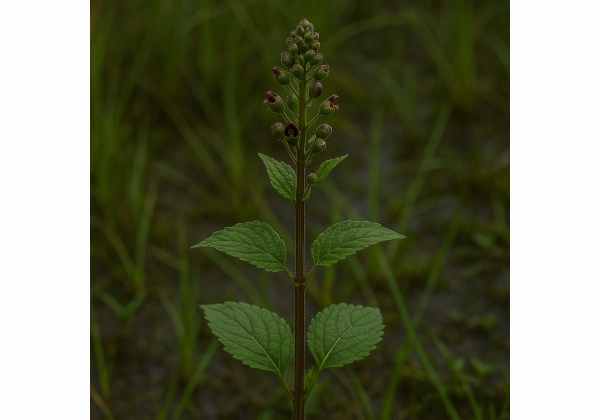
Water Figwort is a perennial herb in the figwort family with square stems, dull green leaves, and small rounded flowers that are usually reddish brown to greenish purple. It favors damp habitats and can grow in surprisingly robust clumps when conditions are right. That wetland character helps distinguish it from some of its relatives, but botanical naming has made the plant more confusing than many readers expect.
In older herb books, seed catalogs, and folk references, Water Figwort often appears as Scrophularia aquatica. In more modern botanical treatment, the European plant commonly called Water Figwort is often listed as Scrophularia auriculata. That does not mean older herbal material is useless. It means readers need to be careful, especially when buying dried herbs or reading historical sources. A label may say Water Figwort, Water Betony, Brownwort, or Scrophularia aquatica, yet the plant discussed in recent floras may appear under a different accepted name.
This matters because the genus Scrophularia contains many species, and they are not interchangeable in a strict scientific sense. Common figwort, water figwort, Chinese figwort, and other species overlap in traditional reputation, but they do not have identical chemistry, identical preparation methods, or identical evidence bases. The safest approach is to treat Water Figwort as part of a medicinal genus with shared themes, while still respecting species differences.
Historically, European figworts were associated with skin disorders, swollen glands, hemorrhoids, wounds, and inflammatory complaints. The old “Doctrine of Signatures” also influenced their use, especially because the knotted roots of some species resembled swollen lymph nodes. Water Figwort became part of that broader tradition, though often with more emphasis on fresh leaves, wetland habitat, and external preparations.
Today, its value is more niche than mainstream. It is not a common supplement, and it is rarely standardized in the way turmeric, echinacea, or valerian might be. That can actually be helpful from an editorial standpoint, because it encourages realism. Water Figwort is best understood as a traditional herb with interesting phytochemistry and selective preclinical support, not as a heavily studied modern remedy.
For identification and use, three practical points are worth keeping in mind:
- Check the Latin name carefully because Water Figwort naming varies across older and newer sources.
- Do not assume every “figwort” product refers to the same species.
- Avoid casual foraging unless you are fully confident in wetland plant identification and harvesting rules.
That final point matters. Wetland plants are more likely to be exposed to environmental contamination, and misidentification is easier than many people think. For most people, Water Figwort is better approached through well-identified dried herb from a reputable supplier than through self-harvested wild plants.
Water Figwort Key Ingredients and Medicinal Properties
Water Figwort’s medicinal reputation rests less on one famous compound and more on a pattern of chemistry common to the figwort genus. Modern research on Scrophularia species shows repeated appearance of iridoid glycosides, phenylpropanoid and phenylethanoid glycosides, flavonoids, phenolic acids, saponins, and terpenoid-type constituents. In Water Figwort and closely related species, that chemistry helps explain why the plant is repeatedly linked to skin comfort, tissue irritation, and inflammatory balance.
The most important group is probably the iridoid glycosides. These are common in Scrophularia species and are often discussed for anti-inflammatory and immunomodulatory effects in laboratory and animal work. Compounds such as harpagide, harpagoside-like molecules, catalpol-related derivatives, scropolioside A, and scrovalentinoside belong to the kind of phytochemical family that makes researchers take this genus seriously. They do not prove clinical benefit in humans, but they give the traditional uses a plausible biochemical foundation.
A second important group is phenylpropanoid and phenylethanoid glycosides, including compounds related to verbascoside. These are often associated with antioxidant behavior and support the idea that Water Figwort may help calm oxidative stress at least in experimental models. Oxidative stress is not a diagnosis by itself, but it is part of many inflammatory conditions, which is why these compounds matter.
Flavonoids and phenolic acids add another layer. They help give figwort species broad-spectrum plant defense properties and may contribute to antioxidant, capillary-supportive, and mild tissue-protective effects. Saponins are also relevant. In some species, they appear alongside iridoids and may help explain why certain figwort extracts have shown activity in edema and inflammation models.
When herbalists describe Water Figwort as a “cooling,” “alterative,” or “detergent” herb, that language sounds old, but it points toward several practical medicinal properties:
- mild anti-inflammatory potential
- antioxidant support
- traditional tissue-soothing and skin-directed action
- possible lymphatic or decongestive support in older herbal frameworks
- limited topical vulnerary reputation for minor skin complaints
The key word in all of this is potential. Water Figwort does not have strong human trial evidence showing it treats eczema, psoriasis, hemorrhoids, or swollen nodes. What it has is a chemically credible profile and a long record of use in exactly those kinds of problems.
That distinction helps avoid two common mistakes. One mistake is dismissing the plant as pure folklore. The other is treating it like a proven drug. The better middle ground is to see Water Figwort as a herb whose chemistry makes its traditional uses plausible, especially around inflammation and irritated tissues, while still recognizing that much of the best evidence comes from related figwort species and experimental systems rather than direct clinical trials.
In practical herbal terms, Water Figwort belongs in the category of plants that may be more relevant for supportive care than for cure claims. Its medicinal properties are real enough to deserve attention, but not settled enough to justify grand promises.
Water Figwort Health Benefits and What the Evidence Actually Shows
The most commonly claimed health benefits of Water Figwort cluster around skin irritation, swollen or congested tissues, mild inflammatory complaints, and traditional use for sore throats or hemorrhoids. To discuss those benefits responsibly, it helps to divide them into three categories: traditional use, preclinical support, and proven human outcomes.
The strongest traditional theme is skin support. Figwort species have long been used for itchy, inflamed, or blemished skin, as well as for old-fashioned categories like scrofulous swellings, ulcers, or piles. Water Figwort fits naturally into that lineage. In real-world terms, that means it has been used as a wash, poultice, ointment ingredient, or internal herb when skin symptoms seemed linked to heat, irritation, or sluggish tissue drainage. If your main goal is a gentler first-line topical herb, calendula for irritated skin is usually better known and easier to use.
The second likely benefit area is inflammatory balance. Experimental studies on related Scrophularia species, especially S. auriculata subspecies and other members of the genus, show anti-inflammatory effects in models of edema, delayed-type hypersensitivity, and inflammatory mediator production. That gives real weight to the genus tradition. It suggests that Water Figwort may support the body’s response to irritation and tissue overreaction, especially when used as part of a broader herbal pattern rather than as a stand-alone “treatment.”
A third likely area is swollen tissues and glandular discomfort. Historical Western herbalism often linked figworts with enlarged or tender nodes, piles, and stagnant-feeling tissue states. Modern readers should translate that carefully. It does not mean Water Figwort dissolves tumors or cures lymphatic disease. It means traditional herbalists viewed it as a plant for inflamed, congested, or thickened tissues.
Some traditions also describe Water Figwort for sore throat, hoarseness, or heat-related irritation in the upper airway. This is plausible in the broad figwort sense, but evidence is far weaker here than for skin and inflammatory uses. It is better thought of as occasional traditional support rather than a dependable respiratory herb.
What the evidence does not show is just as important:
- no strong human trials proving benefit for eczema or psoriasis
- no established role in treating lymphatic disease
- no evidence that it replaces prescription anti-inflammatory care
- no proof that it should be used for serious infections or persistent skin disorders without evaluation
So what is the fairest summary? Water Figwort may offer supportive benefit in mild, non-urgent situations where the goals are soothing irritated tissues, exploring traditional skin herbs, or using a genus with known anti-inflammatory phytochemistry. But the evidence is still too limited to treat it as a front-line remedy.
That means the herb is best suited to people who can work with nuance. If you want a plant with interesting compounds, respectable tradition, and potential usefulness for external skin support or mild internal inflammatory patterns, Water Figwort is worth understanding. If you want guaranteed, well-quantified outcomes, the research base is not there yet.
Traditional Uses and Practical Ways to Prepare It
Traditional Water Figwort use was usually simple and practical. The plant was not treated like a standardized capsule ingredient. It was more often made into infusions, decoctions, poultices, ointments, compresses, or washes. External use appears especially often in the older record, which makes sense given the herb’s long connection with skin irritation, sores, swollen tissues, and hemorrhoids.
For external use, herbal traditions often favored the fresh or freshly dried aerial parts. Leaves and flowering tops could be bruised into a moist application, simmered into a wash, or infused into a fatty base. The old word “vulnerary” is sometimes attached to figworts, meaning a herb used around minor wounds or damaged tissue. That sounds more dramatic than modern practice should allow, but it does suggest why Water Figwort became associated with external care.
Internal use was more restrained. Water Figwort was taken as tea, decoction, or tincture-like preparations when the goal was to support the skin from within, ease sore throat irritation, or address swollen, “hot,” or sluggish conditions in traditional herbal language. That does not make it a detox miracle. It simply places it in the class of herbs once used to shift inflammatory tone and tissue congestion over time.
Today, the most reasonable preparation formats are these:
- Infusion
A mild tea made from dried aerial parts is often the simplest starting point. This suits cautious experimentation and short-term internal use. - Short decoction
Some herbalists prefer a slightly stronger water extraction, especially when working with tougher plant material. This pulls more bitterness and astringency, so it should stay modest. - Topical wash or compress
This is one of the most traditional ways to use figwort-type herbs. A strained tea can be cooled and applied briefly to intact skin. - Salve or ointment
More traditional than evidence-based, but still one of the classic ways the plant was used for local tissue discomfort. - Tincture
Commercial tinctures may exist, but quality is uneven and species identification matters a great deal.
Because Water Figwort is not a high-volume herb, sourcing deserves extra care. Choose suppliers that clearly list the Latin name, plant part, and whether the herb is cultivated or wild harvested. Avoid vague “figwort” products unless the identity is explicit. Avoid wetland foraging unless you understand both the plant and the contamination risk.
A practical rule is to match the preparation to the purpose. If the goal is external soothing, topical use makes more sense than swallowing large amounts. If the goal is a short internal trial, a light infusion is more reasonable than a concentrated extract. For people mainly interested in a simple herb wash for minor skin support, plantain leaf for soothing washes is often easier to identify and use.
That comparison does not reduce Water Figwort’s value. It simply puts it in context. Water Figwort remains a traditional herb of interest, but one that benefits from modest expectations and careful preparation choices.
Water Figwort Dosage Timing and Duration
Dosage is the place where caution matters most, because Water Figwort does not have a standardized modern clinical dose supported by human trials. What exists instead is a mix of older herbal practice, broader figwort monographs, and practical common sense. That means dosing should stay conservative, especially for internal use.
A cautious starting point for dried aerial parts is about 2 to 4 g of herb in 200 to 250 mL of hot water, steeped as a tea or light infusion, taken once or twice daily. This is not a formally established therapeutic dose. It is a reasonable low-end range for a short trial when the goal is gentle traditional support rather than strong pharmacologic effect.
Broader figwort herb references sometimes describe significantly higher amounts, including adult dried herb ranges that go up to 2 to 8 g three times daily for figwort more generally. That does not mean Water Figwort should automatically be used that way. Species-specific evidence is too thin, and many older ranges were written for traditions that tolerated stronger herbal dosing than many people would find comfortable today.
Timing also matters. If you are using Water Figwort internally, earlier in the day is usually better. That gives you time to notice how your digestion, throat, skin, or general tolerance responds. It also reduces the chance that an herb with mild bitter or tissue-moving action will disturb sleep or late-day comfort.
Duration should be short unless you are working with a trained herbal professional. A useful framework is:
- start low
- use it for a few days
- reassess after 3 to 7 days
- avoid turning it into an indefinite daily tonic
If the herb is being used externally, frequency can be gentler but more flexible. A cooled wash or compress may be used once or twice daily for a short period on intact skin, as long as irritation does not appear. Discontinue quickly if redness, itching, burning, or dryness worsens.
Three common dosing mistakes are worth avoiding:
- using a concentrated extract first instead of starting with tea
- assuming old herbal doses are automatically appropriate now
- combining Water Figwort with several other anti-inflammatory or skin herbs at once, which makes it hard to judge tolerance
For most readers, Water Figwort is best treated as a specialist herb rather than a daily wellness staple. Even people who enjoy traditional “alterative” herbs often do better with more familiar options first. If your interest is steady internal skin support over time, burdock for skin and elimination support is usually easier to source and dose than Water Figwort.
The most responsible dosing advice is simple: stay near the lower end, keep the trial brief, and stop early if anything feels off. With niche herbs, restraint is not weakness. It is good practice.
Side Effects Safety and Who Should Avoid It
Water Figwort is often described as mild, but “mild” should not be mistaken for fully studied or risk-free. One of the biggest safety issues is actually the lack of direct human evidence. When a plant has a long tradition but limited clinical research, the honest safety message is cautious rather than confident.
Possible side effects from internal use include digestive discomfort, bitterness-related nausea, loose stool, stomach upset, and headache in sensitive users. These are not inevitable, but they are plausible enough that first use should always be small. Topical use can also cause irritation, especially in people with reactive skin or a history of plant contact sensitivity.
Some groups should avoid Water Figwort unless a qualified clinician specifically recommends it.
Pregnant people should avoid it because there is no reliable pregnancy safety profile and no strong reason to take that risk.
Breastfeeding people should also avoid it for the same reason. Lack of evidence is not a sign of safety.
Children are another group for caution. Traditional use is not enough to justify casual pediatric use.
People with major skin disease should not rely on Water Figwort alone when symptoms are severe, infected, rapidly spreading, or long-lasting. Eczema with broken skin, suspected cellulitis, unexplained ulcers, or persistent anal bleeding need medical assessment.
People with chronic illness or many medications should be careful because Water Figwort is not well standardized and its interaction profile is incomplete.
Topical use deserves its own warning. Do not apply strong home preparations to broken, infected, or very inflamed skin without guidance. Folk medicine often used herbs more boldly than modern safety practice would support. A patch test on a small area is sensible before wider use.
It is also worth distinguishing Water Figwort from the broader romance around “lymph herbs” and “blood cleansers.” Those labels can make an old herb sound universally appropriate. In reality, they are vague traditional categories. Water Figwort may be helpful for some people, but it is not automatically suitable for every rash, every swollen gland, or every inflammatory symptom.
For people whose main concern is throat irritation rather than skin or tissue congestion, marshmallow root for throat comfort usually has a clearer and more practical modern use pattern. That comparison helps show where Water Figwort is strongest: not as a universal soothing herb, but as a more specialized figwort with external and inflammatory tradition.
A useful safety mindset is this: Water Figwort may be reasonable for short, careful, low-dose use in generally healthy adults, especially in topical or mild tea form. But it should not be used casually in pregnancy, childhood, or serious ongoing illness, and it should never delay evaluation when symptoms suggest something more than a minor irritation.
Interactions Product Quality and When to Seek Medical Care
Because Water Figwort is under-researched, its drug interaction list is not well defined. That does not mean interactions are impossible. It means the safest approach is to think in terms of plausible risk and to avoid stacking unknowns.
The most relevant interaction concern is with medicines used for inflammatory, skin, or immune-related conditions. If someone is already using prescription corticosteroids, immunomodulators, or multiple topical agents, adding Water Figwort may complicate the picture without adding much clarity. The same logic applies to people taking many herbal formulas at once. When you use several skin or “detox” herbs together, it becomes difficult to tell what is helping and what is irritating.
Digestive sensitivity is another interaction-like issue. Bitter, polyphenol-rich herbs can feel noticeably different when combined with laxatives, strong bitters, or other cleansing formulas. That does not guarantee a dangerous event, but it can increase discomfort, loose stool, or nausea.
Product quality is a larger concern than many people expect. Since Water Figwort is not a mass-market herb, identification errors are more plausible. Good products should list:
- the full Latin name
- the plant part used
- whether the herb is dried aerial parts, root, or extract
- basic batch or sourcing information
Vague labels such as “figwort blend” or “brownwort herb” are not ideal. If a seller cannot tell you which figwort species is present, do not guess. Also be wary of products that claim dramatic results for psoriasis, lymph detox, tumor shrinkage, or hemorrhoid cure. Those promises usually go well beyond the evidence.
Medical care matters more than herbal experimentation when symptoms cross a certain line. Seek proper evaluation if you have:
- a skin condition that is infected, very painful, or rapidly worsening
- persistent swollen nodes
- hoarseness or throat pain lasting more than a short period
- rectal bleeding
- unexplained weight loss
- fever with rash or swelling
- symptoms that fail to improve after a brief, cautious trial
That last point is especially important. Traditional herbs are often at their best when used early, gently, and intelligently for minor problems. They are at their worst when used to postpone diagnosis.
If your interest in Water Figwort comes from the older idea of “cooling the blood” or supporting slow skin clearing from within, it may help to compare that tradition with dandelion for gentle digestive and elimination support. Water Figwort can still have a place, but it is the more specialized and less studied choice.
In the end, Water Figwort makes the most sense when it is used with precision: the right species, the right preparation, the right expectations, and a quick willingness to stop when symptoms suggest you need something more than a heritage herb.
References
- Phytochemical Profiling and Anti-Obesogenic Potential of Scrophularia aestivalis Griseb. (Scrophulariaceae) 2025 (Experimental Study)
- Ethnomedicinal Use, Phytochemistry, and Other Potential Application of Aquatic and Semiaquatic Medicinal Plants 2022 (Review)
- Pharmacology, phytochemistry, and traditional uses of Scrophularia ningpoensis Hemsl 2021 (Review)
- The genus Scrophularia: a source of iridoids and terpenoids with a diverse biological activity 2017 (Review)
- Anti-inflammatory glycoterpenoids from Scrophularia auriculata 2000 (Preclinical Study)
Disclaimer
This article is for educational purposes only and is not medical advice. Water Figwort is a traditional herb with limited direct human research, so its benefits, dosing, and safety are not established to the same standard as well-studied medicines or common herbal monographs. Do not use it to self-treat persistent skin disease, swollen lymph nodes, hemorrhoidal bleeding, throat problems that do not improve, or any severe or unexplained symptom. Speak with a qualified healthcare professional before using Water Figwort if you are pregnant, breastfeeding, taking prescription medicines, managing a chronic illness, or planning to use it for a child.
If this article was useful, please share it on Facebook, X, or any platform your audience prefers.