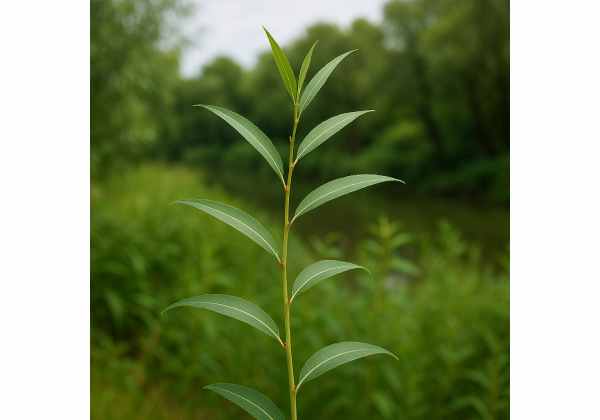
White Willow, botanically known as Salix alba, is one of the most historically important pain-relief herbs in Western herbal medicine. Its bark has been used for centuries for aches, fever, and inflammatory discomfort, and it remains relevant today because it sits at the crossroads of traditional herbal practice and modern pharmacology. The plant is best known for salicin, a natural compound that the body converts into salicylic acid, but White Willow is more than a “natural aspirin” story. Its bark also contains polyphenols, flavonoids, tannins, and related compounds that appear to contribute to its overall effect. In modern use, White Willow is most often discussed for low back pain, osteoarthritis-related pain, headache, and mild fever, though the evidence is stronger for some uses than others. It can be genuinely useful when chosen well, but it is not automatically gentle just because it is herbal. Its benefits, limits, dosage range, and safety profile all deserve careful attention, especially for people who take blood thinners, react badly to aspirin, or want daily pain support.
Quick Summary
- White Willow is best supported for mild to moderate pain, especially low back pain and some osteoarthritis-related discomfort.
- Its main actions involve salicin, polyphenols, and tannins that contribute to pain-relief and anti-inflammatory effects.
- Standardized products often provide about 120 to 240 mg salicin daily, while traditional bark tea uses roughly 1 to 3 g per cup.
- Children, pregnant or breastfeeding people, and anyone allergic to aspirin or taking blood thinners should avoid self-prescribed use.
Table of Contents
- What White Willow is and what makes it medicinal
- White Willow benefits and where the evidence is strongest
- Traditional uses and how they translate today
- How to use White Willow wisely
- Dosage, timing, and how long to use it
- Safety, side effects, and who should avoid it
- What the research actually says
What White Willow is and what makes it medicinal
White Willow is a large deciduous tree in the Salicaceae family, but when people talk about it medicinally, they are almost always referring to the bark. That distinction matters because the bark is the plant part traditionally prepared as tea, powder, tincture, or standardized extract for pain, fever, and inflammation-related complaints. In herbal commerce, the term “willow bark” is sometimes broader than Salix alba alone. Official European monographs, for example, often refer to Salix cortex from several willow species rather than only white willow. Even so, Salix alba remains the name most readers recognize, and it serves as the best-known representative of the bark’s medicinal tradition.
The chemistry of White Willow is more interesting than the common nickname “nature’s aspirin” suggests. Salicin is the best-known constituent because it is metabolized in the body to salicylic acid. That helps explain why White Willow has long been associated with pain relief, fever reduction, and inflammation support. But focusing only on salicin leaves out a large part of the plant’s pharmacological character. Willow bark also contains polyphenols, flavonoids, tannins, and related phenolic compounds. These include compounds such as chlorogenic acid, rutin, epicatechin, and other bark polyphenols that may add antioxidant and inflammation-modulating value.
That broader chemical profile is one reason White Willow should not be treated as merely a weak herbal copy of aspirin. Aspirin is a single, defined drug. White Willow is a bark matrix. The two overlap, but they are not identical in composition, timing, or experience. Salicin converts more gradually than aspirin acts, and some of the bark’s clinical effect may come from its non-salicin compounds. This is one of the most useful things to understand before using it: White Willow works like an herbal pain remedy with salicylate-like chemistry, not like a direct aspirin replacement.
That distinction also helps explain why quality matters so much. A tea made from comminuted bark, a tincture, and a standardized salicin extract may all be sold under the same broad name, yet they can behave differently. A standardized product is easier to dose with intention. A tea is more traditional and often gentler in feel. A vague capsule labeled only as “white willow bark” tells you much less unless it states salicin content or extraction details.
In practice, the key ingredients in White Willow can be understood in three layers:
- salicin and related salicylate glycosides
- polyphenols and flavonoids
- tannins and other bark compounds that may shape the overall effect
This layered chemistry is why White Willow remains more relevant than many historical pain herbs. It has a real mechanistic basis, a long tradition of use, and enough clinical data to support careful discussion. If you compare it with another plant used for inflammatory discomfort, boswellia for joint and inflammation support offers a different but equally strategic example of how herbal pain support can be more complex than one “active” molecule.
White Willow benefits and where the evidence is strongest
White Willow has accumulated many traditional claims over time, but the most defensible modern benefits cluster around pain and inflammation-related discomfort. Even then, it helps to rank its uses by evidence rather than by popularity. The best-supported role is short-term relief of certain kinds of musculoskeletal pain, especially low back pain and some osteoarthritis-related symptoms.
The clearest modern benefit is pain relief in selected musculoskeletal conditions. Clinical trials and later reviews suggest that standardized willow bark extracts can reduce pain better than placebo in some people with low back pain. This does not mean the herb works for every pain type, every cause, or every person. It does mean White Willow has stronger clinical footing than many herbs marketed for “whole-body inflammation” without meaningful human data.
The second likely benefit is support for osteoarthritis-related pain, especially mild to moderate joint discomfort. The evidence is not flawless, and more recent review work still describes the certainty as limited. Even so, arthritis-focused meta-analysis suggests a real possibility of pain reduction and some functional improvement. That makes White Willow worth considering in a broader joint-support plan, especially when the goal is to reduce the burden of occasional pain rather than to replace medical management.
The third benefit is traditional fever and headache support, but these uses sit on a weaker evidence base than the low back pain literature. Official herbal monographs still recognize these uses on the strength of long-standing tradition, and they are pharmacologically plausible given the bark’s salicylate pathway. Still, they are better understood as traditional indications than as strongly trial-proven modern outcomes.
The fourth area is inflammation-related support beyond direct pain relief. Here the evidence becomes more mechanistic and preclinical. White Willow’s bark extracts show antioxidant and anti-inflammatory activity in laboratory settings, and these effects likely involve more than salicin alone. Polyphenols, tannins, and other constituents may help explain why the bark has been valued for soreness, swelling, and irritation rather than for pain only.
A useful way to think about White Willow’s benefits is to separate likely real-world value from overreach:
- More credible: low back pain, selected joint pain, short-term inflammatory discomfort
- Traditionally plausible: fever with a cold, ordinary headache
- Interesting but less settled: broader antioxidant and systemic anti-inflammatory benefits
This ranking matters because White Willow is often marketed too broadly. It is not a cure-all for chronic pain, autoimmune disease, or advanced arthritis. It is also not a free pass to keep provoking pain while expecting the herb to cancel the consequences. Its strength lies in modest but real symptom support.
Another point worth keeping clear is that White Willow is not always the best first herbal option. Some people respond better to herbs with a different inflammatory profile or a different digestive impact. For example, devil’s claw for back and joint pain is often discussed in the same broad territory, though its mechanism and tolerability profile are different.
The most honest summary is that White Willow has a respectable, targeted benefit profile. It shines most when used for short-term relief of certain pain patterns, not when asked to carry the full burden of long-term disease management on its own.
Traditional uses and how they translate today
Traditional herbal use often captures a plant’s personality better than any lab paper can. With White Willow, the old pattern is remarkably consistent: pain, fever, inflammatory discomfort, and what earlier practitioners would have called “rheumatic” complaints. People used willow bark long before they knew the word salicin, which tells us something important. The bark earned its reputation through repeated human experience, not by marketing language or modern supplement trends.
Historically, White Willow bark was taken as a decoction or other bark preparation for aching joints, headaches, feverish states, and body pain. In older practice, it often belonged to the category of cooling, drying, or pain-easing remedies. It was not seen as a tonic for daily vitality or mood. It was a problem-solving bark, used when symptoms pointed toward heat, pain, or inflamed tissue.
That traditional profile still translates surprisingly well today. White Willow makes the most sense when people are dealing with short-term pain or flare-like discomfort rather than vague wellness goals. It fits conditions where something hurts, aches, throbs, or feels inflamed. It does not fit nearly as well when the goal is stress resilience, immune balance, or general energy.
This is where many modern mistakes begin. Because willow bark sounds natural and familiar, people sometimes treat it like a background herb that can be taken casually for “inflammation.” But White Willow is not a gentle all-purpose tonic. It is much closer to a plant-derived analgesic strategy than to a broad everyday wellness plant. That does not make it unsafe by default, but it does mean its traditional use was narrower and more intentional than modern supplement marketing sometimes implies.
In practical terms, White Willow’s traditional uses map onto a few modern situations quite well:
- short-term low back pain or flare-like musculoskeletal discomfort
- mild osteoarthritis-related pain when a person wants a plant-based option
- occasional headache or fever-related discomfort in adults
- inflammatory aches where aspirin-like chemistry makes sense and is tolerated
The modern translation becomes less convincing when the use drifts into chronic, unsupervised daily pain management. A person with persistent pain for months, repeated headaches, or worsening joint symptoms may need diagnosis and targeted care, not a bark that partly blunts symptoms. White Willow can support symptom relief, but it should not hide the need for a clearer explanation.
It is also useful to compare White Willow’s traditional lane with that of other classic pain herbs. feverfew for headache support occupies a different historical niche, leaning more toward recurrent headache patterns than generalized musculoskeletal pain. That comparison helps clarify White Willow’s identity: it is broader for pain and fever, but less specialized for migraine-type use.
So the traditional message still holds up. White Willow is most faithful to its history when used for targeted relief, not vague optimization. It remains useful precisely because its old uses still make sense in modern language: pain, fever, soreness, and inflammation-related discomfort in adults who can safely tolerate salicylate-like herbs.
How to use White Willow wisely
Using White Willow well starts with choosing the right form. This is not a herb where every preparation is interchangeable. Tea, bark powder, tincture, and standardized extract all have their place, but they serve slightly different kinds of users and goals.
The most traditional form is bark tea or decoction. Because willow bark is woody and fibrous, it is usually better prepared as a decoction or long infusion than as a delicate tea. This format suits people who value traditional herbal practice and want a slower, more moderate form of support. It may be appropriate for someone exploring the herb gently or using it occasionally. The limit is that tea is harder to standardize. Two cups may look similar while differing in strength depending on bark quality, cut size, and preparation time.
The next form is powdered bark or capsules made from bark powder. This is convenient and simple, but it can also be inconsistent if the product does not indicate salicin content. Powder may work well for traditional-style use, but it is less precise than a standardized extract.
The most strategic option is a standardized extract. This is the best form for people who want to dose with some confidence and who are specifically using White Willow for low back pain, joint pain, or short-term inflammatory discomfort. Standardized extracts often describe salicin content, which matters much more than total bark weight alone. A lower milligram extract with known salicin may be more useful than a high milligram bark powder with no active-constituent disclosure.
White Willow is generally best used with a clear purpose and an endpoint. That is especially true because official monographs support only short-term use for specific indications. This is not the sort of herb that should slide into indefinite daily use just because it seems to help “a little.”
A wise use pattern looks like this:
- choose the form that matches your goal
- prefer standardized extracts if precision matters
- use decoctions or teas when gentler traditional use is enough
- keep the use short-term unless a clinician advises otherwise
- stop and reassess if symptoms persist, worsen, or change
Another good rule is not to stack it impulsively with other pain-relief herbs or medicines. White Willow already occupies a pharmacologically meaningful space. Adding multiple overlapping products may increase side-effect or bleeding risk without improving the outcome much.
White Willow also works best as part of a broader pain strategy rather than as a stand-alone fix. Stretching, pacing, sleep, hydration, load management, and diagnosis still matter. A bark extract cannot correct poor mechanics, overuse, or untreated disease.
For some people, a different herbal route fits better. If the goal is gentler whole-body anti-inflammatory support rather than aspirin-like pain relief, ginger as a broader inflammation-support herb may feel easier to integrate. White Willow is usually the better match when pain relief is the priority and salicylate-type precautions are acceptable.
The simplest way to use White Willow wisely is to treat it with the same respect you would give any real pain-relief agent. It is herbal, but it is not casual. It works best when the form, timing, and purpose are all deliberate.
Dosage, timing, and how long to use it
White Willow dosage becomes much easier once you stop thinking in generic milligrams of bark and start thinking in forms and salicin equivalents. Different products express strength differently, so a smart dosing discussion must account for whether the person is using loose bark, powder, tincture, or a standardized extract.
Traditional monographs describe several adult dosing patterns. For bark tea or infusion, one common range is about 1 to 3 g of comminuted bark in roughly 150 mL of boiling water, taken up to three times daily. Decoction-style use is stronger, often around 4 g of bark in 200 mL of water, simmered and taken three times daily. Powdered bark has historically been used in divided doses across the day. These traditional doses make sense when someone is using the whole bark rather than a concentrated extract.
Modern supplements often communicate dose in terms of salicin. This is usually more useful than raw bark weight. A common evidence-based supplemental range is about 120 to 240 mg salicin daily for short-term pain support. Some products split this across doses, while others provide it once or twice daily. For many adults, this is the most practical dosage framework because it aligns better with clinical literature and standardized products.
Timing is fairly simple. White Willow is best taken with food or after meals, especially for people with sensitive digestion. This can reduce the chance of stomach upset and fits European monograph advice for oral use. Unlike a sedative herb, it does not need to be timed at night. Unlike a meal-timed glucose herb, it does not need exact synchronization. The main timing principle is comfort and consistency.
How long should it be used? This is one of the most overlooked questions. White Willow is usually a short-term herb. Official herbal guidance generally limits traditional use for back or joint pain to about 4 weeks before reassessment. Longer use may be appropriate only if a clinician agrees and the reason is clear. This limit matters because persistent pain needs evaluation, and long-term salicylate-like exposure is not something to drift into unknowingly.
A practical dosing guide looks like this:
- bark tea: about 1 to 3 g per cup, up to three times daily
- decoction: about 4 g bark in 200 mL water, up to three times daily
- standardized extract: often equivalent to 120 to 240 mg salicin daily
- short-term use: preferably days to a few weeks, not open-ended daily use
Product labels often create confusion by emphasizing total bark weight while hiding active-compound context. A “500 mg willow bark” capsule may say less than it appears to say. If it does not tell you salicin content, extraction ratio, or standardization, it is harder to use intelligently.
This is also where overconfidence can lead to trouble. More is not automatically better. White Willow is not a herb that rewards aggressive dosing. If a well-made, sensibly dosed product does not help, doubling the amount is not always the right conclusion. Sometimes it simply means the herb is not the right fit for that pain pattern.
People looking for a different herbal route for chronic inflammatory discomfort sometimes compare it with curcuma for longer-term inflammation support. That comparison is useful because White Willow is generally more acute and pain-directed, while curcuma often fits slower, cumulative use.
The safest and smartest dosing mindset is clarity: know the form, know the salicin level when possible, take it after meals, and treat short-term use as the default rather than the exception.
Safety, side effects, and who should avoid it
White Willow is often described as a natural alternative to aspirin, but that phrase can mislead people into forgetting the second half of the comparison: aspirin-like benefits often bring aspirin-like precautions. White Willow is generally well tolerated in short-term adult studies, yet it has real contraindications, real interactions, and several groups who should avoid it altogether.
The most common side effects are digestive. These include stomach discomfort, nausea, abdominal pain, diarrhea, heartburn, or general gastrointestinal irritation. For many adults, these effects are mild or do not appear at all, but they are common enough to matter. Allergic reactions can also occur, including rash, itching, and asthma-like responses in susceptible people.
The most important safety rule is salicylate sensitivity. Anyone allergic to aspirin or sensitive to salicylates should treat White Willow as unsafe without professional guidance. The same caution applies to people with salicylate-sensitive asthma. If aspirin has ever triggered wheezing, swelling, rash, or a marked reaction, White Willow is not the herb to experiment with.
Other groups who should avoid or use only under medical supervision include:
- children and adolescents
- pregnant people, especially in the third trimester
- breastfeeding people
- anyone with active peptic ulcer disease
- people with clotting disorders
- people taking anticoagulants, NSAIDs, or other salicylate-containing products
- people with severe liver or kidney dysfunction
- people with glucose-6-phosphate dehydrogenase deficiency
These warnings are not theoretical. They reflect the bark’s real pharmacology. White Willow may be herbal, but it still sits close enough to salicylate medicine that vulnerable groups deserve the same caution they would give to aspirin-related products.
Drug interactions also deserve respect. White Willow may increase bleeding risk in people already taking blood thinners or other salicylates. It may also interact unfavorably with NSAIDs, increasing the burden on the stomach or bleeding risk. This does not mean every combination causes harm, but it does mean casual stacking is a bad idea.
Another practical issue is self-treatment delay. Because White Willow can reduce pain, it can make it tempting to keep pushing through symptoms that need evaluation. If low back pain is severe, radiates, causes weakness, or persists despite treatment, bark extracts should not be used as camouflage. The same goes for recurrent headache or prolonged fever.
For people interested in herbal pain support but unable to use salicylate-like plants, meadowsweet and other traditional herbs with overlapping themes are sometimes discussed, though salicylate-related considerations can still matter there too. The broader point is that not every pain herb is appropriate for every person.
The best safety summary is direct: White Willow can be effective, but it is not a casual herb. It should be treated as a short-term adult pain-support option with aspirin-like precautions, not as a harmless bark tea for anyone with aches.
What the research actually says
White Willow has enough clinical and pharmacological literature to be taken seriously, but not enough to justify the grander claims often made in supplement marketing. That makes it a good herb for balanced interpretation. The research supports usefulness, but in a narrower lane than promotional copy usually admits.
The most reliable human evidence points to short-term pain relief, particularly in low back pain and some arthritis settings. The quality is not perfect, and recent meta-analysis still describes the certainty as limited, but the overall direction is meaningful. White Willow is not just a historical pain herb that researchers have ignored. It has clinical data behind it, especially for musculoskeletal discomfort.
At the same time, the evidence is uneven across indications. Joint pain and osteoarthritis data suggest potential benefit, but the literature is small and not fully consistent. Fever and headache remain more traditional-use indications than strongly modern evidence-based ones. That is an important distinction because a herb can be clinically plausible without being firmly proven for every historical use.
The mechanistic research is broader than the clinical evidence. Salicin is central, but newer work on bark extracts continues to show that willow bark contains a wider bioactive system than salicin alone. Polyphenols, flavonoids, tannins, and related compounds appear to contribute to antioxidant and anti-inflammatory behavior in vitro. This supports the view that White Willow’s effect is not simply “salicin in bark form.” It is a composite botanical effect.
Another useful research insight is that official monographs are more cautious than many commercial products. European authorities distinguish between uses supported by stronger evidence and uses accepted mainly on long-standing traditional grounds. That is a healthier model for consumers. It allows the herb to be useful without pretending every claim is equally proven.
The safety evidence is also more reassuring and more limited than people often realize. A U.S. Pharmacopeia safety review found no serious adverse events dominating short-term adult trials at typical salicin doses, but the review also emphasized meaningful risks in vulnerable groups, including bleeding-related concerns, aspirin sensitivity, pregnancy-related issues, and Reye syndrome risk in children. In other words, White Willow looks reasonably tolerable for many adults over short periods, not universally safe for everyone.
So what does the research justify?
- White Willow can reasonably be considered for short-term adult pain support.
- Standardized bark extracts are easier to interpret than vague bark powders.
- Salicin matters, but so do the bark’s other polyphenols.
- The evidence is strongest for musculoskeletal pain, not broad general wellness use.
- Safety depends heavily on age, pregnancy status, salicylate sensitivity, and medication use.
What does the research not justify?
- treating White Willow as a harmless daily herb for anyone
- presenting it as equal to modern drug therapy in all contexts
- assuming all willow products are equivalent
- using it long term without reassessing the reason and the risk
This balanced view is what makes White Willow valuable. It is not an empty folk remedy, and it is not an herbal miracle. It is a legitimate traditional medicine with targeted modern relevance, best used for the kind of short-term adult pain and inflammatory discomfort that its research, chemistry, and history all support.
References
- Willow Bark (Salix spp.) Used for Pain Relief in Arthritis: A Meta-Analysis of Randomized Controlled Trials – PMC 2023
- Effect of Microwave and Ultrasound-Assisted Extraction on the Phytochemical and In Vitro Biological Properties of Willow (Salix alba) Bark Aqueous and Ethanolic Extracts – PubMed 2023
- Nutritional Approaches for Musculoskeletal Pain: What the Science Says | NCCIH 2022
- United States Pharmacopeia Safety Review of Willow Bark – PubMed 2019
- Salicis cortex – herbal medicinal product | European Medicines Agency (EMA) 2017
Disclaimer
This article is for educational purposes only and is not medical advice. White Willow can affect pain, inflammation, bleeding risk, and salicylate exposure, so it should not replace diagnosis, prescribed treatment, or urgent care. Speak with a qualified healthcare professional before using it if you take blood thinners, react to aspirin, have ulcers, are pregnant or breastfeeding, or are considering regular use for ongoing pain.
If this article helped you, please share it on Facebook, X, or another platform where careful herbal information can reach more readers.