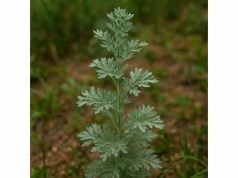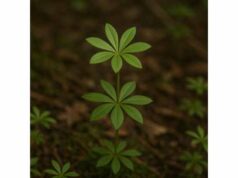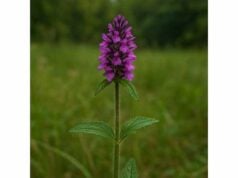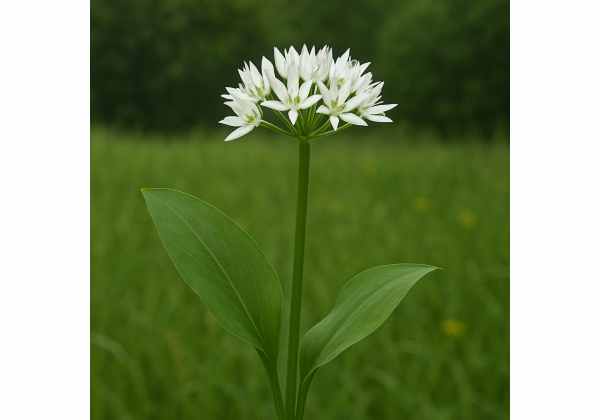
Wild garlic, Allium ursinum, is one of the most beloved spring herbs in Europe, prized for its soft garlic aroma, tender green leaves, and long-standing place in both food and folk medicine. Also called ramsons or bear’s garlic, it belongs to the same broad family as garlic, onions, and chives, yet it offers a fresher, leafier character and is usually eaten as a seasonal herb rather than as a bulb crop. Traditional use has linked it with circulation, digestion, respiratory comfort, and general spring cleansing, while modern studies point to a rich mix of sulfur compounds, flavonoids, and phenolic acids that may help explain its antioxidant, antimicrobial, and cardio-protective potential.
What makes wild garlic especially interesting is the way it bridges cuisine and phytotherapy. It is clearly a food, but it is not merely a food. At the same time, it is not a standardized medicinal extract with a clean clinical dose. That balance matters. Wild garlic is best understood as a potent culinary herb with genuine medicinal promise, clear safety issues around poisonous look-alikes, and enough active chemistry to deserve careful, practical use.
Essential Insights
- Wild garlic’s best-supported strengths are antioxidant, antimicrobial, and likely cardio-protective activity.
- It is most useful as a fresh seasonal food herb rather than as a standardized high-dose supplement.
- No validated medicinal oral dose exists, but food studies commonly use 1% to 4% dried leaf addition in snacks and similar products.
- Anyone who cannot confidently distinguish it from lily-of-the-valley, autumn crocus, or arum should avoid foraging it.
Table of Contents
- What wild garlic is and why people value it
- Key ingredients and medicinal properties
- Potential health benefits and where the evidence is strongest
- Traditional and modern uses of wild garlic
- Dosage, forms, timing, and why food-first makes sense
- Safety, look-alikes, and who should avoid it
- How to harvest, store, and use it well
What wild garlic is and why people value it
Wild garlic, Allium ursinum, is a woodland spring herb that emerges early in the year, often carpeting damp forests with lush green leaves before flowering in white star-like clusters. It is native across much of Europe and parts of Asia, and it has become deeply associated with spring cooking, seasonal tonic foods, and traditional herbal practice. Common names such as ramsons and bear’s garlic reflect both its culinary identity and the folk belief that animals, especially bears, sought it out after winter.
Part of its appeal lies in its position between vegetable and herb. Unlike common garlic, which is prized mainly for its bulb, wild garlic is used primarily for its leaves, flowers, and sometimes buds. The flavor is unmistakably garlic-like, but greener, softer, and less lingering. This makes it especially suited to pesto, soups, salads, herb butters, breads, soft cheeses, and spring sauces. It behaves more like a tender leaf herb than a pungent spice.
Its botanical relatives help explain its reputation. Like other leafy alliums used for both food and gentle wellness support, wild garlic offers sulfur chemistry alongside polyphenols and flavonoids. But it also has a stronger aura of seasonality and foraging culture. People often seek it not only because it tastes good, but because it feels like the first strong green herb of the year.
That seasonal enthusiasm can create two very different impressions. One is that wild garlic is a wonderfully accessible spring health food. The other is that it is a risky wild plant because it is easily confused with poisonous look-alikes. Both impressions are true. Wild garlic is indeed a valued edible and medicinal plant, but it is also one of the best examples of why plant knowledge matters. Several toxic woodland plants produce leaves that can resemble it, especially before flowering.
This tension is part of what makes wild garlic worth writing about. It is not an exotic supplement separated from daily life. It is a real herb people gather, cook, ferment, preserve, and sometimes misuse. That makes its practical side especially important. A good wild garlic article should not just list compounds and claimed benefits. It should help readers understand what kind of plant this is.
In the broadest sense, wild garlic is best seen as a medicinal food herb. It is milder than standard garlic in the kitchen, but not chemically empty. It has a long tradition, but not a standardized pharmaceutical profile. It is full of promise, but it also demands humility. When people use it well, they are usually doing something simple: adding a fresh spring allium to food in moderate amounts. When they use it badly, they often begin by assuming that every broad green leaf in the woods is wild garlic.
That is why the plant remains so compelling. Wild garlic combines everyday pleasure, phytochemical richness, and botanical risk in a single species. Few herbs make those three qualities feel so immediate.
Key ingredients and medicinal properties
Wild garlic’s medicinal profile begins with sulfur chemistry. Like common garlic and several other Allium species, Allium ursinum contains sulfur-rich amino acid derivatives known as cysteine sulfoxides. The dominant ones include methiin and alliin, along with smaller amounts of isoalliin and propiin. When the leaf is crushed, chopped, or blended, plant enzymes act on these compounds and generate volatile breakdown products such as thiosulfinates and sulfides. This is what creates the plant’s vivid aroma and much of its biological activity.
That chemistry matters because wild garlic is often described too loosely as “similar to garlic.” It is similar, but not identical. The balance of sulfur compounds differs by plant part, harvest time, and processing. In practical terms, that means fresh leaves, dried powder, fermented products, and extracts can behave quite differently. The strongest garlic-like actions tend to appear when the fresh tissue is damaged and the enzyme-driven transformation is allowed to happen.
Alongside sulfur compounds, wild garlic contains a meaningful phenolic and flavonoid profile. Studies have identified kaempferol derivatives as especially abundant, along with other flavonols, phenolic acids, and antioxidant-active compounds. These help explain why wild garlic is discussed not only for antimicrobial effects but also for antioxidant and anti-inflammatory potential. Its chemistry is therefore layered: sulfur compounds drive much of the pungent, antimicrobial character, while flavonoids and phenolics contribute to broader protective effects.
Researchers have also described steroidal glycosides and other secondary metabolites in different plant parts. These are not the compounds most cooks think about when making pesto, yet they matter because they widen the plant’s pharmacological interest beyond simple “natural garlic” language. Wild garlic is not just a flavor plant. It is a chemically sophisticated spring herb with multiple classes of active constituents.
A useful comparison is common garlic’s better-known sulfur chemistry and cardiovascular reputation. Wild garlic shares part of that world, especially around organosulfur compounds and circulatory interest, but its leaf-based profile gives it a different rhythm. It is often fresher, greener, and more phenolic in culinary use, and it is less standardized medicinally than garlic bulb products.
Its main medicinal properties can be described in a balanced way as:
- sulfur-rich and antimicrobial
- antioxidant and polyphenol-active
- mildly anti-inflammatory in experimental settings
- traditionally circulatory and digestive
- food-compatible, but not chemically trivial
One more detail matters: processing changes everything. Fresh wild garlic leaves are not the same as cooked leaves, dried powder, alcohol extract, or preserved paste. Heat, drying, oxidation, and storage can reduce or shift the volatile sulfur fraction. By contrast, some phenolic compounds may remain more stable. This means a raw sauce, a dried seasoning, and a cooked soup each deliver a somewhat different version of the plant.
That practical variability is one reason medicinal claims around wild garlic can become fuzzy. A study on a concentrated extract does not necessarily describe what a spring salad does. At the same time, a culinary preparation is not evidence against medicinal relevance. Wild garlic sits in the middle: active enough to matter, but variable enough that form and preparation need to be part of the conversation.
Taken together, the key ingredients of wild garlic support a plant that is convincingly medicinal in character, even if not yet standardized in dose. Its chemistry justifies the long-standing view that wild garlic is more than a tasty leaf.
Potential health benefits and where the evidence is strongest
Wild garlic is often praised as a spring tonic for the blood, heart, and digestion. Modern evidence partly supports that reputation, but not evenly. The strongest way to discuss its benefits is to rank them, not to present them as if all claims are equally proven.
The clearest support lies in antioxidant and antimicrobial activity. Multiple studies have shown that wild garlic leaves and extracts contain bioactive sulfur compounds and flavonol-rich fractions that can act against bacteria, fungi, and oxidative stress in laboratory settings. This fits both the plant’s chemistry and its traditional reputation. It also explains why wild garlic is such a frequent subject of research in functional foods and plant extracts.
A second strong area is cardio-protective potential, though much of this remains preclinical. Earlier work and broader reviews point toward antiplatelet, ACE-related, and blood-pressure-related effects, suggesting that wild garlic may support vascular function in ways somewhat parallel to garlic, though not necessarily with the same strength or standardization. This is one of the most interesting features of the plant, but it should be described as promising rather than fully proven for ordinary self-care use.
A third meaningful area is anti-inflammatory potential. Wild garlic contains compounds that appear to reduce inflammatory signaling in experimental systems. This does not yet translate into a validated treatment for chronic inflammatory disease, but it strengthens the case that the plant’s value is not limited to flavor alone.
There is also a reasonable argument for digestive support, particularly when wild garlic is used as a food rather than as a concentrated extract. Aromatic alliums often stimulate appetite, secretions, and digestive interest, and some work on wild garlic extracts suggests gastrointestinal activity worth further study. Still, this is better understood as a traditional and food-based benefit than as a clinical indication.
A helpful comparison can be made with other Allium vegetables known for cardiovascular and antioxidant actions. Wild garlic belongs in that same family of sulfur-rich plants, but it is less studied in humans and more variable in how people consume it. That means its benefits are plausible and often well-supported experimentally, yet still not standardized in the way users of supplements often expect.
The most realistic benefit ranking looks like this:
Most plausible and best supported
- antioxidant activity
- antimicrobial activity
- general functional-food value
Promising but still mostly experimental
- cardio-protective and antiplatelet effects
- blood-pressure and ACE-related effects
- anti-inflammatory potential
Interesting but not established enough for strong self-treatment claims
- cancer-preventive use
- stand-alone treatment for infections
- long-term disease management through extract use
This ranking matters because wild garlic can easily be oversold. People often hear “wild garlic” and assume it is simply a stronger or purer form of garlic. It is not. It is a distinct species with overlapping chemistry and genuine medicinal promise, but it still sits closer to the medicinal-food end of the spectrum than to the drug-like botanical end.
The best way to use the evidence, then, is not to turn wild garlic into a miracle herb. It is to recognize that the plant likely deserves its traditional respect, especially for antimicrobial and circulatory relevance, while also admitting that its strongest modern value still lies in food-first use supported by phytochemical richness. That is a powerful enough role on its own.
Traditional and modern uses of wild garlic
Wild garlic has long been used as both food and medicine, and the overlap between those roles is part of its identity. Traditional accounts describe it as a spring cleansing herb, a plant for sluggish digestion, poor circulation, mucus, and general weakness after winter. It was also used as a village remedy when stronger cultivated garlic was unavailable or when a fresh green plant was preferred.
That traditional pattern makes sense. Wild garlic appears early in the year, when people naturally seek sharp, green, aromatic foods. In that context, its use as a “spring tonic” is less mysterious than it sounds. Plants that stimulate appetite, add sulfur-rich compounds to the diet, and fit easily into soups and fresh preparations often acquire reputations for renewal and internal cleansing. Whether one likes the old language or not, the practical meaning is understandable.
Today, the plant is used in several distinct ways.
1. Culinary use
This is by far the most common. Fresh leaves go into pesto, herb pastes, soups, omelets, dumpling fillings, breads, vinegars, salts, butters, ferments, and sauces. Flowers are also edible and are used as garnishes or in infused preparations. In modern kitchens, wild garlic often plays the role of a seasonal all-purpose green with a garlic accent.
2. Folk-herbal use
Wild garlic is still used informally in teas, tinctures, homemade extracts, vinegars, and fresh juices. These uses usually focus on circulation, digestion, seasonal cleansing, and resistance to minor infections. Yet they are not standardized, and the gap between folk use and validated medicinal dosing remains large.
3. Functional-food research
Recent work treats wild garlic as a promising ingredient for enriched snacks, pasta, and other foods. This is a very modern use, but in some ways it returns the plant to its roots. Instead of isolating it into a capsule, researchers are asking how it behaves when incorporated into everyday foods that preserve at least some of its phytochemical value.
Compared with gentler culinary alliums such as leek, wild garlic is usually used in smaller amounts and with more emphasis on freshness. It is not a neutral vegetable. Its best uses depend on protecting its aroma and green character, which is why raw or lightly warmed preparations are often preferred.
Modern use has also created a new problem: popularity has encouraged widespread foraging by people who lack plant knowledge. That is important because wild garlic is not just another supermarket herb. Its rise in popularity has made it one of the better-known examples of how medicinal-food enthusiasm can outrun botanical skill.
In practical life, the strongest modern uses are probably these:
- as a fresh culinary herb in spring foods
- as a preserved seasonal ingredient in pesto, frozen cubes, salts, and infused fats
- as a functional-food additive in experimental products
- as a mild folk herb for digestion, circulation, and general spring use
What it is not at present is a clearly standardized medicinal supplement with a settled internal dose and proven long-term clinical outcomes. That point matters. Wild garlic has modern relevance, but it remains most convincing when it stays close to food and gentle herb use.
The plant’s traditional and modern uses therefore point in the same general direction: wild garlic works best when it is kept close to the kitchen, close to the season, and close to simple preparations. The further it moves into concentrated or exaggerated claims, the weaker the certainty becomes.
Dosage, forms, timing, and why food-first makes sense
Wild garlic presents a common herbal challenge: it has clear culinary value and promising biological activity, but no well-established medicinal oral dose for modern self-care. That is the most important sentence in this section.
Unlike herbs with official monographs that specify grams, milliliters, or extract ratios for adults, wild garlic is used mostly as a food plant and as a variable folk preparation. That means dose depends heavily on form. Fresh leaves, dried powder, tincture, juice, pesto, and capsules are not equivalent. The active sulfur chemistry also changes with chopping, drying, heating, and storage, which makes a single standardized number even harder to defend.
So how should readers think about it?
The best answer is to treat wild garlic as a food-first herb. Fresh leaves in spring dishes are the most realistic and safest primary form. In this setting, practical use is guided more by flavor tolerance and culinary tradition than by a medical prescription. Small handfuls in pesto, soups, or fillings are normal food use, not therapeutic dosing in the strict sense.
When research tries to quantify its inclusion in foods, the numbers are more useful. In functional-food studies, dried wild garlic leaf addition around 1% to 4% has been used in snacks and similar products, with higher inclusion generally boosting phenolic content and antioxidant-related measures. This gives a workable food-form range, even though it is not the same as a medicinal dose.
That distinction matters. A food formulation percentage is not a doctor-style dosage, but it is still a meaningful range with units. It tells readers that wild garlic can be used as a concentrated culinary ingredient without needing to force the conversation into capsules and drops.
Timing is also more culinary than clinical. Fresh wild garlic is best used:
- early in the season, when leaves are tender
- soon after harvest, when aroma is strongest
- raw or lightly heated, if the goal is to preserve volatile sulfur compounds
A useful comparison is other herbs that work well in food long before they are standardized as supplements. Like them, wild garlic does not need to become a capsule to be useful. In fact, trying to treat it as a supplement too quickly can make the conversation less accurate, not more.
A practical hierarchy of use looks like this:
- Fresh leaves in food
The best-supported, most traditional, and most reasonable form. - Preserved culinary preparations
Pesto, frozen chopped leaves, herb salt, or infused butter. Convenient, but somewhat variable in chemistry. - Dried powder in food products
Useful in measured food formulations and functional-food experiments. - Extracts and tinctures
Possible, but much less standardized and harder to dose confidently.
This is why the safest dosage conclusion is honest rather than neat: there is no validated medicinal oral dose for wild garlic, but food-form use is both traditional and well supported as the plant’s primary delivery method. For most readers, that is not a limitation. It is the right way to approach the herb.
Safety, look-alikes, and who should avoid it
The biggest safety issue with wild garlic is not the plant itself. It is mistaken identity.
Wild garlic leaves are famously confused with poisonous woodland plants, especially lily-of-the-valley (Convallaria majalis), autumn crocus (Colchicum autumnale), and sometimes arum (Arum maculatum). These mistakes are not theoretical. Poisoning cases have been described precisely because people collected broad spring leaves in wooded areas and assumed they were wild garlic. That is why no responsible wild garlic article should treat safety as a minor closing note.
The risk is highest before flowering, when leaf-only identification becomes harder. Smell helps, but it should never be the only test, especially when harvested leaves are rubbed together in bunches, spreading scent from one true leaf onto a poisonous one. Safe foragers pick and inspect leaves one by one, rather than gathering mixed handfuls from uncertain ground.
Beyond misidentification, wild garlic itself is usually well tolerated as a food herb, but it is not completely free of concerns. Because of its sulfur compounds and possible antiplatelet effects, people using anticoagulants or antiplatelet drugs should be cautious about large, repeated medicinal-style use. Ordinary culinary amounts are a different matter from concentrated extracts or habitual large doses.
Possible side effects or cautions include:
- stomach irritation in sensitive people if eaten in excess
- sulfur-related digestive discomfort
- allergy-like responses in people sensitive to Allium plants
- uncertain interaction risk with high-dose extract use and blood-thinning therapy
A helpful comparison can be made with common garlic and its blood-thinning and stomach-irritating potential at higher intakes. Wild garlic may be gentler in flavor, but it belongs to the same general sulfur-rich world. Large amounts are not necessarily harmless just because the leaves taste fresh and green.
Who should avoid self-treatment or unsupervised use?
- people who cannot confidently identify the plant
- foragers collecting in mixed woodland stands
- people taking anticoagulants or antiplatelet medication
- those with known Allium allergy
- pregnant or breastfeeding people considering concentrated extract use rather than food use
- anyone planning to use wild garlic as a medicinal extract for a chronic condition
One more safety point deserves attention: wild garlic has become fashionable. That popularity has encouraged bulk wild harvesting, sometimes in ecologically sensitive areas. While this is not a direct medical risk, it is part of responsible use. Overharvesting damages local populations and may push inexperienced gatherers into riskier, more careless collection.
The safest practical rule is simple. If you did not grow it, buy it from a trusted source, or identify it leaf by leaf with real confidence, do not eat it. In herbal medicine, the first step in safe dosing is correct identity. With wild garlic, that principle is impossible to overstate.
Used as a fresh, correctly identified seasonal herb, wild garlic is generally a rewarding plant. Misidentified or over-romanticized, it becomes one of the clearest examples of why wild food medicine demands discipline.
How to harvest, store, and use it well
Wild garlic is at its best when the leaves are young, fresh, and vividly aromatic. The ideal harvest period is usually early to mid-spring, before the leaves become tough or the flavor starts to flatten after flowering. The younger leaves are more tender and better suited to raw use, which is important because raw or lightly handled preparations preserve more of the plant’s sharp, fresh sulfur character.
If foraging, harvest gently and selectively. Do not strip an entire patch. Take a few leaves from many plants rather than many leaves from a few plants. This protects the population and also improves the quality of what you collect, because mixed-age harvesting tends to yield a more balanced basket. Most importantly, inspect each leaf separately before it enters your bag.
Once harvested, wild garlic does not store like a dry herb. It wilts quickly and loses aromatic force faster than common garlic bulbs. That means the best use sequence is:
- use fresh within a day or two
- refrigerate loosely wrapped if needed
- preserve quickly if you have a surplus
The best preservation methods depend on the goal. For flavor retention, pesto and frozen chopped leaves work especially well. Herb butter, blended oils, and salt pastes are also popular, though oils should be prepared carefully and refrigerated appropriately. Drying is convenient, but it changes the flavor and may weaken the plant’s brightest sulfur notes. Dried powder is useful more as a seasoning or functional-food ingredient than as a perfect substitute for fresh leaves.
Compared with delicate spring herbs used fresh for aroma and brightness, wild garlic is more forgiving in blending and freezing, but less satisfying when overdried. It rewards methods that lock in greenness rather than methods that merely dehydrate.
Practical kitchen uses include:
- wild garlic pesto with nuts, seeds, or cheese
- chopped leaves in potato dishes, eggs, risotto, and dumplings
- blended green soups finished after cooking
- herb butter for fish, mushrooms, or spring vegetables
- fresh leaves in salads, sandwiches, and soft cheese spreads
The biggest cooking mistake is overheating it for too long. Like many green alliums, wild garlic becomes flatter and less distinct when boiled aggressively. If the goal is both flavor and gentle medicinal-food value, add it at the end or use it raw.
A second mistake is assuming every use must be intense. Wild garlic is powerful enough that even modest amounts can change a dish. This is another reason food-first use works so well: the plant does not need heroic quantities to matter.
The best wild garlic user is therefore not the person chasing maximum potency. It is the person who harvests carefully, preserves thoughtfully, and lets the plant stay what it naturally is: a seasonal medicinal food herb. That approach respects both its chemistry and its character. And in the case of wild garlic, those two things are closely linked.
References
- Allium ursinum: botanical, phytochemical and pharmacological overview 2015 (Review)
- Histological Features Detected for Separation of the Edible Leaves of Allium ursinum L. from the Poisonous Leaves of Convallaria majalis L. and Colchicum autumnale L 2025 (Safety Study)
- Plant Metabolomics as a Tool for Detecting Adulterants in Edible Plant: A Case Study of Allium ursinum 2022 (Safety and Authentication Study)
- The Antioxidant, Antimicrobial, and Antitumor Proprieties of Flavonol-Rich Extracts from Allium ursinum (Wild Garlic) Leaves: A Comparison of Conventional Maceration and Ultrasound-Assisted Extraction Techniques 2024 (Research Article)
- Effect of the Production Parameters and In Vitro Digestion on the Content of Polyphenolic Compounds, Phenolic Acids, and Antiradical Properties of Innovative Snacks Enriched with Wild Garlic (Allium ursinum L.) Leaves 2022 (Functional Food Study)
Disclaimer
This article is for educational purposes only and does not replace medical advice, diagnosis, or treatment. Wild garlic is a seasonal edible herb with promising medicinal properties, but it does not have a standardized modern therapeutic dose, and the largest safety risk is confusion with poisonous look-alike plants. Do not forage or self-treat with wild garlic unless identification is certain and the intended use is appropriate. People with medical conditions, those taking blood-thinning medicines, and anyone considering concentrated extract use should seek qualified advice first.
If you found this article useful, please consider sharing it on Facebook, X, or another platform you prefer.