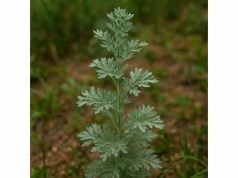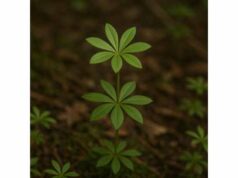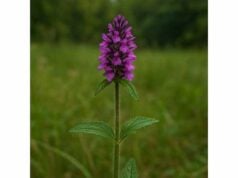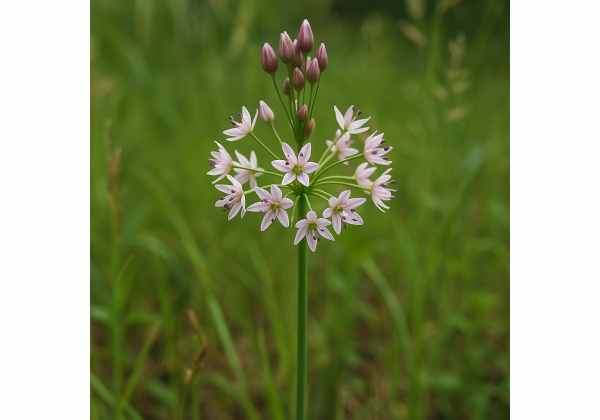
Wild onion, usually identified botanically as Allium canadense, is a native North American allium with a familiar onion scent and a long history as both a food and a folk remedy. It grows from small bulbs, sends up narrow leaves in spring, and can produce clusters of pale pink, white, or bulbil-filled flower heads. Many people first notice it in lawns, meadows, and field edges, where it is often treated as a weed. Yet this plant has a more interesting story than its common appearance suggests.
Like other alliums, wild onion contains sulfur-based compounds that give it its sharp aroma and help explain its culinary and medicinal reputation. Traditional uses have included teas for cough and stomach upset, crushed bulbs for bites and stings, and general digestive or stimulating uses. At the same time, modern species-specific research is much thinner than the evidence available for cultivated garlic and onion. That means the best way to understand wild onion is as an edible wild allium with plausible health-supporting properties, but limited direct clinical proof and a few important safety cautions.
Quick Facts
- Wild onion is an edible allium that offers sulfur compounds and related plant chemicals similar in direction, though not in proof level, to better-studied onions and garlic.
- Traditional use includes food, bulb tea for cough and vomiting, and crushed bulb applied to insect bites and stings.
- Because no validated medicinal dose exists, use should stay at food-level amounts, such as about 5 to 15 g fresh or 1 to 2 small bulbs in a meal.
- Avoid self-foraging unless identification is certain, and keep it away from dogs, cats, and livestock because Allium plants can be toxic to animals.
Table of Contents
- What Wild Onion Is and How to Identify It
- Key Ingredients and Medicinal Properties
- Wild Onion Health Benefits and What the Evidence Suggests
- Traditional Uses Food Forms and Practical Applications
- Dosage Timing and Duration
- Wild Onion Safety Side Effects and Interactions
- When Wild Onion Makes Sense and When to Consider Something Else
What Wild Onion Is and How to Identify It
Wild onion, or Allium canadense, is a perennial bulb-forming plant in the amaryllis family. It is native to much of eastern and central North America and commonly appears in meadows, thickets, woods edges, lawns, and disturbed soils. In many places it is called meadow garlic, wild garlic, or wild onion, which adds to the confusion because several wild alliums share overlapping common names.
The plant usually grows in clumps with narrow, grass-like leaves and a clear onion smell when crushed. Flowering stems rise above the leaves and may carry small star-like blossoms or clusters of reddish to pale bulblets. The bulb is small, crisp, and mild compared with cultivated onions, while the leaves and flowers have a fresher, greener flavor. That mild but unmistakable aroma is one of the most important field clues. If a suspected plant does not smell distinctly of onion or garlic when gently bruised, it should not be eaten.
That identification rule is not trivial. Wild onion is edible, but dangerous look-alikes exist. The most serious risk is confusing it with death camas and related toxic plants. This kind of mistake is not theoretical. Modern case reports document severe poisoning in people who foraged a toxic plant while believing they had gathered wild onion. That makes identification one of the most important safety issues in the entire article.
Botanically, wild onion is both useful and inconvenient. It is valued by pollinators, browsed by some wildlife, and can be used as food, yet it is also considered a weed in lawns and pastures. That split identity explains why many people know it first as something to mow rather than something to harvest.
From a practical standpoint, all edible parts are commonly discussed: bulbs, leaves, flowers, and stems. The flavor sits somewhere between a scallion, a mild garlic chive, and a baby onion. For readers who already use allium greens in the kitchen, chives are the closest everyday comparison, though wild onion is more variable and more foraging-dependent.
The most responsible way to frame wild onion is as an edible wild allium first and a medicinal plant second. That order matters. Its strongest established use is culinary and ethnobotanical, not modern clinical. Once that is understood, the rest of the discussion becomes clearer: the plant may offer useful sulfur compounds and traditional benefits, but it should be approached with identification discipline and realistic expectations.
Key Ingredients and Medicinal Properties
Wild onion’s likely medicinal value begins with its chemistry. Although Allium canadense has not been studied as intensively as garlic or bulb onion, it belongs to a genus famous for sulfur-rich phytochemicals and broad food-medicine relevance. Species-specific work and ethnobotanical phytochemistry suggest that wild onion contains cysteine sulfoxides such as methiin, alliin, and propiin. These compounds matter because they are part of the biochemical system that gives alliums their characteristic scent and much of their biological interest.
When an allium is chopped, crushed, chewed, or otherwise damaged, sulfur precursors can be transformed into more reactive sulfur-containing compounds. In better-studied Allium species, those breakdown products help explain antimicrobial effects, strong aroma, and some of the cardiometabolic and antioxidant activity often linked to garlic and onion. Wild onion should not automatically be treated as equivalent to those cultivated relatives, but its chemistry clearly points in the same general direction.
At the broader genus level, Allium plants are also known for flavonoids, phenolics, saponins, sterols, vitamins, minerals, and other phytonutrients. Those compounds help support the common claim that alliums are more than flavoring agents. They act as culinary plants with physiologically active chemistry. Still, it is important not to overstate species-level proof. Saying wild onion belongs to a medicinally important genus is reasonable. Saying that every health effect documented for garlic or onion must apply equally to Allium canadense is not.
Traditional medicinal descriptions of wild onion include terms such as cathartic, diuretic, expectorant, and stimulant. Older uses also suggest mild external application and digestive support. Translated into more modern language, the plant has been viewed as:
- A pungent digestive stimulant
- A mild respiratory-support herb in traditional use
- A topical folk remedy for bites and stings
- A food plant with likely antimicrobial relevance
- A sulfur-rich wild green with possible antioxidant value
That list should be read carefully. It reflects a mix of traditional use and genus-level chemistry, not a modern package insert. The plant’s probable medicinal properties are most believable when kept modest and practical.
Compared with a much better-studied allium such as garlic, wild onion sits earlier in the evidence chain. Garlic has richer clinical and mechanistic study. Wild onion has good ethnobotanical logic, useful culinary identity, and species-specific sulfur precursors, but a thinner direct research base.
So the best summary of the ingredients is this: wild onion likely owes its reputation to sulfur compounds first, then to the broader nutritional and phytochemical pattern common to alliums. Its medicinal properties are plausible, food-compatible, and worth respecting, but they are not yet standardized in the way people often expect from major herbal supplements.
Wild Onion Health Benefits and What the Evidence Suggests
Wild onion’s health benefits are easiest to understand when divided into three levels: food value, traditional use, and genus-based scientific plausibility. That structure matters because Allium canadense itself has limited direct clinical research. Many of the stronger “allium benefits” people recognize come from garlic, onion, leek, or chive studies rather than from this exact species.
The first and strongest benefit is culinary-nutritional. Wild onion is an edible plant that can add flavor with very little energy cost while contributing sulfur compounds and small amounts of plant nutrients. Used fresh, it can encourage higher vegetable intake, reduce dependence on heavy seasonings, and bring the kind of phytochemical variety that wild foods often add to the diet. This may sound modest, but in real life it is probably the most dependable benefit.
The second level is traditional benefit. Ethnobotanical records describe wild onion as a bulb tea for cough and vomiting, a crushed-bulb application for insect bites and stings, and a general digestive or stimulating plant. Cherokee phytochemical review literature also notes cathartic and diuretic use. These older uses do not prove modern clinical efficacy, but they do suggest that people observed meaningful actions beyond flavor alone.
The third level is scientific plausibility from the wider Allium genus. Allium research strongly supports the idea that sulfur compounds and related phytochemicals can contribute to antioxidant, antimicrobial, anti-inflammatory, and cardiometabolic effects. That does not mean wild onion has been proven to lower blood pressure, control blood sugar, or prevent infection in human trials. It means the plant belongs to a well-supported medicinal food family, and its chemistry makes those directions plausible.
A balanced summary of likely benefit areas would include:
- Digestive stimulation through pungent allium compounds
- Mild traditional respiratory support
- Possible antimicrobial relevance
- General antioxidant and food-based wellness support
- Culinary use that may improve diet quality
What should not be claimed too confidently is just as important. There is not enough direct human evidence to market wild onion as a proven heart herb, diabetes treatment, infection cure, or immune booster. Those kinds of claims leap too quickly from genus evidence to species certainty.
For readers who mainly want well-documented antioxidant or cardiometabolic support, green tea is actually easier to discuss responsibly because the human evidence is broader and more specific. Wild onion remains interesting, but in a more grounded, food-first way.
The most honest conclusion is that wild onion probably offers genuine benefits, especially as an edible allium with traditional use and sulfur-rich chemistry. But its best-supported role is still somewhere between wild food and folk herb, not a modern evidence-backed therapeutic. That is not a weakness. It simply tells the reader how to use the plant wisely.
Traditional Uses Food Forms and Practical Applications
Wild onion has been used much more like a household food-medicine than like a formal supplement. That distinction makes it practical. The same plant could season a meal, brighten a broth, and serve in simple folk remedies depending on the part used and the setting in which it was gathered.
As food, the bulbs can be eaten raw, boiled, pickled, or used as seasoning. The leaves, stems, and flowers are also edible and often milder than the bulb. This versatility is one reason the plant remained useful across seasons. Tender greens fit spring cooking, bulbs offered concentrated flavor, and flowering tops could be used when available. In a kitchen, wild onion works much like a foraged cross between scallion, garlic chive, and small spring onion.
Traditional medicinal uses tend to cluster into a few categories. One is respiratory and digestive tea use. Extension and ethnobotanical sources note bulb tea for cough and vomiting. Another is external application: crushed bulb for bites and stings. A third is broader “stimulating” use, including cathartic and diuretic descriptions in older records. These are not formal medical protocols, but they show how the plant was woven into ordinary household care.
In modern practical use, the best applications are still food-centered:
- Chopped fresh leaves in eggs, soups, potatoes, beans, or savory yogurt
- Bulbs cooked into stews, sautés, and mixed vegetable dishes
- Flowers or bulbils used as garnish with a mild onion note
- Pickled bulbs for small-batch seasoning use
This food-first pattern matters because it naturally keeps exposure moderate. Many traditional plants are safest when they stay close to the amounts people use in meals rather than in concentrated extracts.
Wild onion also has a place in foraging education. It teaches a useful lesson: edible wild alliums can be valuable, but only when identification is certain. Good practice includes checking smell, growth habit, bulb form, and habitat, and never harvesting from areas treated with herbicides or polluted runoff.
What wild onion is not well suited for is aggressive self-treatment. There is no established commercial supplement pattern, no standardized tincture tradition in current practice, and no good reason to force the plant into a role better served by more studied herbs.
That does not make it minor. In fact, its strength may be precisely this blend of food and modest folk utility. Wild onion is at its best when used as a flavorful edible plant that also carries some traditional medicinal logic. The farther it moves away from that context, the shakier the guidance becomes.
Dosage Timing and Duration
Because wild onion is primarily an edible plant and not a standardized medicinal supplement, dosage has to be handled differently than it would be for an encapsulated extract. There is no established human medicinal dose in milligrams or milliliters for Allium canadense backed by clinical trials. That is the first and most important point.
A realistic way to think about dosage is to separate food use from medicinal ambition. In food use, wild onion is usually consumed in small culinary amounts. A practical serving might be about 5 to 15 g fresh, or roughly 1 to 2 small bulbs, or a small handful of chopped leaves in a dish. That is not a clinical dose. It is a reasonable seasoning-level estimate that keeps the plant in its most traditional and predictable context.
If someone wants to use it more deliberately, the safest rule is still moderation. Stronger flavor is not the same as stronger benefit. In fact, pushing alliums too far often leads first to digestive discomfort rather than to extra wellness gains.
A cautious approach looks like this:
- Use it first as food, not as medicine.
This gives you a baseline for taste and tolerance. - Start with a small amount.
A few chopped leaves or one small bulb in a meal is enough for a first try. - Increase only if tolerated.
If nausea, bloating, or stomach burning appears, reduce or stop. - Do not force daily high intake.
Wild onion is best treated as a useful edible, not as an all-day supplement.
Timing matters less than context. Many people tolerate pungent alliums better with food than on an empty stomach. Cooked use is often gentler than raw use, especially for sensitive stomachs. Short-term use in seasonal cooking is more natural than long-term high-dose experimentation.
As for duration, there is no defined therapeutic course. If you are using wild onion as part of meals during its growing season, that is reasonable. If you are trying to treat a persistent symptom with it for weeks, the problem is probably not the timing. The problem is that the plant does not have a validated self-care protocol for that purpose.
This section is where honesty matters most. Some herb articles invent precise dosing when the evidence does not support it. Wild onion does not have that kind of data. The best dose is the smallest food-level amount that fits your tolerance and culinary use. If your real goal is predictable digestive relief rather than seasonal food use, a better-defined herb such as chamomile will usually make more practical sense.
So the dosage summary is simple: no validated medicinal dose exists, food-level amounts are the safest default, and larger unsupervised use is not justified by the current evidence.
Wild Onion Safety Side Effects and Interactions
Wild onion is edible, but “edible” does not mean risk-free. The most important safety issue is identification. The second is dose and tolerance. The third is animal toxicity. Those three concerns matter more than dramatic human poison risk from normal culinary use.
For humans, wild onion is generally low in toxicity when correctly identified and eaten in moderate food amounts. Even so, it can cause nausea, vomiting, and diarrhea if consumed excessively. That fits the common pattern of pungent allium plants: small amounts are usually tolerated well, while large amounts may irritate the gastrointestinal tract.
The identification issue is more serious. Wild onion can be confused with toxic look-alikes, especially death camas. Recent case reports describe severe poisoning in a family who foraged a toxic plant while believing it was wild onion. Symptoms included nausea, vomiting, abdominal pain, bradycardia, and hypotension, with some cases needing intensive care. That means the first safety rule is not “eat less.” It is “be certain what you harvested.”
A few practical safety rules reduce risk:
- Harvest only plants with a clear onion or garlic smell
- Avoid unknown bulb plants that lack that smell
- Do not gather from roadsides, sprayed lawns, or contaminated soils
- Do not use a plant medicinally just because it belongs to the Allium genus
Animal safety deserves special mention. Like other Allium species, wild onion can be toxic to dogs, cats, and livestock in significant amounts. Sulfur-containing oxidants can damage red blood cells and lead to hemolytic anemia in animals. That risk is well documented across Allium plants. People sometimes assume a wild edible is automatically safe for pets because humans can eat it. This is not true here.
Potential interaction concerns in humans are mostly inferred from broader allium research rather than proven specifically for Allium canadense. Still, caution is reasonable for:
- People using blood-thinning medicines
- People with highly sensitive stomachs
- People taking multiple supplements aimed at blood sugar or circulation
- Anyone with onion or garlic allergy
Another practical issue is raw versus cooked use. Raw alliums tend to be sharper and harder on the stomach. Cooking usually softens both flavor and irritant potential. For many people, that makes cooked wild onion the safer first choice.
The final safety point is psychological: familiarity can create overconfidence. Because wild onion smells like something from the kitchen, people may think it is too ordinary to cause trouble. In fact, the risk usually comes not from the plant itself in modest food use, but from confusion, excess, or animal exposure. Respecting those boundaries keeps the plant in the safe zone.
When Wild Onion Makes Sense and When to Consider Something Else
Wild onion makes the most sense when the goal is simple: to use a correctly identified native edible allium as part of cooking, seasonal foraging, or modest folk-style home use. It is especially appropriate for people who enjoy learning local plants, who want more flavor from fresh ingredients, or who appreciate the overlap between food and traditional medicine.
In that setting, wild onion has real value. It can deepen culinary variety, add seasonal interest to meals, and offer the kind of mild functional-food benefit that comes from eating sulfur-rich allium plants. It also makes sense for readers who want a plant with a genuine ethnobotanical footprint, not just a trendy supplement label.
Where it makes less sense is in treatment-seeking behavior. If your goal is to lower cholesterol, control blood sugar, treat infection, stop coughing, or manage chronic inflammation, wild onion is not the most practical first choice. The reason is not that it lacks all usefulness. The reason is that the evidence is not strong enough to guide those uses with confidence.
It also makes less sense when foraging certainty is low. If you are not fully confident in plant identification, there is no health upside large enough to justify the risk of harvesting the wrong bulb. In those cases, buying cultivated onions, scallions, or chives is the wiser decision.
Wild onion should also be avoided as a pet-safe kitchen herb. Even small amounts may be a problem for dogs and cats, and larger exposures are clearly hazardous.
So what should you consider instead if the aim is more specifically medicinal?
- For gentle digestive settling, chamomile is easier to use responsibly.
- For stronger evidence on cardiometabolic effects, cultivated garlic and onion are far better studied.
- For cough support, other herbs with clearer tradition and dosing are usually better choices.
- For safe daily culinary use, scallions, chives, or regular onions offer more predictability.
The broader lesson is useful. Not every edible wild plant needs to become a supplement, and not every traditional use should be treated as a modern treatment plan. Wild onion shines when it stays close to its strengths: flavorful, seasonal, sulfur-rich, and modestly medicinal in the old household sense. It becomes less helpful when people ask it to do the job of a clinically studied herb or medicine.
That is the most balanced conclusion. Wild onion is worth knowing, worth respecting, and often worth eating. But its best role is still that of a carefully identified edible allium with traditional uses, not a substitute for evidence-based treatment.
References
- Allium canadense (Meadow Garlic, Wild Garlic, Wild Onion) | North Carolina Extension Gardener Plant Toolbox 2026.
- The Phytochemistry of Cherokee Aromatic Medicinal Plants 2018. (Review)
- Harnessing the nutraceutical and therapeutic potential of Allium spp.: current insights and future directions 2024. (Review)
- Garlic and Onion (Allium spp) Toxicosis in Animals 2024. (Veterinary Reference)
- Acute death Camas (Toxicoscordion venenosum) plant poisoning in seven family members following foraging for wild onions 2025. (Case Report)
Disclaimer
This article is for educational purposes only and is not a substitute for medical advice, diagnosis, or treatment. Wild onion is an edible plant when correctly identified, but it is not a well-standardized medicinal herb, and serious harm can occur if it is confused with toxic look-alikes. Speak with a qualified healthcare professional before using wild plants for therapeutic purposes, especially if you are pregnant, breastfeeding, have chronic illness, take prescription medicines, or are gathering plants yourself.
If this article helped you, please share it on Facebook, X, or your preferred platform so more readers can approach wild edible plants with better evidence, better identification habits, and safer expectations.