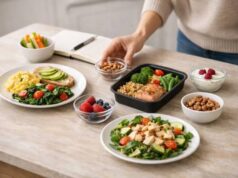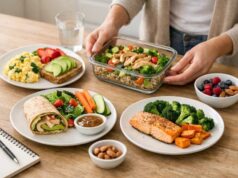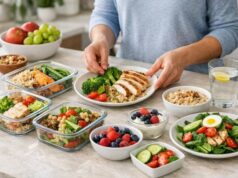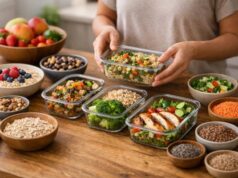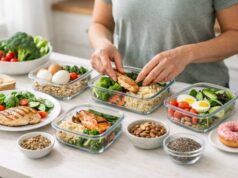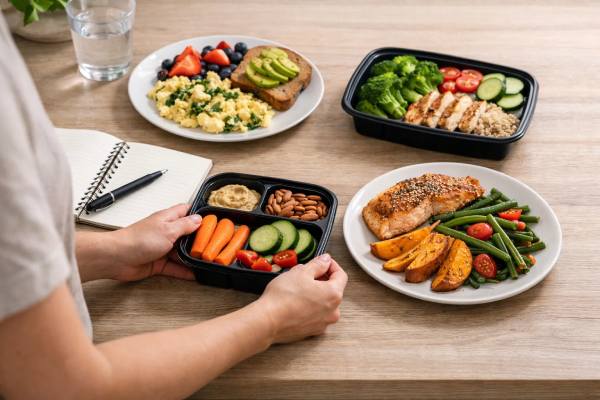
A 1,600-calorie meal plan can be a practical middle ground for weight loss: low enough to create a calorie deficit for many adults, but high enough to leave room for real meals, satisfying portions, and enough protein and fiber to make the week feel manageable. The key is not simply eating less. It is building meals that control hunger, support energy, and fit normal life.
This guide explains when a 1,600-calorie plan makes sense, how to structure your protein, carbs, fats, and fiber, and exactly what to eat over seven days. You will also get a grocery framework, meal-prep tips, and simple ways to adjust the plan without drifting out of your deficit.
Table of Contents
- Why 1,600 calories can work
- How the plan is built
- 7-day 1,600-calorie menu
- Grocery list and meal prep
- How to adjust without losing the deficit
- Mistakes that make 1,600 harder
- Who should use this plan carefully
Why 1,600 calories can work
A 1,600-calorie target often works well for people who want a moderate calorie deficit without dropping into a plan that feels punishing. It is not a magic number, and it is not right for everyone. But for many adults, it lands in the zone where fat loss is possible while still allowing three solid meals and one or two snacks.
What makes this intake useful is flexibility. You can fit in a substantial breakfast, a protein-centered lunch, a balanced dinner, and enough snack calories to prevent the late-afternoon or late-night rebound that derails many diets. That is much harder to do on a very low-calorie plan.
A 1,600-calorie approach is often most sustainable when:
- You are aiming for steady, not extreme, weight loss.
- You want enough food volume to stay consistent during busy weeks.
- You exercise lightly to moderately and do not want your diet to feel under-fueled.
- You prefer normal foods over shakes, bars, or meal replacements.
It is less likely to work well if your maintenance calories are already close to this level, or if you are very active, larger-bodied, breastfeeding, pregnant, recovering from illness, or trying to support intense athletic training. In those cases, the deficit may be too aggressive or not appropriate.
A good way to think about 1,600 calories is this: it is a framework, not a verdict. If your current intake is much higher, this plan may feel structured and effective. If your needs are lower or higher, you may need to scale portions up or down. That is why it helps to understand your baseline first through guides on calorie targets for weight loss and a realistic safe rate of weight loss rather than copying a number blindly.
The most successful 1,600-calorie plans also share a few traits. They keep protein fairly high, include plenty of produce, avoid spending too many calories on ultra-processed snacks, and repeat enough staple foods to make shopping and prep simple. In other words, the plan works best when the menu is designed for fullness and consistency, not just lower calories.
How the plan is built
This meal plan is designed around one main goal: make 1,600 calories feel like enough. That usually means prioritizing protein, fiber, and meal volume before worrying about perfect macro math.
For most people, a practical 1,600-calorie fat-loss menu works well with roughly:
| Target | Practical range | Why it helps | Main food sources |
|---|---|---|---|
| Protein | 120 to 140 grams | Supports fullness and helps protect lean mass | Greek yogurt, eggs, chicken, turkey, fish, cottage cheese, tofu, edamame |
| Carbohydrates | 140 to 170 grams | Supports energy, training, and meal satisfaction | Oats, fruit, potatoes, rice, beans, whole-grain wraps, quinoa |
| Fat | 45 to 60 grams | Improves taste, satiety, and staying power | Olive oil, avocado, nuts, seeds, salmon, eggs |
| Fiber | 25 to 35 grams | Helps fullness, digestion, and meal volume | Vegetables, berries, beans, oats, chia, whole grains, fruit |
That range is not a medical prescription. It is a useful starting structure. In practice, this means each meal should usually include a clear protein anchor, one or two high-volume foods, and a controlled portion of carbs or fats rather than piling both on by default.
A simple plate formula looks like this:
- Breakfast: 25 to 35 grams of protein plus fruit or oats.
- Lunch: lean protein, vegetables, and a measured starch or whole grain.
- Dinner: protein, vegetables, and a satisfying carb portion.
- Snacks: mostly protein, fiber, or both.
This approach matters because low-calorie plans often fail for predictable reasons. Breakfast is too small, lunch is mostly carbs, dinner becomes a free-for-all, and snacks are built from convenience foods that do not satisfy. A stronger structure prevents that pattern.
Protein distribution is especially useful. Rather than saving most of it for dinner, spreading it across the day tends to make hunger easier to manage. That is why this menu uses yogurt, eggs, cottage cheese, turkey, chicken, tuna, and salmon repeatedly. If you want a deeper breakdown of meal-level targets, see protein per meal for weight loss. For fullness, this plan also leans on berries, beans, vegetables, oats, and whole grains in line with the broader principles behind daily fiber targets and food swaps.
Another important detail: this is a “repeatable” plan, not a gourmet challenge. The meals are intentionally familiar. A plan only becomes sustainable when you can shop for it, prep it, and eat it on an ordinary Wednesday.
7-day 1,600-calorie menu
Below is a full week of meals built to land close to 1,600 calories per day. Totals are approximate, which is normal in real-world meal planning. The goal is consistency and overall intake, not hitting the exact same number every day.
Day 1
Breakfast: Greek yogurt bowl with 3/4 cup nonfat Greek yogurt, 1/2 cup oats, 3/4 cup berries, 1 tablespoon chia seeds, and 1 tablespoon chopped walnuts.
Lunch: Grilled chicken quinoa salad with mixed greens, cucumber, tomatoes, 4 to 5 ounces chicken breast, 1/2 cup cooked quinoa, and light vinaigrette.
Dinner: Baked salmon, roasted baby potatoes, and green beans with 1 teaspoon olive oil.
Snacks: Apple with string cheese; carrots with 3 tablespoons hummus.
This day works well because it starts with slow-digesting carbs and protein, then keeps lunch and dinner balanced instead of ultra-light. Estimated total: about 1,580 to 1,620 calories.
Day 2
Breakfast: Two eggs scrambled with spinach, one slice whole-grain toast, and a side of cottage cheese with pineapple.
Lunch: Turkey wrap with a high-fiber tortilla, deli turkey, lettuce, tomato, mustard, and a side of grapes.
Dinner: Lean ground turkey taco bowl with cauliflower rice plus 1/2 cup regular rice, black beans, salsa, shredded lettuce, and avocado.
Snacks: Plain Greek yogurt with cinnamon; a small banana with 1 tablespoon peanut butter.
This menu gives a little more variety in texture and keeps carbs higher around lunch and dinner, which many people find easier to stick with. Estimated total: about 1,600 calories.
Day 3
Breakfast: Protein smoothie made with whey or Greek yogurt, frozen berries, spinach, half a banana, unsweetened milk, and ground flax.
Lunch: Tuna and white bean salad with cucumbers, celery, cherry tomatoes, olive oil, lemon, and whole-grain crackers.
Dinner: Chicken stir-fry with broccoli, peppers, snap peas, and a measured serving of rice.
Snacks: Cottage cheese with sliced strawberries; air-popped popcorn.
This day is useful for busy schedules because breakfast and lunch come together quickly, while dinner is easy to batch-cook. Estimated total: about 1,550 to 1,620 calories.
Day 4
Breakfast: Overnight oats with Greek yogurt, rolled oats, blueberries, chia seeds, and cinnamon.
Lunch: Leftover chicken stir-fry bowl or a prepped chicken and rice container with extra vegetables.
Dinner: Turkey meatballs, marinara, roasted zucchini, and a moderate portion of whole-wheat pasta.
Snacks: Pear with a light mozzarella stick; cucumber slices and hummus.
This is a strong “consistency day.” It reuses earlier ingredients, reduces decision fatigue, and still feels different enough to prevent boredom. Estimated total: about 1,600 calories.
Day 5
Breakfast: Veggie egg scramble with mushrooms and peppers, plus roasted potatoes and salsa.
Lunch: Lentil soup with a side salad and grilled chicken or tofu for extra protein.
Dinner: Shrimp fajita plate with peppers, onions, black beans, one small tortilla, and guacamole.
Snacks: Greek yogurt; orange and a small handful of almonds.
Day 5 leans more heavily on legumes and vegetables, which boosts fiber and meal volume without making calories creep too high. Estimated total: about 1,570 to 1,630 calories.
Day 6
Breakfast: Cottage cheese bowl with sliced apple, cinnamon, pumpkin seeds, and a small serving of granola.
Lunch: Chicken salad made with Greek yogurt or light mayo, served in a whole-grain pita with lettuce and tomato.
Dinner: Lean beef or extra-lean turkey burger on a thin bun, side salad, and oven fries.
Snacks: Berries with Greek yogurt dip; roasted edamame or a high-protein snack pack.
This day shows that a weight-loss menu does not have to look “diety.” You can still eat foods that feel familiar, as long as portions are structured. Estimated total: about 1,600 calories.
Day 7
Breakfast: High-protein pancakes or oatmeal pancakes topped with berries and a spoonful of yogurt.
Lunch: Mediterranean bowl with grilled chicken, chopped vegetables, chickpeas, cucumber, tomatoes, olives, and a small scoop of rice or farro.
Dinner: Sheet-pan chicken thighs or breast with Brussels sprouts, carrots, and sweet potato.
Snacks: Kiwi and cottage cheese; dark chocolate square with tea after dinner.
The final day keeps things satisfying enough for a weekend while still protecting the weekly deficit. Estimated total: about 1,590 to 1,640 calories.
A few quick notes make this week easier to use:
- Swap similar proteins freely: chicken for turkey, salmon for shrimp, cottage cheese for Greek yogurt.
- Keep higher-calorie extras measured: oils, nut butters, avocado, granola, cheese, dressings.
- If you need convenience foods, choose ones that still fit the plan rather than aiming for perfection.
- If you prefer lighter meals earlier and a bigger dinner, move 100 to 150 calories from breakfast or a snack into the evening.
The best version of this plan is the one you can repeat for several weeks with minor variations, not the one you follow perfectly for four days and then abandon.
Grocery list and meal prep
The easiest way to stick to a 1,600-calorie plan is to make the right foods easy to reach. Most people do not overeat because they lack information. They overeat because the default option is faster, more tempting, or already in the house.
A smart shopping list for this week includes:
- Proteins: chicken breast or thighs, turkey, salmon or shrimp, eggs, Greek yogurt, cottage cheese, tuna, tofu or edamame.
- Carbs: oats, potatoes, sweet potatoes, rice, quinoa, whole-grain wraps, whole-wheat pasta, beans, lentils, high-fiber cereal or crackers.
- Produce: berries, apples, bananas, citrus, greens, cucumbers, tomatoes, broccoli, peppers, green beans, carrots, zucchini, Brussels sprouts, onions.
- Fats and extras: olive oil, avocado, nuts, seeds, hummus, salsa, mustard, light vinaigrette, marinara, herbs and spices.
- Emergency items: frozen vegetables, frozen berries, pre-cooked grains, canned beans, canned tuna, bagged salad.
Meal prep does not need to mean cooking every meal in advance. A better system is to prep components that remove friction:
- Cook two main proteins.
- Wash and chop several vegetables.
- Prepare one grain or starch.
- Portion two or three easy snacks.
- Repeat two breakfasts and two lunches instead of making seven different ones.
That gives you enough structure to stay on plan without turning the week into a food logistics project.
A useful weekend prep might look like this:
- Roast a tray of chicken breasts or thighs.
- Cook a pot of rice or quinoa.
- Bake potatoes or sweet potatoes.
- Chop cucumber, peppers, lettuce, and carrots.
- Portion yogurt, cottage cheese, berries, and hummus into grab-and-go servings.
- Make one soup, chili, or turkey meatball recipe for two dinners and one lunch.
If you want a deeper batching system, a one-hour weekend meal-prep plan can simplify the process even more. For shopping, a beginner-friendly weight-loss grocery list is also useful if your kitchen is not already stocked with staples.
The more often your meals come from ready-to-assemble foods instead of last-minute takeout, the easier 1,600 calories becomes.
How to adjust without losing the deficit
No meal plan survives real life unchanged. Hunger changes. Social events happen. Workdays run late. The answer is not abandoning the plan at the first disruption. It is knowing how to adjust while keeping the weekly pattern intact.
If you are hungry all day, do not immediately assume 1,600 calories is too low. First check the structure:
- Are your meals protein-centered?
- Are you eating enough vegetables, fruit, beans, or whole grains?
- Are you drinking calories that are not helping fullness?
- Are you leaving too many calories for “extras” and not enough for actual meals?
Often, the fix is improving food quality and distribution before increasing calories.
If you exercise more on certain days, shift calories instead of adding them randomly. For example, move 100 to 200 calories toward the meal before or after training by using an extra piece of fruit, more rice or potatoes, or an added protein snack. That makes the plan feel better without turning every workout into an excuse to overeat.
If weekends are the problem, use a mild calorie-banking approach. Keep weekdays close to plan, then allow one meal to be somewhat larger while staying aware of portions. The goal is flexibility, not turning a weekly deficit into a maintenance week by Saturday night.
Useful swap ideas include:
- Replace chips or cookies with one of these 100 to 250 calorie snack options.
- Replace a low-protein breakfast with eggs, Greek yogurt, or cottage cheese.
- Replace a “healthy” but calorie-dense salad with a meal that has measured fats and a defined protein portion.
You should also adjust expectations over time. As weight drops, the same calorie intake may produce slower progress. That does not mean the plan stopped working. It usually means the deficit got smaller. When progress slows meaningfully for several weeks, it may be time to review when to recalculate calories during weight loss rather than cutting food aggressively at the first stall.
The best adjustment strategy is simple: keep the framework, tweak the portions, and do not let one imperfect meal turn into a lost week.
Mistakes that make 1,600 harder
A 1,600-calorie plan usually fails for behavioral reasons before it fails for mathematical ones. The number itself is often workable. The problem is how people spend those calories.
One common mistake is eating too little during the day and too much at night. A tiny breakfast, rushed lunch, and oversized dinner can still total 1,600 calories on paper, but it usually feels much harder than a more balanced pattern.
Another mistake is treating “healthy” foods as automatically low-calorie. Nuts, nut butters, avocado, granola, smoothies, wraps, restaurant salads, and olive oil can all fit a weight-loss plan, but they can also crowd out more filling foods if portions are not measured.
A third issue is underestimating liquid and incidental calories:
- coffee add-ins
- cooking oil
- dressings
- bites while cooking
- weekend drinks
- “healthy” snack foods eaten straight from the bag
Many people also make the plan too restrictive. They cut all bread, all pasta, all desserts, and all convenience foods, then burn out fast. A sustainable 1,600-calorie approach is not built on fear foods. It is built on repeatable portions and better defaults.
Finally, some people mistake monotony for discipline. Repetition helps, but boredom still matters. You need enough variety in seasoning, produce, proteins, and textures to stay engaged. A sustainable plan should feel structured, not joyless.
If your progress keeps stalling, it is worth reviewing broader diet mistakes that stall weight loss and the most common foods that make a calorie deficit harder. Often, the issue is not one dramatic mistake. It is several small leaks added together.
Who should use this plan carefully
This plan is meant as a general adult sample menu, not a universal prescription. Some people should be more cautious with a 1,600-calorie target or avoid using it without professional guidance.
Use extra care if you are:
- pregnant or breastfeeding
- under 18
- older and at risk of under-eating protein
- managing diabetes with medications that can affect blood sugar
- using GLP-1 or other weight-loss medications that change appetite
- recovering from an eating disorder
- highly active, training hard, or trying to maintain performance
- managing kidney disease or another condition that changes nutrition needs
Even if none of those apply, the plan may still need adjustments based on height, current body size, activity level, medications, appetite, and rate of loss. A sample plan should help you get organized, not pressure you into eating less than you need.
A smart starting point is to compare the menu against a broader healthy weight-loss checklist. If you have a medical condition, a long history of weight cycling, or concerns about whether your target is safe, it is also worth reviewing when to talk to a doctor before weight loss.
The right plan is the one that produces steady results while leaving you able to think clearly, train, work, sleep, and live normally. If 1,600 calories cannot do that for you, the solution is not more willpower. It is a better-calibrated plan.
References
- Obesity Management in Adults: A Review 2023 (Review)
- Nutritional Considerations During Major Weight Loss Therapy: Focus on Optimal Protein and a Low-Carbohydrate Dietary Pattern 2024 (Review)
- Enhanced protein intake on maintaining muscle mass, strength, and physical function in adults with overweight/obesity: A systematic review and meta-analysis 2024 (Systematic Review)
- 8. Obesity and Weight Management for the Prevention and Treatment of Diabetes: Standards of Care in Diabetes–2026 2026 (Guideline)
- Healthy diet 2026 (Fact Sheet)
Disclaimer
This sample 1,600-calorie meal plan is for general educational purposes only. It is not personal medical or nutrition advice, and it is not a substitute for advice from your doctor or a registered dietitian, especially if you have a medical condition, use weight-loss medication, are pregnant or breastfeeding, or have a history of disordered eating.
If this article helped, share it on Facebook, X, or any platform you prefer so someone else can use the plan this week.