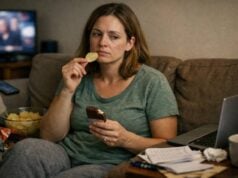
Sitting too much does not automatically cause fat gain on its own, but it can make weight loss meaningfully harder. Long sedentary stretches usually mean less daily movement, fewer calories burned outside of formal exercise, more stiffness and fatigue, and more opportunities to snack out of boredom or stress. Over time, that combination can quietly shrink the gap between the calories you burn and the calories you eat.
That is why this topic matters so much. Many people think they need a harder workout plan when the real issue is a day built around almost no movement. This article explains how sedentary habits affect weight loss, why exercise does not always fully cancel them out, and what practical changes help you sit less without turning your day upside down.
Table of Contents
- Why sitting too much can slow weight loss
- Does exercise cancel out a sedentary day?
- How sedentary habits change eating patterns
- Signs your day is more sedentary than you think
- The most useful ways to break up sitting
- Make movement more automatic at home and work
- A realistic low-sedentary day
- When sitting is not the whole problem
Why sitting too much can slow weight loss
The most important thing to understand is that sitting too much affects weight loss indirectly as much as directly. It is not usually the sole reason someone gains weight, but it often makes all the other parts of weight management harder.
The clearest mechanism is simple: the more time you spend sitting, the less energy you usually burn across the day. That does not just mean skipping workouts. It includes all the small physical activity that normally happens between bigger tasks, like walking to the kitchen, climbing stairs, standing while you talk, carrying groceries, pacing during calls, taking short outdoor breaks, and moving around at home or work. When those small movements disappear, daily energy expenditure often drops more than people realize.
This is one reason the idea of non-exercise activity matters so much. Many people focus only on gym time, but a large part of daily calorie burn comes from movement that does not feel like formal exercise. A person who takes one workout class but otherwise stays planted for most of the day can easily move less overall than someone who never trains hard but walks, stands, and changes position regularly.
Long sedentary stretches can also affect how your body feels during the day. People who sit for hours often describe a cycle of stiffness, sluggishness, low energy, and reduced motivation to move. That creates a feedback loop. The less you move, the less you feel like moving. Then even small activity starts feeling inconvenient.
Just as important, sedentary days often overlap with the routines that tend to undermine fat loss:
- screen-heavy work
- convenience eating
- mindless snacking
- delayed meals
- low step counts
- late-night unwinding on the couch
So the problem is not only “sitting burns fewer calories.” It is also that sitting-heavy days often come bundled with other habits that make consistent weight loss harder.
A helpful way to frame this is that sitting too much lowers the margin for error. If you move very little, small amounts of extra snacking or slightly larger portions are more likely to erase a calorie deficit. That does not mean weight loss becomes impossible. It means your routine needs more support.
Does exercise cancel out a sedentary day?
A common question is whether a workout “makes up for” sitting all day. The honest answer is: not always, and not completely.
Exercise is still extremely valuable. It helps preserve muscle, improves fitness, supports long-term health, and can increase daily calorie burn. But one workout does not automatically erase the effects of spending the other 10 to 14 waking hours mostly still. That is especially true if the workout is short and the rest of the day is extremely sedentary.
This is where people often get stuck. They do a solid 30- to 45-minute session, then assume the rest of the day no longer matters. But weight loss is influenced by the total pattern of the day, not just the best hour in it.
Here is the key distinction:
| Factor | What it helps with | What it does not fully solve |
|---|---|---|
| Formal exercise | Fitness, strength, muscle retention, extra calorie burn | All-day sitting, low step counts, constant stillness |
| Daily movement | Higher total energy expenditure, less stiffness, better routine flow | Replacing all benefits of training |
| Breaking up sitting | Less continuous sedentary time, more frequent movement cues | Building strength or endurance on its own |
The best setup is not choosing one over the other. It is combining all three:
- regular exercise
- more total daily movement
- fewer long, uninterrupted sitting blocks
This matters psychologically too. People who rely only on workouts often end up with an “I exercised, so now I can sit the rest of the day” mindset. That can unintentionally reduce overall movement and shrink the net benefit of the training session.
A better goal is to stop thinking in extremes. You do not need to be moving nonstop. You just want your day to be less static. If you already exercise, great. Keep it. Then ask how you can make the other 23 hours support that effort instead of quietly working against it.
This is one reason a desk-job movement plan or a better remote-work routine can matter so much. They solve the part of the problem that workouts alone often miss: the long periods of uninterrupted stillness that shape the rest of the day.
How sedentary habits change eating patterns
People often think of sitting as only a movement issue, but it also changes how and why many people eat.
The first pattern is boredom eating. When you sit for long periods, especially in front of a screen, food can become stimulation. It gives the day texture. A snack breaks monotony, gives your hands something to do, and briefly changes your mental state. This is one reason couch snacking, desk snacking, and “wandering into the kitchen” behavior are so common.
The second pattern is stress snacking. Sedentary work is often mentally tiring even when it is physically easy. Emails, deadlines, meetings, and decision overload can all make food feel like a fast reset. The problem is that it often becomes automatic rather than intentional.
The third pattern is blurred hunger cues. On very sedentary days, some people ignore meals until they are suddenly very hungry, then overeat later. Others eat repeatedly without much real hunger because food is nearby and the day has no structure. Both patterns make calorie control harder.
The fourth pattern is reward eating. Sitting all day can make you feel like you “deserve something” because you are mentally drained, even if you are not physically depleted. That does not make the feeling fake. It just means the reward may need to be something other than food every time.
These patterns are often amplified by screens. The more time you spend sitting while scrolling, watching, or working, the easier it is to eat without fully noticing how much or why. That is one reason long sedentary evenings often pair with larger portions and lower-quality food choices.
A practical way to think about it is this: sedentary time can increase the number of eating opportunities, weaken meal structure, and make food more likely to become a coping tool.
That is why breaking up sitting is not just about burning a few more calories. It can also interrupt the cue that leads to automatic eating. A short walk, standing break, or non-food reset can create enough separation to stop a habitual snack loop before it starts.
If this pattern sounds familiar, it may help to look at how boredom and stress eating differ, or why automatic overeating patterns can become so sticky. For many people, the issue is not hunger alone. It is sitting plus screens plus stress plus easy food access.
Signs your day is more sedentary than you think
Many people underestimate how much they sit because the day feels mentally busy. But mental activity is not the same as physical activity. A full schedule can still be a very sedentary schedule.
A few signs show up again and again.
You might be more sedentary than you think if:
- most of your day happens in one chair
- you regularly go two to three hours without standing
- your workouts are your only intentional movement
- you feel stiff, restless, or heavy by late afternoon
- you snack mostly during screen time
- your step count is consistently much lower than expected
- you do tasks online that used to require leaving the house
- you end the day feeling exhausted but not physically used
Another sign is that your environment makes sitting the default. Your desk, couch, car, and bed may all be set up for stillness, while movement requires a deliberate decision every time. That kind of setup creates a lot of invisible friction.
It also helps to think about transitions. Sedentary days often have very few of them. You move from one seated task to another with minimal interruption. The longer that pattern continues, the more “normal” it feels.
A useful self-check is to ask:
- How often did I stand up today?
- How many times did I leave the room or building?
- Did I walk at any point besides formal exercise?
- Did I take breaks because I chose to, or only when I had to?
The answers reveal a lot.
Some people find that their sedentary time is highest in one specific block:
- long morning work sessions
- afternoon screen fatigue
- evening television time
- late-night scrolling
That matters because you do not need to fix the whole day at once. You only need to identify where sitting becomes most continuous and start there.
If your pattern is work-related, office worker weight loss habits can still apply even if you work from home, because the core issue is the same: too much seated time bundled with low movement and easy snacking. If the problem becomes strongest at night, then screen time and appetite may be a bigger part of the picture than sitting alone.
Awareness is useful here because sedentary habits are often invisible until you track them. They do not feel dramatic. They feel normal. That is exactly why they can quietly affect progress for months.
The most useful ways to break up sitting
The best strategy for reducing sedentary time is not to promise yourself that you will “move more.” It is to make movement easier to repeat than ignoring it.
Short breaks work well because they do not require a full outfit change, a commute, a gym session, or a perfect mood. They simply interrupt stillness.
Useful options include:
- standing when a meeting ends
- walking during phone calls
- refilling water away from your desk
- taking a short loop around the room, hallway, or office
- doing a few minutes of stairs
- stretching while the kettle, microwave, or printer runs
- walking for a few minutes after meals
- standing during tasks that do not require intense typing
The real power comes from repetition. A two-minute movement break done several times a day is usually more sustainable than relying on one big burst of motivation.
A practical rule is to link movement to existing events. For example:
- After every meeting, stand and walk briefly.
- After lunch, take a short walk.
- Before grabbing a snack, move first and then decide if you are actually hungry.
- At the end of the workday, do one final movement break to separate work from evening time.
This is why movement snacks are such a useful concept. They fit the way real people live. They do not ask for a dramatic lifestyle overhaul. They ask for repeatable interruptions to sedentary time.
It is also worth noting that the “best” break is the one you will actually do. Walking is great, but standing and stretching is still better than another uninterrupted hour in a chair. The goal is not perfection. It is reducing continuous stillness.
For many people, the easiest first step is building one break into the same point every day. A short walk after lunch works especially well because it interrupts sitting, creates a mid-day reset, and can make the second half of the day feel less heavy. That is one reason a 10-minute walk after meals is so useful: it is small enough to repeat and practical enough to become normal.
Make movement more automatic at home and work
Habits usually follow environment. If your setup makes sitting effortless and movement inconvenient, you will probably sit more even if your intentions are good.
The easiest fix is to stop relying on memory alone. Build cues into your surroundings.
At work or at home, that might mean:
- keeping your water bottle somewhere that requires refills
- placing walking shoes near your workspace
- using a smaller cup so standing up happens more often
- setting your printer, charger, or trash can away from your desk
- keeping a resistance band or mat visible
- putting reminders in transition points instead of only on your phone
- leaving your desk area for every meal
You can also redesign common sedentary loops. For example, if you always go from laptop to couch after work, build a short movement cue in between. That could be a walk, a few chores done standing, or a quick reset before you sit again.
The same idea applies to food. If your most sedentary moments are also your snacking moments, change both cues at once. Make your first response to boredom or fatigue something physical and brief before you decide whether food is actually needed.
A helpful question is: What movement choice could become the default here? Not the heroic choice. The default one.
Examples:
- stairs instead of elevator when practical
- standing during certain calls
- walking while listening to voice notes or podcasts
- getting up during ad breaks or between episodes
- adding a short errand walk instead of stacking everything into one seated block
This is where making healthy choices easier at home matters. The easier the environment makes movement, the less discipline you need to force it. And if you work in front of a screen all day, your setup starts to matter almost as much as your intention.
You do not need a perfect ergonomic or fitness-focused home. You need a space that does not quietly encourage all-day stillness.
A realistic low-sedentary day
A less sedentary day is not a day spent exercising nonstop. It is a day where movement shows up in enough places that sitting no longer dominates everything.
Here is what that can look like in practice.
| Part of day | Sedentary version | Lower-sedentary version |
|---|---|---|
| Morning | Wake, sit, coffee, desk | Wake, short walk or standing routine, breakfast, then work |
| Work block | Sit through every task and meeting | Stand after meetings and walk during some calls |
| Lunch | Eat at desk and keep working | Step away from the desk and move briefly after eating |
| Afternoon slump | Snack while scrolling or staring at a screen | Take a short movement break, then choose a planned snack if hungry |
| Evening | Couch for hours | Some seated downtime, but with one walk, chore block, or standing break |
Notice that this version is not extreme. It is not even especially athletic. It is simply less continuous in its sitting.
That is an important distinction because people often quit when they set the bar too high. They assume the answer is a massive daily step target, a standing desk they never use, or an intense training plan on top of an already exhausting day. The better answer is usually smaller and more repeatable.
A few reliable habits often outperform ambitious ones:
- one short walk after lunch
- standing during low-focus tasks
- more deliberate meal breaks
- fewer all-evening couch sessions
- one extra bout of movement during your lowest-energy window
This approach also works better psychologically. When you stop treating movement as a separate project and start treating it as part of how the day flows, it feels less like another demand on your schedule.
If you are busy, the goal is not to create a fitness lifestyle that takes over your calendar. It is to build a daily rhythm that lets you move enough to support weight loss without making life feel harder than it already is.
When sitting is not the whole problem
Reducing sedentary time can help a lot, but it is not a magic explanation for every case of weight gain or stalled fat loss.
Sometimes sitting is one contributor among several bigger problems, such as:
- eating more than you realize
- very low protein or fiber intake
- poor sleep
- chronic stress
- weekend overeating
- medications or medical conditions
- a calorie target that is no longer accurate
- underestimating how little total movement you are getting outside workouts
That is why it is important to stay nuanced. A more active day can support a calorie deficit, but it does not remove the need for a diet you can actually sustain. In the same way, less sitting may improve how you feel and how consistent you are, but it will not by itself guarantee fat loss if your overall intake still exceeds your needs.
Sleep is one commonly missed factor. People who sit a lot, work late, and unwind with evening screen time often sleep worse too. Then hunger and cravings are harder to manage the next day. If that sounds familiar, poor sleep and appetite may be interacting with sedentary habits more than you think.
Another missed factor is compensation. Sometimes people consciously move more in one part of the day but become less active later because they feel they have “done enough.” That is why the broader pattern matters more than one isolated effort.
You should also consider looking beyond sitting habits if:
- your weight is going up quickly without an obvious explanation
- fatigue is severe enough that movement feels unusually difficult
- you have pain, shortness of breath, or dizziness with ordinary activity
- your appetite feels unusually high despite adequate meals
- your progress has stalled for a long time despite solid consistency
In those cases, it may help to review the bigger picture rather than assuming the chair is the whole issue. Sometimes the better question is not “Am I sitting too much?” but “What daily system is making weight loss hard right now?”
Sitting less is often a strong lever, but it works best inside a bigger routine that includes reasonable nutrition, better meal structure, movement you can sustain, and enough recovery to keep going.
References
- WHO guidelines on physical activity and sedentary behaviour 2020 (Guideline)
- Sedentary behavior, physical inactivity, abdominal obesity and obesity in adults and older adults: A systematic review and meta-analysis 2022 (Systematic Review and Meta-Analysis)
- Exploring the effect of sedentary behavior on increased adiposity in middle-aged adults 2024 (Observational Study)
- The effectiveness of exercise snacks as a time-efficient treatment for improving cardiometabolic health in adults: a systematic review and meta-analysis 2025 (Systematic Review and Meta-Analysis)
- Effects of exercise snacks on body composition in adults: a systematic review and meta-analysis based on evidence from bioimpedance and DXA methods 2026 (Systematic Review and Meta-Analysis)
Disclaimer
This article is for general educational purposes only and is not a substitute for medical, nutrition, or behavioral health advice. If weight gain, fatigue, pain with activity, or trouble losing weight may be related to a health condition or medication, talk with a qualified healthcare professional.
If this article helped you, please share it on Facebook, X, or your preferred platform so someone else can build less sedentary habits and make weight loss feel easier to maintain.