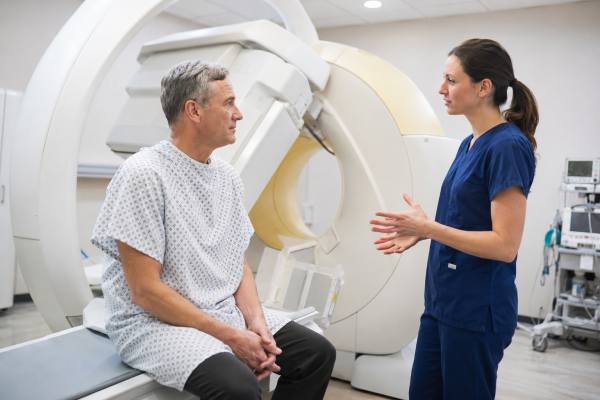
A SPECT scan is a nuclear medicine imaging test that shows patterns of activity, blood flow, or specific chemical targets in the brain. It is different from an MRI or CT scan because it is less focused on the brain’s structure and more focused on how certain brain systems are functioning.
For brain disorders, SPECT is used selectively. It may help in epilepsy surgery planning, certain movement disorder evaluations, suspected dementia with Lewy bodies, selected dementia workups, and some blood-flow questions. It is not a general-purpose brain scan, and it usually cannot diagnose depression, anxiety, ADHD, autism, or most psychiatric conditions by itself.
Table of Contents
- What a SPECT Scan Shows
- How Brain SPECT Works
- When Brain SPECT Is Used
- SPECT vs Other Brain Tests
- What to Expect During the Test
- Accuracy, Limits, and Interpretation
- Risks, Preparation, and Safety
- What Happens After Results
What a SPECT Scan Shows
A brain SPECT scan shows how a radioactive tracer is distributed in the brain, which can reflect blood flow, brain perfusion, or a specific molecular target such as dopamine transporter activity. In practical terms, it helps clinicians see patterns that may not be visible on a standard structural scan.
The most common brain-related SPECT categories are:
- Perfusion SPECT, which estimates regional cerebral blood flow.
- Ictal or interictal SPECT, used in some epilepsy evaluations to compare blood flow during or between seizures.
- Dopamine transporter SPECT, often called DAT SPECT or DaTscan when using ioflupane I-123, which evaluates dopamine transporter activity in the striatum.
- SPECT/CT, which combines SPECT functional information with CT-based anatomical localization.
A perfusion SPECT scan does not directly measure thoughts, emotions, intelligence, personality, or mental illness. It shows a physiological pattern. The meaning of that pattern depends on the reason the test was ordered, the tracer used, the timing of the scan, the person’s symptoms, and comparison with other test results.
For example, in epilepsy, a SPECT scan may show increased blood flow in a region involved in seizure onset if the tracer is injected during a seizure. In some dementia evaluations, perfusion patterns may support one diagnosis over another, although MRI, PET, cognitive testing, blood tests, and clinical examination are often more central. In movement disorders, DAT SPECT does not “see Parkinson’s disease” directly; it shows whether dopamine transporter uptake is reduced in a pattern consistent with a presynaptic dopaminergic deficit.
This distinction matters because a SPECT image is not a stand-alone diagnosis. A scan may be abnormal for several reasons, and a normal scan may not rule out every condition. When symptoms involve memory loss, confusion, tremor, seizures, or major changes in behavior, the scan is only one part of a broader diagnostic process that may also include brain MRI, cognitive testing, lab work, EEG, medication review, and specialist evaluation.
How Brain SPECT Works
Brain SPECT works by injecting a small amount of radioactive tracer into a vein, then using a gamma camera to detect the energy released by that tracer. A computer reconstructs the signals into three-dimensional images.
The tracer is chosen for the clinical question. A blood-flow tracer is used when the goal is to evaluate perfusion. Ioflupane I-123 is used when the goal is dopamine transporter imaging in selected adults with suspected parkinsonian syndromes or suspected dementia with Lewy bodies. Different tracers answer different questions, so “a SPECT scan” is not one single test with one single meaning.
After injection, the tracer travels through the bloodstream. Depending on the tracer, it may be taken up by brain tissue in proportion to blood flow, or it may bind to a specific target. The scan itself does not usually create the radioactive signal; the scanner detects signal from the tracer inside the body.
For many brain SPECT studies, the person lies still on a scanning table while camera heads rotate around the head. The imaging portion may take roughly 30 to 60 minutes, though the total appointment can be longer because of tracer uptake time, preparation, medication instructions, or delayed imaging requirements.
Timing can be especially important in epilepsy. If SPECT is being used to help localize seizure onset, the tracer may need to be injected as close as possible to the start of a seizure. That often requires inpatient video EEG monitoring and a coordinated epilepsy team. The scan is then compared with other imaging and EEG data rather than interpreted in isolation. For more on electrical brain testing, see EEG testing.
In dopamine transporter imaging, timing is different. The person receives thyroid-blocking medication before the tracer in many protocols, then imaging is performed hours later. The scan looks at uptake in the striatum, a deep brain region involved in movement. Reduced uptake may support a degenerative parkinsonian syndrome or dementia with Lewy bodies, but it does not by itself separate Parkinson’s disease from multiple system atrophy or progressive supranuclear palsy.
When Brain SPECT Is Used
Brain SPECT is used when the expected functional information could change diagnosis, treatment planning, or referral decisions. It is usually ordered for a specific clinical question, not as a broad screening test for unexplained symptoms.
One important use is drug-resistant focal epilepsy, especially when surgery is being considered. In this setting, SPECT may help localize a seizure focus when MRI, EEG, PET, and clinical history do not fully agree. Ictal SPECT can be useful because blood flow may increase in the region involved in seizure onset. It is most useful when performed within a specialized epilepsy program that can coordinate tracer injection, video EEG, MRI comparison, and surgical planning.
Another use is parkinsonian syndrome evaluation. DAT SPECT can help distinguish essential tremor or medication-related tremor from conditions involving loss of presynaptic dopaminergic nerve terminals. It may be considered when the examination is unclear, symptoms are early or atypical, or the result would affect treatment and counseling. It is not usually needed when a movement disorders specialist can make a confident clinical diagnosis from history and examination.
SPECT may also be used in selected dementia evaluations, especially when dementia with Lewy bodies is suspected. Reduced dopamine transporter uptake can be an indicative biomarker for Lewy body dementia when symptoms such as cognitive fluctuations, visual hallucinations, REM sleep behavior disorder, or parkinsonism are present. It may be part of a broader workup alongside Lewy body dementia testing, MRI, cognitive assessment, sleep evaluation, and medication review.
Perfusion SPECT has sometimes been used in cognitive decline and dementia differential diagnosis, but its role varies by setting. In many memory clinics, MRI and PET-based approaches are more commonly used for specific dementia questions. A broader overview of when imaging is considered is available in brain imaging for memory loss.
SPECT may also appear in selected evaluations of cerebrovascular reserve, brain injury, tumors, inflammatory disease, or suspected brain death, depending on local protocols and specialist judgment. These uses are more situation-specific and should be guided by neurology, nuclear medicine, radiology, or another relevant specialist.
SPECT is generally not a routine diagnostic test for depression, anxiety, ADHD, autism, bipolar disorder, or personality disorders. Brain function differs across groups in research studies, but an individual scan usually cannot confirm or rule out these conditions. For that question, see brain scans and mental health diagnosis.
SPECT vs Other Brain Tests
SPECT is best understood as a functional nuclear medicine test. It answers different questions from MRI, CT, PET, EEG, and neuropsychological testing.
| Test | What it mainly shows | Common brain-related uses | Key limitation |
|---|---|---|---|
| SPECT | Tracer uptake reflecting blood flow, perfusion, or dopamine transporter activity | Selected epilepsy, parkinsonian syndrome, dementia with Lewy bodies, and perfusion questions | Functional patterns are not usually diagnostic by themselves |
| MRI | Detailed brain structure | Stroke, tumors, inflammation, atrophy, trauma, multiple sclerosis, dementia workups | May not show functional or chemical changes directly |
| CT | Fast structural imaging | Bleeding, fracture, emergency stroke evaluation, acute head injury | Less detailed than MRI for many soft-tissue brain findings |
| PET | Metabolism or molecular targets, depending on tracer | Dementia evaluation, epilepsy, tumors, amyloid or tau assessment in selected cases | Availability, cost, tracer access, and radiation exposure vary |
| EEG | Electrical brain activity | Seizures, epilepsy classification, encephalopathy, altered awareness episodes | Does not provide detailed structural imaging |
| Neuropsychological testing | Cognitive performance patterns | Memory loss, ADHD, brain injury, dementia, learning concerns, executive dysfunction | Does not show brain anatomy or tracer uptake |
SPECT and PET are often compared because both are nuclear medicine tests. PET generally has higher resolution and stronger quantitative capabilities for many brain applications, but SPECT remains useful in certain settings because of tracer availability, established protocols, and specific clinical indications such as DAT imaging and ictal epilepsy evaluation.
MRI and CT are structural tests. They can show a tumor, stroke, bleeding, hydrocephalus, atrophy, or other visible changes in anatomy. SPECT may show altered physiology even when structure is less obvious, but that does not automatically make it “better.” The best test depends on the clinical question.
For sudden neurological symptoms, CT or MRI is often more urgent than SPECT. For suspected seizures, EEG is usually central. For memory symptoms, cognitive testing and MRI are commonly early parts of the workup. For uncertain parkinsonism, DAT SPECT may add information that MRI cannot. For Alzheimer’s disease biomarker questions, PET or newer blood and cerebrospinal fluid tests may be more relevant than perfusion SPECT in many settings.
What to Expect During the Test
A brain SPECT scan is usually painless, but it can take several hours from arrival to completion depending on the tracer and protocol. The most important practical requirement is staying still during imaging.
Before the scan, the imaging center may ask about pregnancy, breastfeeding, allergies, kidney or liver disease, recent nuclear medicine tests, and current medications. For DAT SPECT, some medications can interfere with dopamine transporter binding, so the ordering clinician or nuclear medicine team may give specific instructions about whether to hold certain medicines. Do not stop prescription medication unless the clinician who ordered the test or the imaging team tells you to.
For many SPECT scans, the steps are:
- A technologist reviews the test and confirms safety information.
- An IV line is placed, usually in the arm or hand.
- The tracer is injected.
- You wait while the tracer distributes or binds to the target tissue.
- You lie on a table with your head positioned carefully.
- The camera rotates around your head while images are collected.
- The nuclear medicine physician or radiologist reviews the images and sends a report to the ordering clinician.
The waiting time varies. Some perfusion studies may involve a shorter uptake period. DAT SPECT commonly involves delayed imaging after injection. Epilepsy-related SPECT may involve a more complex process if injection is timed to a seizure during inpatient monitoring.
The scan itself is quiet compared with MRI. There is no strong MRI magnet, so some people who cannot have MRI because of certain devices may still be eligible for SPECT, depending on the situation. However, the scanner can still feel close to the head, and people with severe claustrophobia should tell the imaging team ahead of time.
Most people can return to normal activities after the scan unless they received sedation or have separate instructions. The tracer leaves the body over time, often through urine, so hydration and frequent urination may be recommended after the test.
Accuracy, Limits, and Interpretation
A SPECT scan is most useful when it is matched to the right question. Its accuracy depends on the condition being evaluated, the tracer, scan timing, image quality, patient movement, medications, and the expertise of the interpreting team.
For epilepsy surgery planning, SPECT can be helpful when performed in the right clinical context. But it is not interpreted alone. Specialists compare it with seizure semiology, scalp or intracranial EEG, MRI, PET, and neuropsychological results. A scan that appears to highlight one region may still need confirmation before surgery is considered.
For DAT SPECT, an abnormal scan supports reduced presynaptic dopaminergic function. That can help separate essential tremor from degenerative parkinsonian syndromes in uncertain cases. But DAT SPECT does not reliably distinguish among Parkinson’s disease, multiple system atrophy, and progressive supranuclear palsy. Those distinctions still depend on clinical features, progression, examination findings, MRI patterns, autonomic symptoms, eye movement findings, and specialist evaluation.
For dementia with Lewy bodies, reduced dopamine transporter uptake can support the diagnosis when symptoms fit. However, a scan does not replace a careful dementia evaluation. Alzheimer’s disease, vascular disease, Parkinson’s disease dementia, medication effects, sleep disorders, delirium, and psychiatric symptoms can overlap. Cognitive testing, caregiver history, sleep history, medication review, MRI, and sometimes PET or lab testing may all be relevant. A broader diagnostic workup is discussed in Alzheimer’s testing and diagnosis.
For mental health conditions, the limits are especially important. A colorful SPECT image can look persuasive, but psychiatric diagnoses are not made by simply matching a person’s scan to a template. Depression, anxiety disorders, ADHD, PTSD, bipolar disorder, autism, psychosis, and substance-related conditions are evaluated through clinical history, symptom patterns, functional impact, validated screening tools, physical health review, and sometimes psychological or neuropsychological testing.
A SPECT result may be described as normal, abnormal, mildly reduced, asymmetrical, focal, diffuse, or suggestive of a specific pattern. The wording can be confusing. The best next step is to ask the ordering clinician three practical questions:
- What clinical question was the scan supposed to answer?
- Does the result change the diagnosis or treatment plan?
- What other tests or clinical findings support or contradict the scan?
When a scan result is unexpected, it may need specialist review rather than immediate conclusions. Imaging reports are technical documents, and the same finding may mean different things in different patients.
Risks, Preparation, and Safety
For most people, SPECT is considered a low-risk diagnostic test, but it does involve ionizing radiation from the tracer. The decision to order it should weigh the expected benefit against radiation exposure, cost, and whether the result is likely to change care.
The amount of radiation varies by tracer, dose, body size, and whether CT is included as part of SPECT/CT. Nuclear medicine teams use protocols designed to keep exposure as low as reasonably achievable while still producing useful images.
Possible risks and inconveniences include:
- Mild pain, bruising, swelling, or bleeding where the IV is placed.
- Rare allergic or hypersensitivity reactions to the tracer.
- Radiation exposure from the radiotracer.
- Additional radiation if the study includes CT.
- Discomfort from lying still.
- Anxiety in people who feel uncomfortable in scanners.
- Medication-related concerns if certain drugs must be paused.
Pregnancy and breastfeeding require special discussion. A person who is pregnant, may be pregnant, trying to become pregnant, or breastfeeding should tell the ordering clinician and imaging team before the test. The scan may still be appropriate in selected situations, but the team may change timing, tracer choice, precautions, or post-scan instructions.
For DAT SPECT, preparation may include thyroid blocking before ioflupane I-123 to reduce thyroid uptake of radioactive iodine. The imaging team may also review drugs that can interfere with scan interpretation. These instructions are specific and should come from the clinician or nuclear medicine facility.
SPECT is not usually an emergency test for sudden severe symptoms. Seek urgent medical evaluation for new weakness on one side, facial droop, trouble speaking, seizure with prolonged confusion, sudden severe headache, head injury with worsening symptoms, new severe confusion, fainting with neurological symptoms, or suicidal thoughts with immediate danger. More guidance is available in when to go to the ER for neurological or mental health symptoms.
What Happens After Results
After a SPECT scan, the result should be reviewed in the context of symptoms, examination findings, and other tests. A normal result may be reassuring for the specific question asked, but it does not always rule out every possible diagnosis.
The report is usually written by a nuclear medicine physician or radiologist. It may include technical details, tracer distribution, comparison with expected patterns, and an impression. The impression is the most clinically focused part, but it still needs interpretation by the clinician who knows why the test was ordered.
Possible next steps include:
- No change in care if the scan does not add new information.
- Neurology referral or movement disorder specialist referral.
- Epilepsy center evaluation if seizures remain unexplained or surgery is being considered.
- Memory clinic evaluation for progressive cognitive decline.
- Additional MRI, PET, EEG, cognitive testing, or lab work.
- Medication review if drug effects could explain symptoms or interfere with results.
- Follow-up imaging only when there is a clear reason.
If the scan is abnormal, avoid assuming that the most serious explanation is the correct one. Many imaging findings are nonspecific. Some are incidental. Some support a diagnosis only when the symptoms already point in that direction.
If the scan is normal, avoid assuming that symptoms are “not real.” SPECT can miss conditions it was not designed to detect, and many brain and mental health conditions do not produce a clear SPECT abnormality. A normal scan may redirect the workup toward sleep, medication effects, migraine, psychiatric conditions, metabolic causes, hormonal issues, neuropsychological testing, or other imaging.
When results are confusing, it is reasonable to ask whether the scan should be reviewed by a subspecialist, especially for epilepsy, dementia, or movement disorders. For broader next-step planning after scan or cognitive test findings, see abnormal brain scan or cognitive test results.
References
- EANM practice guidelines for an appropriate use of PET and SPECT for patients with epilepsy 2024 (Guideline)
- EANM practice guideline/SNMMI procedure standard for dopaminergic imaging in Parkinsonian syndromes 1.0 2020 (Guideline)
- Practical use of DAT SPECT imaging in diagnosing dementia with Lewy bodies: a US perspective of current guidelines and future directions 2024 (Review)
- DATSCAN (ioflupane I 123 injection), for intravenous use 2022 (Prescribing Information)
- Nuclear Medicine Cerebral Perfusion Scan 2023 (Review)
- SPECT scan 2024 (Patient Education)
Disclaimer
This article is for general educational purposes only and is not a substitute for professional medical advice, diagnosis, or treatment. A SPECT scan should be interpreted by qualified clinicians in the context of symptoms, examination findings, and other test results.
Share this article on Facebook, X, or your preferred platform to help others understand when brain SPECT scans are useful and where their limits are.